
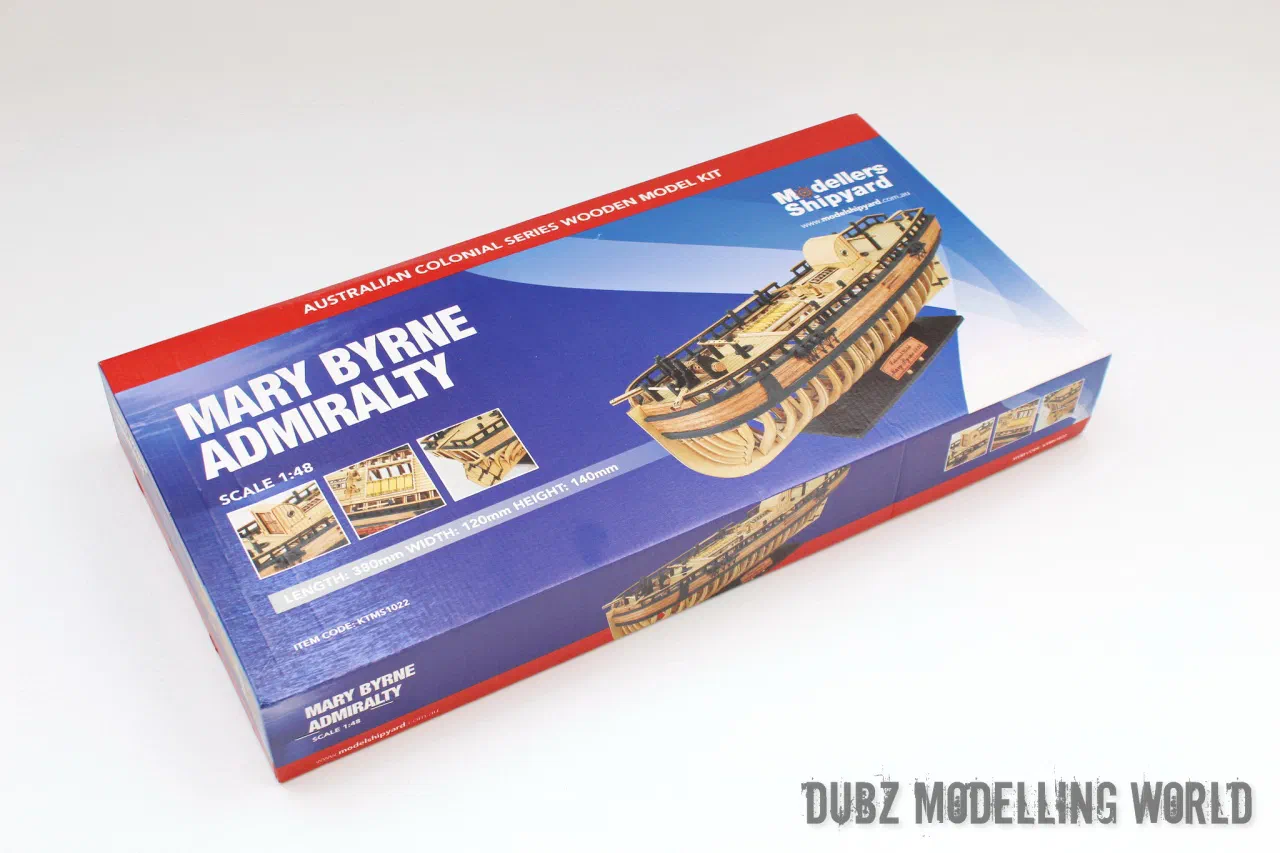
The subject
Ketches came to the Australian colonies with the Europeans in the early 19th century as river and coastal traders and evolved into designs suited to Australian waters. With two masts and a simple sail plan they could be handled by a crew of three. Manoeuvrable in light winds and with a shallow draught, they could work up the coastal rivers, carrying farm produce, grain and minerals to the city and supplies to isolated communities along the coast of eastern and south-eastern Australia – the link between city and country before road and rail.
The model is named after Mary Byrne, a young Irish woman sentenced in Dublin in 1826 to seven years’ transportation for stealing a lace handkerchief. She sailed on the Lady Rowena with 102 other women and arrived in Sydney in May 1826, worked as an assigned servant, set up house in The Rocks with John Burke, a blacksmith and former convict, and died in Sydney in 1842 at the age of 36. Her descendants lived in The Rocks for more than a hundred years and still live in Australia; the kit is dedicated to her and to them (source: Modelers Central).
The kit
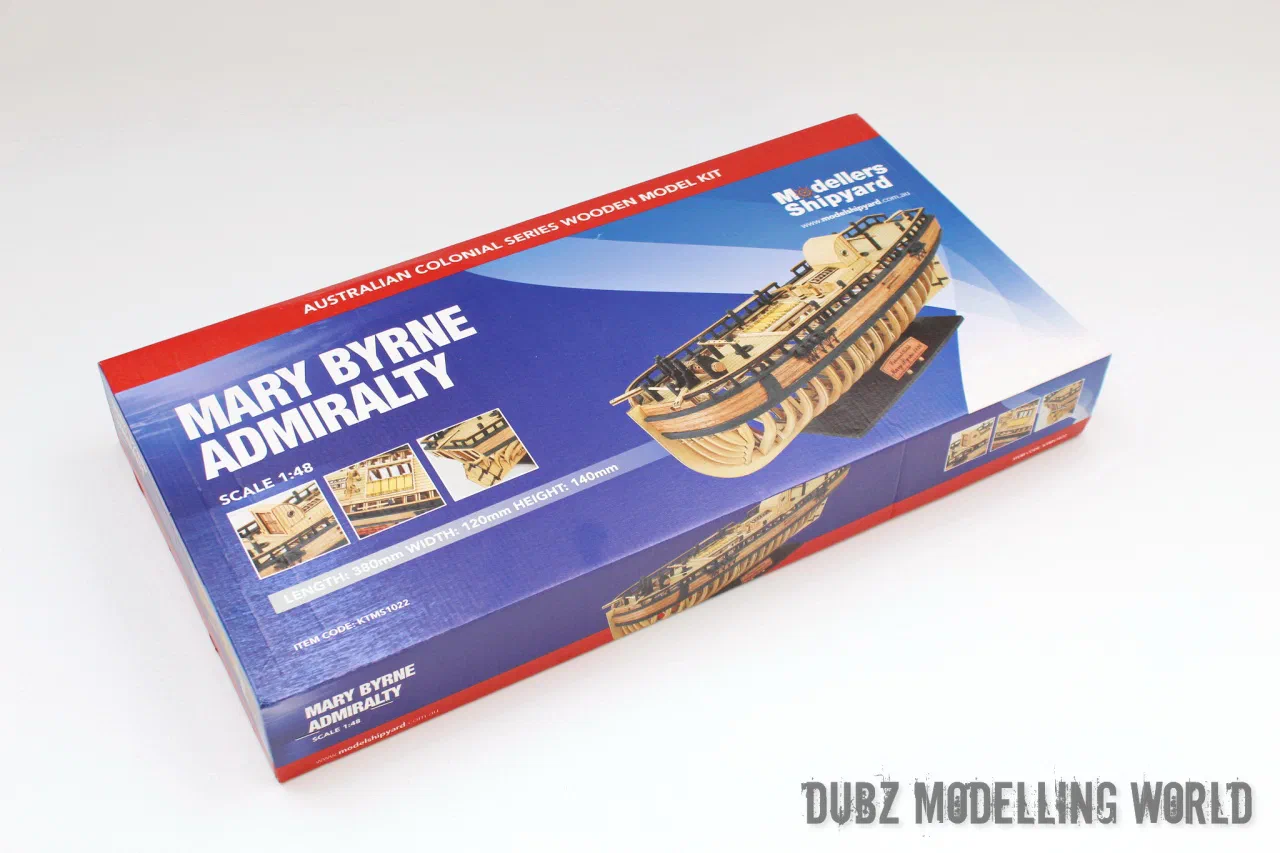
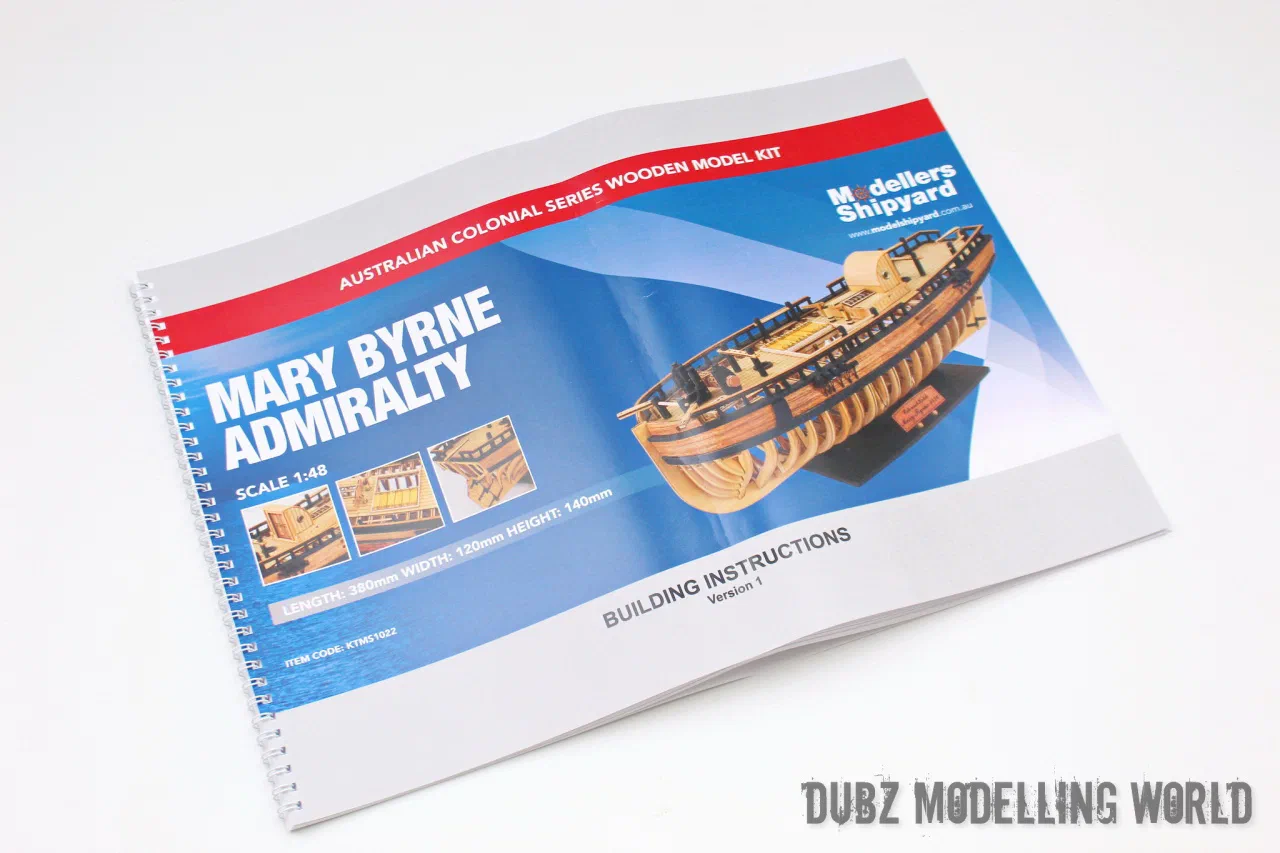
Modellers Shipyard released the Mary Byrne as an Admiralty-style model in July 2021 (KTMS1022). It was designed and built by John Staib. In 1:48 the model is 380 mm long, 140 mm high and 120 mm wide; the manufacturer rates it intermediate.
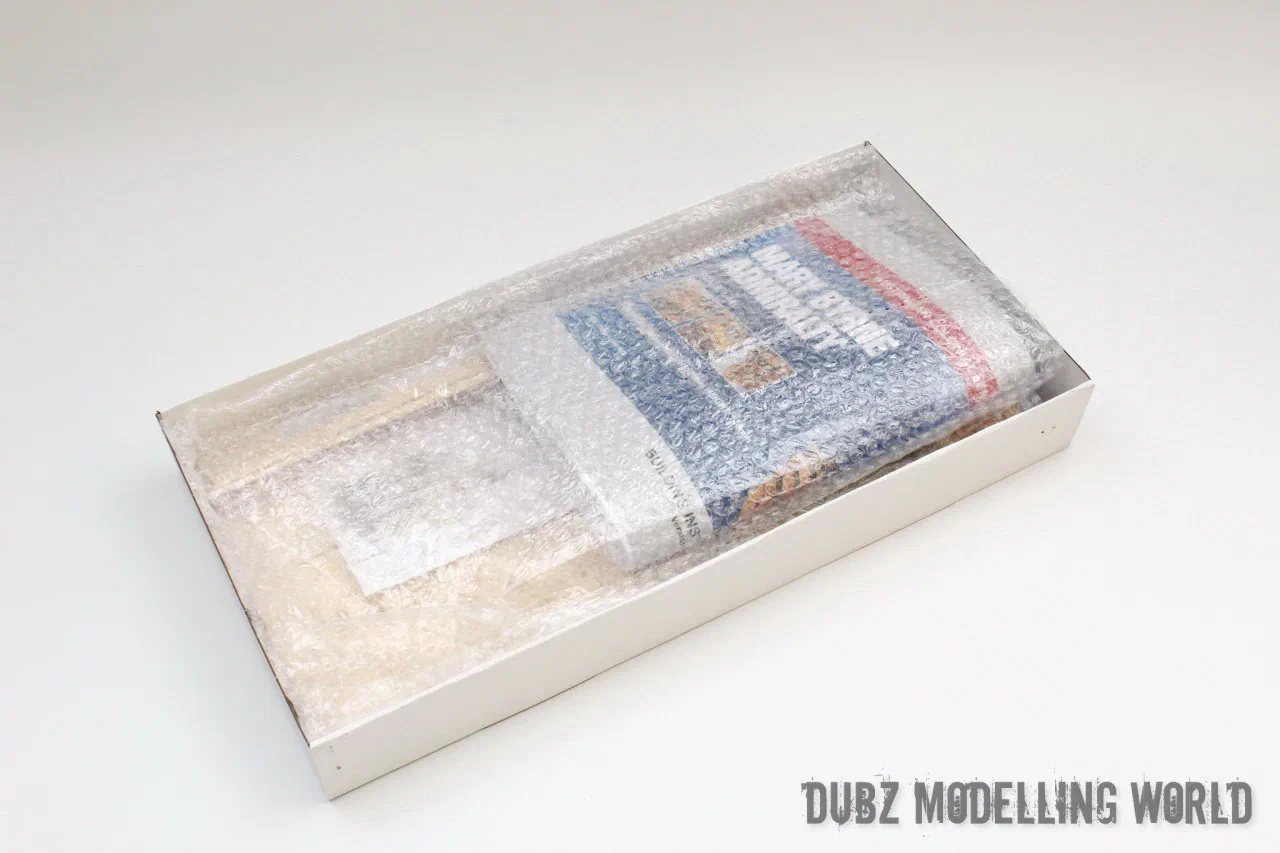
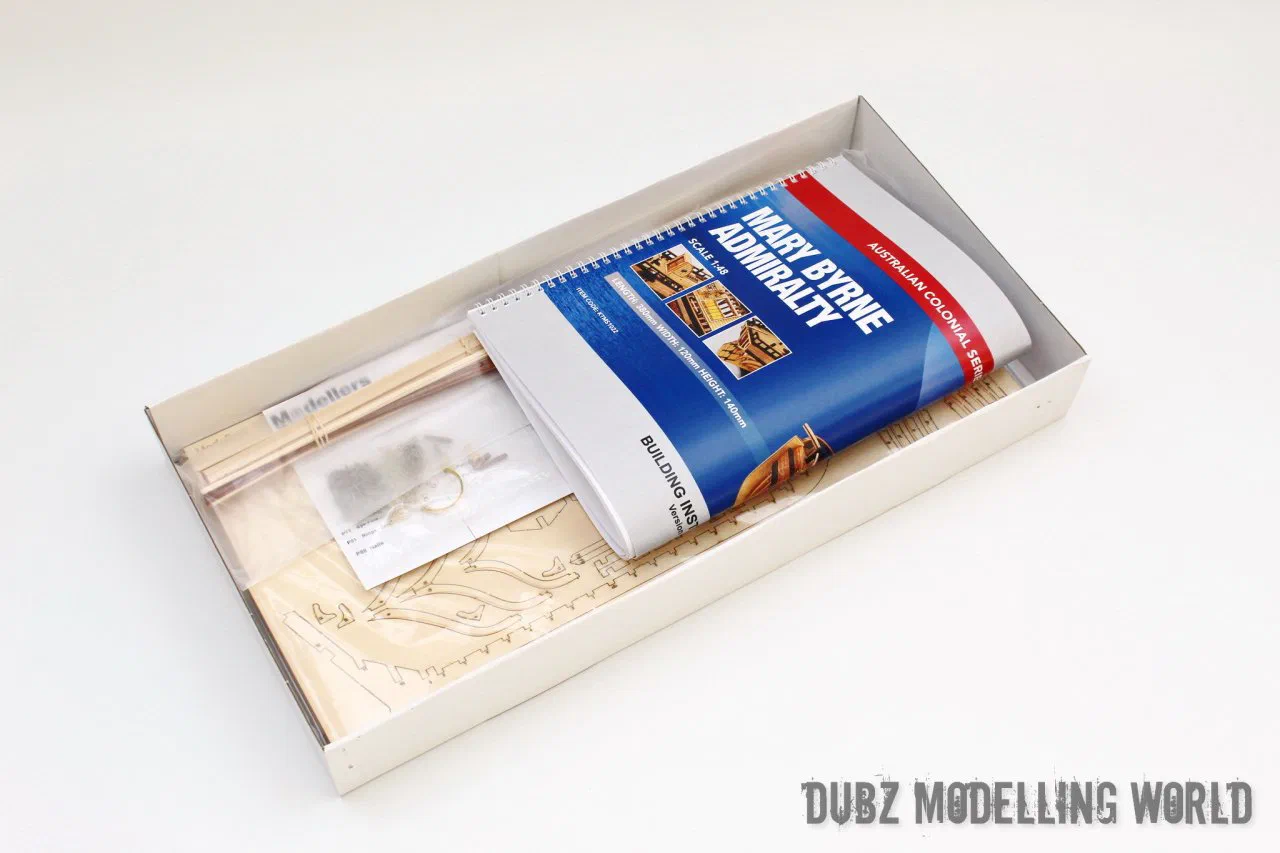
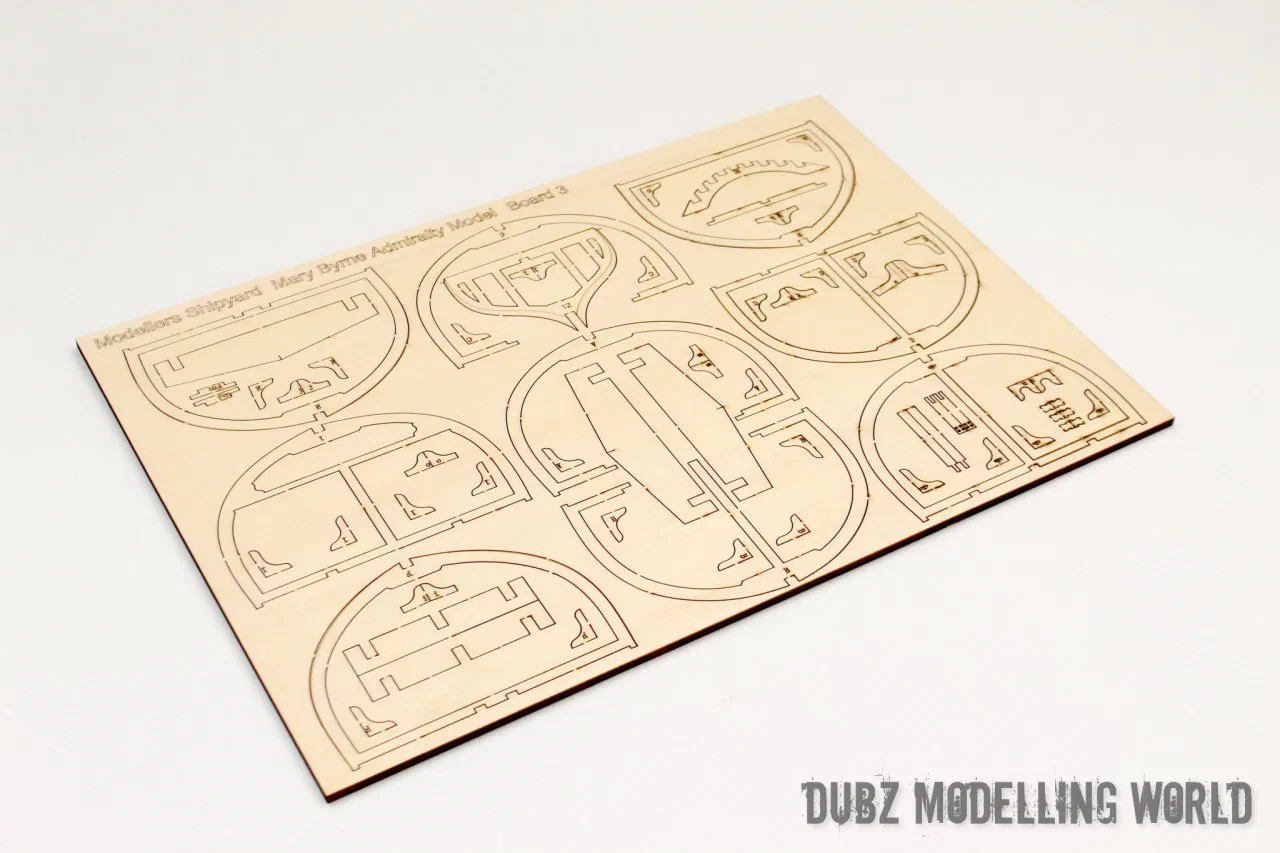
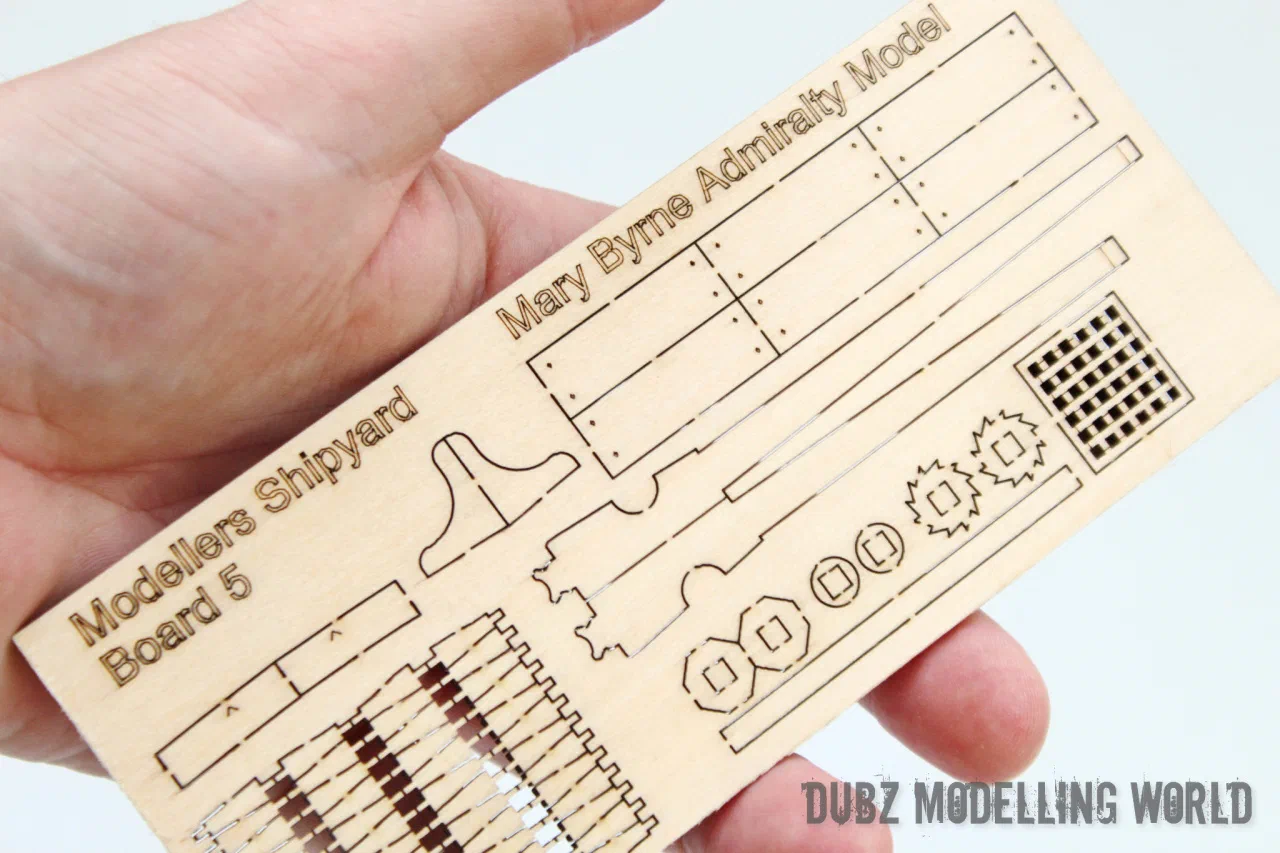
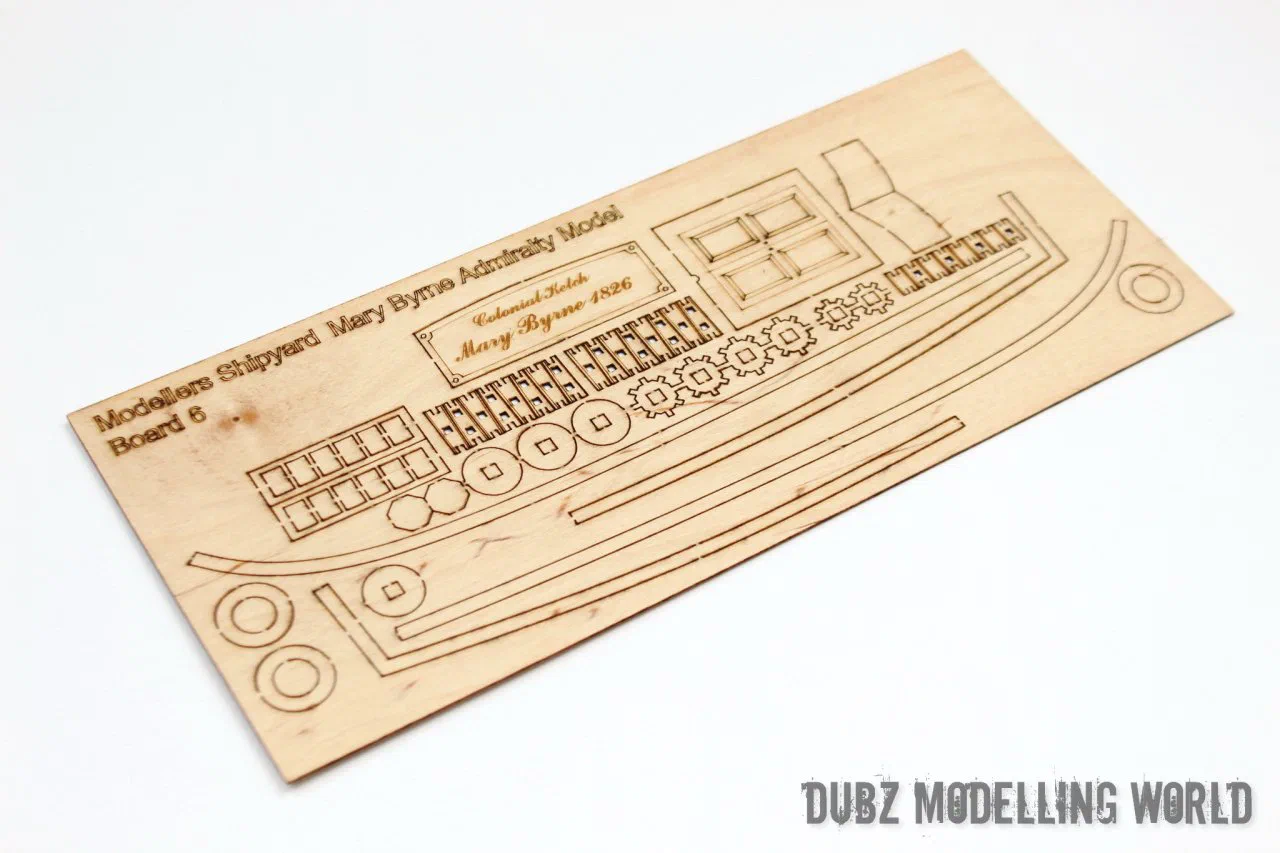
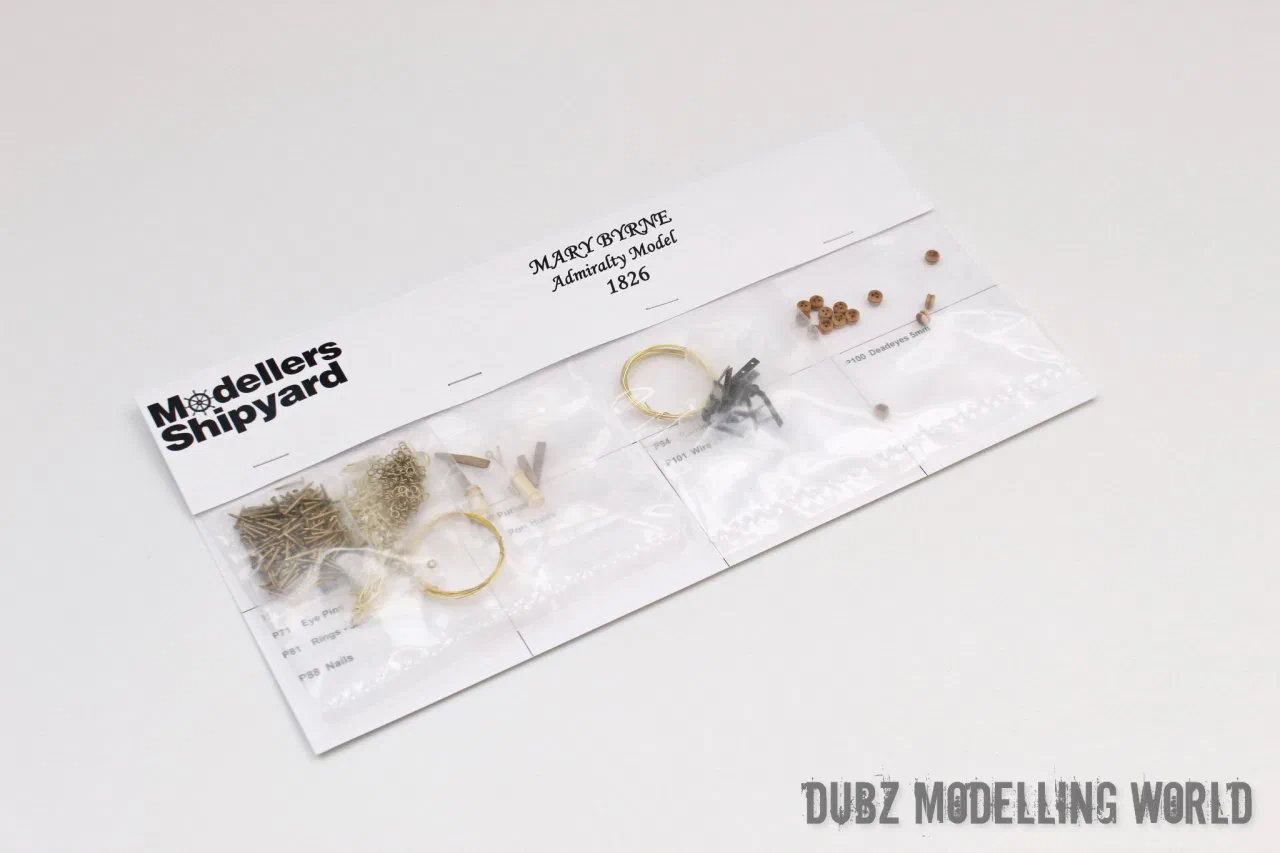
The box contains a large, full-colour photo instruction booklet in English, six sheets of laser-cut plywood, wood strips and the small parts – wire, eye pins, rings, nails, pumps, rudder hinges and deadeyes. Everything is stored safely and tidily.
Laser work
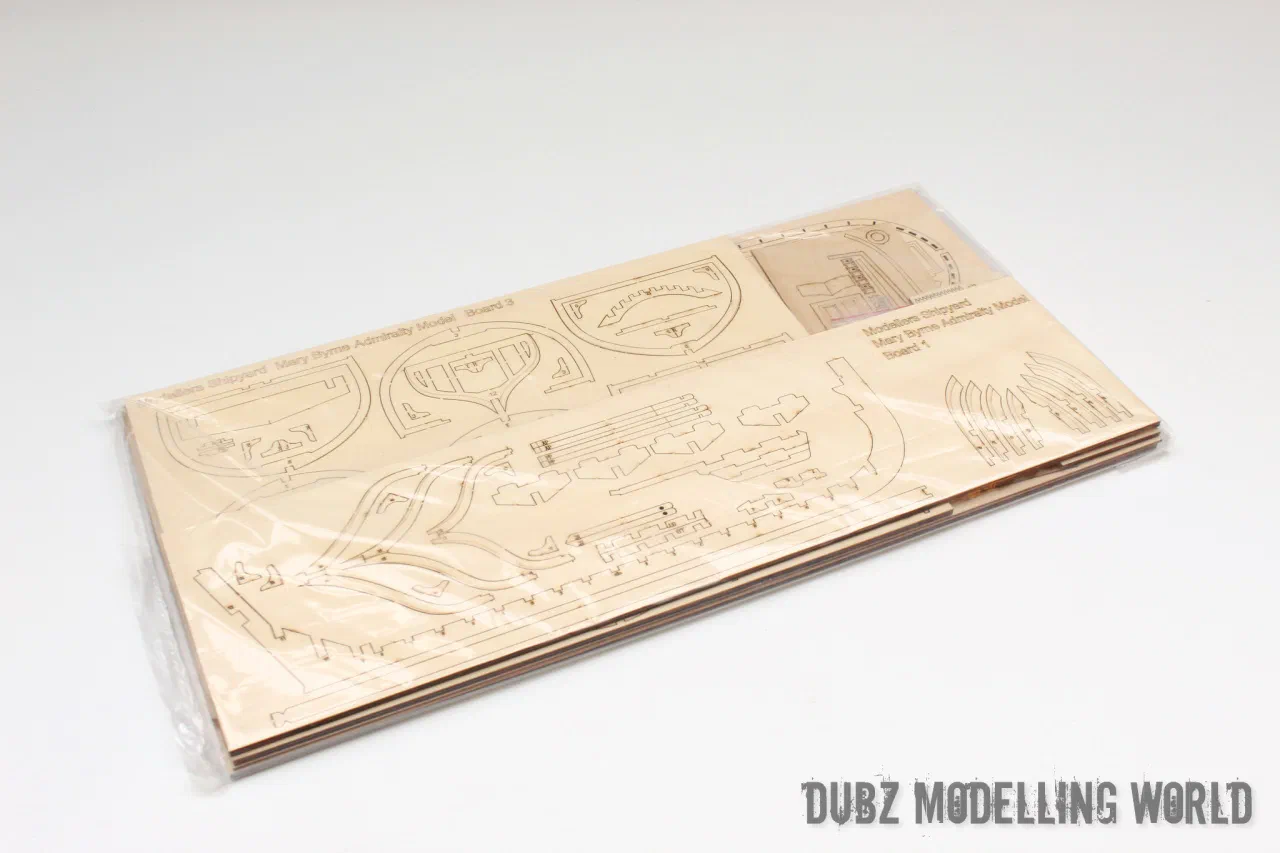
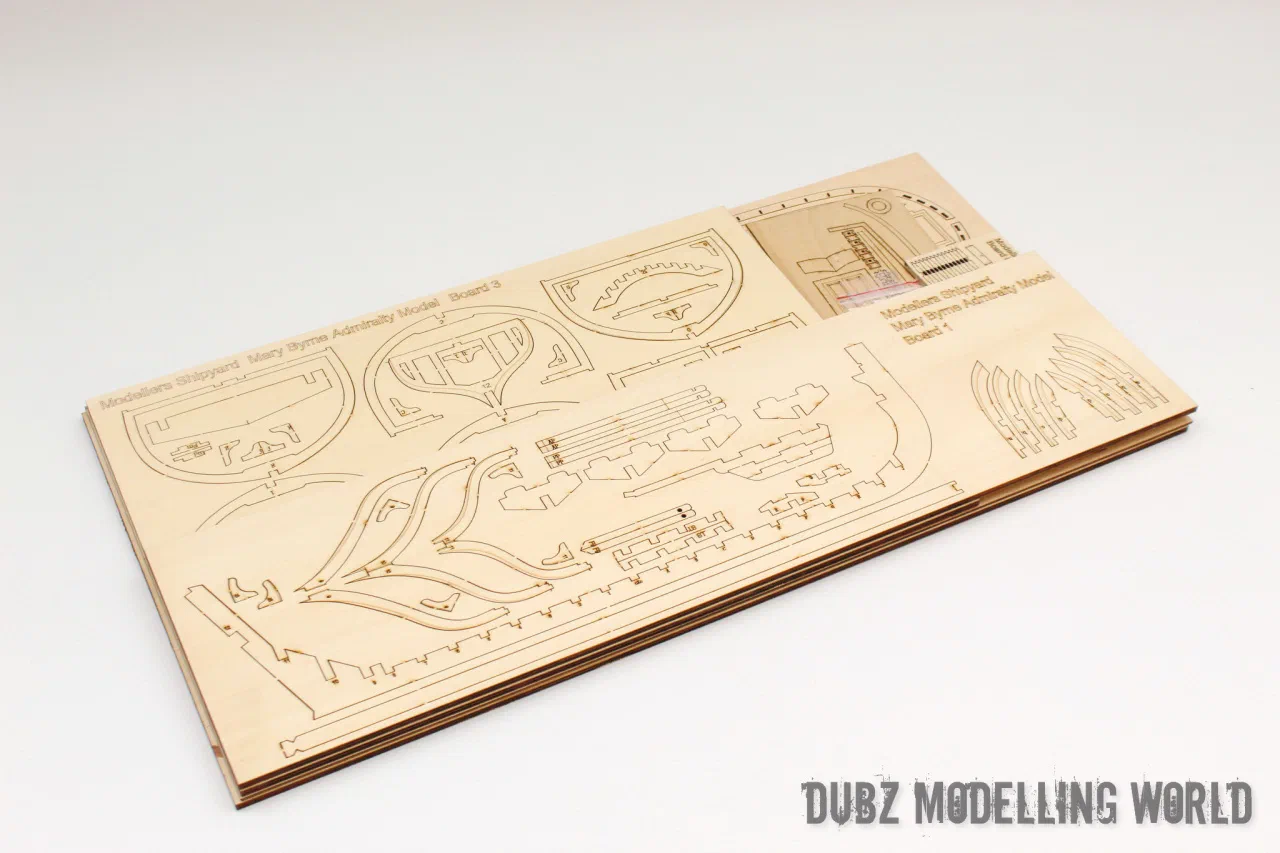
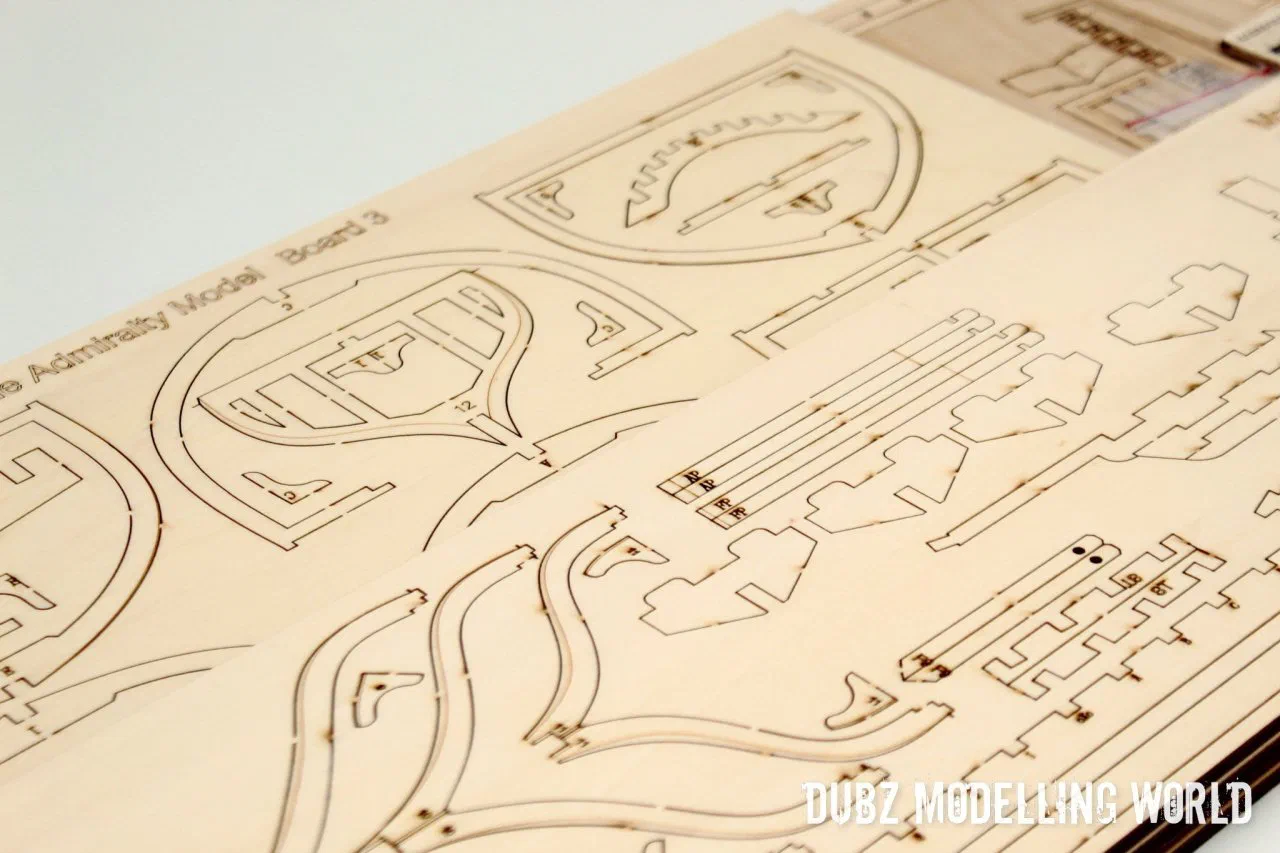
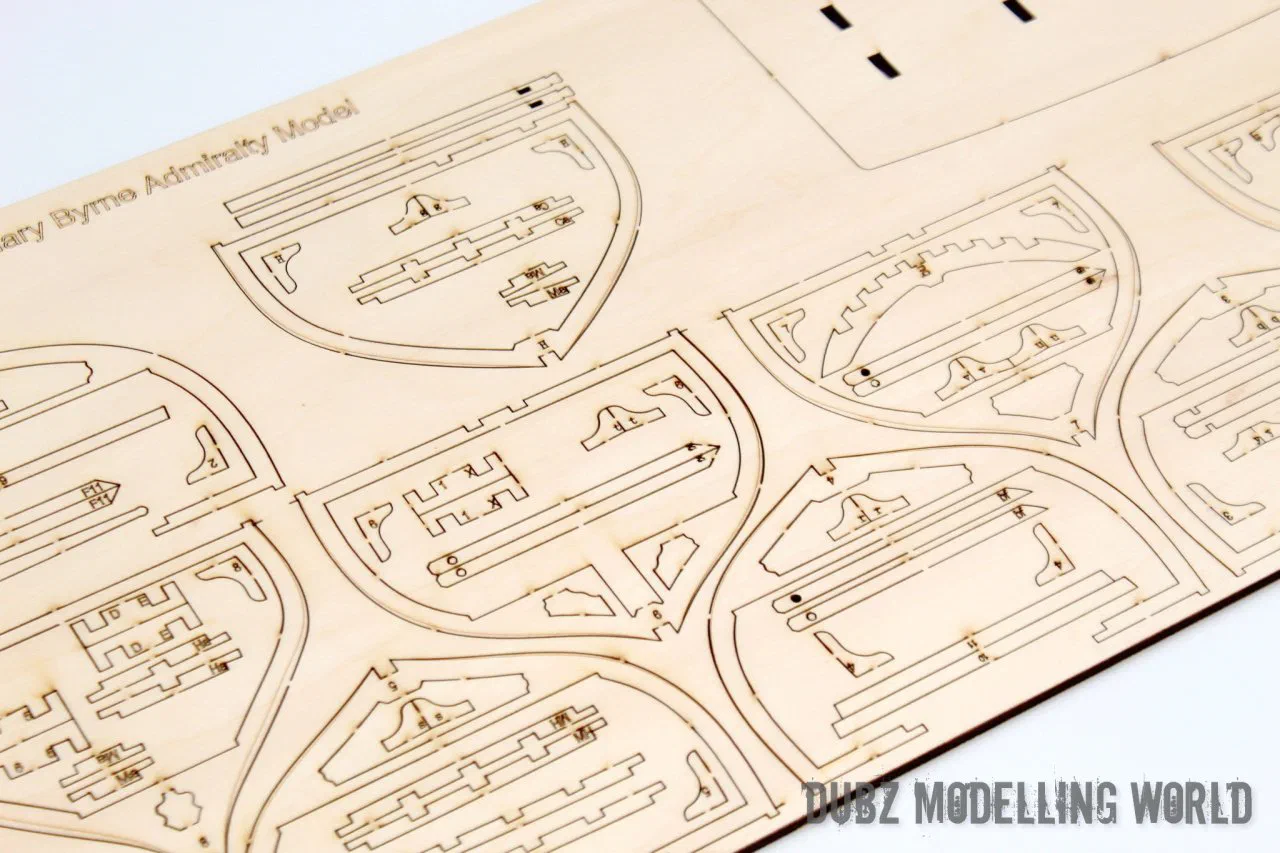
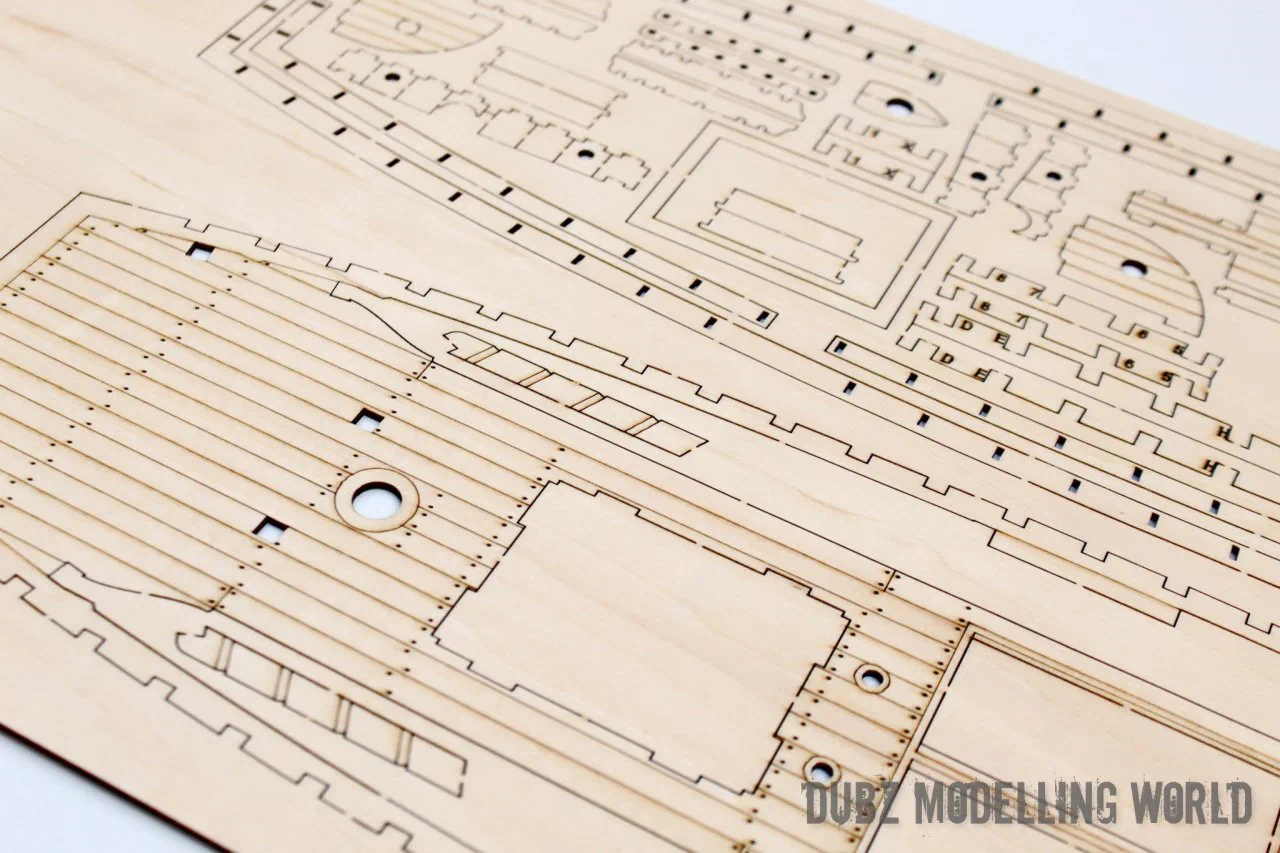
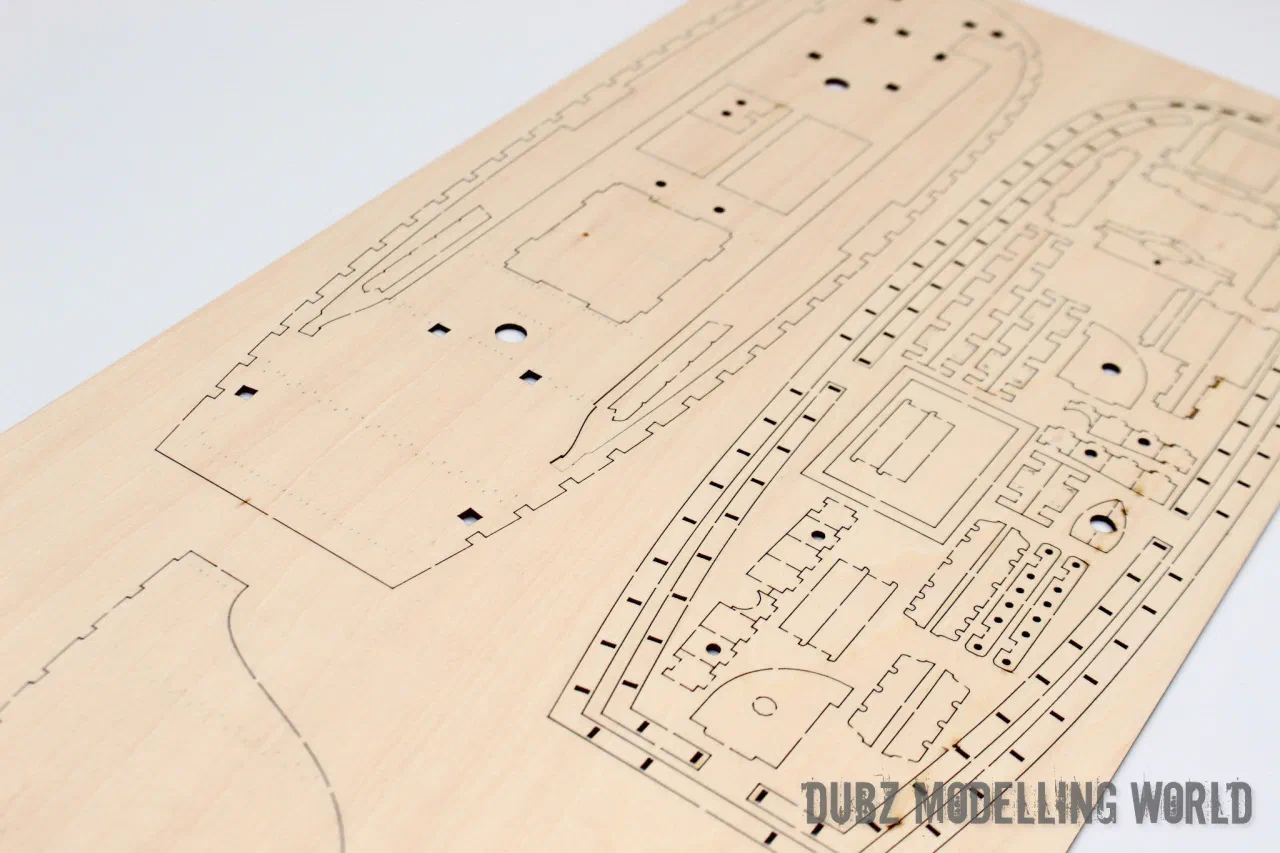
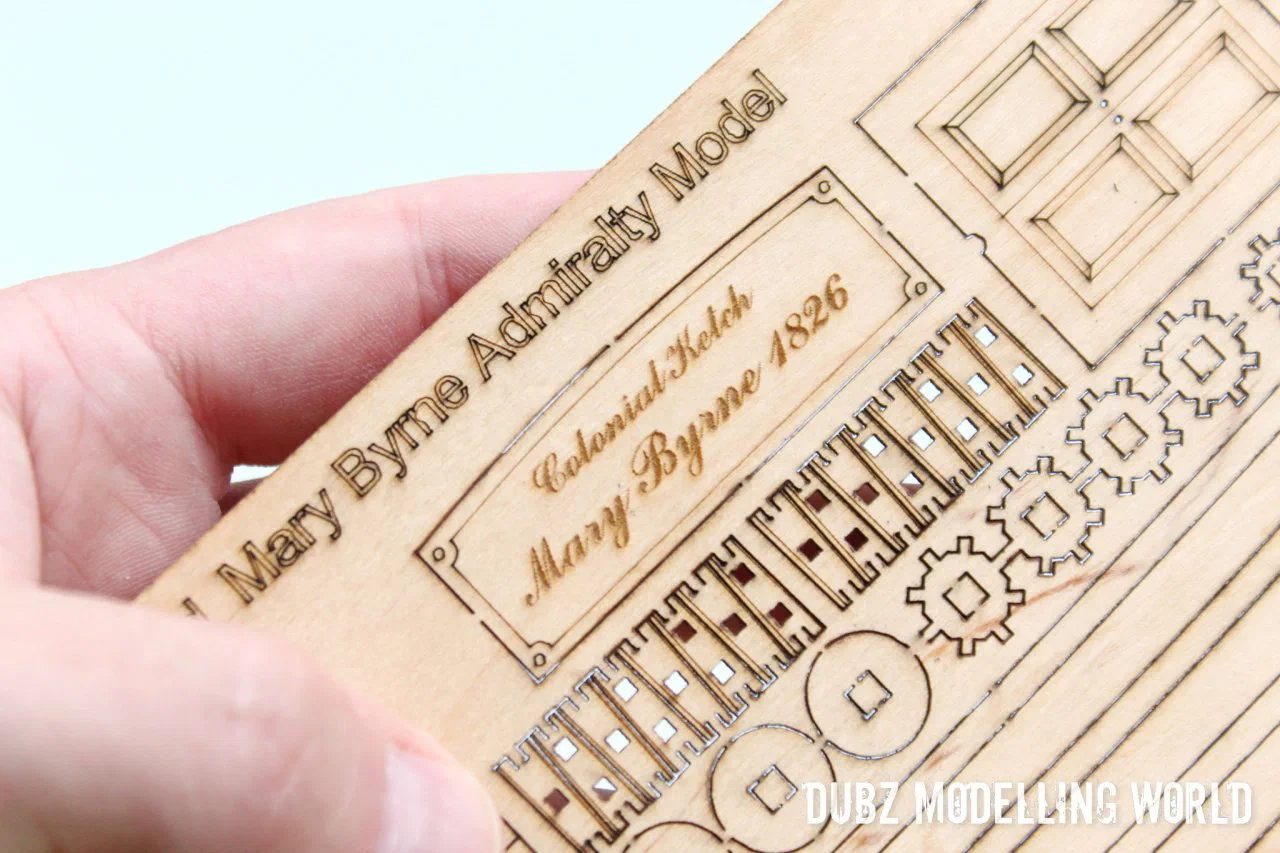
The plywood is perfectly lasered. On the back there are no laser marks at all – the laser is clearly well adjusted, and I like that. A feature unique to Modellers Shipyard: the frames carry laser-scored fairing lines, which make fairing easy, accurate and symmetrical. The cant frames have these lines too.
Small parts
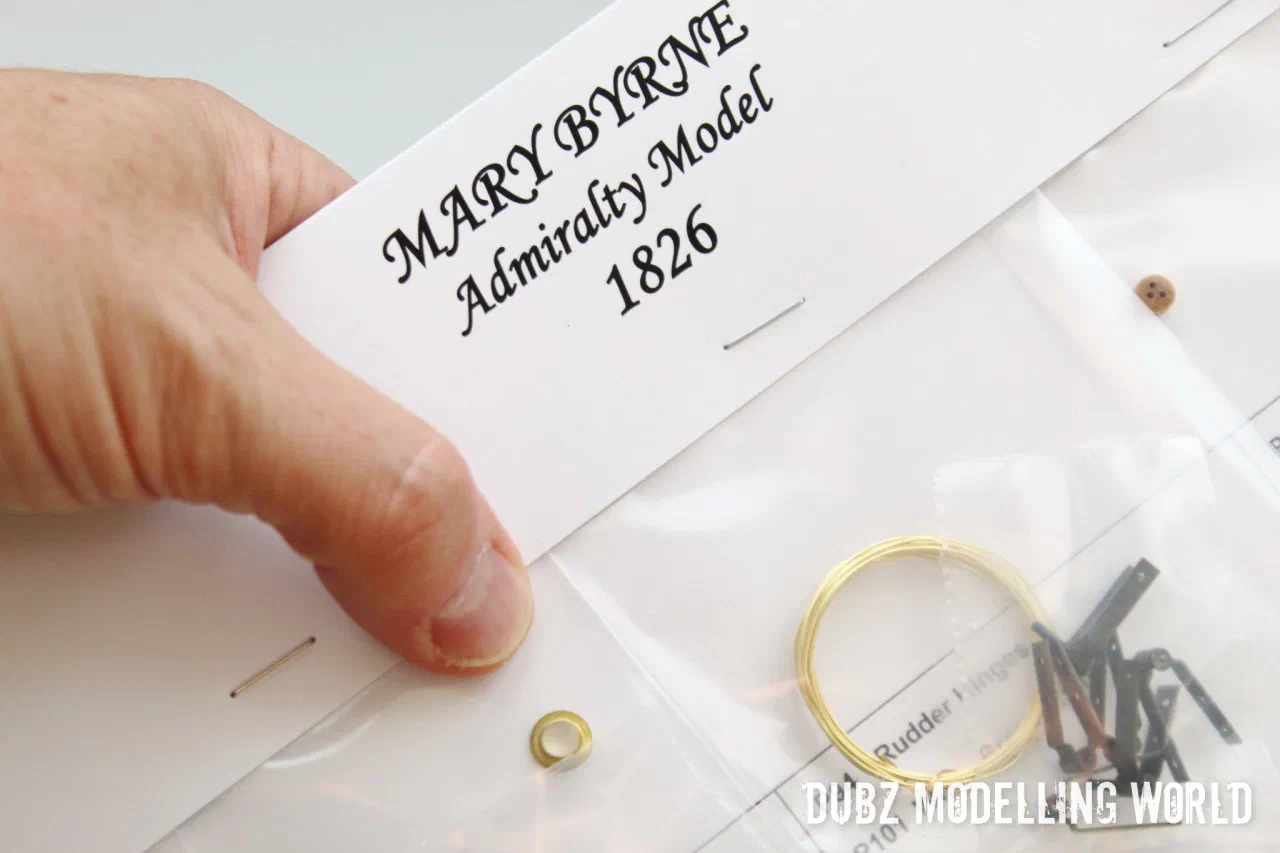
The small parts come sorted in bags.
Instructions
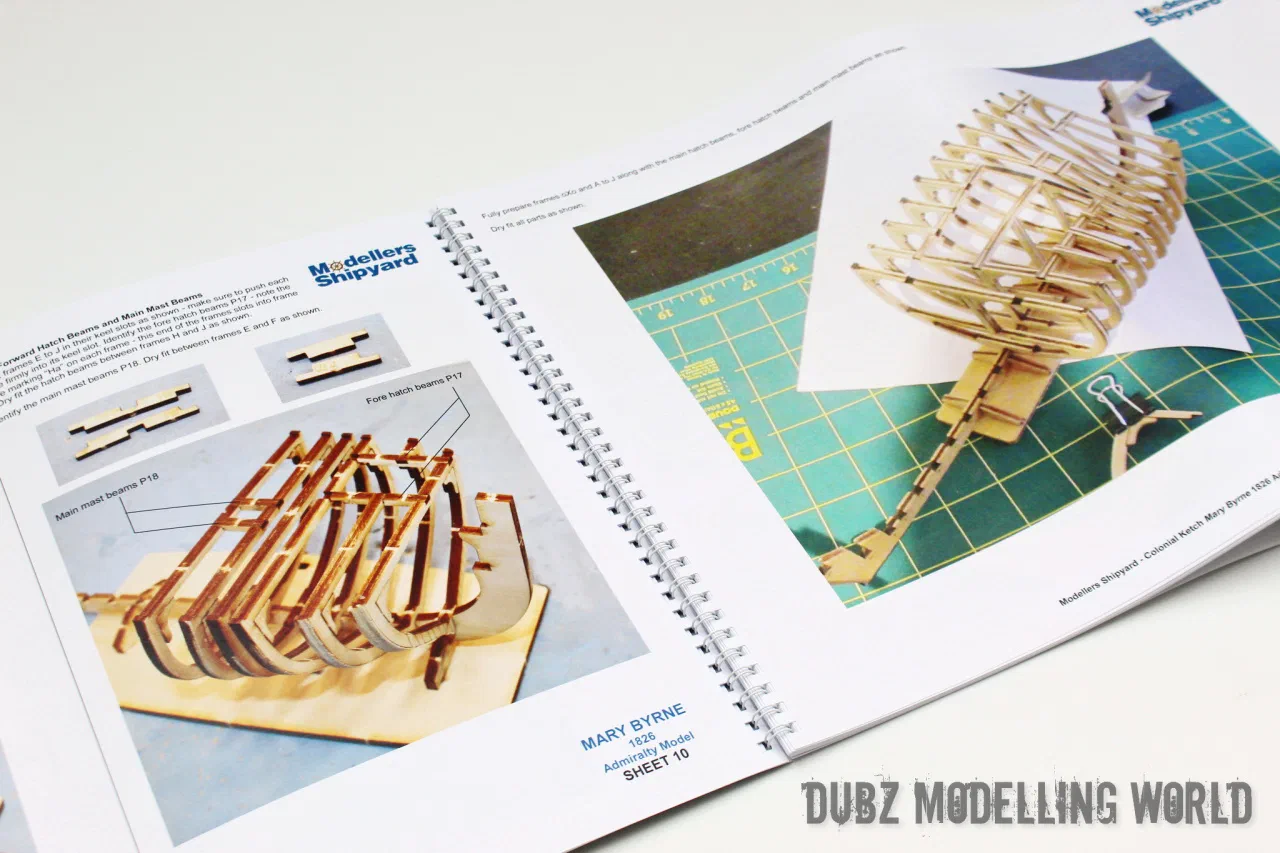
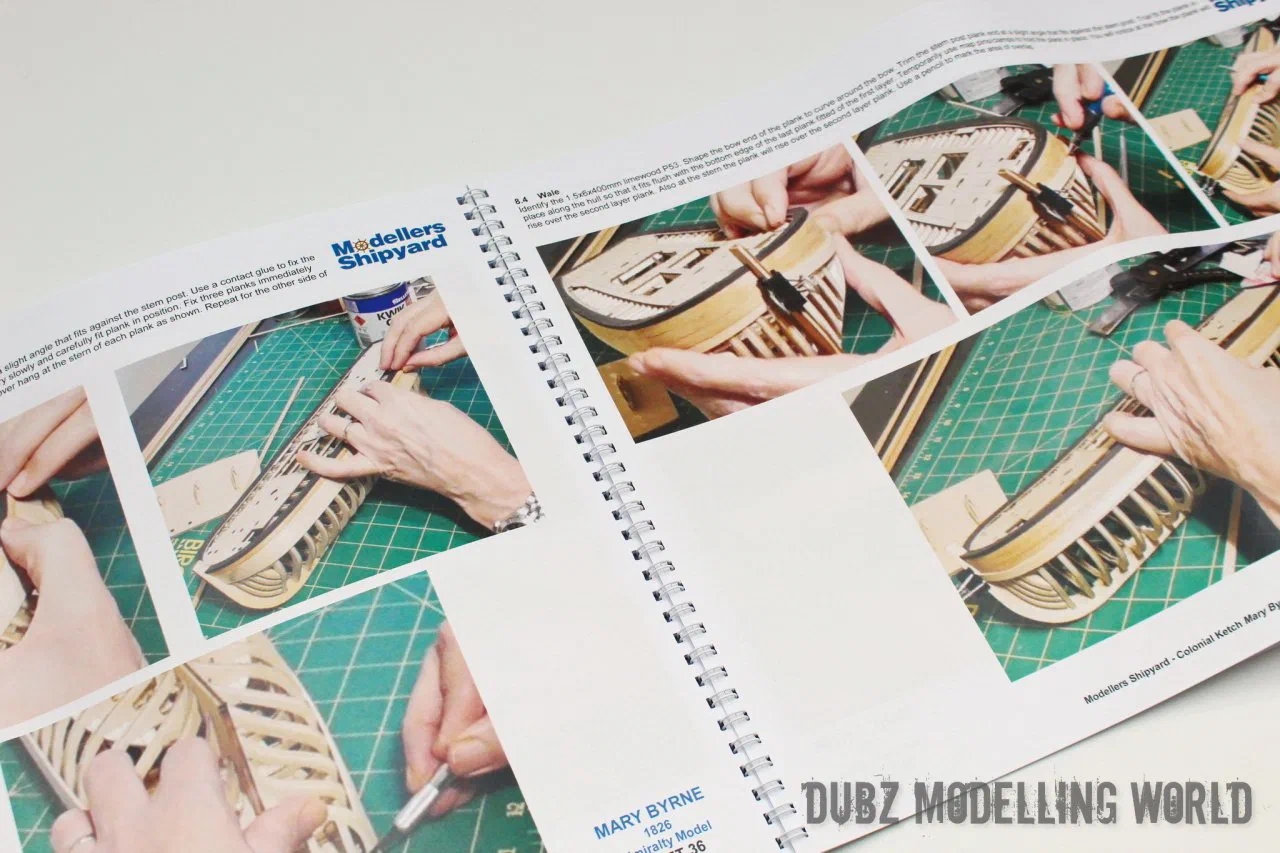
Instructions are essential for a good kit. There are no real plans – and they are not missed – but a great, large photo instruction booklet. In my opinion it would have been nicer to make the booklet a little smaller, so that it fits into the box without being folded.
Conclusion
This is a great kit of the Mary Byrne and a wonderful example of how dedicated companies with a lot of love for detail can develop affordable, innovative new kits. The first-class, well-lasered wood and the excellent illustrated instructions, which do their job well and leave few if any questions open, round it off. All parts are of very good to high quality, and you can feel the attention to detail.
That the visible frames are all plywood is certainly a question of price. You have to like it – it is not perfect – or think about painting the frames, red or white for example. I can understand that solid wood, perhaps yellow cedar, was not used, as it would make the kit considerably more expensive. The framing is also exemplary rather than historically correct, but I am sure beginners will enjoy it. What is nice is the potential for kit-bashers: so many possibilities to extend the interior.
Whether it is a beginner’s or – as the manufacturer says – an intermediate kit, it is worth building, and the instructions are excellent. Great job by Modellers Shipyard! My sincere thanks go to Modelers Central for sending this kit for review.
Pro
- First-class, cleanly lasered wood
- Laser-scored fairing lines on the frames
- Excellent illustrated instructions
- Good fittings
- Lots of potential for kit-bashing
Contra
- Visible frames in plywood
- Framing exemplary rather than historically correct
- The large booklet is folded to fit in the box