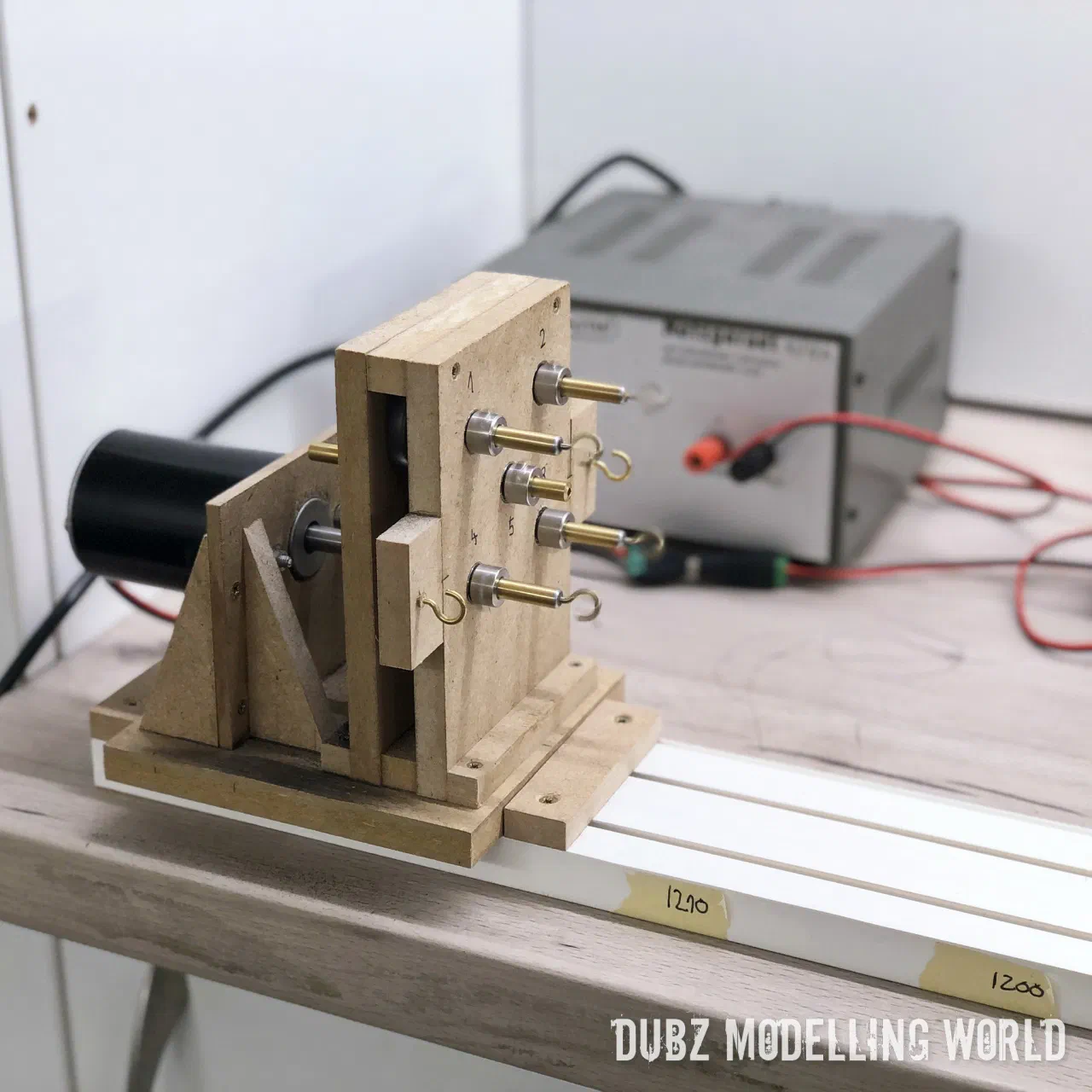
The machine
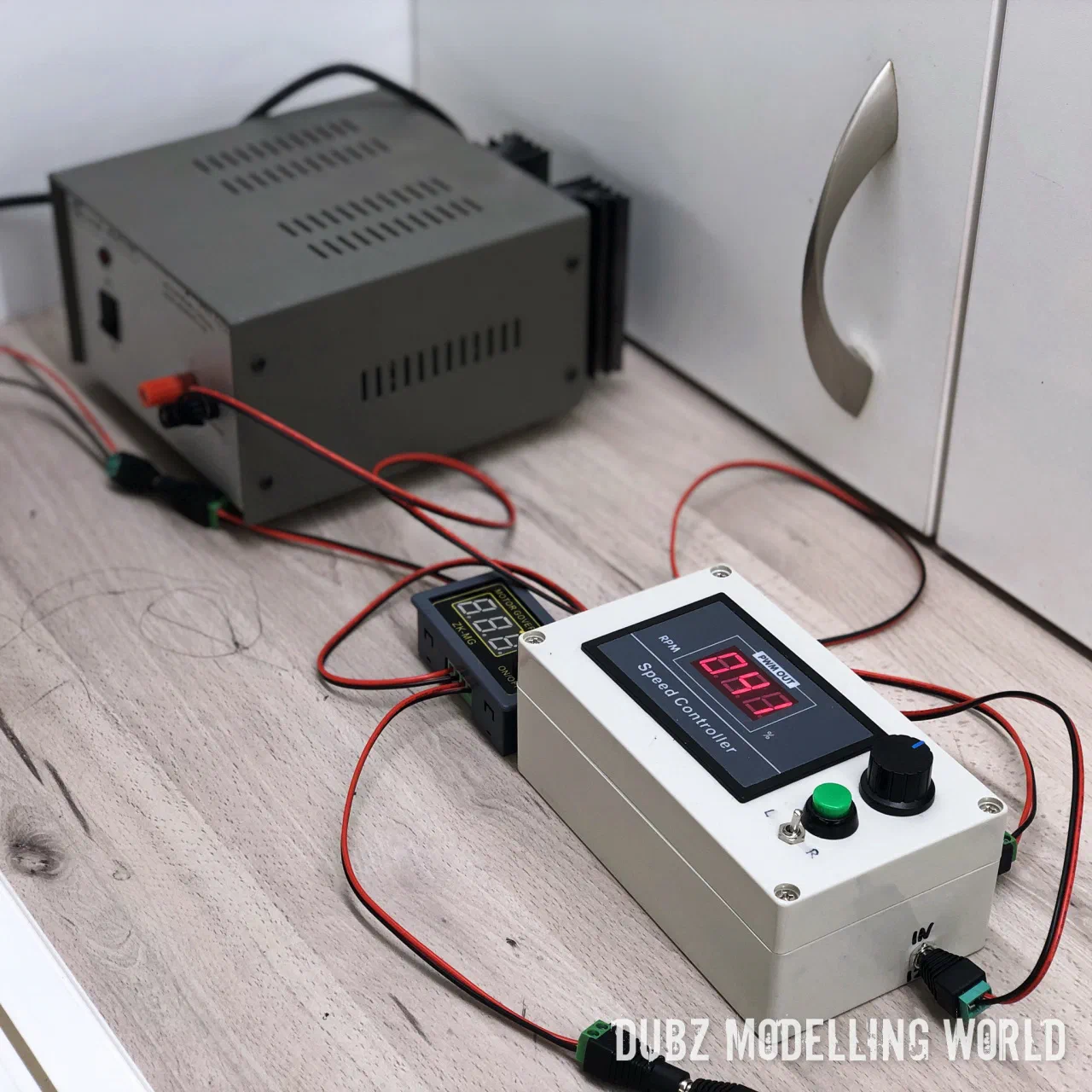
My ropewalk works with two motors and a sledge: one motor twists the individual threads into strands, the other lays the strands together into rope. The sledge, including its motor, weighs about 1.1 kg – and it is surprising how such thin yarn is able to pull it. For bigger diameters such as 2 mm you need a powerful motor and plenty of weight on the sledge. Most of the electronics came from eBay, many parts directly from China.
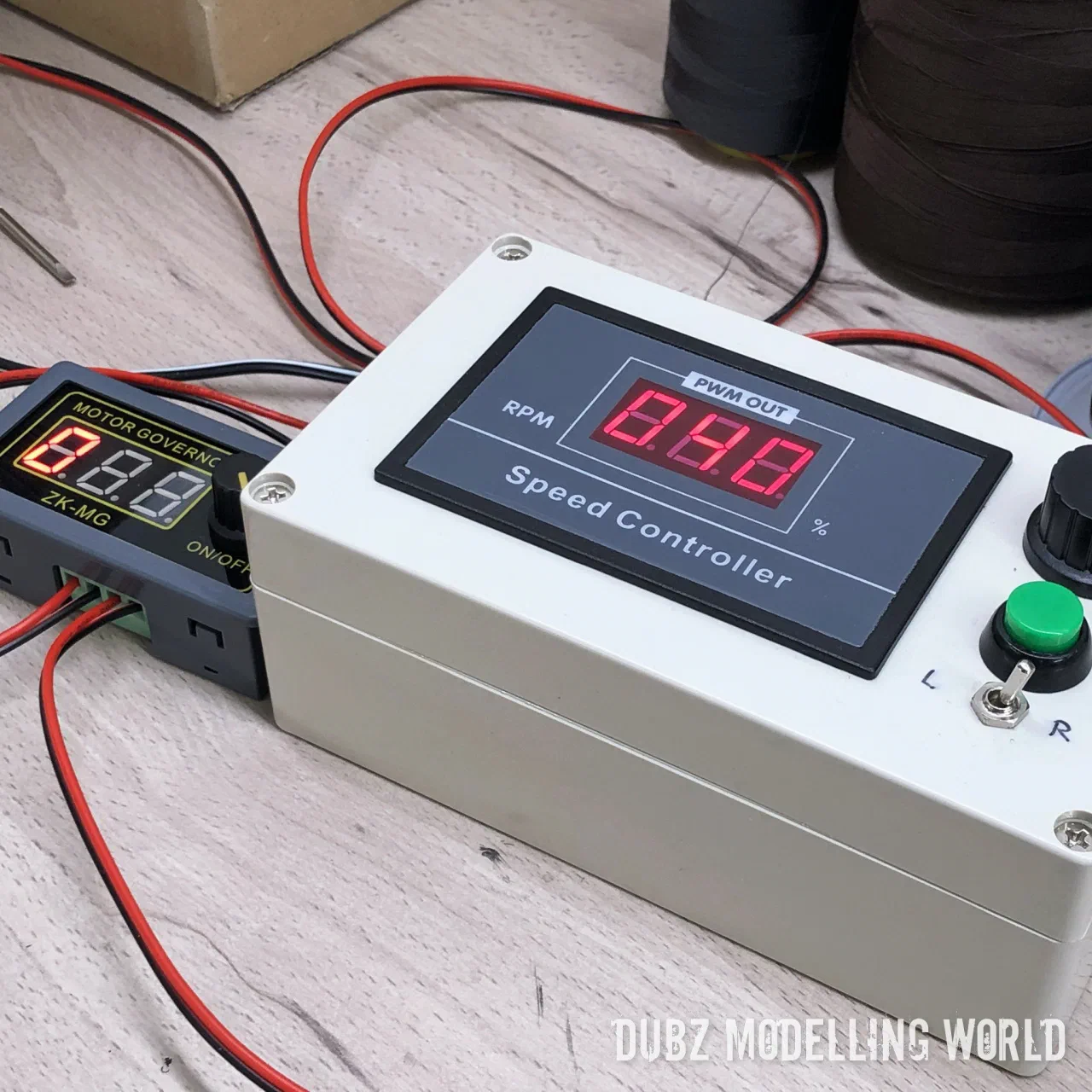
The ropes I make are about 1.7 m long. One rope takes around five minutes; the bigger diameters only three to four. Contrary to what one often reads, the big diameters are the easy and fast ones – it is the small ones that take time.
How a rope is laid
An example: a 3 × 2 rope from Gütermann Skala 360, colour 702.
- Motor 1 twists the two single threads of each strand. It runs at about 41 % in this phase. After a while the sledge starts to move.
- When the sledge has travelled a set distance – 15 cm for this recipe – I start Motor 2, which lays the strands into rope, and turn Motor 1 down to about 30 %.
- The top (the hoofd) starts to travel and the rope is laid. It is important that Motor 1 keeps twisting at reduced speed, so that the rope is laid evenly over its whole length.
- When the top reaches Motor 1, I stop it, which also stops the sledge. Motor 2 keeps on laying until the sledge starts to move again – the sign that twisting and laying forces are in balance.
Taken off the ropewalk this way, the rope has no residual twist and lies beautifully closed. Before cutting, the ends are secured with a drop of CA glue.


Small diameters
Up to now I had “beaten” every rope with a free-turning swivel. For the small diameters I switched to active beating with the second motor. From about 0.4–0.5 mm upwards the swivel does the job automatically, quickly and with a constant result over the whole length. Below that, the motor gives me the control over twist and lay that I need.
Mara or Skala?
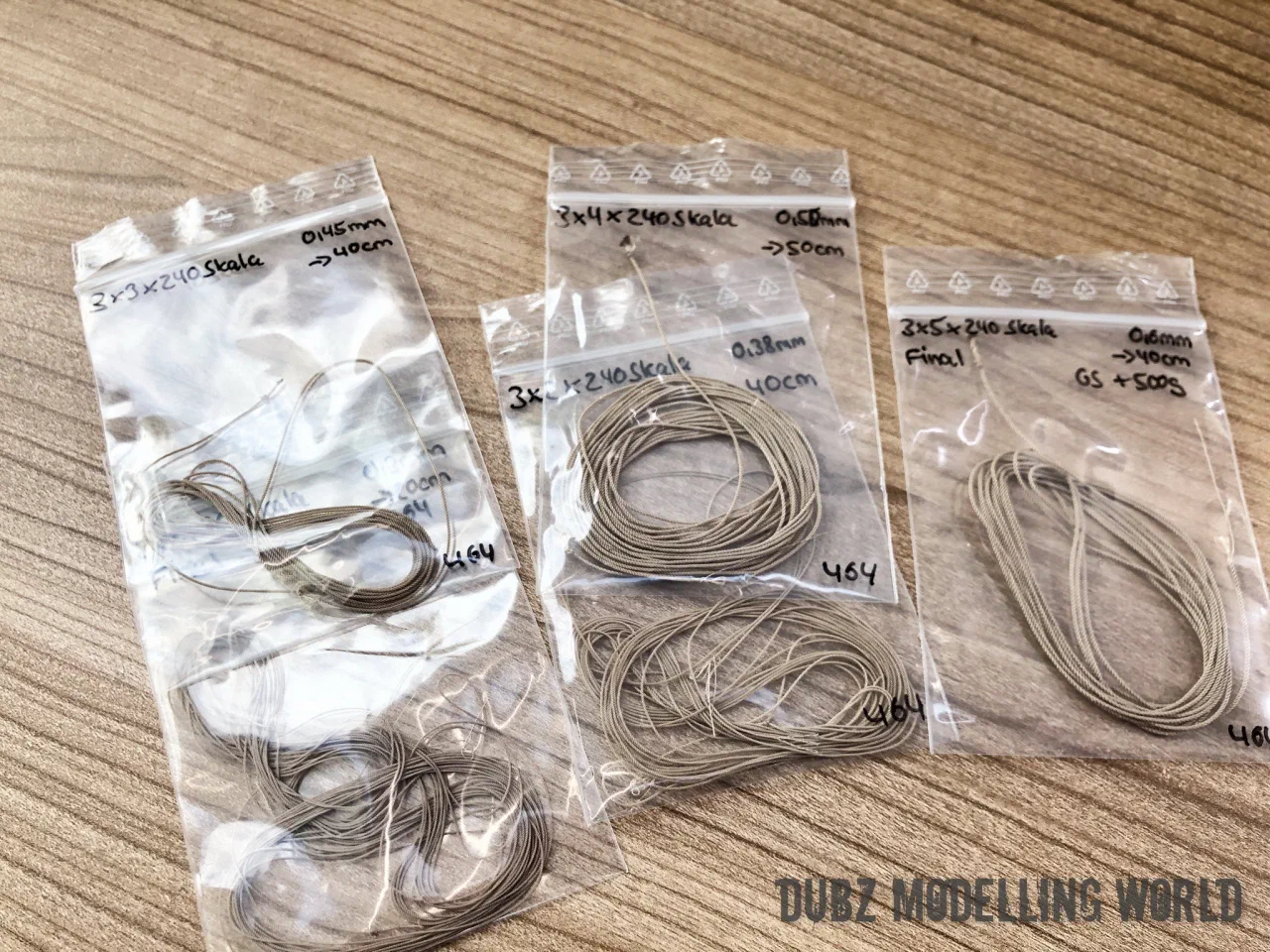
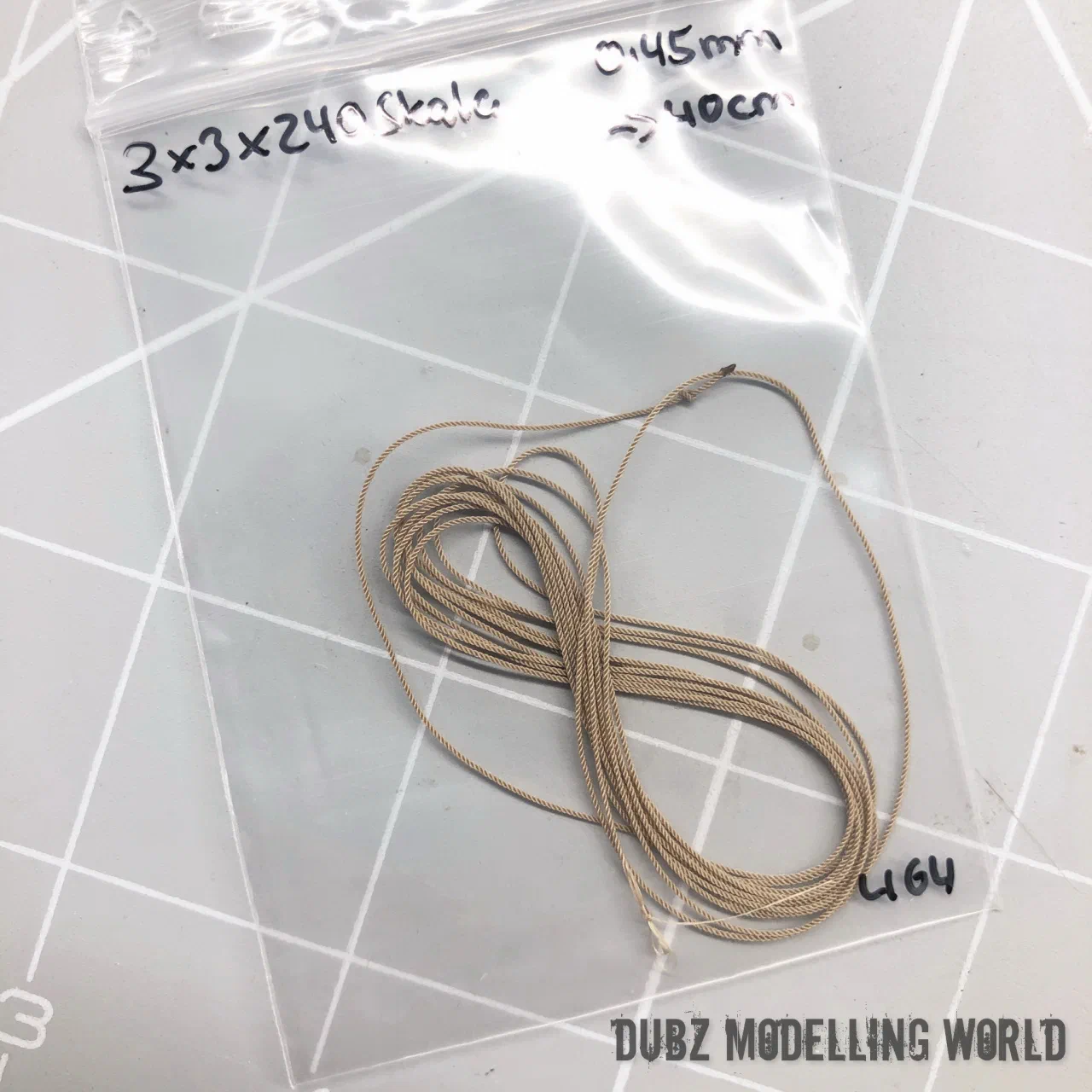
I started with Gütermann Mara 220 for 0.3 mm (3 × 1) and 0.2 mm (2 × 1) and was quite happy – until I tried Skala 360 for the same diameters. The difference is huge: Mara is much more fuzzy. So all my thin rope is now made from Skala. For beige (colour 464) I use Skala exclusively; for the bigger diameters in dark colours, Mara can be the better choice, because Skala can look a little too shiny there.
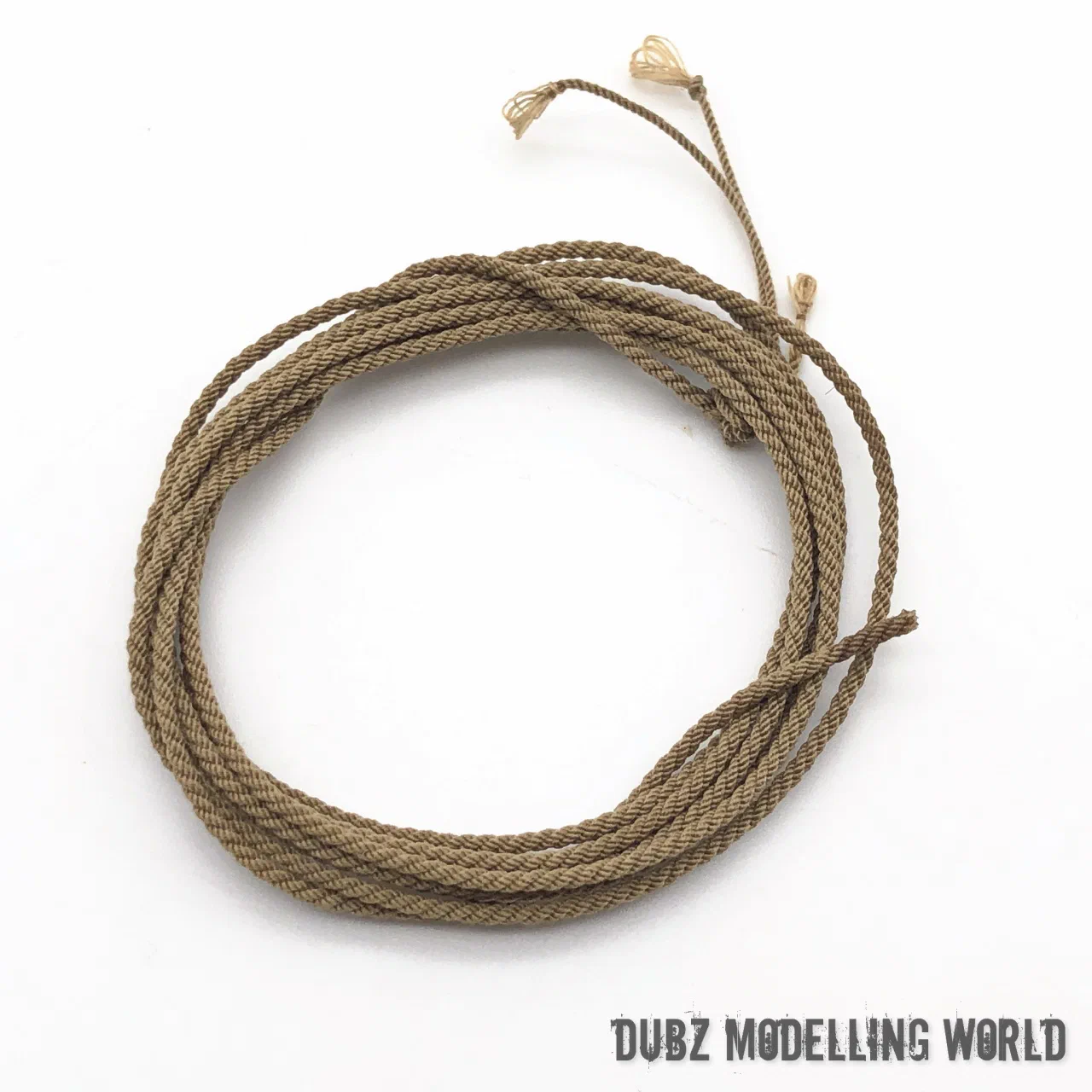
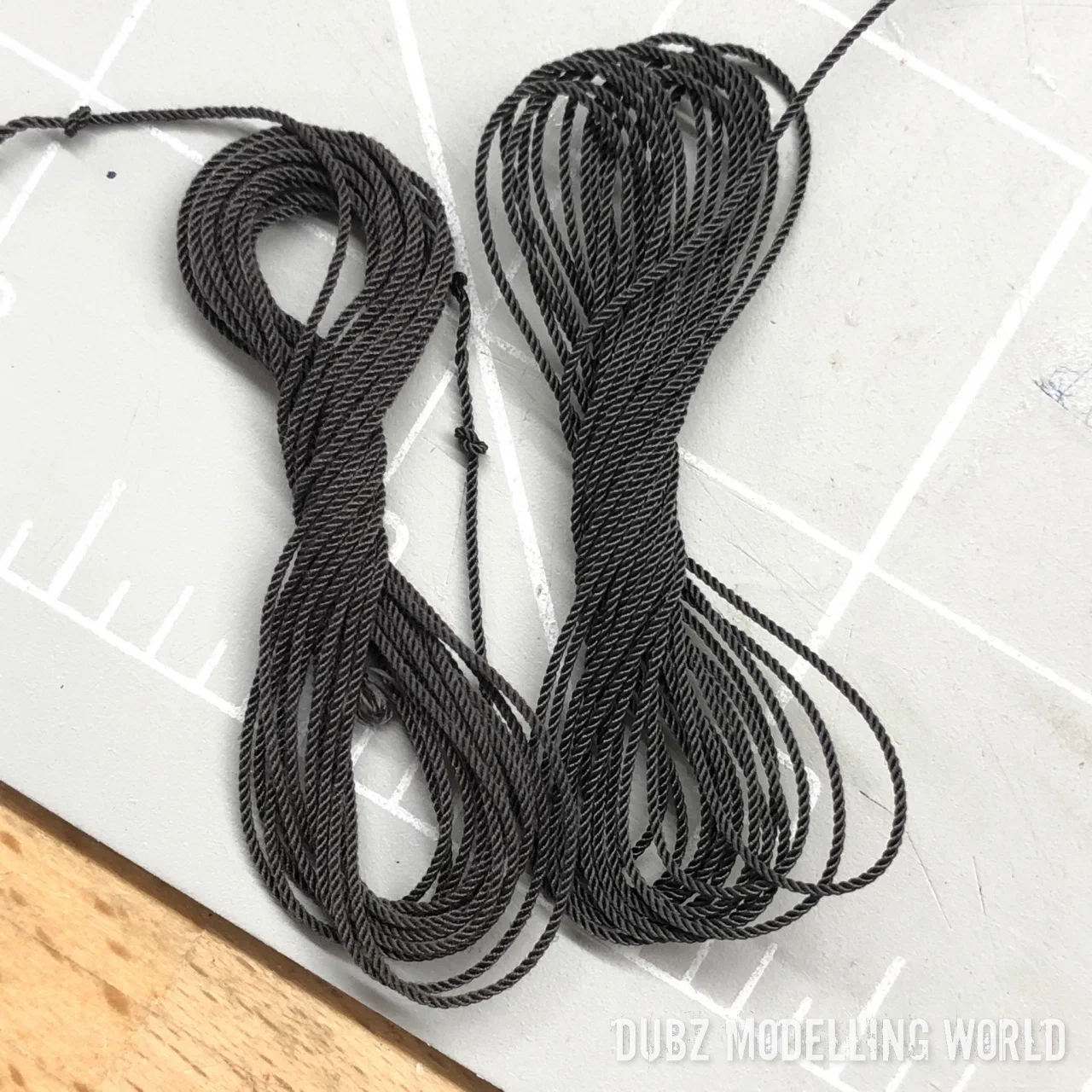
On the Polotsk, all running rigging is made of Skala. For the standing rigging I combine Mara and Skala – Skala for the very thin sizes of 0.2–0.4 mm. I deliberately don’t use black but anthracite (Mara 36, Skala 702): it doesn’t “pop” so much. For the schooner alone I made about 50 m of 0.3 mm and 25 m of 0.4 mm rope, and the 1.3 mm anchor cable.
Four strands
Good four-strand rope is difficult. Without a heart in the middle, the strands try to fill the empty centre and the rope can’t be laid hard – it “jumps around”. Four-strand rope is really only needed for shroud-laid rope on bigger vessels, so for most of what we need three strands are fine.
Baking
One more tip, against my own earlier opinion: bake the rope. Five minutes in the oven at 170 °C almost stopped the unravelling of a breeching rope – and even ropes that were laid very stiff become soft and flexible. Since then I highly recommend it.