
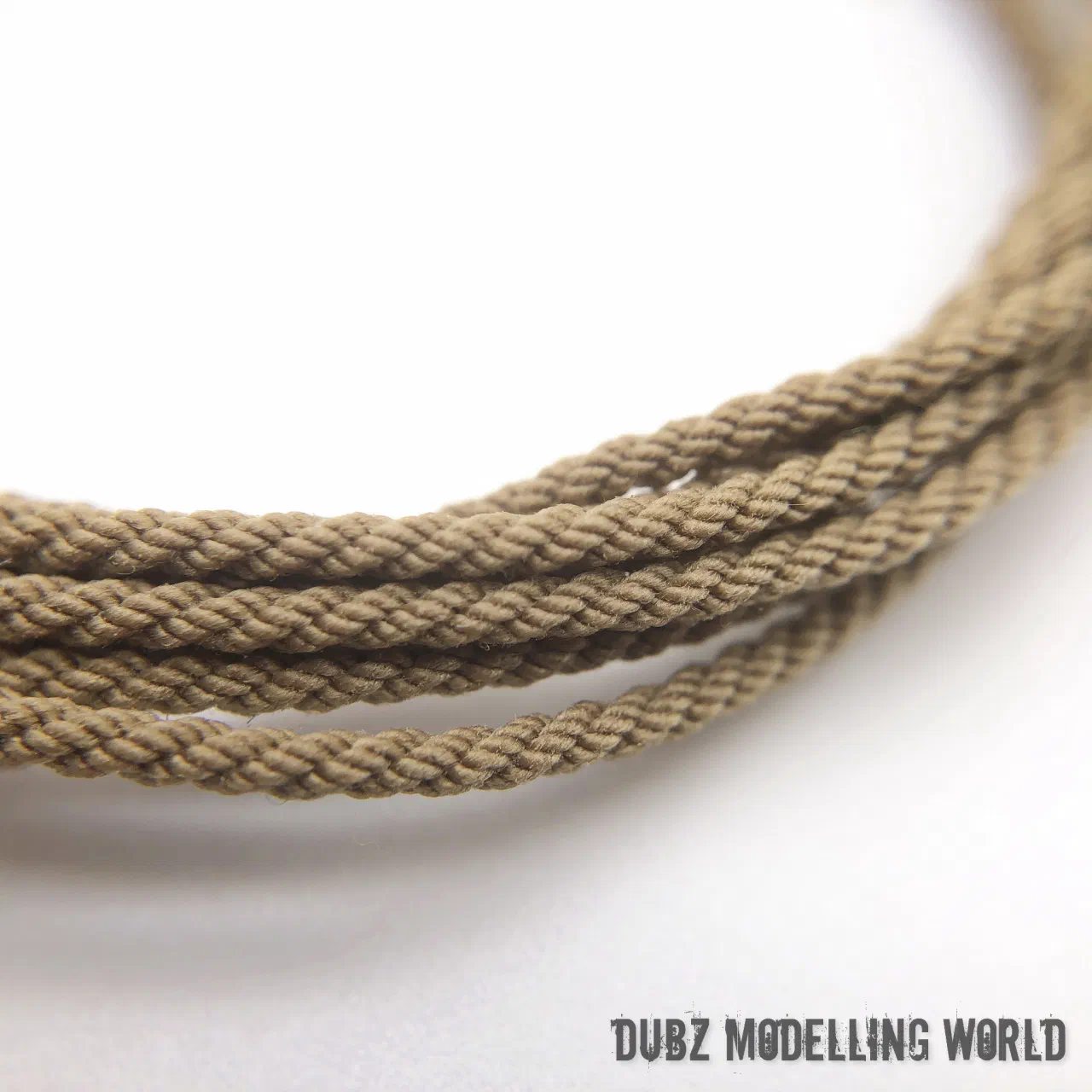
Abstract
There seems to be much confusion among model makers over the ways in which rope was laid for its various functions on board a ship. The three general ways – hawser-laid, shroud-laid and cable-laid – are clear in their definitions and uses. The confusion arises when modellers use the wrong lay of rope for its different uses. Many have claimed that the shrouds of 17th-, 18th- and mid-19th-century ships were usually made of left-handed plain rope. That is simply not correct. Only cable-laid rope is laid left-handed. It is true that cable-laid rope was sometimes used for the shrouds of large warships, but this was the exception. The shrouds usually used – especially in merchant shipping – were shroud-laid: four strands around a central line or heart, laid to the right.
I have seen many contemporary and modern models, even by world champions, with left-handed running rigging, and sometimes with a mix of left- and right-handed running rigging on the same model. This made me wonder why, as it seems illogical at the very least. There have also been many discussions about the breeching ropes of guns and carronades – were they cable-laid or left-handed hawser-laid?
The bottom line is that there are a lot of contradictory statements that are almost never backed up by sources. Some wrong ideas have simply taken root as “correct”. This study tries to clear the air about the different uses of rope and to show that hawser-laid rope, used for all running rigging, was and is always right-handed, Z-laid rope. The widespread use of left-handed running rigging or left-handed shrouds on models is historically wrong – unless they are made as cables or cablets.
Rope basics
Two definitions after Paasch
Captain H. Paasch’s dictionary From Keel to Truck (1901) gives the terms in English and German side by side, which makes it particularly useful:
Strand (of a rope). A number of rope-yarns etc., when twisted together make up a strand; three or more strands laid together form a rope. – Ducht eines Taues; Tauducht.
Strand (of a cable-laid rope). One of the three hawser-laid ropes employed to form a cable-laid rope. – Kardeel.
The parts of a rope
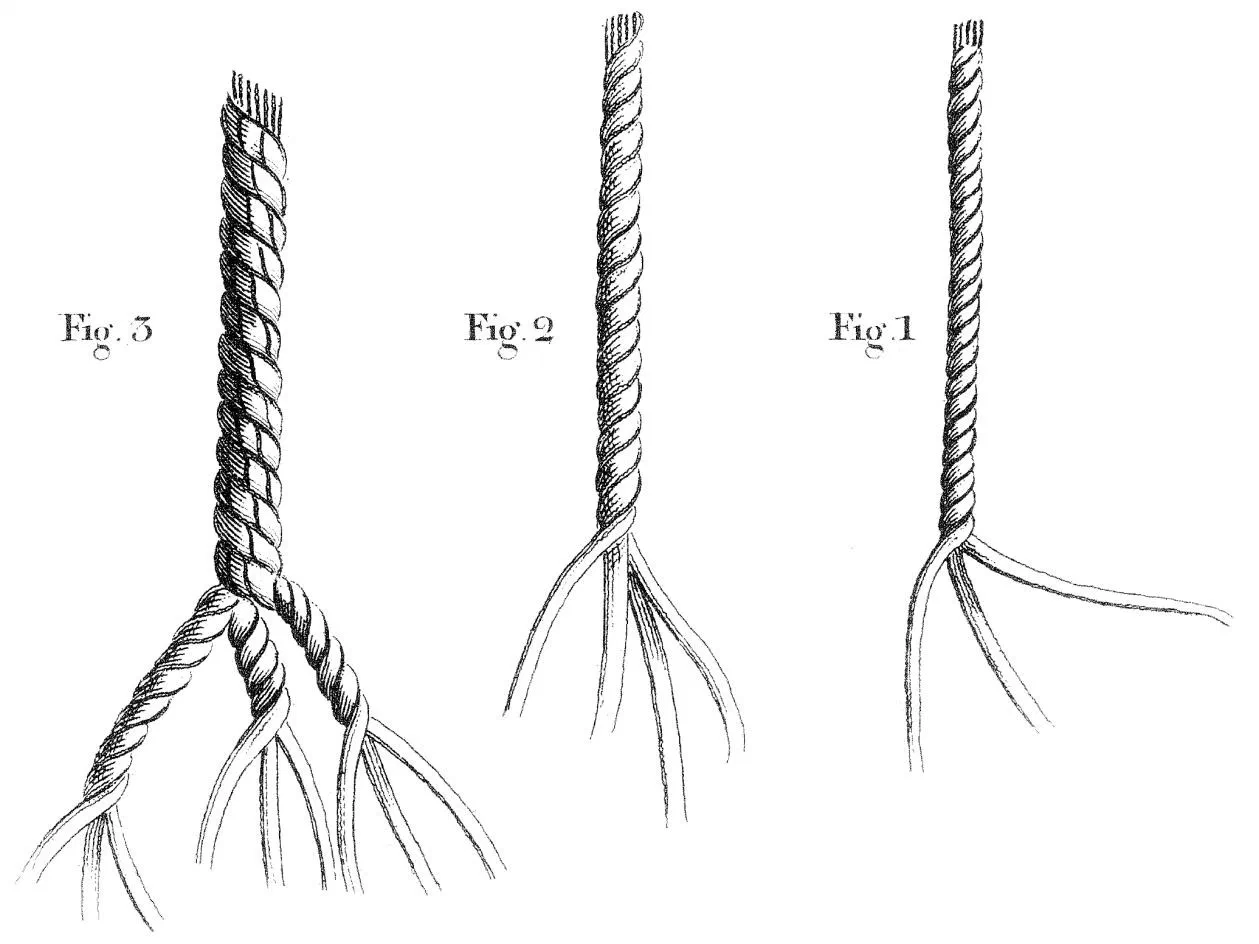
A rope is built up in levels, and on each level the direction of twist is reversed. Yarns are spun from fibres, strands are formed from yarns, and the strands are laid into a rope – always in the opposite direction to the level below, so that the twist on one level holds the next one together. Following Damien Sanders, the historical ropemaker’s terms are: yarns are spun, strands are formed, hawsers are laid and cables are closed.
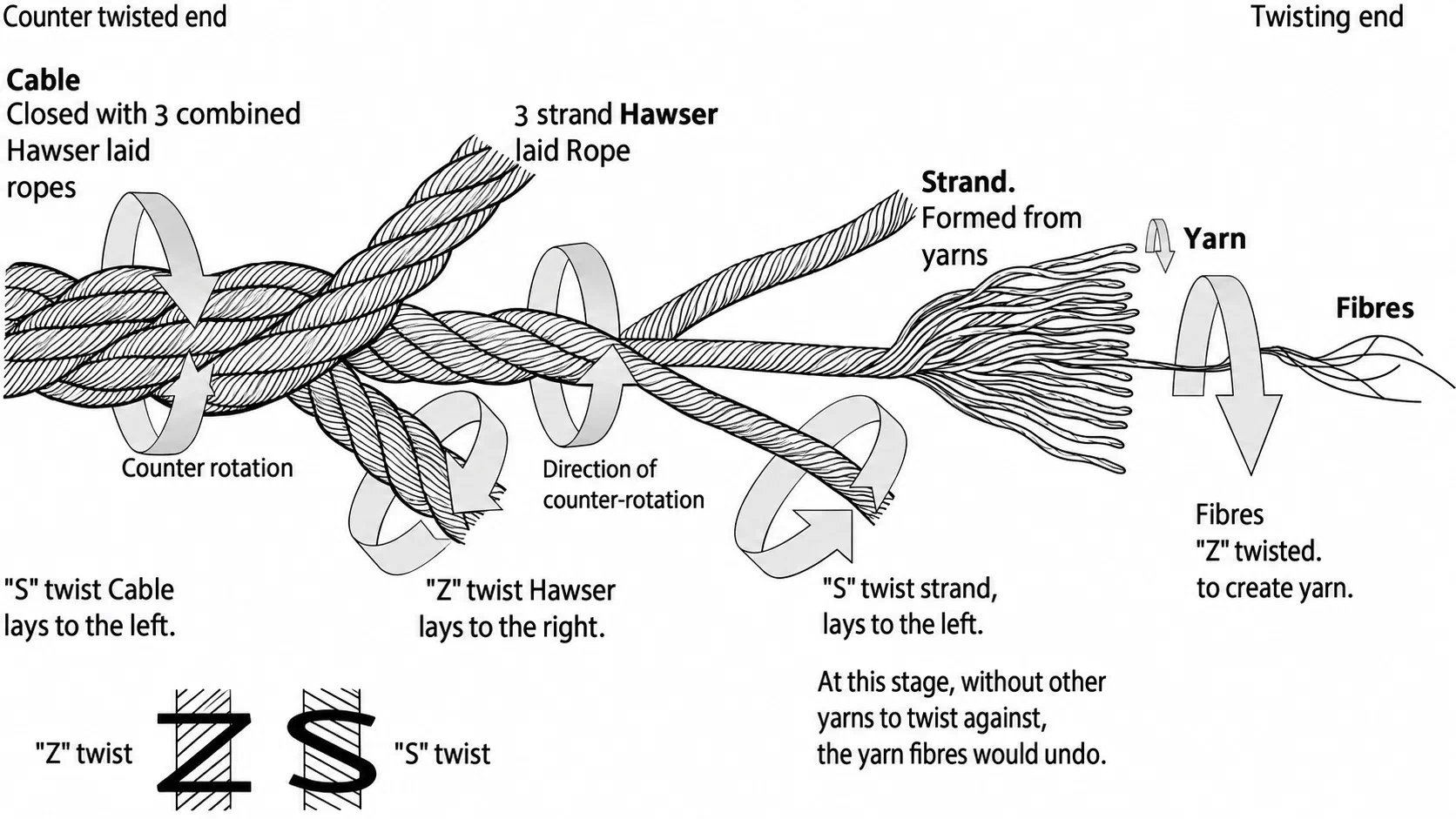
This has a practical consequence. To make a left-handed hawser, every level below it – yarn and strand – would have to be spun and twisted the other way round as well. A ropewalk making both would need twice the effort and twice the stock of yarn. That alone makes a general use of left-handed hawser-laid rope rather unlikely.
A source of misunderstanding: the wording changed around 1847
Around the middle of the 19th century, American usage changed. William Brady writes in The Kedge Anchor that “hawser-laid and cable-laid rope is all the same”, and Robert Kipping explains that the former hawser-laid rope is now called “common” or “plain” rope. Anyone reading a source from after about 1847 with the meaning of the 18th-century terms in mind will draw the wrong conclusions.
How to tell left from right
Hold the rope vertically in front of you. If the strands run like the middle stroke of the letter Z – from top right to bottom left – the rope is right-handed (Z-laid). If they follow the middle of the letter S, it is left-handed (S-laid). It works the same from either end.
Known terms in English and German
| Rope | Synonyms (English) | German |
|---|---|---|
| Hawser-laid rope | Z-laid, Z-twist, right-handed, laid with the sun, common rope, plain rope | Trossenschlag, Z-Schlag, rechts geschlagen aus drei Duchten |
| Cable-laid rope | Cable, S-laid, S-twist, left-handed, laid against the sun | Kabel, Kabelschlag, S-Schlag, links geschlagen aus drei Trossen (Kardeelen) |
| Shroud-laid rope | Four strands with a heart, laid right, laid with the sun | Wantschlag, vierschäftiges Tau, 4 Duchten mit Seele rechts geschlagen |
A word about twist
One reason for many misunderstandings is the question of what left and right actually refer to. There is a difference between the direction in which a rope is laid on the ropewalk and the result of the laying. When we speak of a right-handed hawser, we mean the result – a rope that was in fact laid in the left-hand direction on the ropewalk.
The ropemaker B. Keith explains this very clearly. “S twist” and “Z twist” are modern designations of ASTM International and the ISO, adopted in the 20th century precisely to avoid the confusion of terms such as right, left, clockwise and anticlockwise. S and Z describe the shape of the finished rope; right and left twist describe the process of making it – and that depends on one’s point of view. Whether the crank turns clockwise or the fibres are twisted clockwise by hand gives opposite results. Older texts speak of ropes laid “with the sun”, which corresponds to clockwise – but even that depends on whether one stands at the crank or faces it. Keith also points out that the word clockwise itself did not exist before about 1800.
For our purposes, the conclusion is simple: always state the result – S or Z, left- or right-handed rope – and not the direction in which a crank was turned.
Contemporary definitions
David Steel, The Elements and Practice of Rigging and Seamanship (1794)
Steel is the most important English source for the late 18th century, and he is precise about rope:
p. 54: “CABLES, ropes made of nine strands, that are nine inches and upwards in circumference.”
p. 55: “HAWSERS, ropes made of three or four single strands. When made of four strands it is called shroud-laid, and is used in merchant-ships.”
p. 55: “HEART, a strand slack twisted, used in some four-strand ropes it is run down the middle, to fill the vacancy that would otherwise occur, and thereby forms a round.”
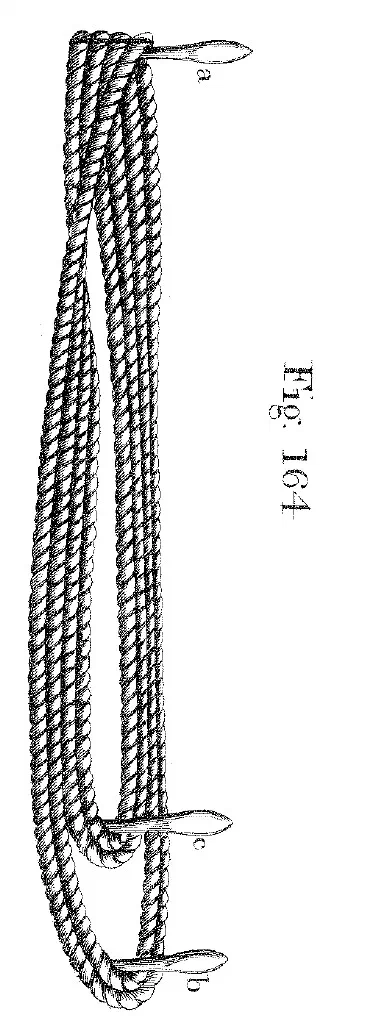
On stays (p. 61), Steel describes four strands with a heart running through the middle, “which keeps the rope true”, and adds: “Main, fore, and mizen, topmast, and some topgallant-mast, stays are cable-laid.” On running rigging (p. 62) he is unambiguous: “Ropes, from 2 inches to the largest size, for running rigging, are hawser-laid, and made of 3 strands on a sledge.”
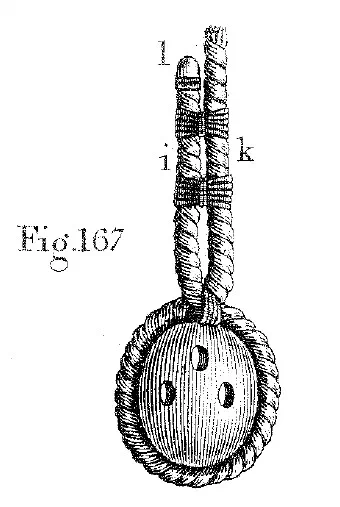
Further definitions complete the picture. A cablet is “any cable-laid rope under nine inches in circumference” (p. 163); the messenger is “a cable-laid rope, used to heave in the cable” (p. 170); bowsprit shrouds “are made of cable-laid rope” (p. 187); and a stay “is cable-laid in large ships, and hawser-laid in small ones” (p. 190). Finally, deadeyes are turned into the lower ends of the shrouds “left-handed, (being cable-laid rope,)” (p. 198) – the direction of the turn simply follows the lay of the rope.
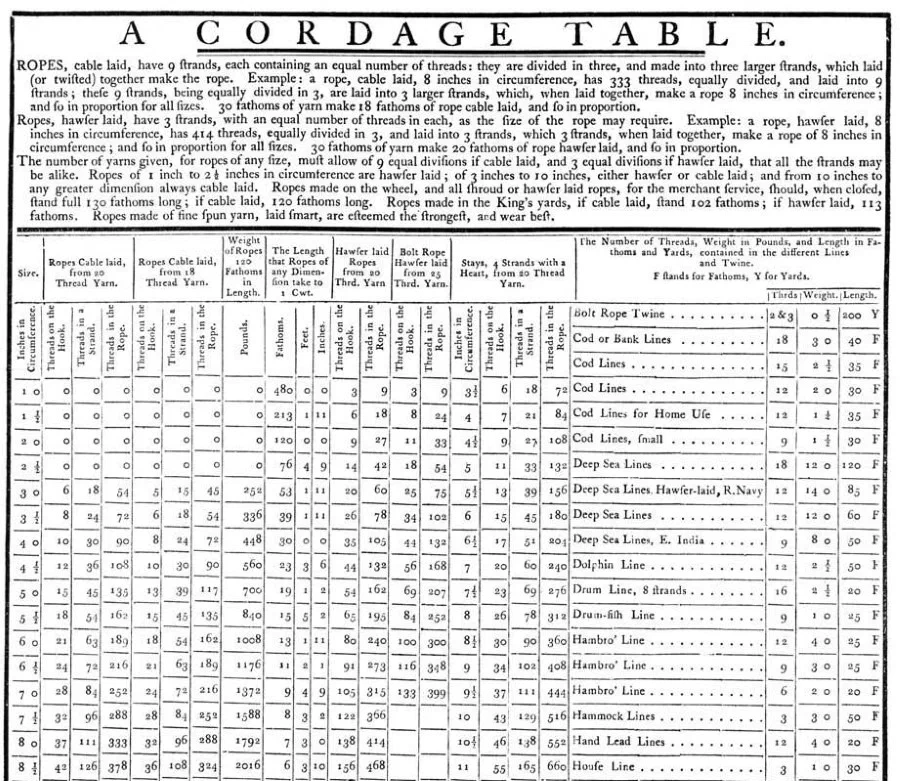
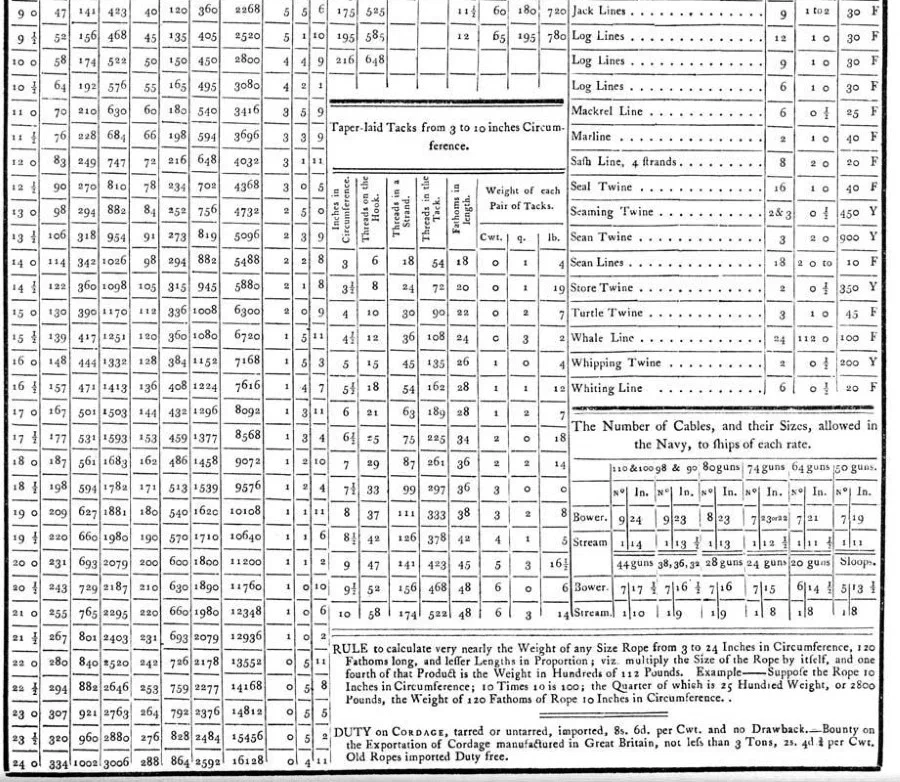
Steel also gives a detailed rope table for the Royal Navy. It lists no left-handed hawser-laid rope at all – and does not even mention one. If such a rope had been in regular use, it would certainly appear there.
Darcy Lever, The Young Sea Officer’s Sheet Anchor (1808)
Lever describes the three kinds of rope in the clearest possible way (p. 2):
“A HAWSER-LAID ROPE is composed of three single strands, each containing an equal quantity of yarns, and is laid right-handed, or what is termed with the sun. A SHROUD-LAID ROPE consists of four strands of an equal number of yarns, and is also laid with the sun. A CABLE-LAID ROPE is divided into nine strands of an equal number of yarns: these nine strands being again laid into three, by twisting three of the small strands into one. It is laid left-handed, or against the sun.”
And on shrouds (p. 22): “SHROUDS sometimes are cable-laid; but they are now generally shroud or hawser-laid.” The deadeye is turned in “left-handed, if cable-laid, right-handed, if hawser-laid”.
William Brady, The Kedge Anchor (1847)
Brady already reflects the changed American terminology: for him, hawser-laid and cable-laid rope “is all the same” – nine strands, laid up left-handed. The three-strand rope is now “common or plain rope”. He also mentions that plain-laid rope laid up left-handed is called back-laid rope – one of the first references to a left-handed plain rope at all.
Robert Kipping, Rudimentary Treatise on Masting, Mast-Making, and Rigging of Ships (1853 and 1921)
Kipping (p. 70) is one of the very rare sources that mention left-handed plain-laid rope: “When plain-laid rope is laid up left-handed, it is called water or back-laid rope.” Note the date.
S. B. Luce, Text-Book of Seamanship (1891)
Luce, writing for the US Navy, explains the principle once more: all yarns are spun right-handed, the strands formed from them become left-handed, and three strands twisted together form a right-handed rope, “known as plain-laid rope”. Tarred plain-laid rope is “in more general use than any other” – for the lighter standing rigging, much of the running rigging and many purchase falls.
Cable-laid rope, by contrast, is left-handed, made of nine strands to make it impervious to water – but the additional twist weakens it: the strength of plain-laid to cable-laid rope is given as 8.7 to 6.
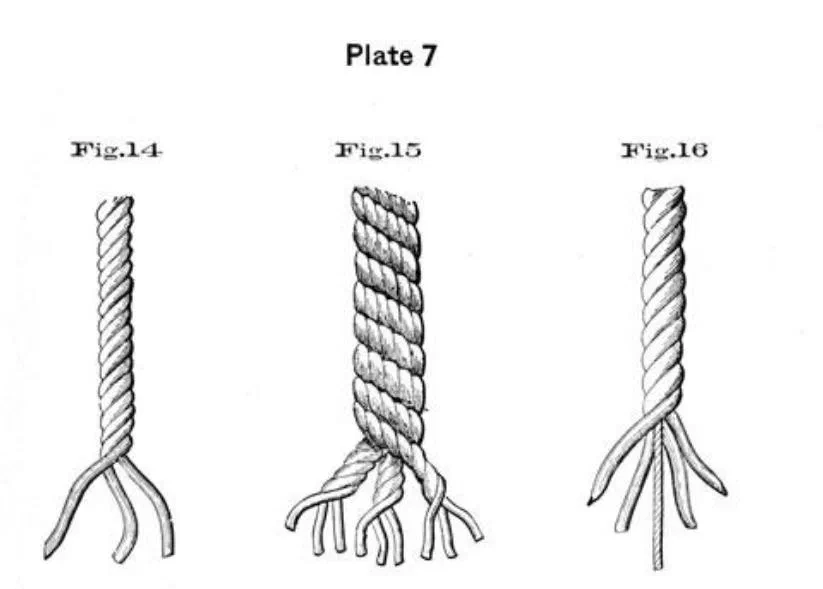
Finally, Luce notes that four-stranded rope is laid up around a soft heart about a third of the size of the strands; below 5 inches it is weaker than three-stranded rope, and by his time it was “but little used”.
Current research
John H. Harland, The Lay of Rope (2014)
Harland, one of the great authorities on seamanship under sail, comes to a clear conclusion: right-handed rope predominates – not for a specific technical reason, but simply because ropemakers have always made it that way. Left-handed rope was produced for some purposes, above all cable-laid cables for anchor cables and the heaviest stays and shrouds. Harland also cites Luce’s back-handed rope and Burney (1871), who describes the gun gear of his time as reverse-laid, left-handed rope – softer and easier to handle, but less durable.
He also tells a nice anecdote about point of view: looking at the cut end of a rope, the strands of a right-handed rope seem to turn the other way – by convention, one looks along the rope. And he mentions that when the replica frigate for the film Master and Commander was rigged with right-handed rope in 2003, critics called it an anachronism – a claim he calls patently incorrect.
Damien Sanders, Knowing the Ropes (2010)
Sanders looks at ropes from the archaeologist’s perspective, and his findings on gun-carriage cordage are particularly relevant. On HMS Victory, all breeching ropes below decks are today left-laid or reverse-laid – but photographs from the 1950s still show plain-laid, Z-twist breechings on the quarterdeck, and only in the mid-1990s were all breeching ropes switched to S-twist. Sanders has never found such rope on a wreck site.
Archaeological finds tell a different story: on Vasa, both gun tackles and breeching ropes are regular three-stranded, Z-laid rope, and the breeching rope of the Stirling Castle, lost in the great storm of 1703, is a Z-laid hawser as well. Sanders also warns that pictorial evidence is unreliable, because drawings, engravings and photographs are easily reversed in printing and copying – and that S-twist breechings have already appeared on HMS Warrior and around the Hermione replica. Without a historical basis, this spread should be stopped.
Contemporary models as a source
We tend to treat contemporary models as reliable evidence – surely the model makers of the time knew what they were doing. Unfortunately, this is dangerous and often leads us astray. Scott Bradner reviewed the models in the U.S. Naval Academy Museum for the direction of lay of their rope and found very inconsistent results:
- About 35 relevant models, most of them with repaired rigging – and therefore an unreliable indicator.
- 32 have left-handed stays, 14 of them clearly cable-laid.
- 13 have left-handed shrouds and backstays, some of them cable-laid.
- The St. George of 1701, with her original silk rigging, has cable-laid stays and right-handed shrouds and backstays.
- Three prisoner-of-war models have cable-laid shrouds and left-handed stays and backstays.
A model can only be as reliable as its rigging is original – and even then it shows the habits of its maker, not necessarily the practice on board.
Contemporary photographs
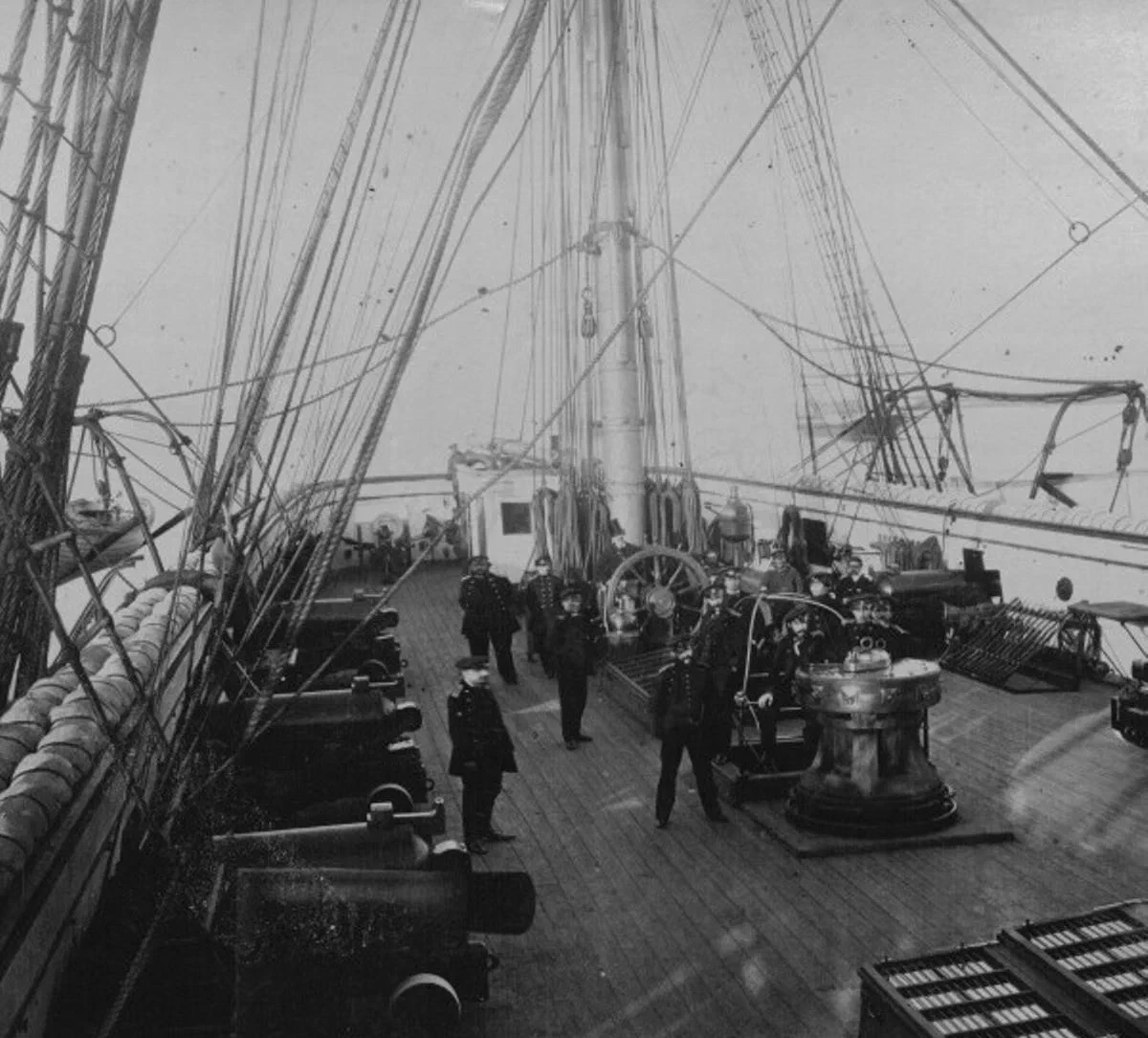
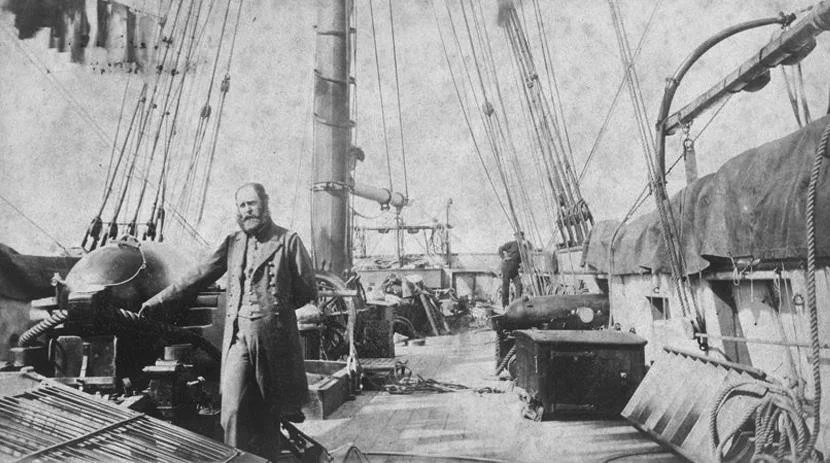
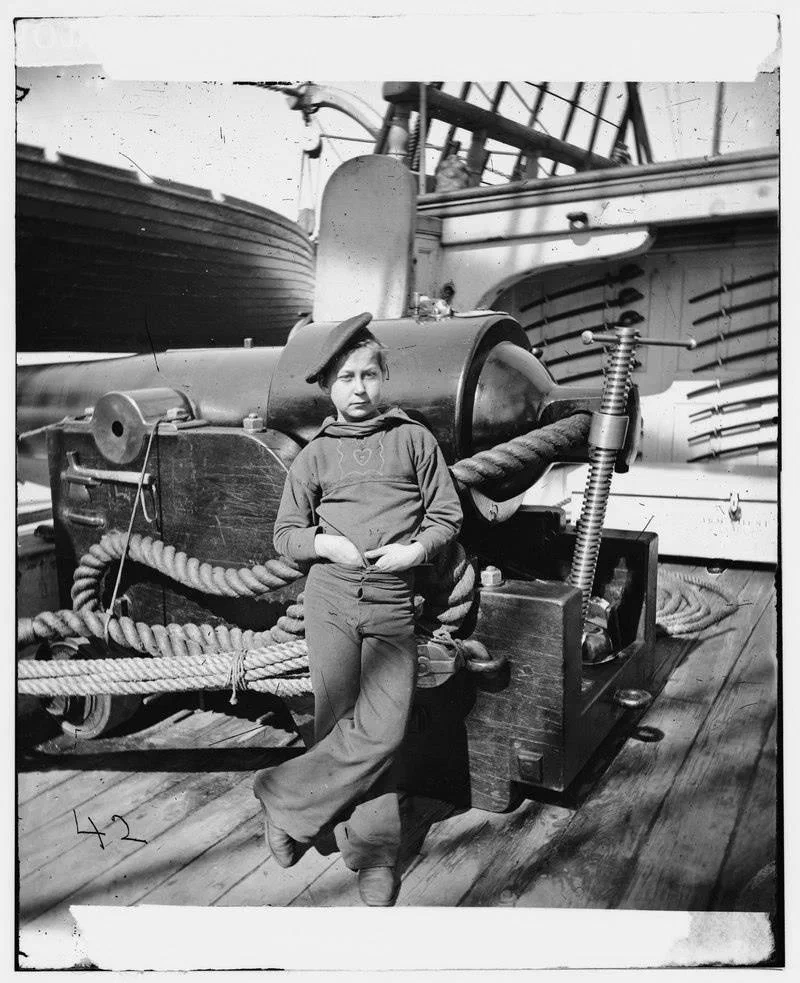
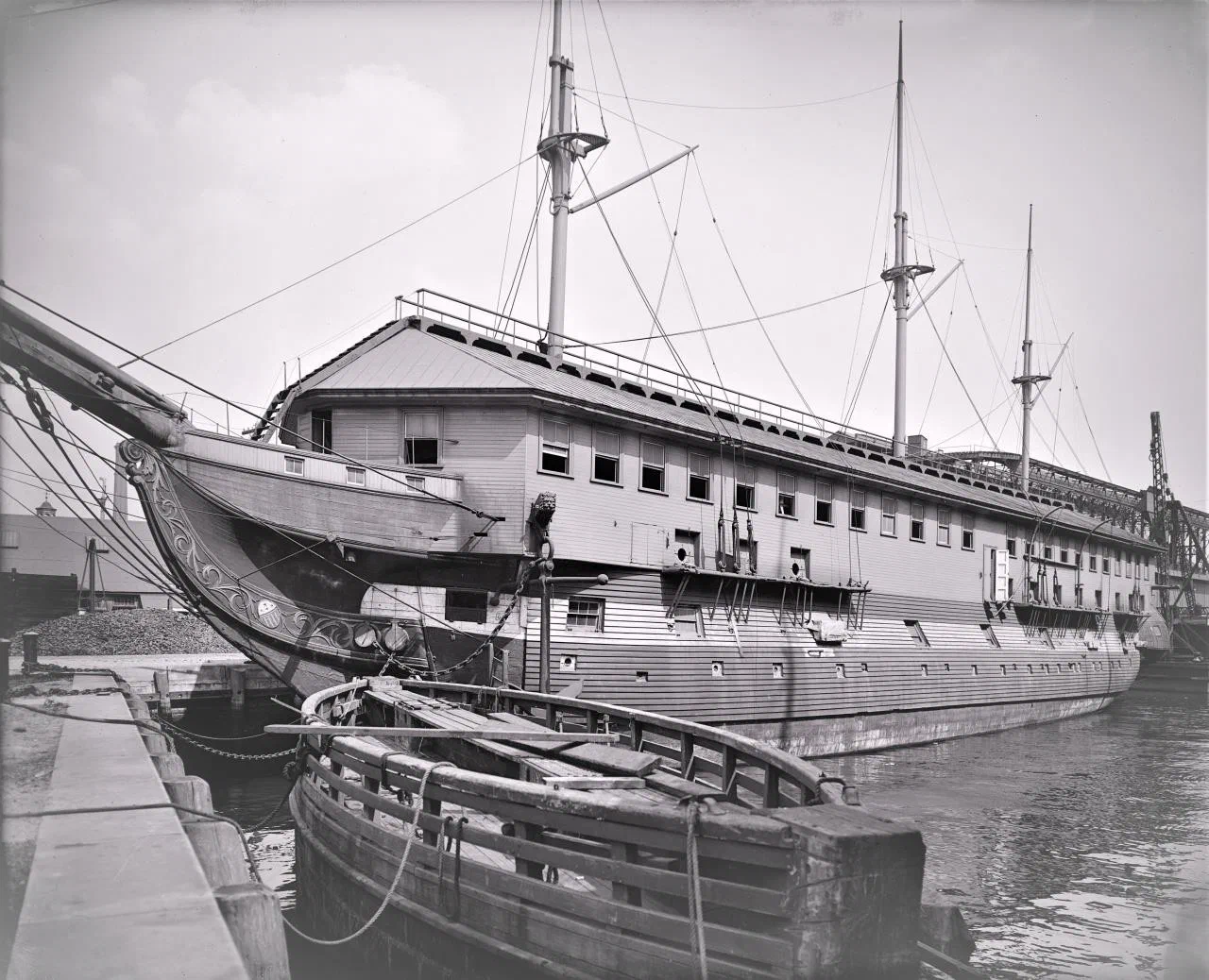
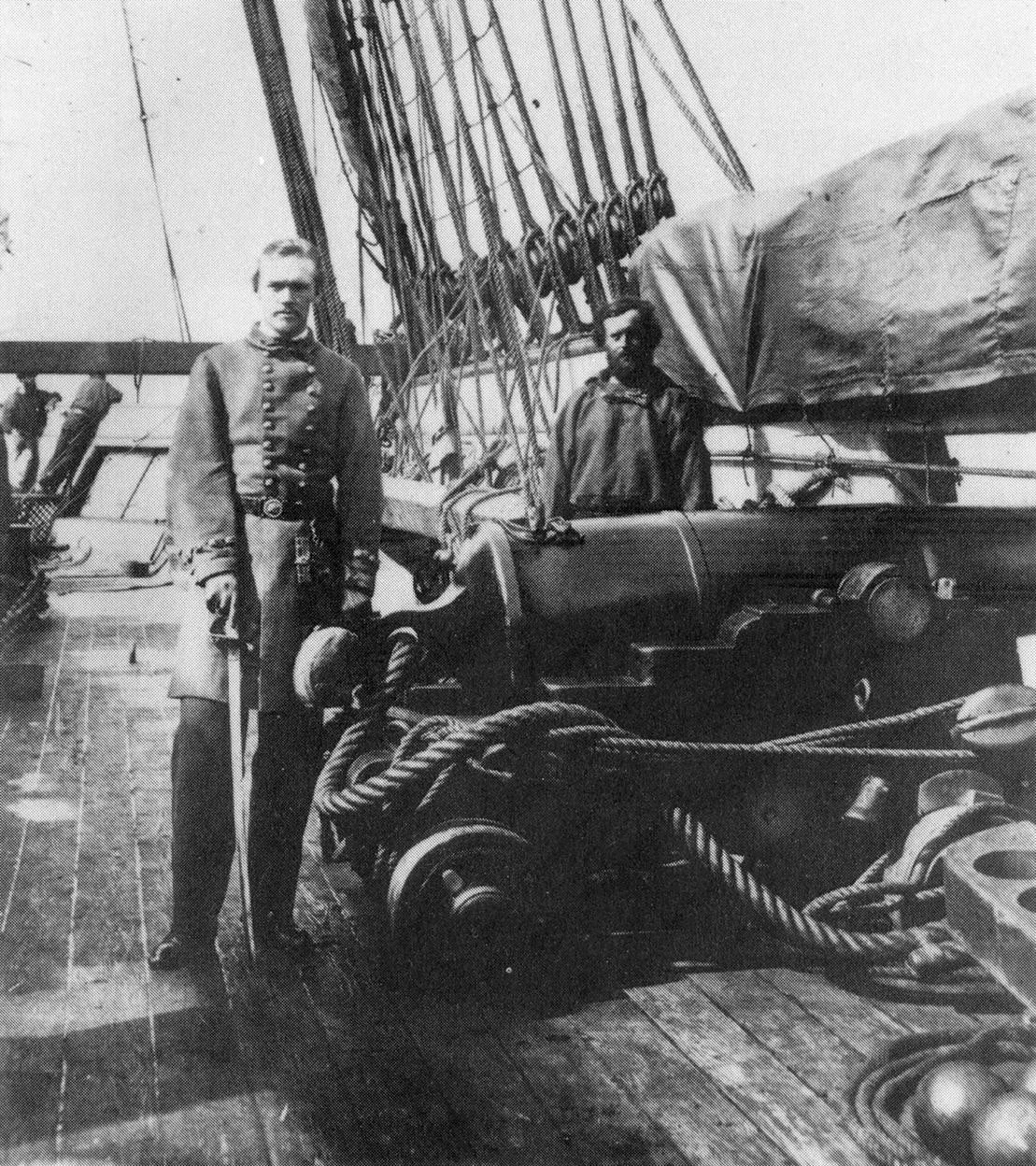
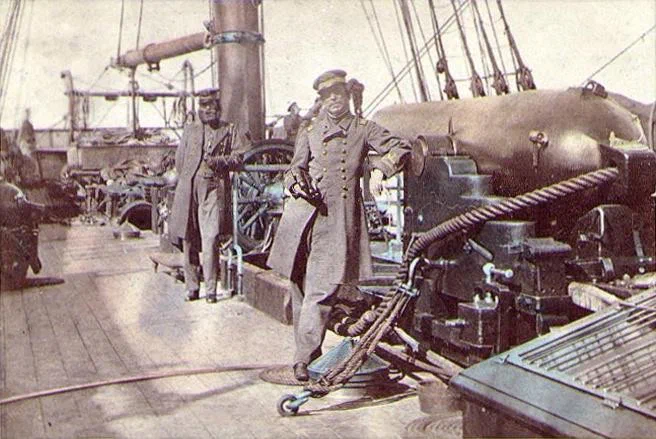
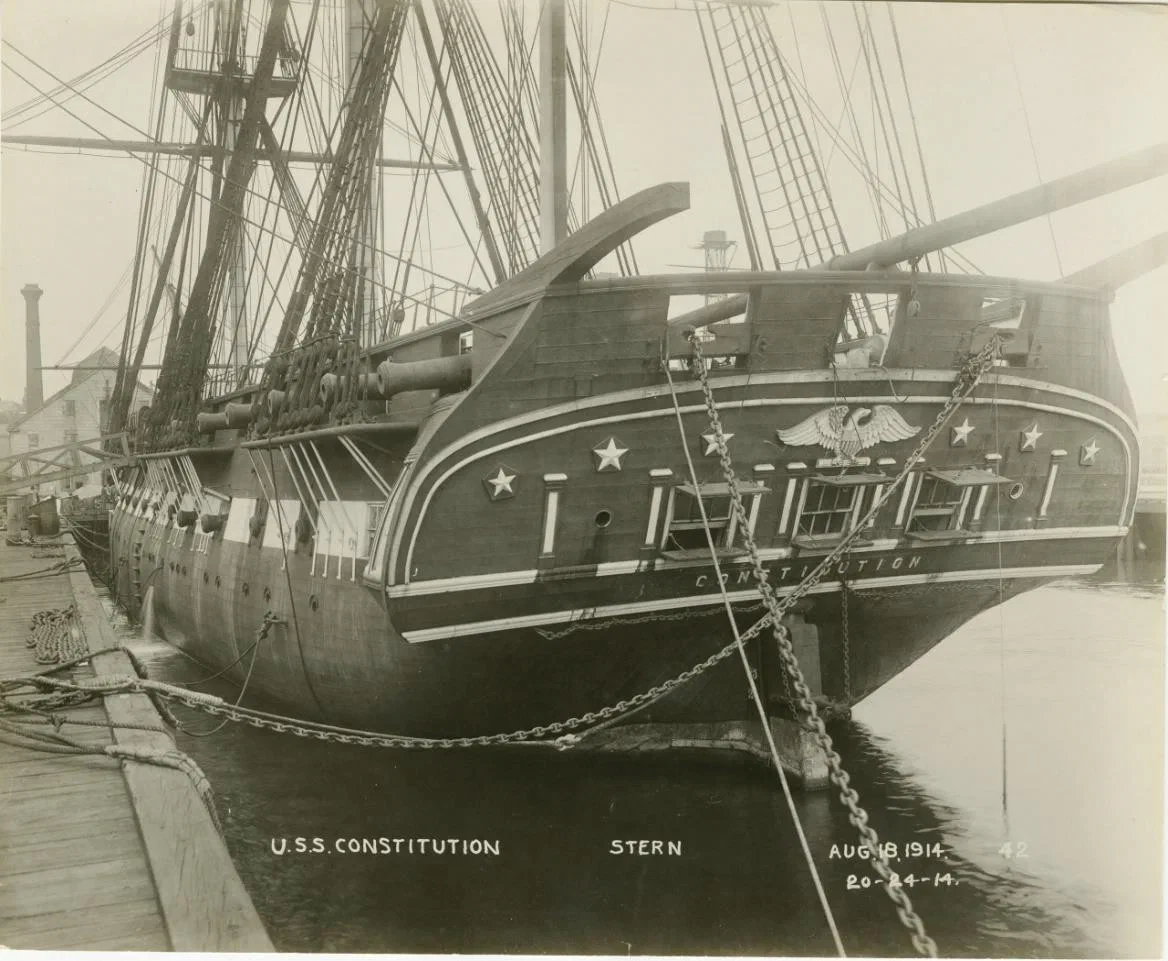
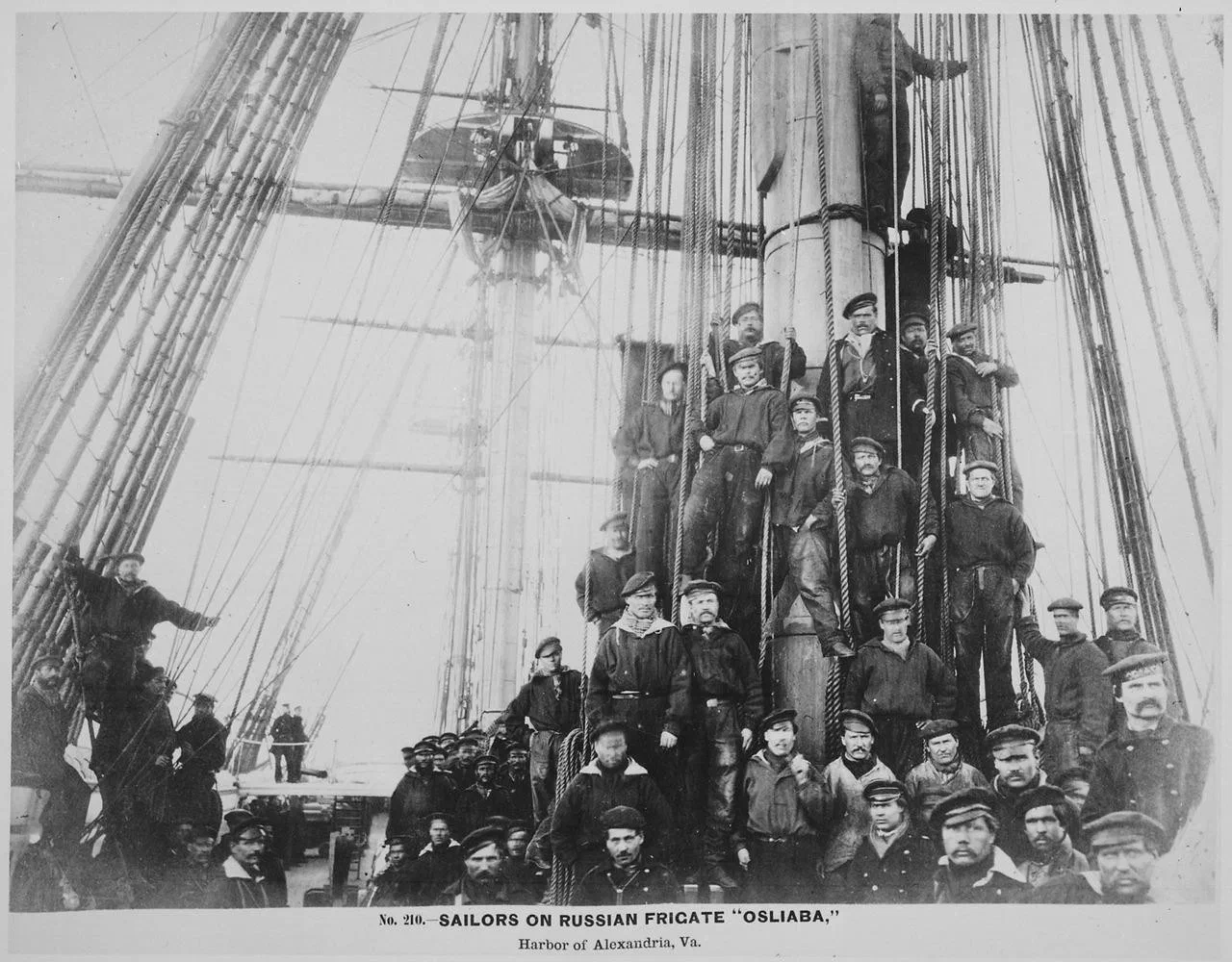
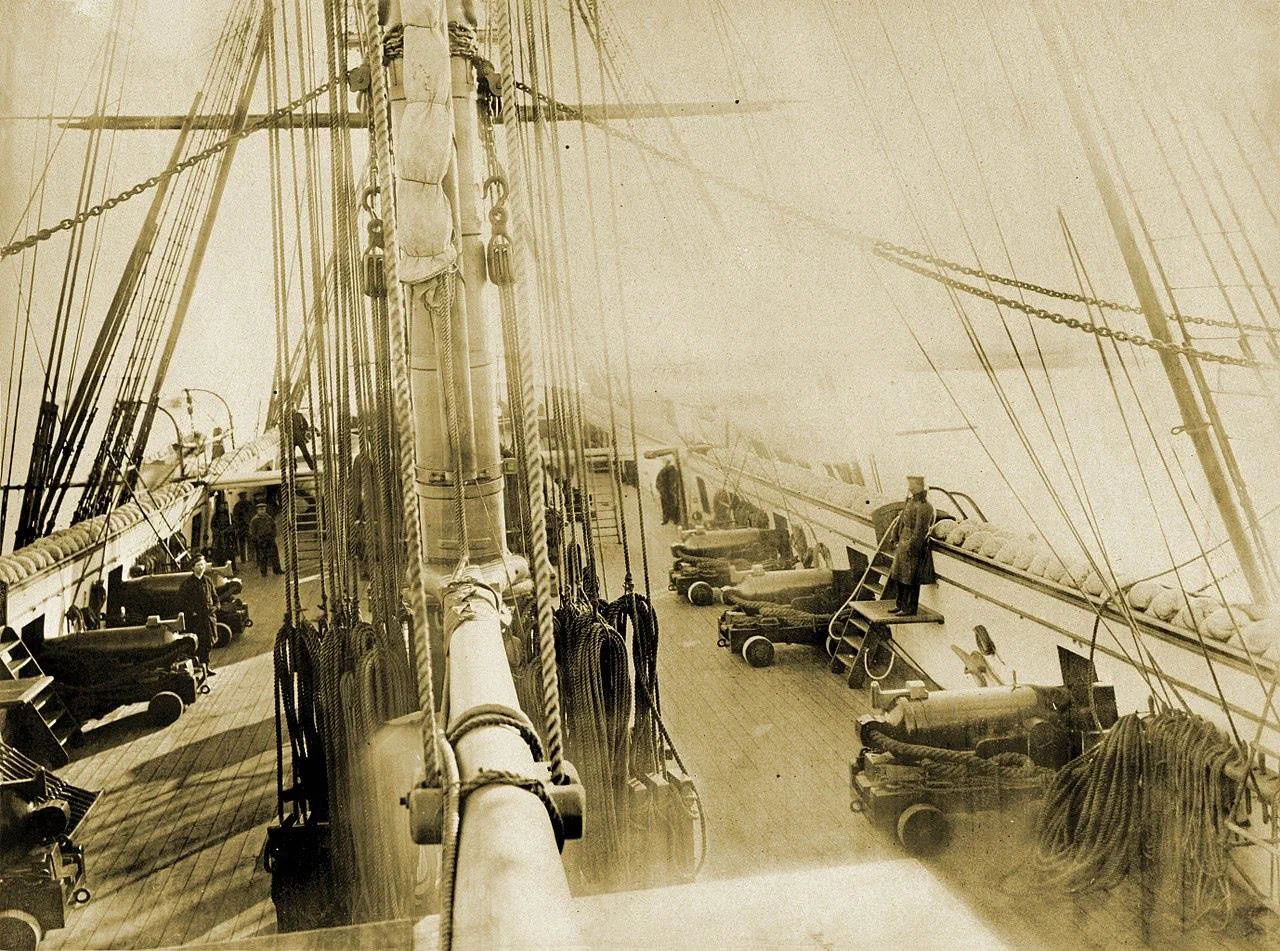
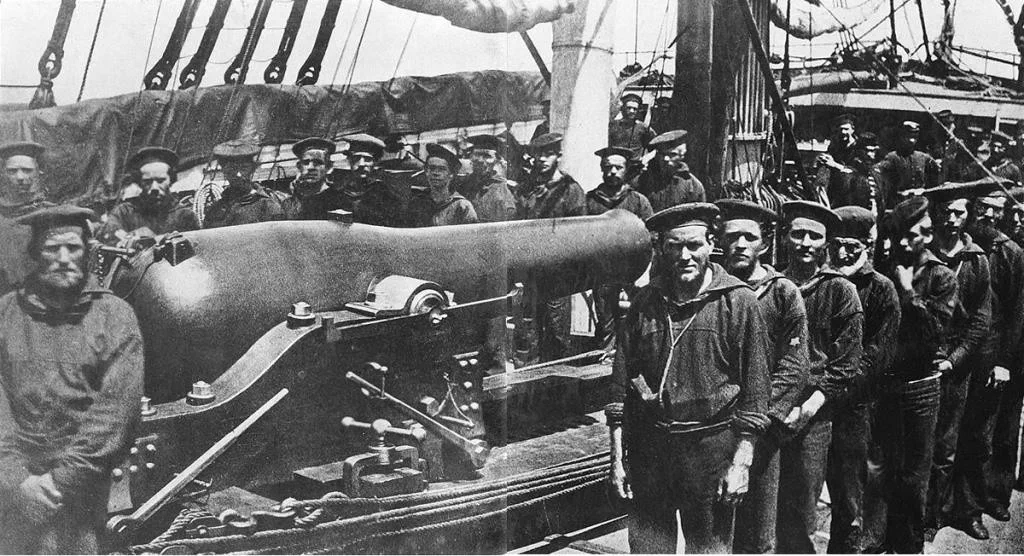
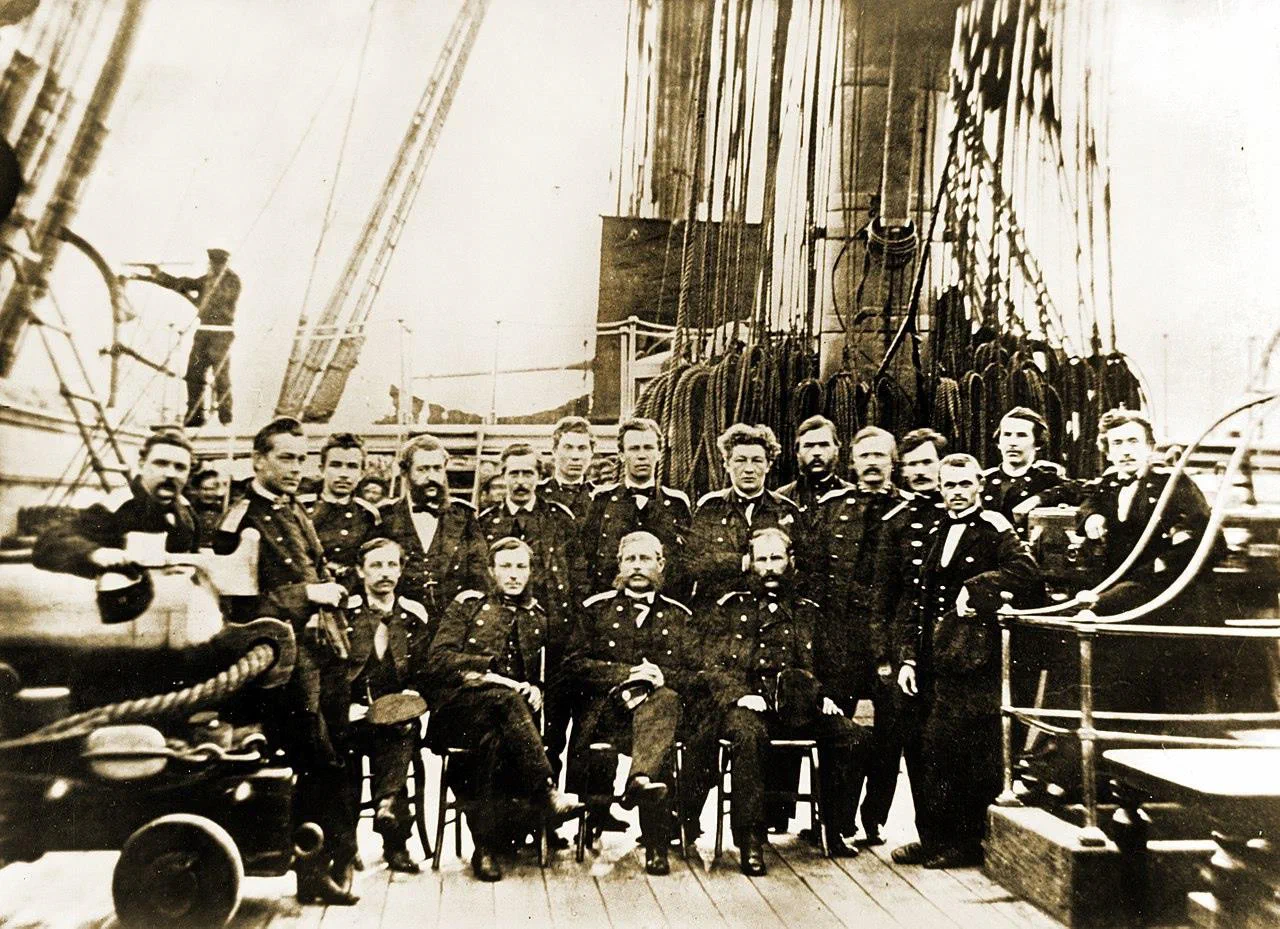
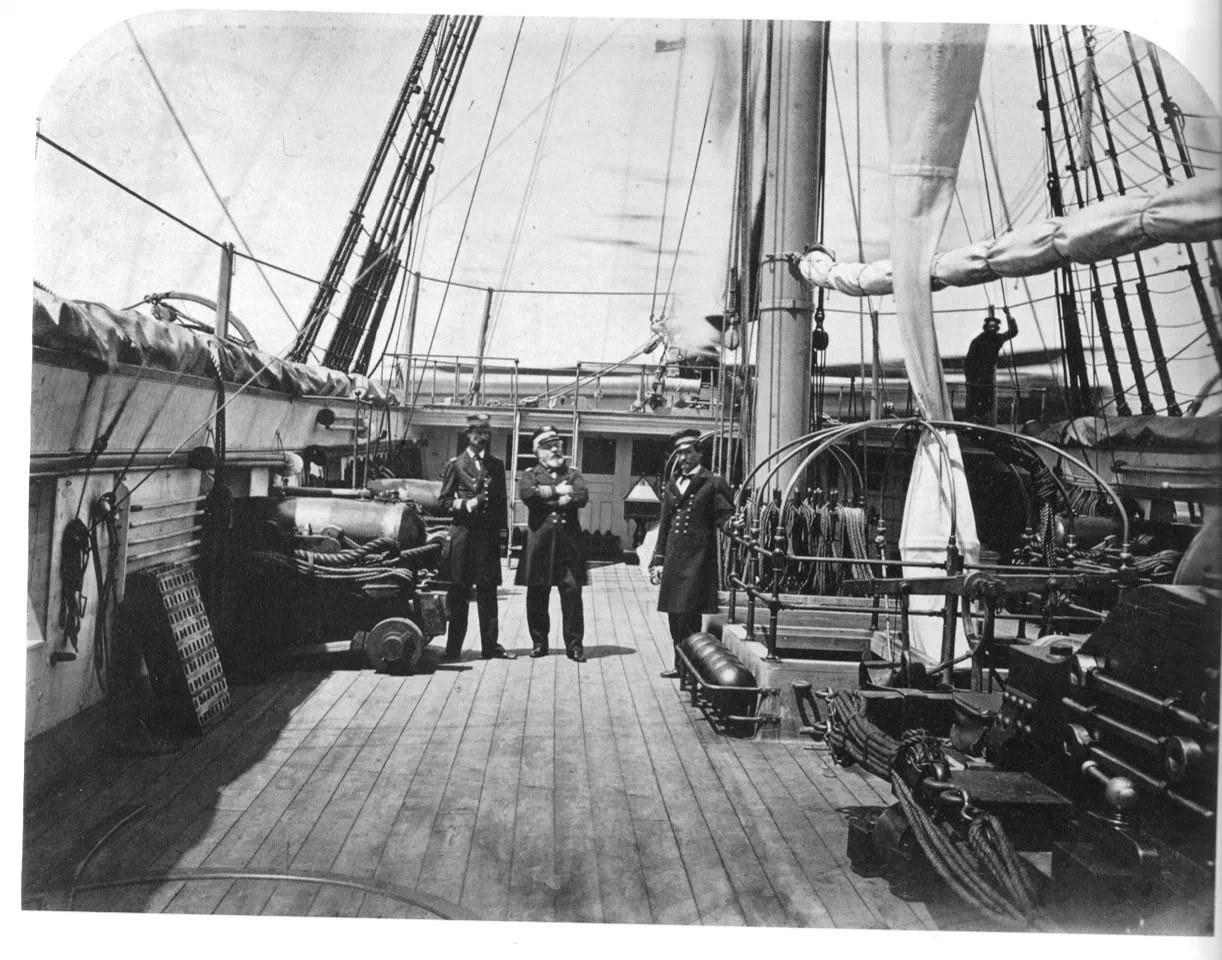
Photographs taken on board ships from around 1850 to the 1860s are a much better witness than models – with one caveat: they must not be mirrored. Wherever the lay of the rope can be made out in the following pictures, running rigging and, where visible, shrouds are hawser-laid and right-handed. Breeching ropes appear right-handed in most of them; in two photographs from the 1860s they are left-handed – which fits the earliest written mention of left-handed breechings in 1869 rather than the practice of the 18th century.
Conclusions
- Three-strand hawser-laid rope is laid right-handed and is the plain, standard rope.
- Four-strand hawser-laid rope with a heart is laid right-handed as well and is also called shroud-laid.
- A cable is laid left-handed from three, sometimes four (see Sanders), hawser- or shroud-laid ropes. It has a circumference of nine inches or more.
- Cablets are laid the same way, with a circumference of less than nine inches.
- Cables came about because at the time it was not possible to lay hawser-laid ropes larger than nine inches.
- Cables and cablets are weaker than hawser-laid rope, but less sensitive to the weather.
- According to Sanders, cables and cablets were not always wormed, often simply served.
- Ropes were laid to different degrees of hardness (slack-laid) according to their use.
- There is no evidence that left-handed hawser-laid rope was common, or used at all, in shipping before about 1830.
- Rigging laid left-handed in the manner of cables or cablets – even on contemporary or museum models – is incorrect.
- There is no convincing evidence that left-handed breeching rope existed as hawser-laid rope before about 1830.
- From about 1849 onwards, American sources equate hawser-laid and cable.
- Stick to the existing terminology – as Sanders stresses, there have been and still are major misunderstandings.
- With old photographs and engravings, always make sure they are not mirrored.
- Don’t mix sources from different periods!
The paper was mentioned in the Rope News Journal No. 121, p. 6 (“Rope Work Story Revised”) by Sato Kenji – thank you very much.
The paper was also published as “The Myth of left-handed hawser rope [in Ship Modeling] for the period 1600–1830” in The MSB Journal, December 2022, p. 15 ff. (ISSN 1913-6943), published by modelshipbuilder.com.
Sources by name
Ainsley (1864). The Examiner in Seamanship
Anderson, R.C. (1927). Rigging of Ships in the Days of the Sprit Topmast, Dover Publications, Inc., New York
Ashley, Clifford W. (1944). Ashley’s book of Knots, Faber and Faber Limited London Boston
Åström, Alexander (2016). Mathematical and Physical Properties of Rope Made for Decorative Purposes, https://www.semanticscholar.org/paper/Mathematical-and-Physical-Properties-of-Rope-Made-%C3%85str%C3%B6m/80c5ee7944a34e8440d876acf79114a947e9a90b
Åström, Alexander and Christoffer Åström (2018). Art and Science of Rope, https://link.springer.com/referenceworkentry/10.1007%2F978-3-319-70658-0_15-1
Biddlecombe, George (1848). The Art of Rigging, London: Published by Charles Wilson, https://books.google.de/books?id=9RkEAAAAQAAJ
Bohr, J., & Olsen, K. (2011). The ancient art of laying rope. Europhysics Letters, 93(6), 60004. DOI: 10.1209/0295-5075/93/60004
Bradner, Scott (2021). Obsessing about rope, https://www.sobco.com/ship_model/articles/Obsessing_about_rope.html
Brady, William (1852). The Kedge Anchor or, young sailors' Assistant, Sixth Edition, New York: Published by the Author, https://archive.org/details/kedgeanchororyo01bradgoog
Burney, C. (1871). The Boy’s Manual of Seamanship and Gunnery, Second Edition, London: Frederick Warne and CO., https://books.google.cg/books?id=3F4BAAAAQAAJ
Chapman, Charles (1869). All About Ships
Chapman, Robert (1869). A Treatise on Rope making, Revised Edition, Philadelphia: Henry Carey Baird, Industrial Publisher, https://archive.org/details/treatiseonropema00chap
Corder, Catharine Laigh Inbody (2007). La-Belle rigging in the days of the spritsail topmast, Master Thesis, https://nautarch.tamu.edu/Theses/pdf-files/Corder-MA2007.pdf
Eichhoff, Jürgen (1968). Die Sprache des niederdeutschen Reepschlagerhandwerks, Böhlau Verlag Köln Graz
Fitcham, John (1843). A Treatise on Masting Ships and Mast Making, London: Published by Whittaker and Co.
Harland, John H., Dawson, Charles, Platt, Alan (2013), The Mariner's Mirror Volume 91, 2005 – Issue 3, Notes, pp. 470–474, published online: 22 Mar 2013, DOI: 10.1080/00253359.2005.10656962, https://doi.org/10.1080/00253359.2005.10656962
Harland, John H. (2014). The Lay of Rope, The Mariner's Mirror, 100:1, 83–95, DOI: 10.1080/00253359.2014.875255, https://www.tandfonline.com/doi/abs/10.1080/00253359.2014.875255
HMS Colossus (2012). Monitoring and investigation 2012, Project Report, http://www.cismas.org.uk/docs/Colossus%20Monitoring%20and%20Investigation%20Report.pdf
HMS Colossus (2015). Investigation 2015, Project Report, https://historicengland.org.uk/images-books/publications/hms-colossus-investigation-2015/hms-colossus-investigation/
HMS Colossus (2017). Wrecking Project 2017, Project Report, http://www.cismas.org.uk/docs/Colossus%202017%20FINAL.pdf
Kipping, Robert (1853). Rudimentary Treatise on Masting, Mast-Making, and Rigging of Ships, https://books.google.de/books?id=gSxbAAAAcAAJ
Kipping, Robert (1921). Rudimentary Treatise on Masting, Mast-Making, and Rigging of Ships, London: Crosby Lockwood and Son
Lever, Darcy (1808). The young sea officer's sheet anchor, London: Sold by John Richardson, Royal Exchange, Dover Edition, Dover Publications, Inc.
Luce, S.B. (1891). Textbook of Seamanship, New York: Van Nostrand Company.
Murphy & Jeffers (1849). Spars and Rigging
Nares, George S. (1862). Seamanship
Paasch, Captain H. (1901). From Keel to Truck
Petersson, Lennarth (2000). Rigging Period Ship Models
Petersson, Lennarth (2007). Rigging Period fore and aft Craft
Sanders, Damien (2009). Knowing the Ropes: The Need to Record Ropes and Rigging on Wreck-Sites and Some Techniques for Doing So, The International Journal of Nautical Archaeology (2010) 39.1: 2–26. DOI: 10.1111/j.1095-9270.2009.00235.x
Sanders, Damien (2019). The Cables and Cablets of the Mary Rose (1545), International Journal of Nautical Archaeology, 48:1, 52–76, DOI: 10.1111/1095-9270.12338
Splitstoser, Jeffrey C. (2012). The Parenthetical Notation Method for Recording Yarn Structure, Published in Textiles and Politics: Textile Society of America 13th Biennial Symposium Proceedings, Washington, DC, September 18 – September 22, 2012.
Steel, David (1794). The Elements and Practice of Rigging and Seamanship, London: Printed for David Steel, https://maritime.org/doc/steel/
Steel, David (1796). Art of Rigging – 2nd edition, London: Printed for David Steel, At his Navigation-Warehouse
Ulffers, Franz (1872). Handbuch der Seemannschaft, Ernst Siegfried Mittler & Sohn, Koenigliche Hofbuchhandlung
Verrill, A. Hyatt (1917). Knots, Splices and Rope Work: A Practical Treatise, 2nd revised Edition
Sources by date
1794 Steel, David (1794). The Elements and Practice of Rigging and Seamanship, London: Printed for David Steel, https://maritime.org/doc/steel/
1796 Steel, David (1796). Art of Rigging – 2nd edition, London: Printed for David Steel, At his Navigation-Warehouse
1808 Lever, Darcy (1808). The young sea officer's sheet anchor, London: Sold by John Richardson, Royal Exchange, Dover Edition, Dover Publications, Inc.
1843 Fitcham, John (1843). A Treatise on Masting Ships and Mast Making, London: Published by Whittaker and Co.
1848 Biddlecombe, George (1848). The Art of Rigging, London: Published by Charles Wilson, https://books.google.de/books?id=9RkEAAAAQAAJ
1849 Murphy & Jeffers (1849). Spars and Rigging
1852 Brady, William (1852). The Kedge Anchor or, young sailors' Assistant, Sixth Edition, New York: Published by the Author, https://archive.org/details/kedgeanchororyo01bradgoog
1853 Kipping, Robert (1853). Rudimentary Treatise on Masting, Mast-Making, and Rigging of Ships, https://books.google.de/books?id=gSxbAAAAcAAJ
1862 Nares, George S. (1862). Seamanship
1864 Ainsley (1864). The Examiner in Seamanship
1869 Chapman, Charles (1869). All About Ships
1869 Chapman, Robert (1869). A Treatise on Rope making, Revised Edition, Philadelphia: Henry Carey Baird, Industrial Publisher, https://archive.org/details/treatiseonropema00chap
1871 Burney, C. (1871). The Boy’s Manual of Seamanship and Gunnery, Second Edition, London: Frederick Warne and CO., https://books.google.cg/books?id=3F4BAAAAQAAJ
1872 Ulffers, Franz (1872). Handbuch der Seemannschaft, Ernst Siegfried Mittler & Sohn, Koenigliche Hofbuchhandlung
1891 Luce, S.B. (1891). Textbook of Seamanship, New York: Van Nostrand Company.
1901 Paasch, Captain H. (1901). From Keel to Truck
1917 Verrill, A. Hyatt (1917). Knots, Splices and Rope Work: A Practical Treatise, 2nd revised Edition
1921 Kipping, Robert (1921). Rudimentary Treatise on Masting, Mast-Making, and Rigging of Ships, London: Crosby Lockwood and Son
1927 Anderson, R.C. (1927). Rigging of Ships in the Days of the Sprit Topmast, Dover Publications, Inc., New York
1944 Ashley, Clifford W. (1944). Ashley’s book of Knots, Faber and Faber Limited London Boston
1968 Eichhoff, Jürgen (1968). Die Sprache des niederdeutschen Reepschlagerhandwerks, Böhlau Verlag Köln Graz
2000 Petersson, Lennarth (2000). Rigging Period Ship Models
2007 Corder, Catharine Laigh Inbody (2007). La-Belle rigging in the days of the spritsail topmast, Master Thesis, https://nautarch.tamu.edu/Theses/pdf-files/Corder-MA2007.pdf
2007 Petersson, Lennarth (2007). Rigging Period fore and aft Craft
2009 Sanders, Damien (2009). Knowing the Ropes: The Need to Record Ropes and Rigging on Wreck-Sites and Some Techniques for Doing So, The International Journal of Nautical Archaeology (2010) 39.1: 2–26. DOI: 10.1111/j.1095-9270.2009.00235.x
2011 Bohr, J., & Olsen, K. (2011). The ancient art of laying rope. Europhysics Letters, 93(6), 60004. DOI: 10.1209/0295-5075/93/60004
2012 HMS Colossus (2012). Monitoring and investigation 2012, Project Report, http://www.cismas.org.uk/docs/Colossus%20Monitoring%20and%20Investigation%20Report.pdf
2012 Splitstoser, Jeffrey C. (2012). The Parenthetical Notation Method for Recording Yarn Structure, Published in Textiles and Politics: Textile Society of America 13th Biennial Symposium Proceedings, Washington, DC, September 18 – September 22, 2012.
2013 Harland, John H., Dawson, Charles, Platt, Alan (2013), The Mariner's Mirror Volume 91, 2005 – Issue 3, Notes, pp. 470–474, published online: 22 Mar 2013, DOI: 10.1080/00253359.2005.10656962, https://doi.org/10.1080/00253359.2005.10656962
2014 Harland, John H. (2014). The Lay of Rope, The Mariner's Mirror, 100:1, 83–95, DOI: 10.1080/00253359.2014.875255, https://www.tandfonline.com/doi/abs/10.1080/00253359.2014.875255
2015 HMS Colossus (2015). Investigation 2015, Project Report, https://historicengland.org.uk/images-books/publications/hms-colossus-investigation-2015/hms-colossus-investigation/
2016 Åström, Alexander (2016). Mathematical and Physical Properties of Rope Made for Decorative Purposes, https://www.semanticscholar.org/paper/Mathematical-and-Physical-Properties-of-Rope-Made-%C3%85str%C3%B6m/80c5ee7944a34e8440d876acf79114a947e9a90b
2017 HMS Colossus (2017). Wrecking Project 2017, Project Report, http://www.cismas.org.uk/docs/Colossus%202017%20FINAL.pdf
2018 Åström, Alexander and Christoffer Åström (2018). Art and Science of Rope, https://link.springer.com/referenceworkentry/10.1007%2F978-3-319-70658-0_15-1
2019 Sanders, Damien (2019). The Cables and Cablets of the Mary Rose (1545), International Journal of Nautical Archaeology, 48:1, 52–76, DOI: 10.1111/1095-9270.12338
2021 Bradner, Scott (2021). Obsessing about rope, https://www.sobco.com/ship_model/articles/Obsessing_about_rope.html