A rare kit
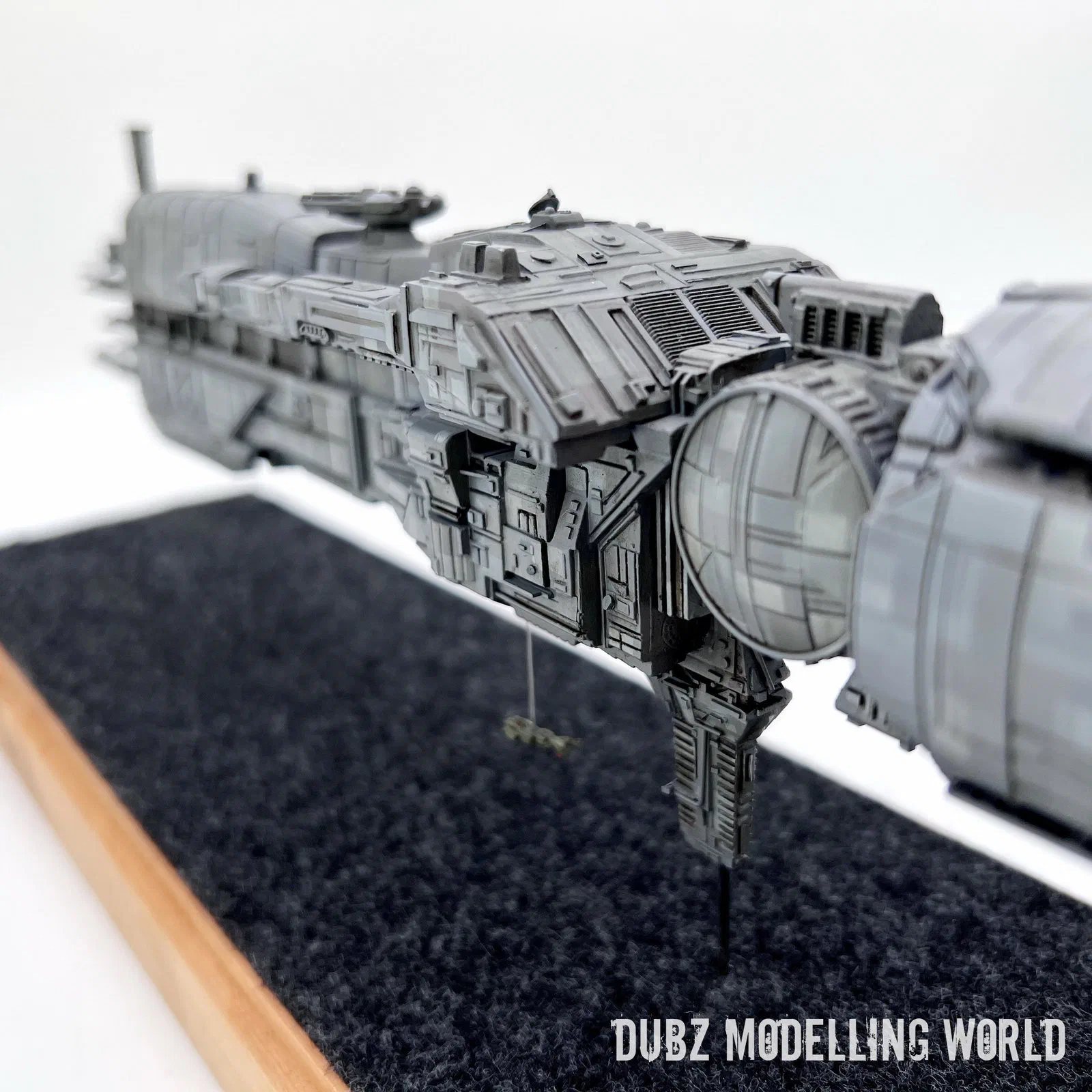
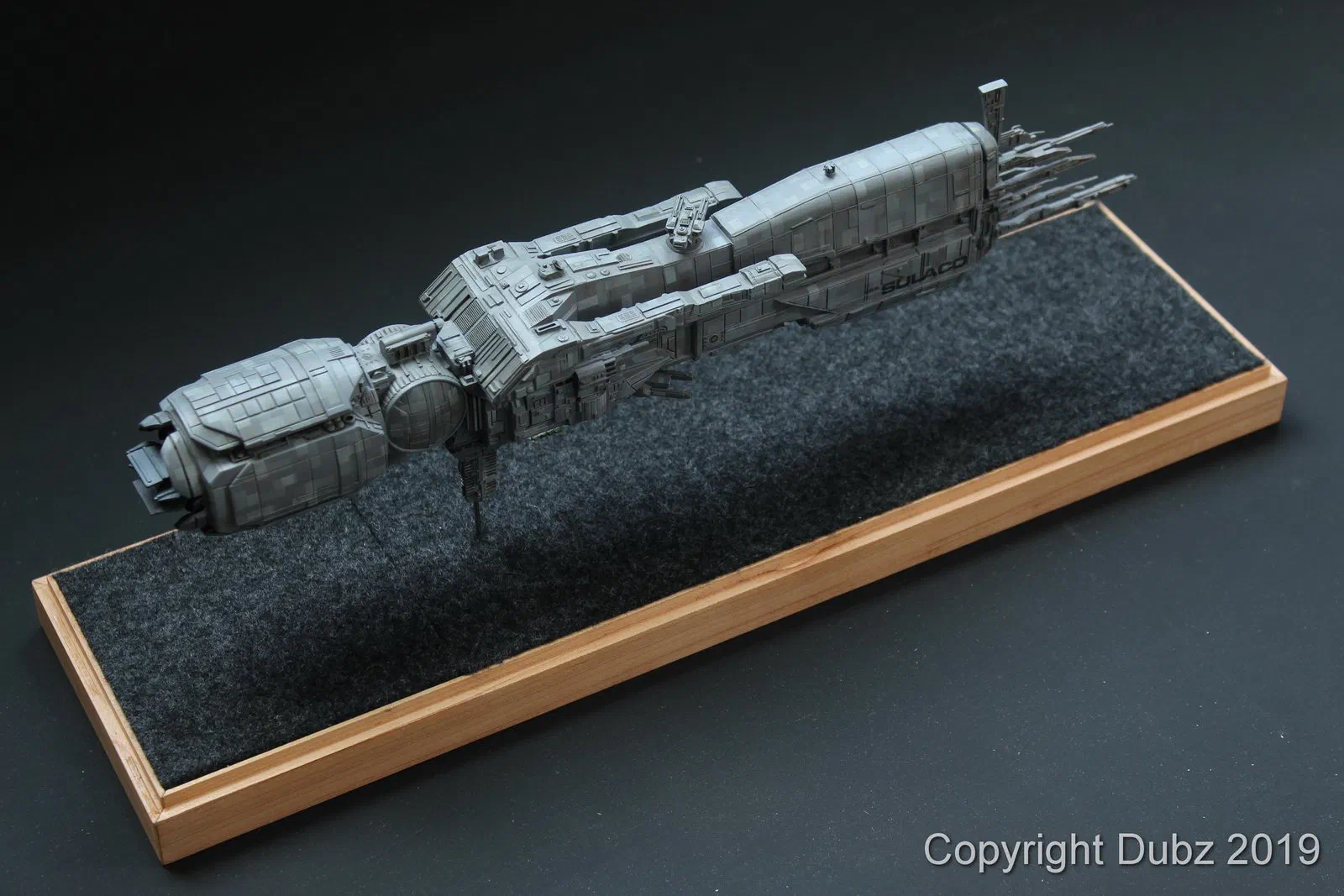
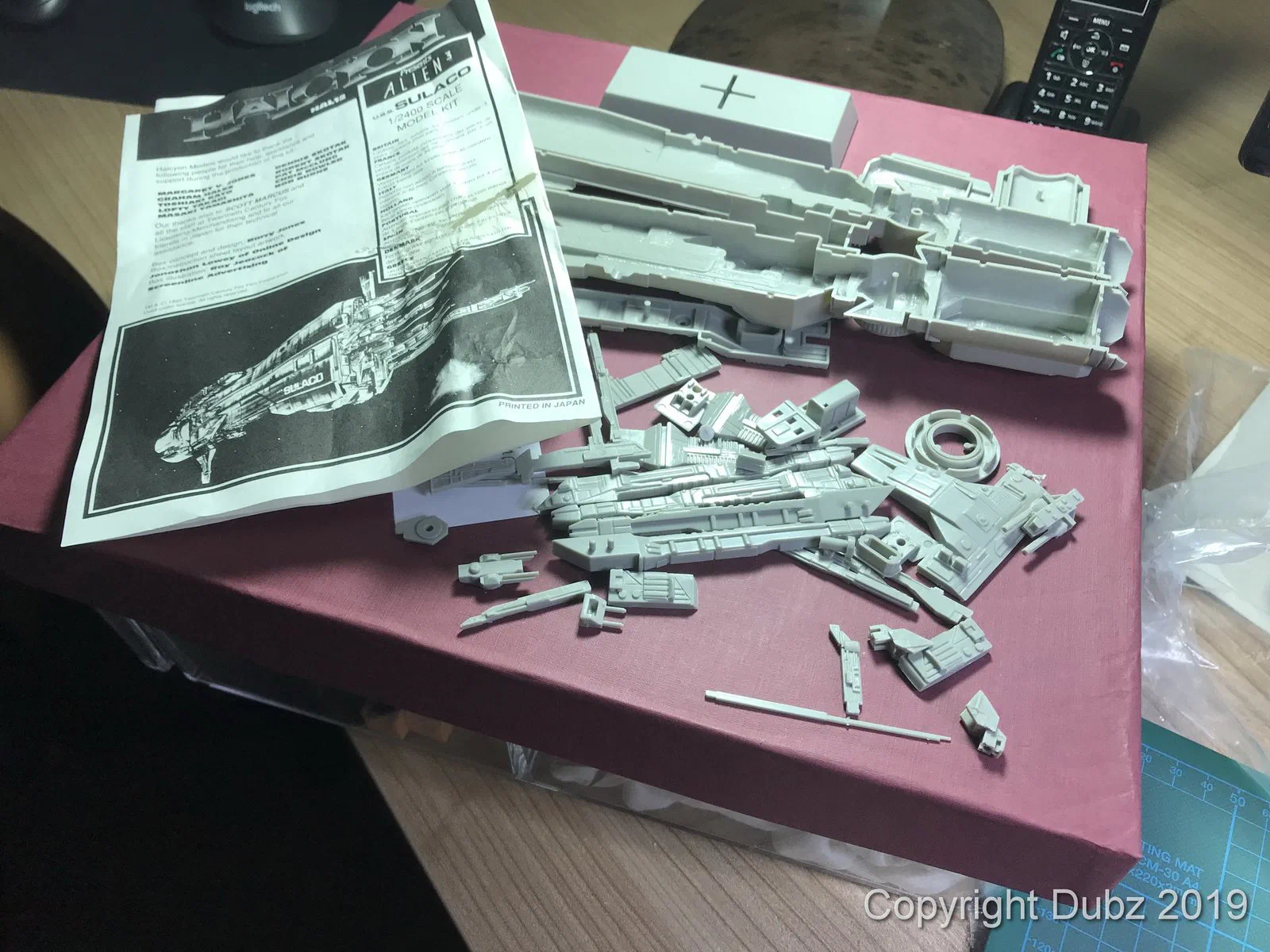
The Sulaco is the ship that carries the colonial marines to LV-426 in James Cameron’s Aliens – a long, heavily armed transport with the drive section at the stern and the hangar for the dropship in her belly. The Halcyon kit in 1:2400 is rare today, and it is a kit with a lot of potential: the basic shapes are right, but there is plenty of room to make the ship your own. That is exactly what I wanted to do.
Greeblies – and even more greeblies
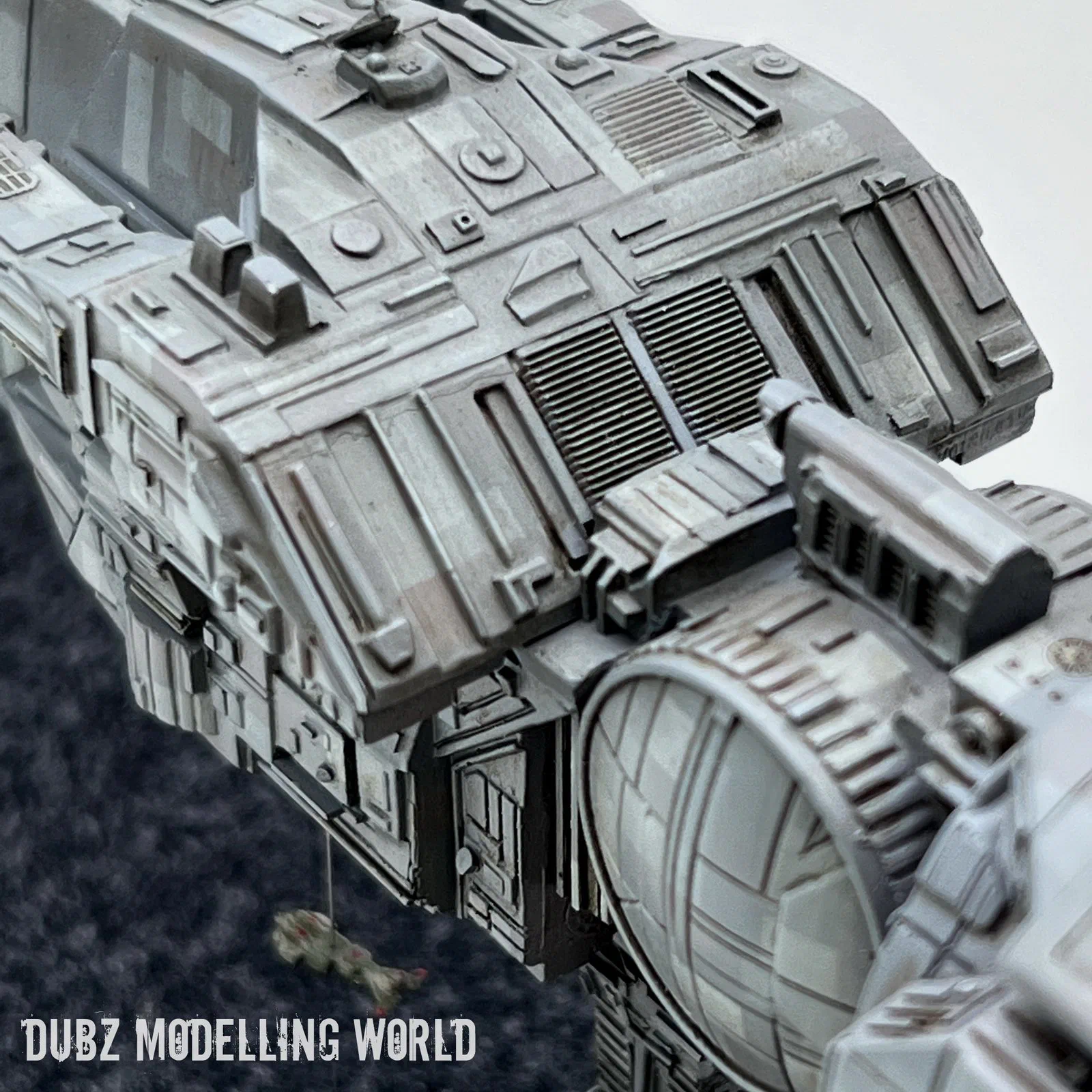
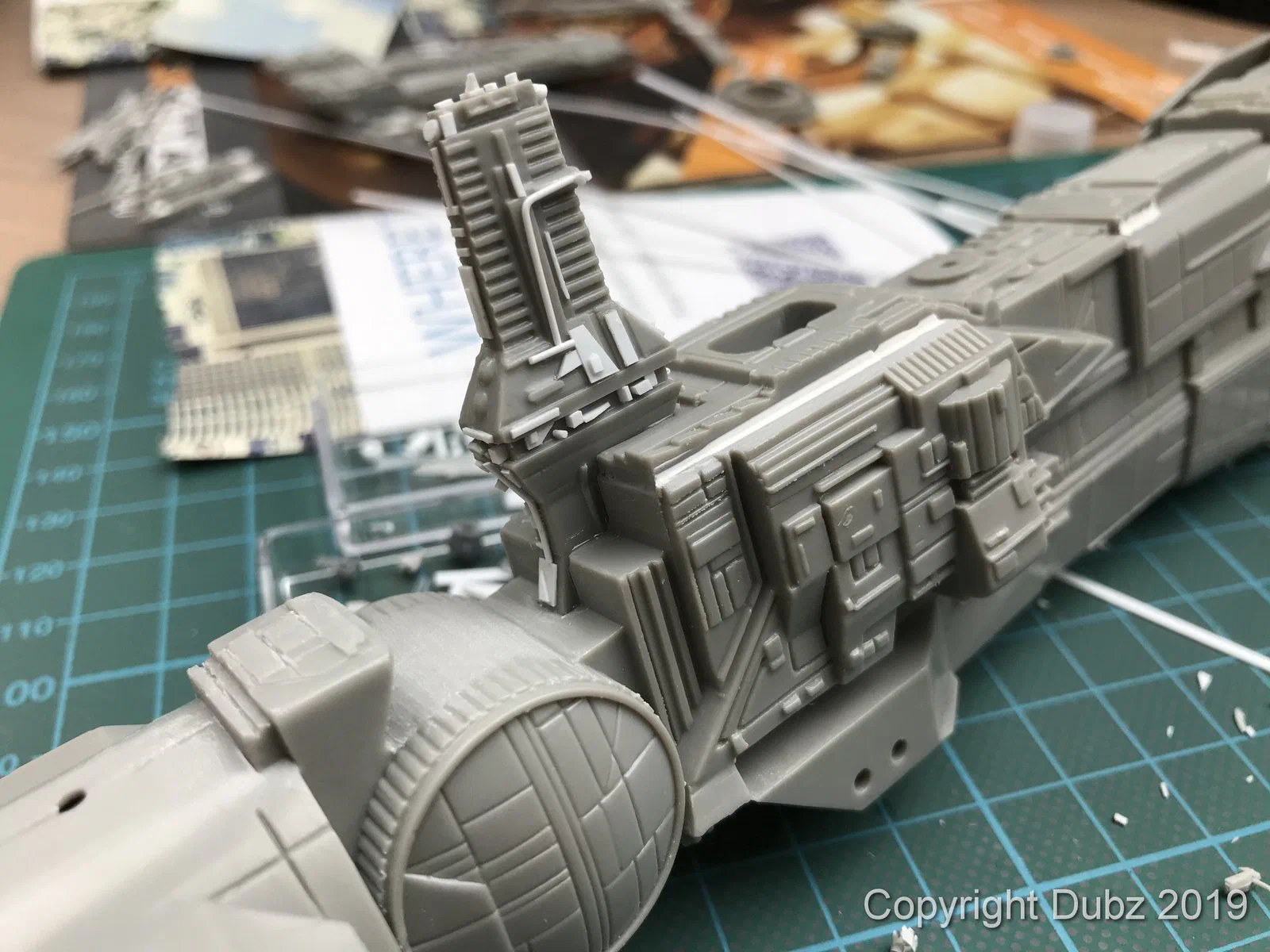
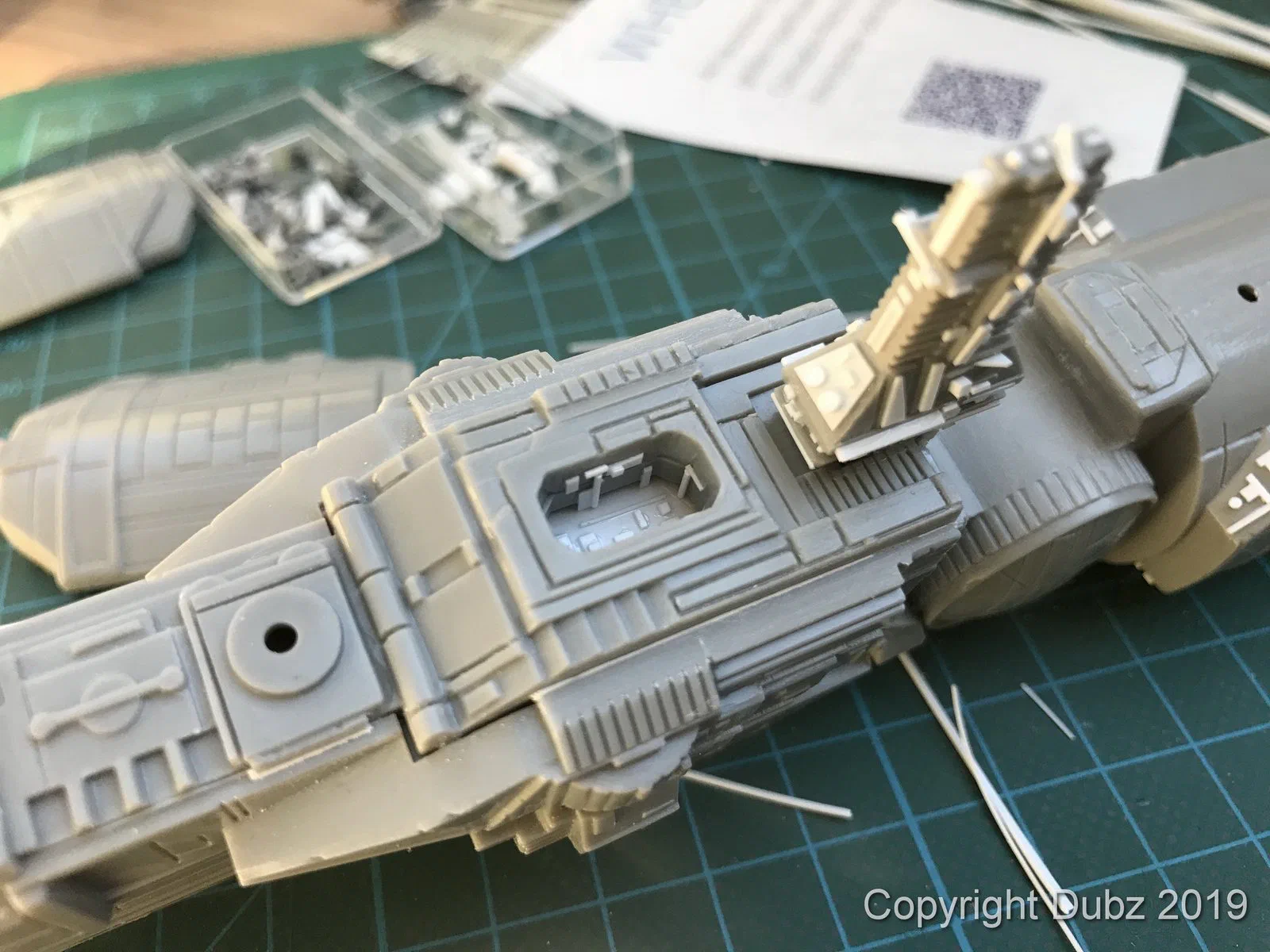
The film ship is covered in small technical details, and the kit surface looked rather bare in comparison. So the first and longest stage of the build was adding greeblies: small plastic parts, strips and bits from the spares box, glued onto the hull piece by piece to break up the surfaces. And when I thought it was enough, I added even more.
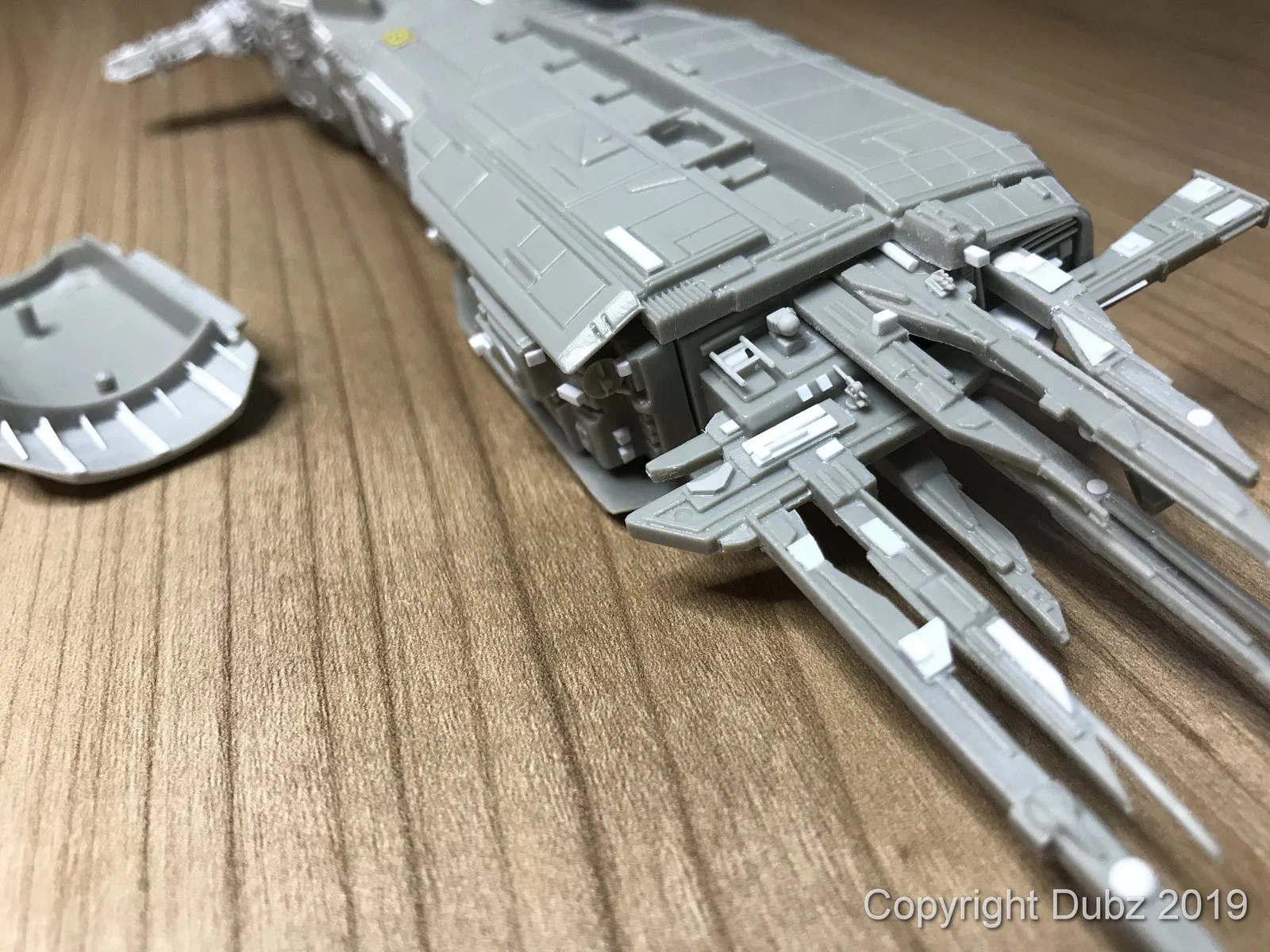
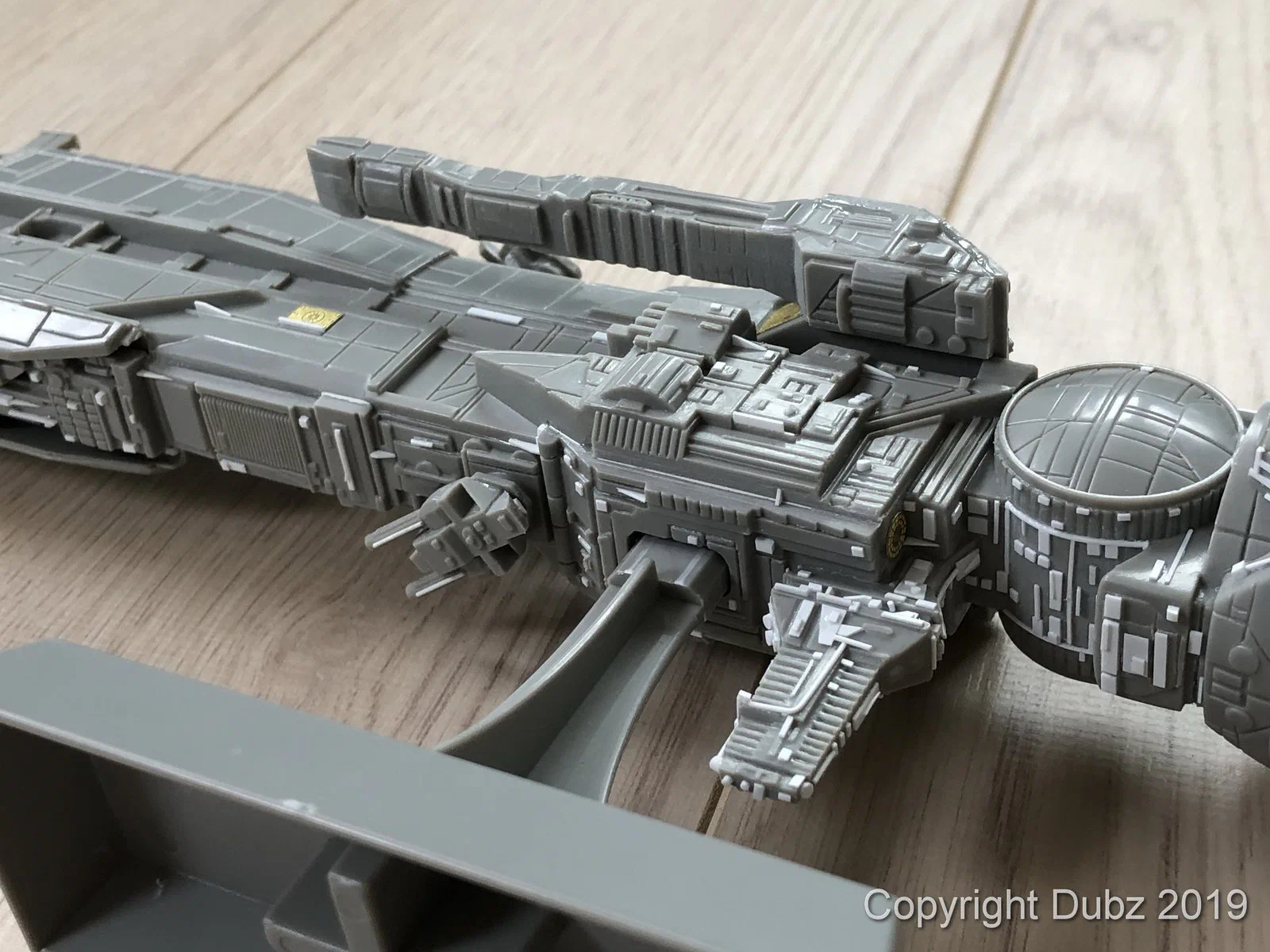
Engine and assembly
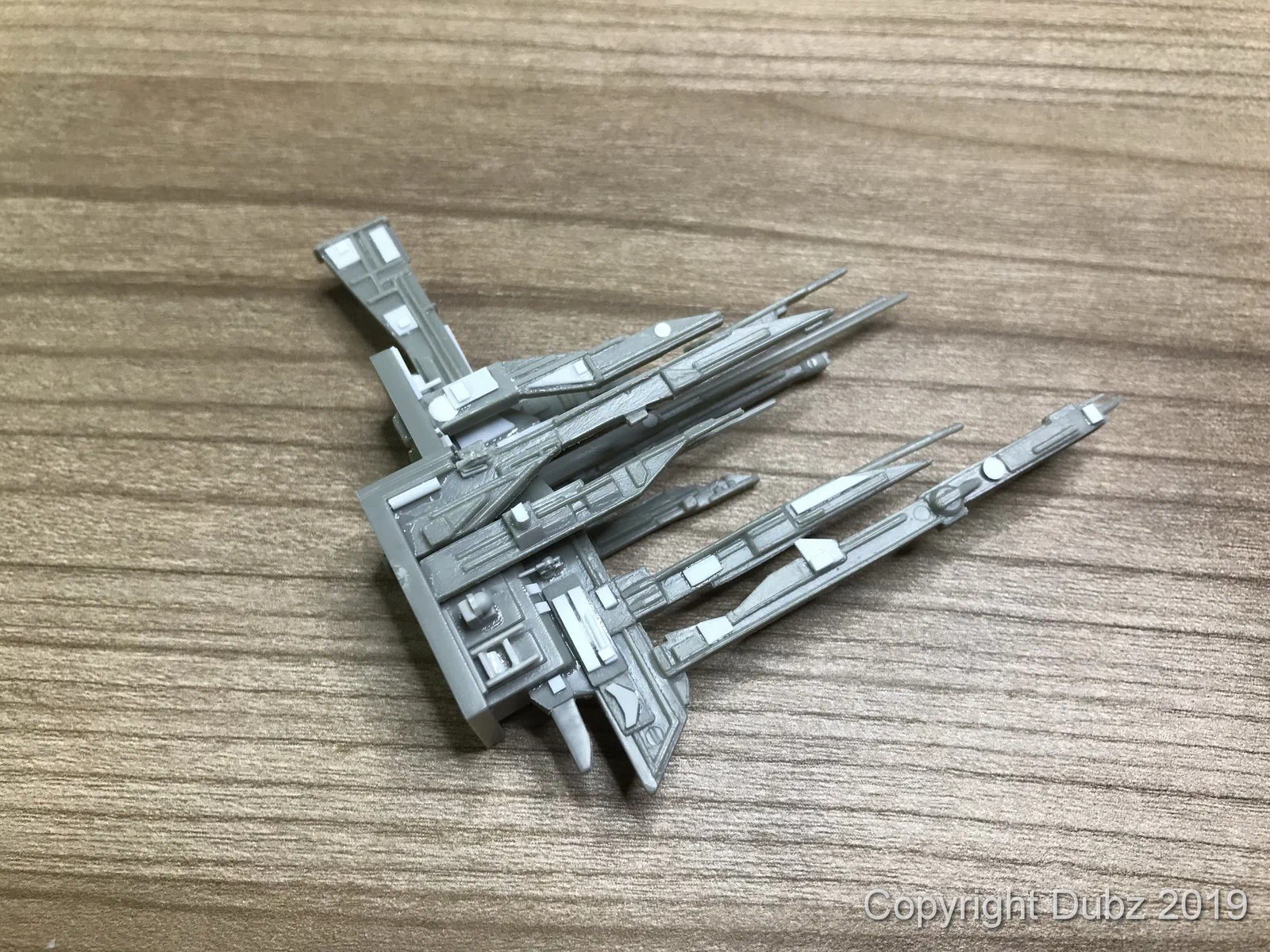
The engine section at the stern got its own share of detail before everything was glued together. After the main assembly came another round of modifying, until the hull had the dense, technical look I was after.
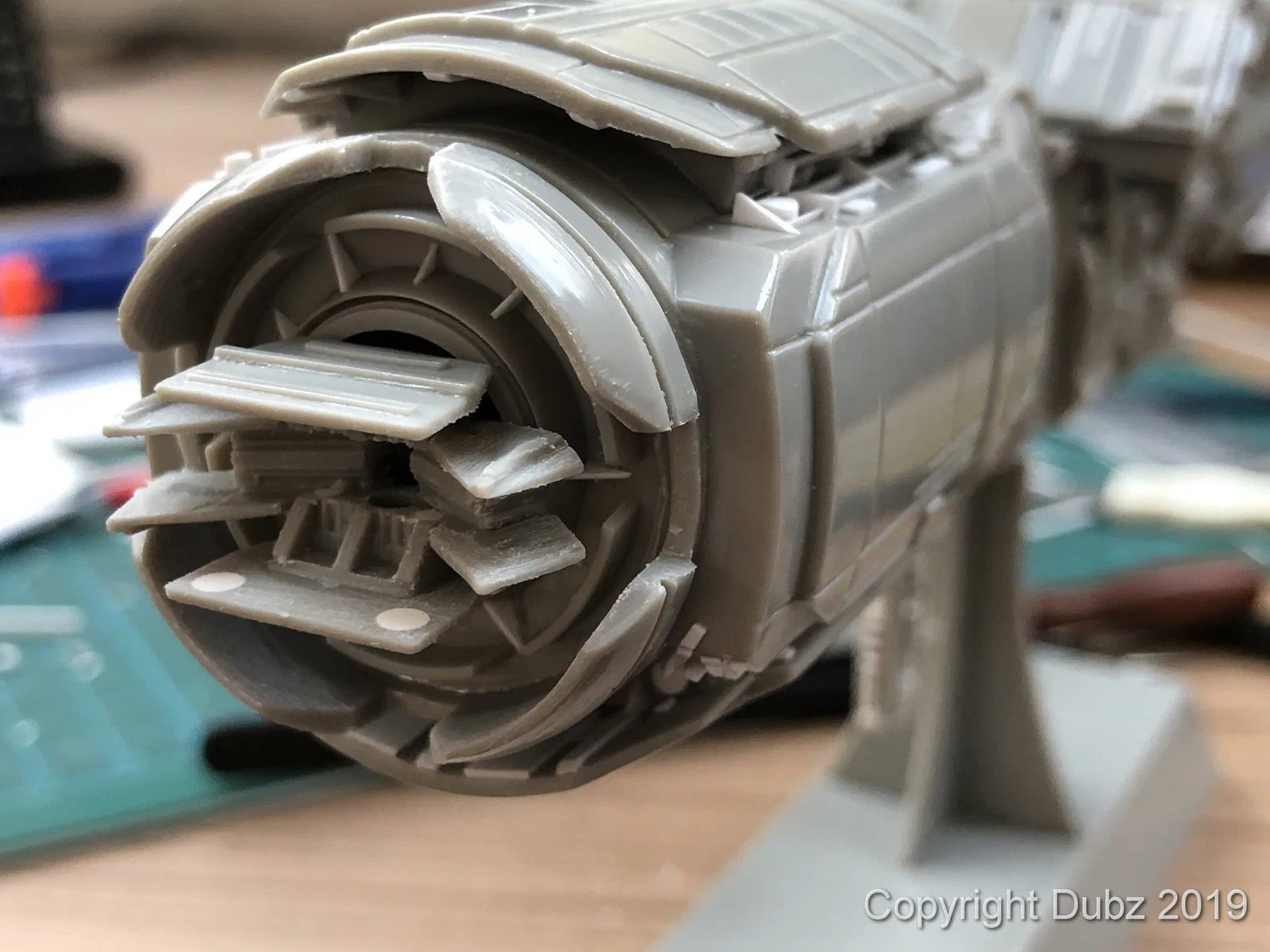
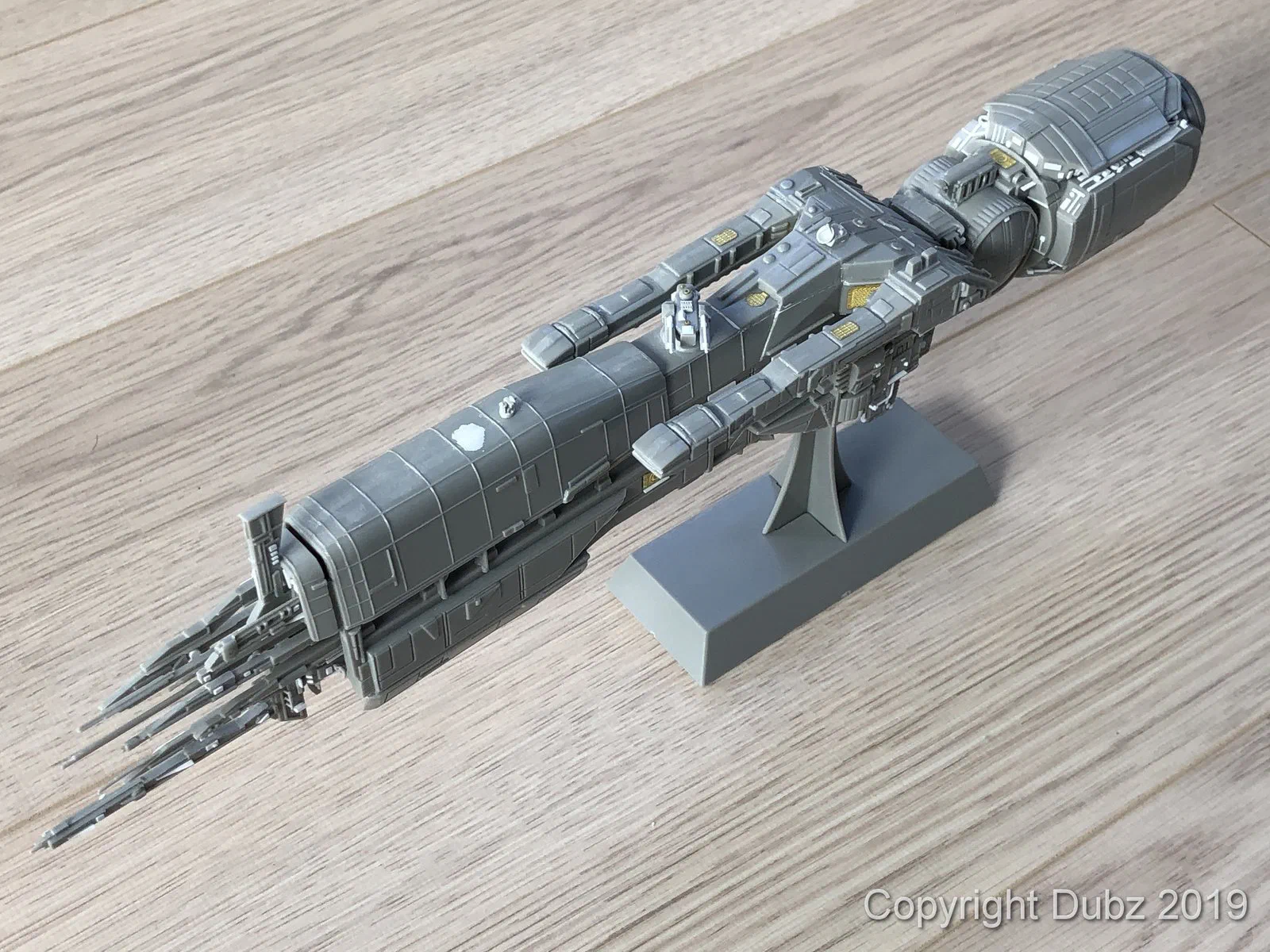
Primer and panels
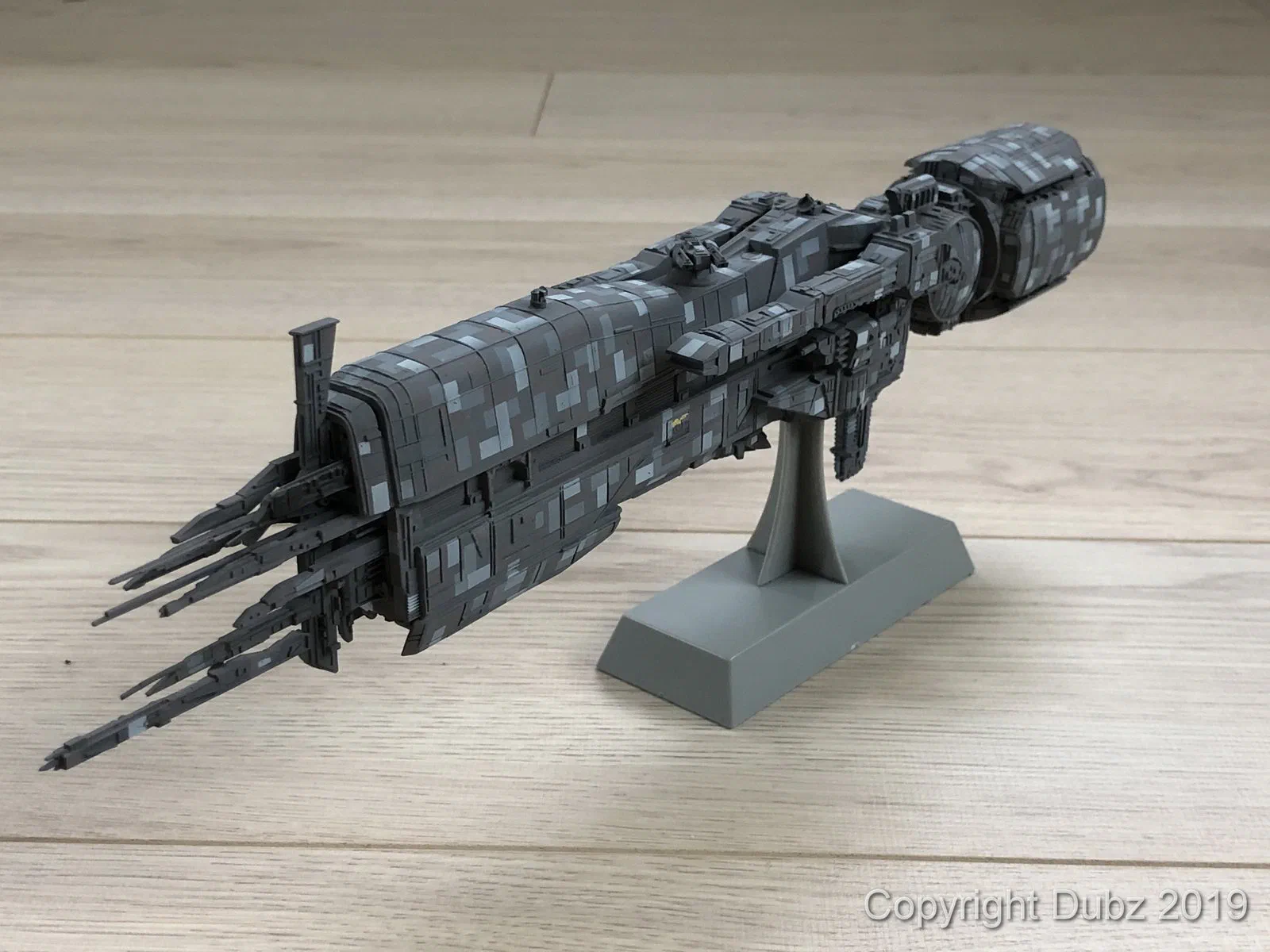
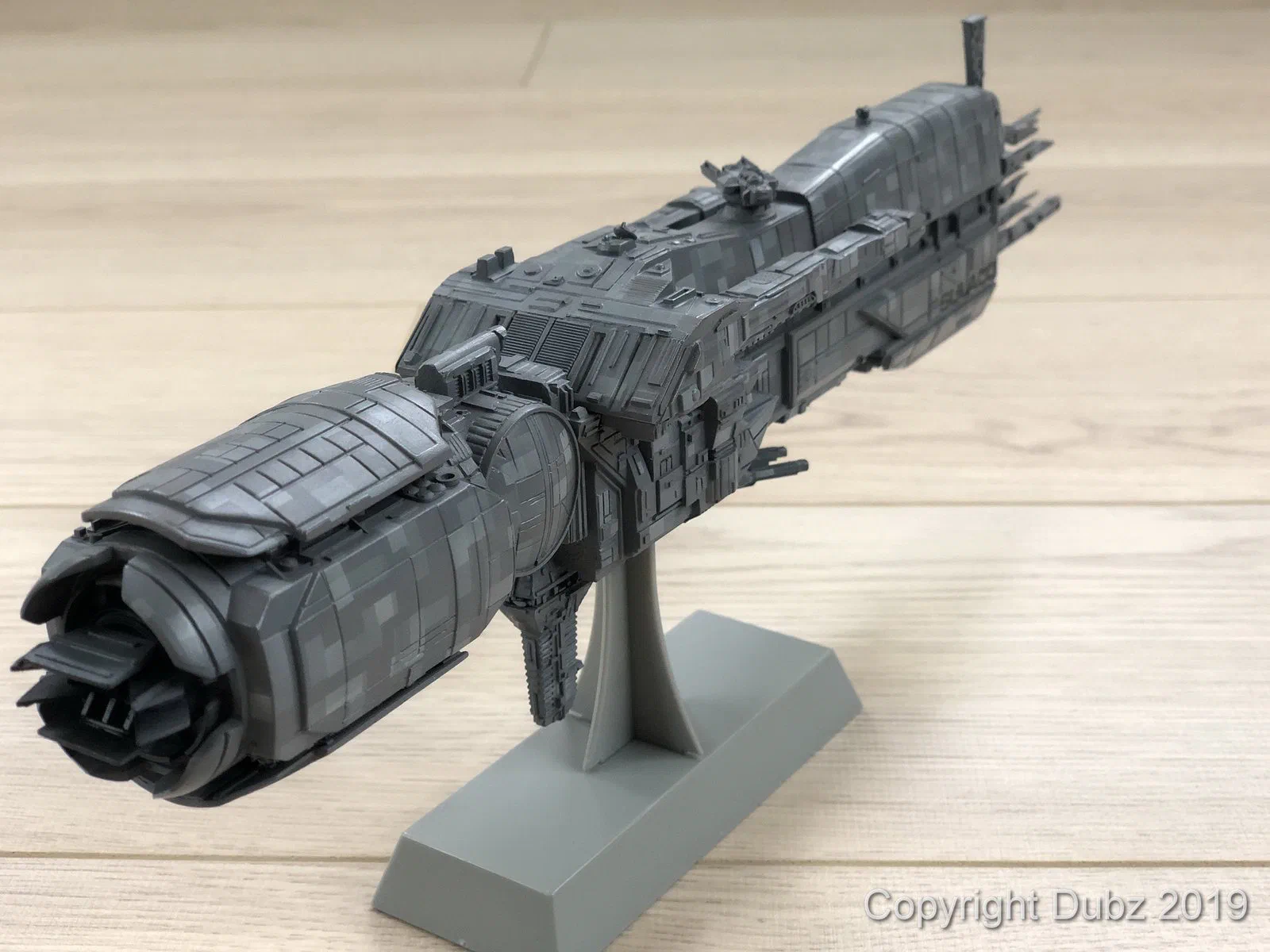
The primer shows every flaw and every success of the greeble work. Over the first coat of grey I masked and sprayed individual panels in different shades of grey. That takes a lot of tape – and there is always one more piece of tape to find and remove afterwards.
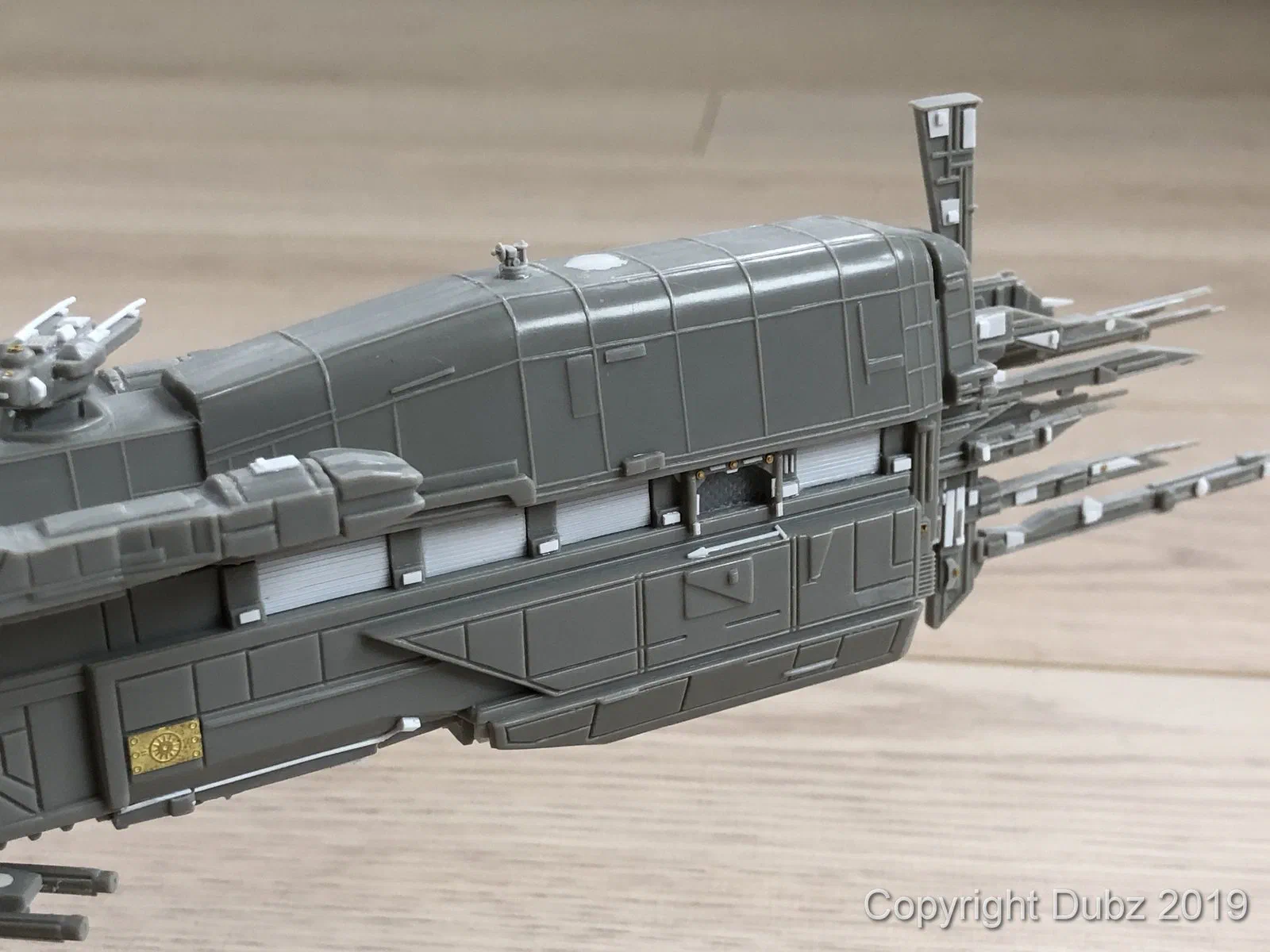
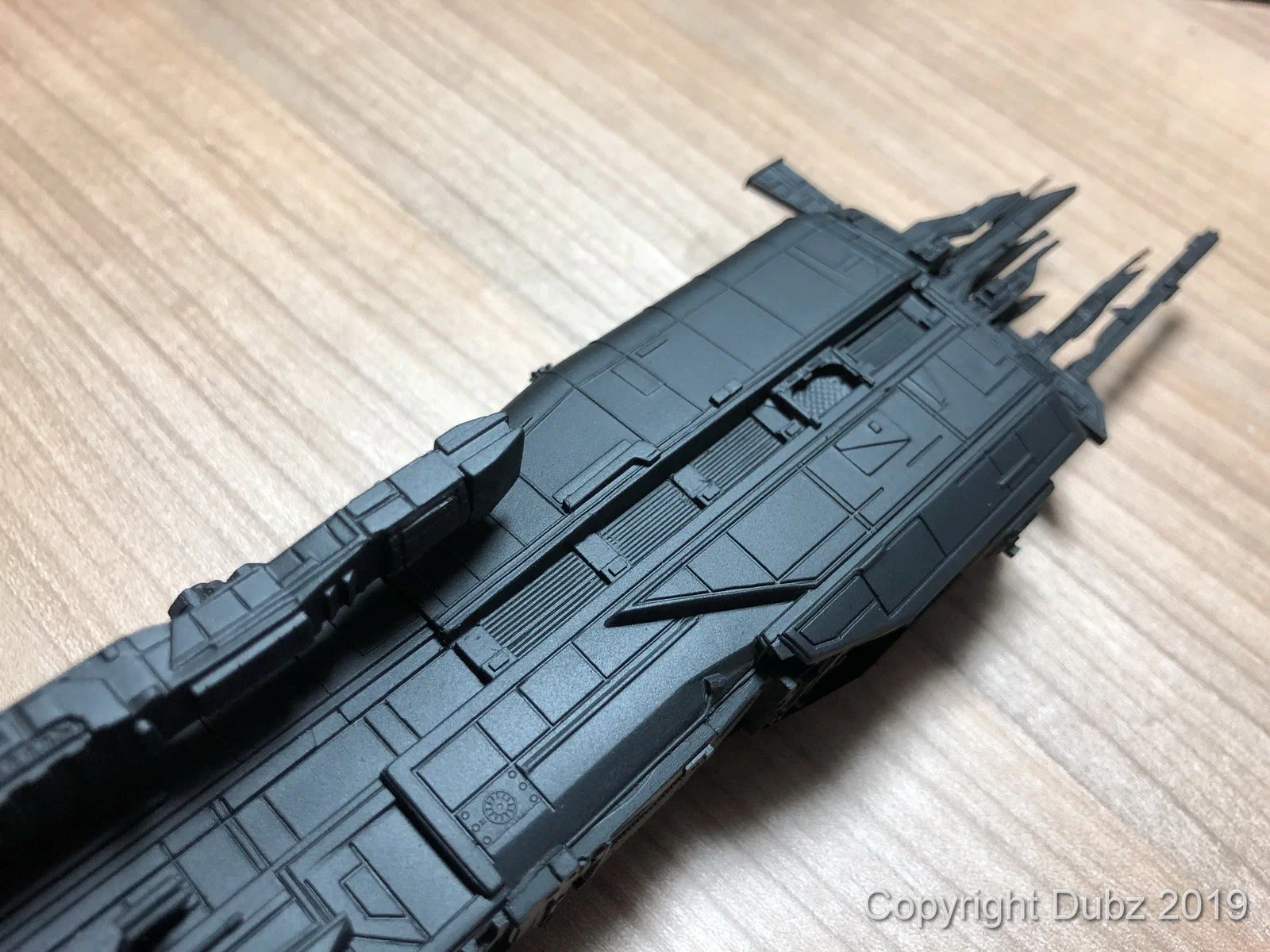
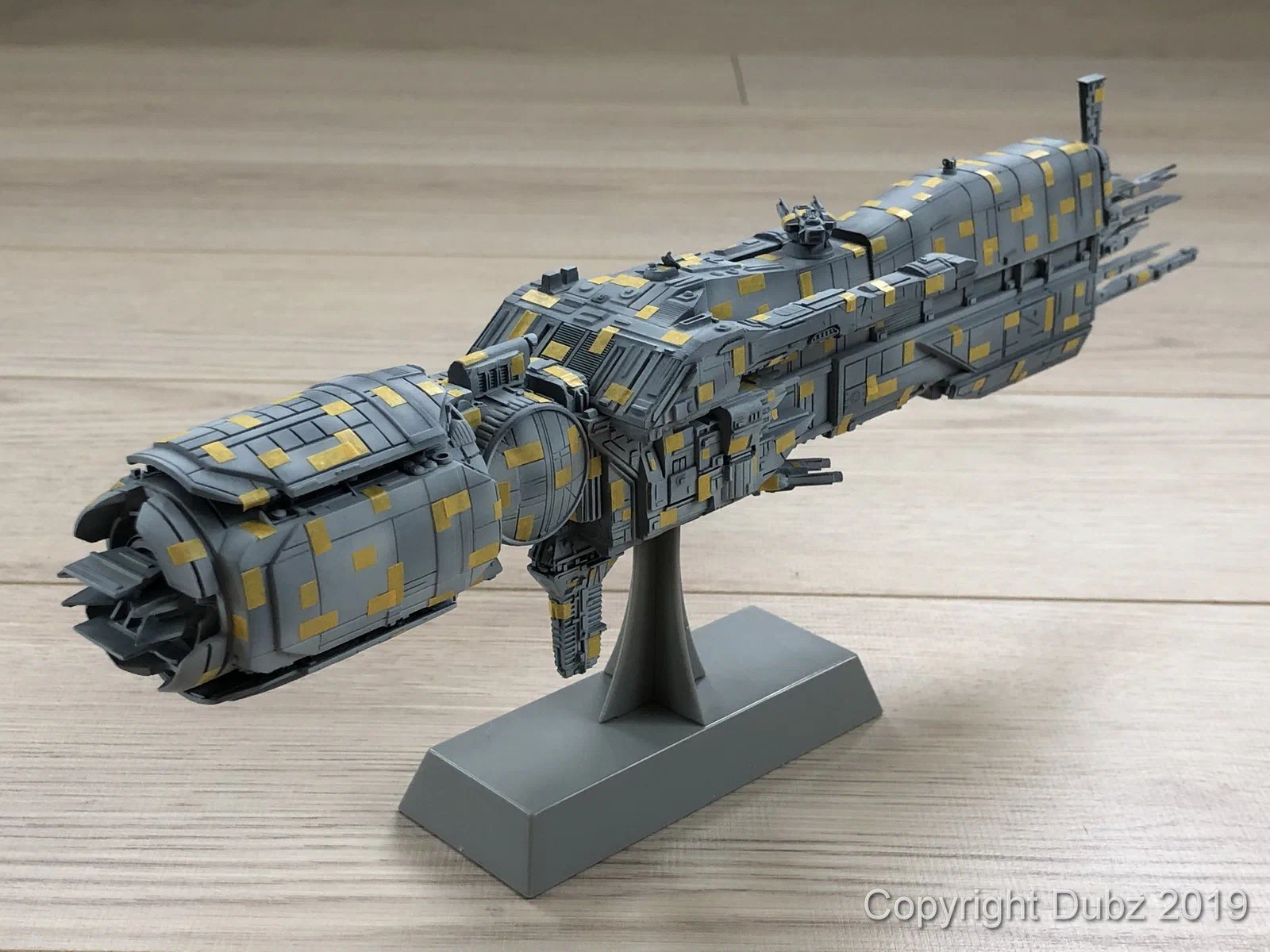
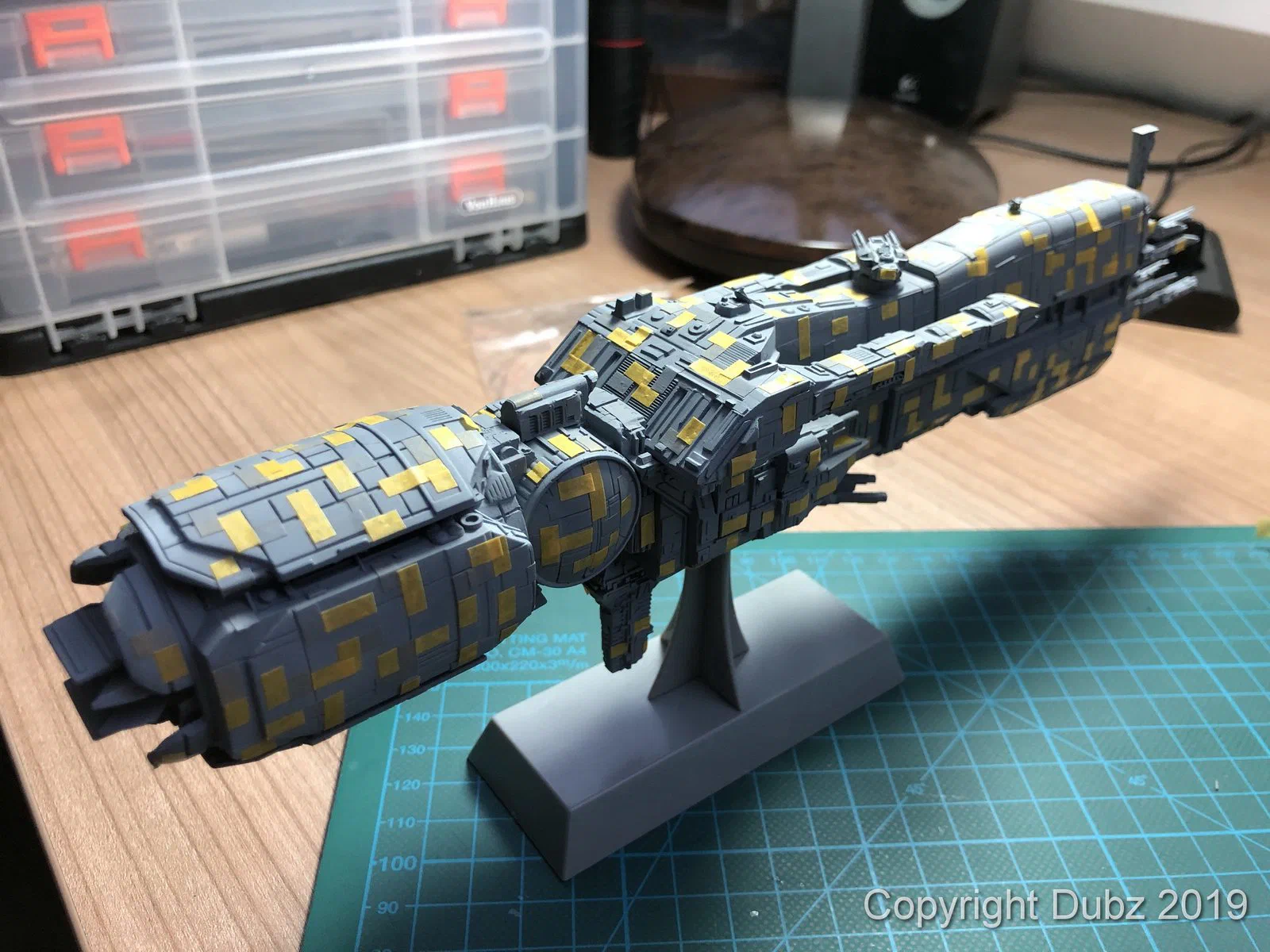
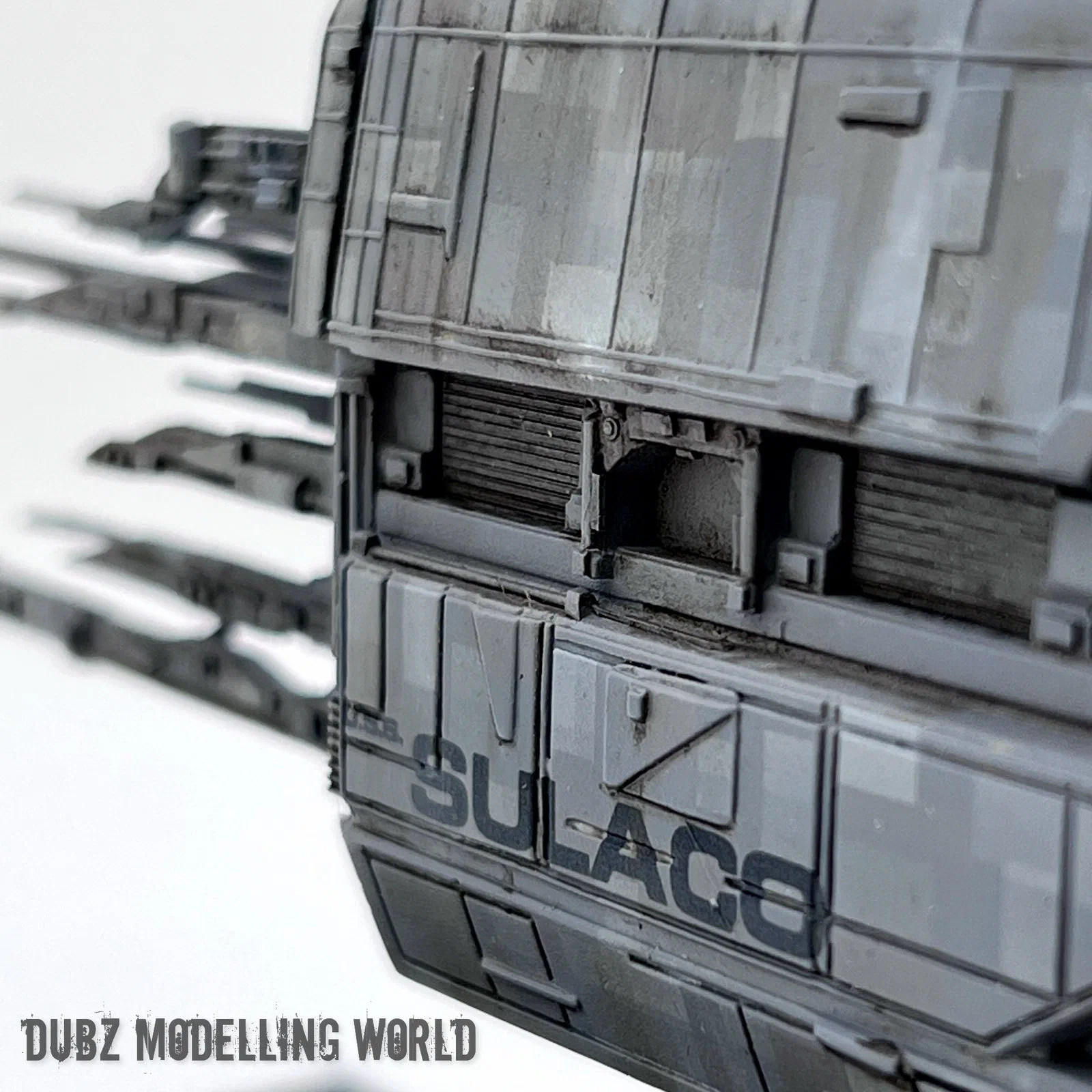
After the tape came off, the contrast between the panels was too strong. A filter evened it out, so that the panels read as slight differences on one hull rather than as a patchwork. Then the usual sequence: Klear, decals, Klear again.
Weathering
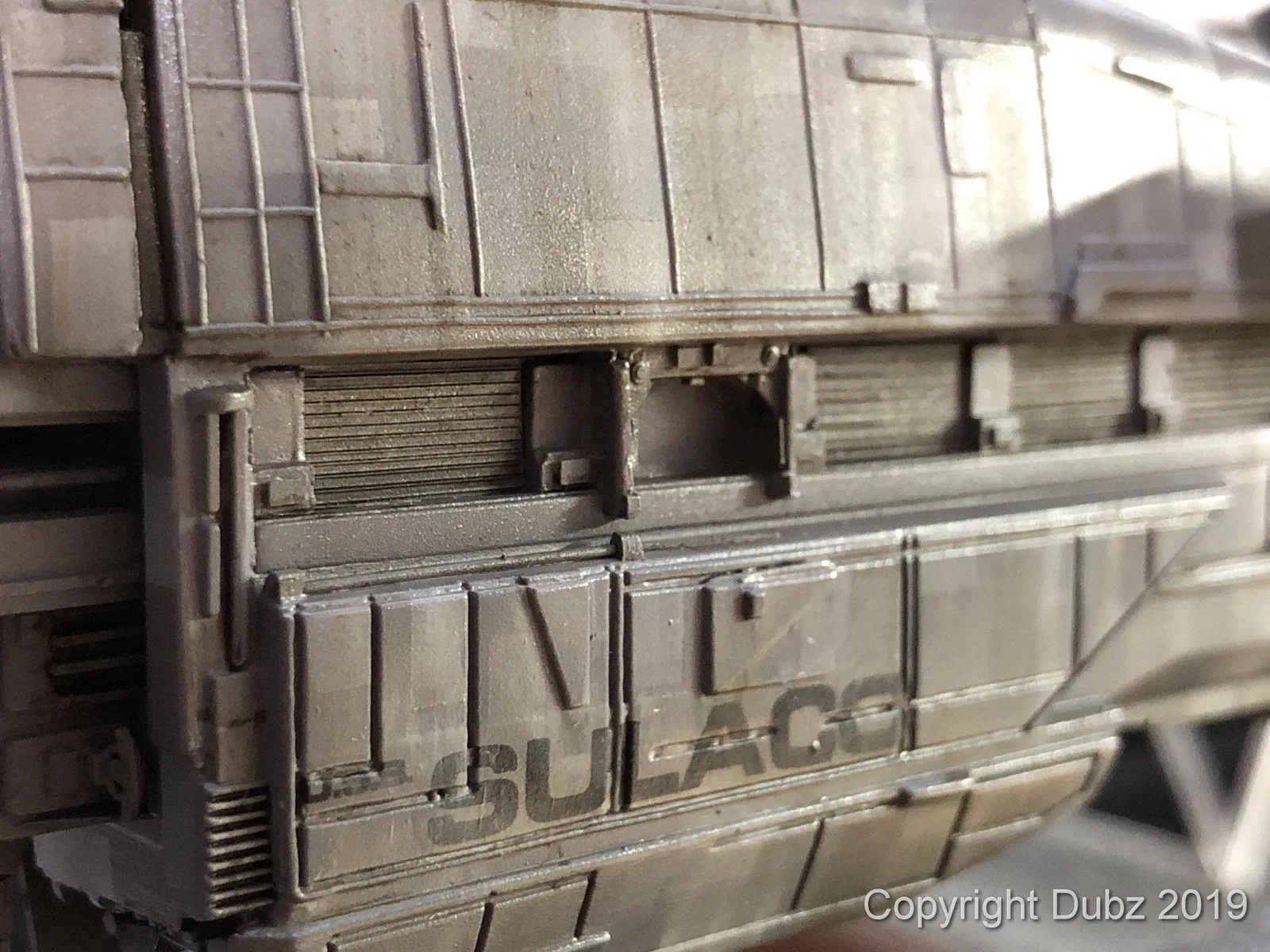
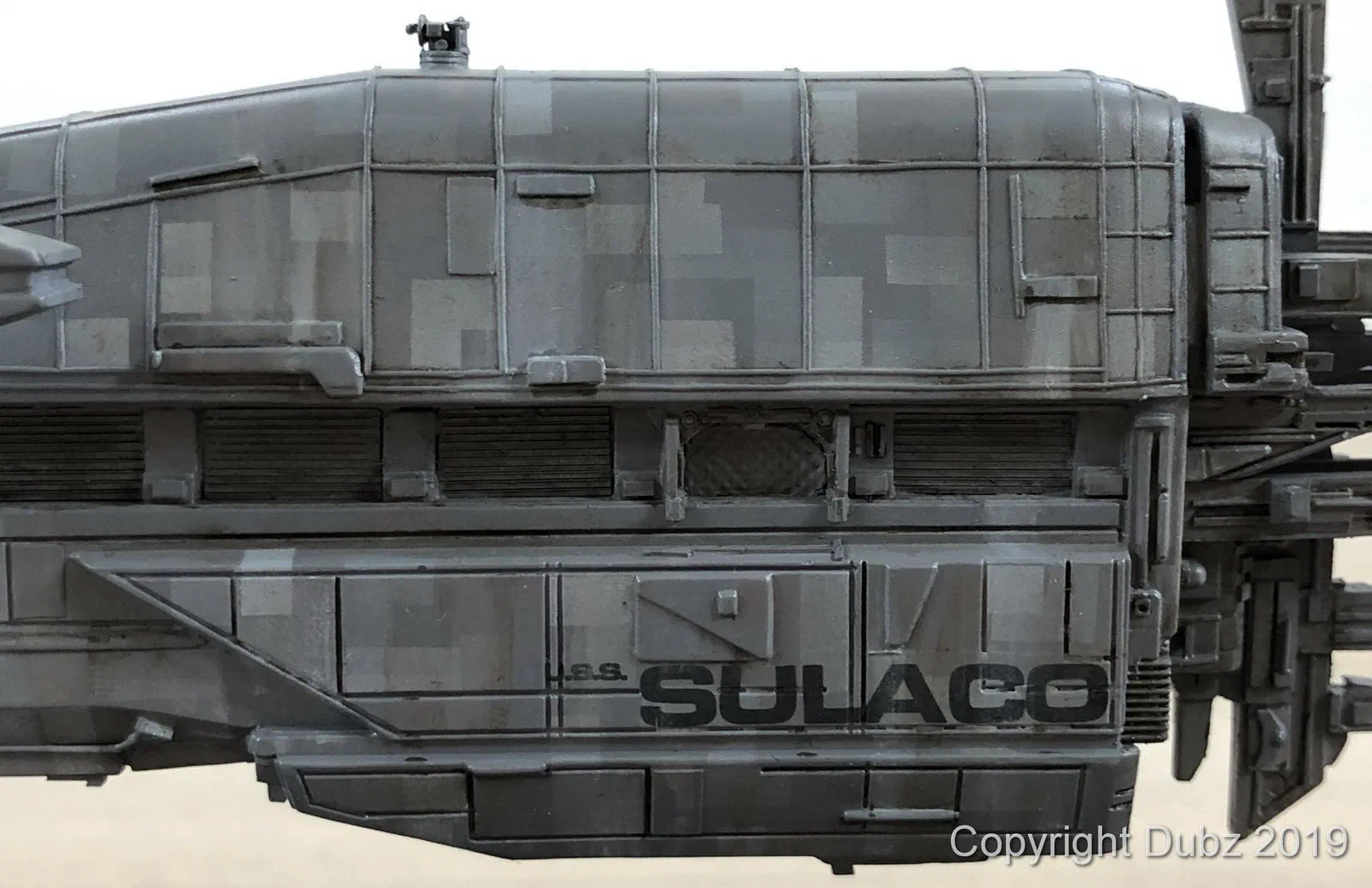
Next came the pin wash, a matt coat and the weathering. I wanted to show the Sulaco as a heavily used warship – not a showroom model, but a ship that has been in service for years.
Case and dropship
The case was built in between: a dark, textured base in a light wooden frame under an acrylic cover. And just when I thought the finish line was close, I noticed that I had completely forgotten the main hangar doors. They went in at the very end – open, with the dropship hanging below the hull on a thin wire, as if she were just being lowered for deployment.
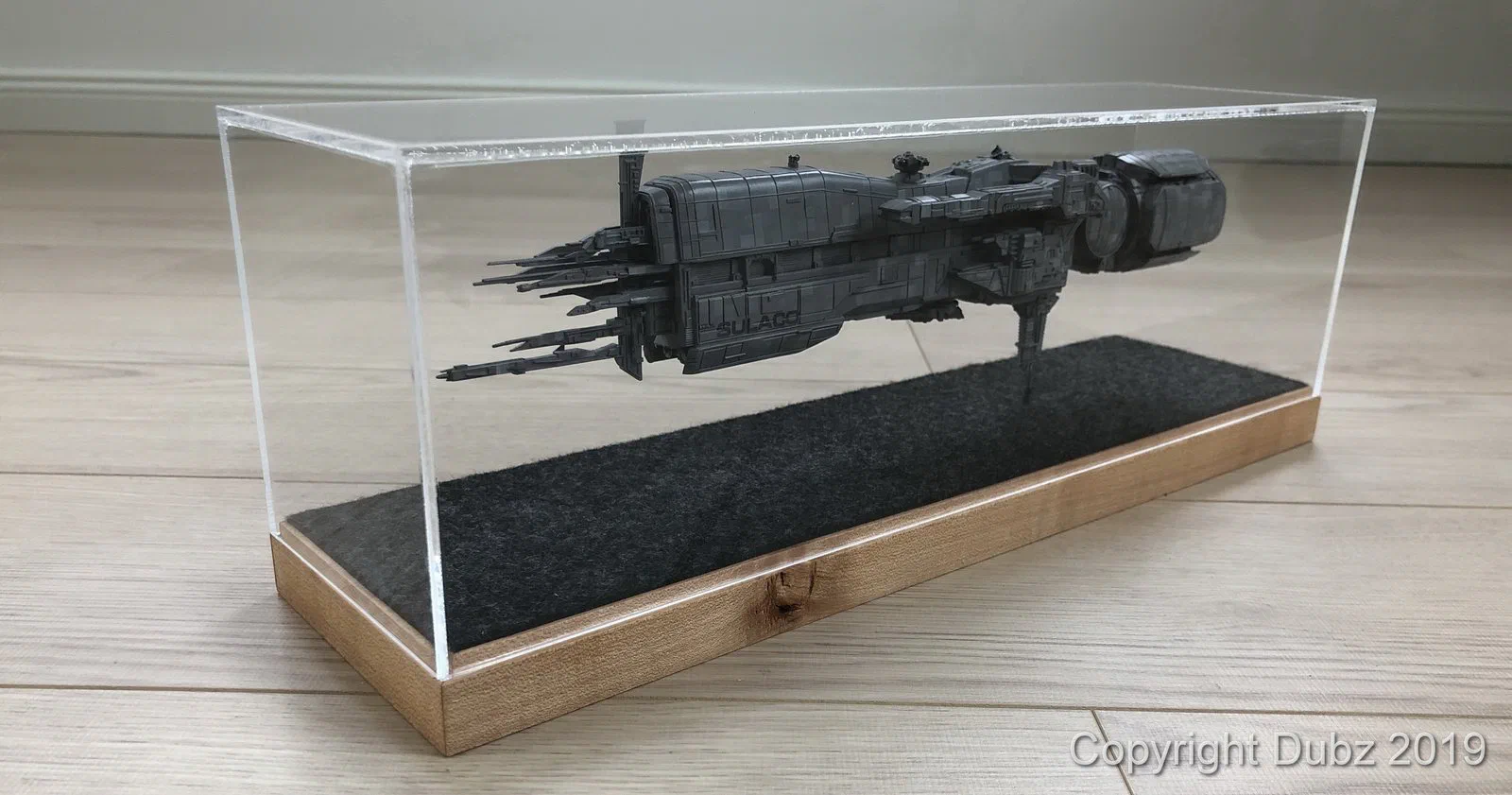
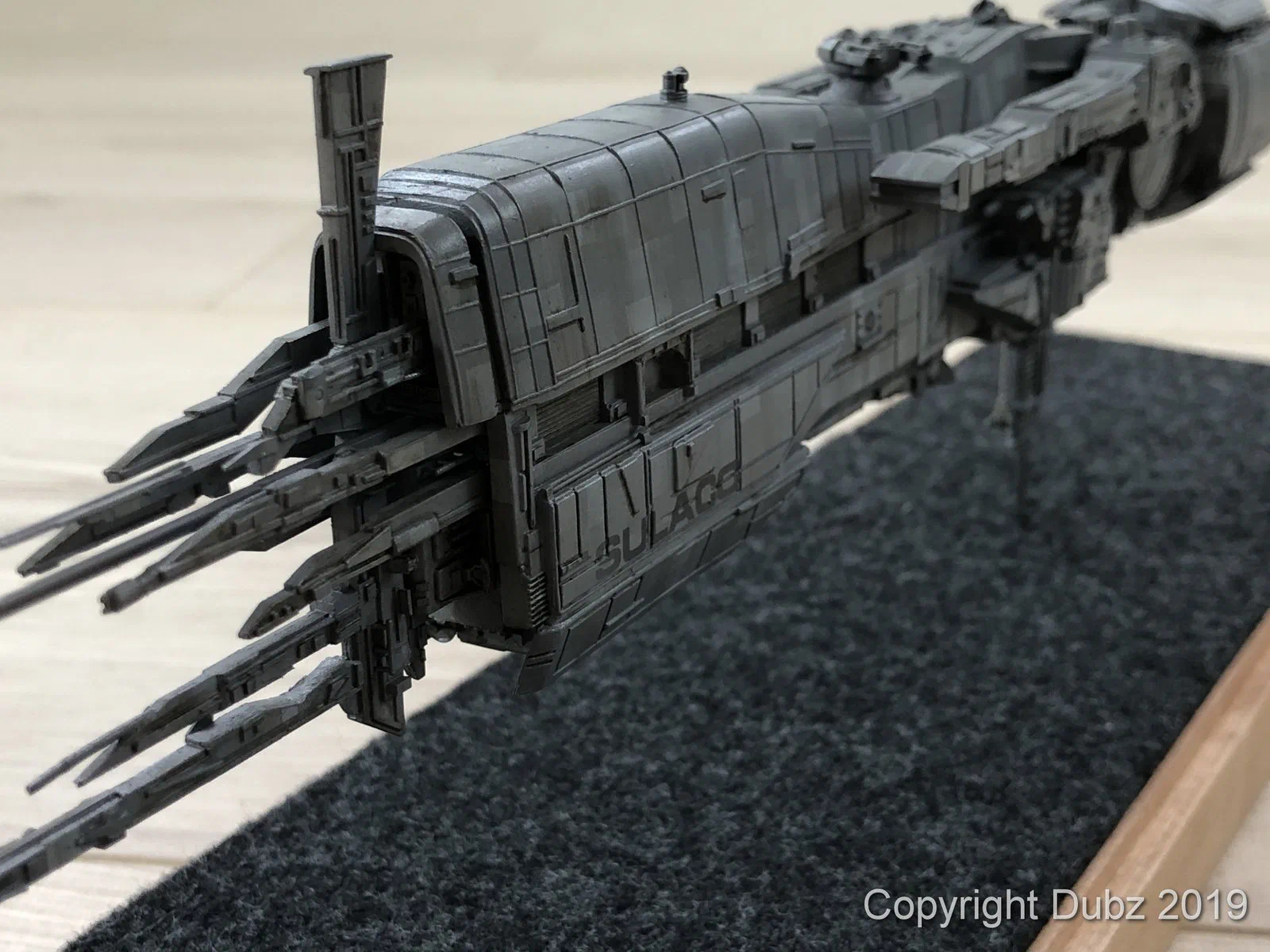
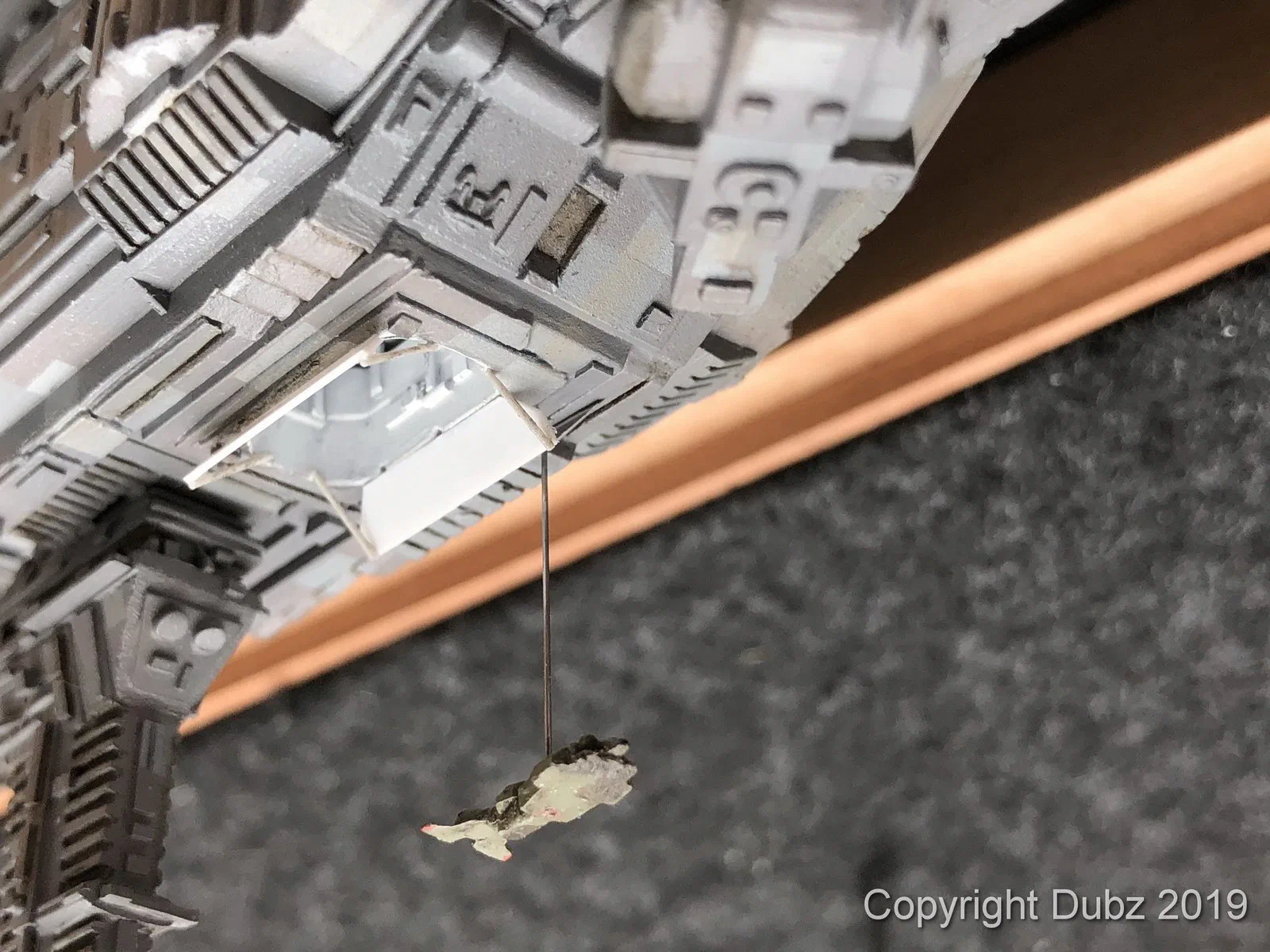
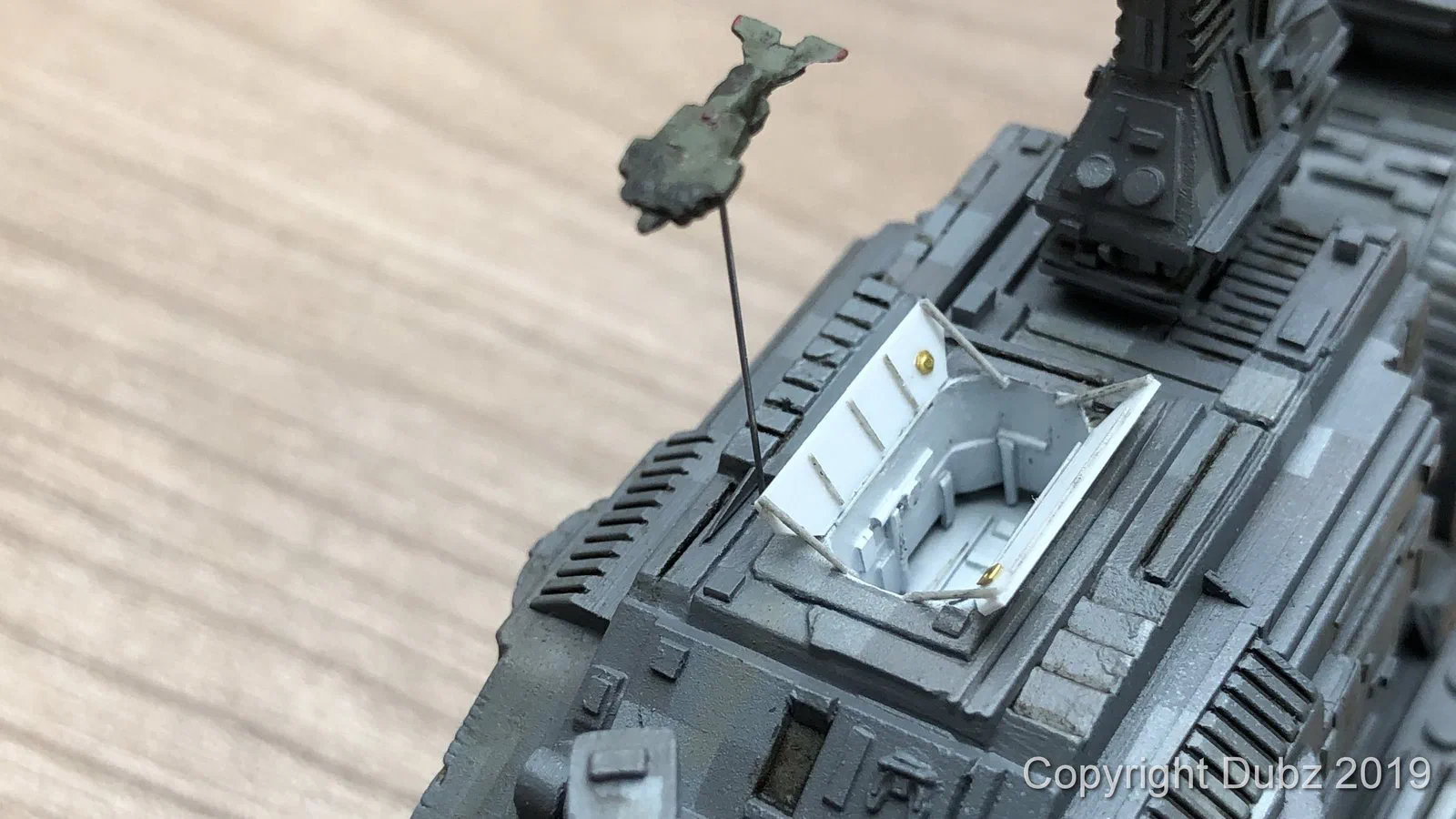
The finished model
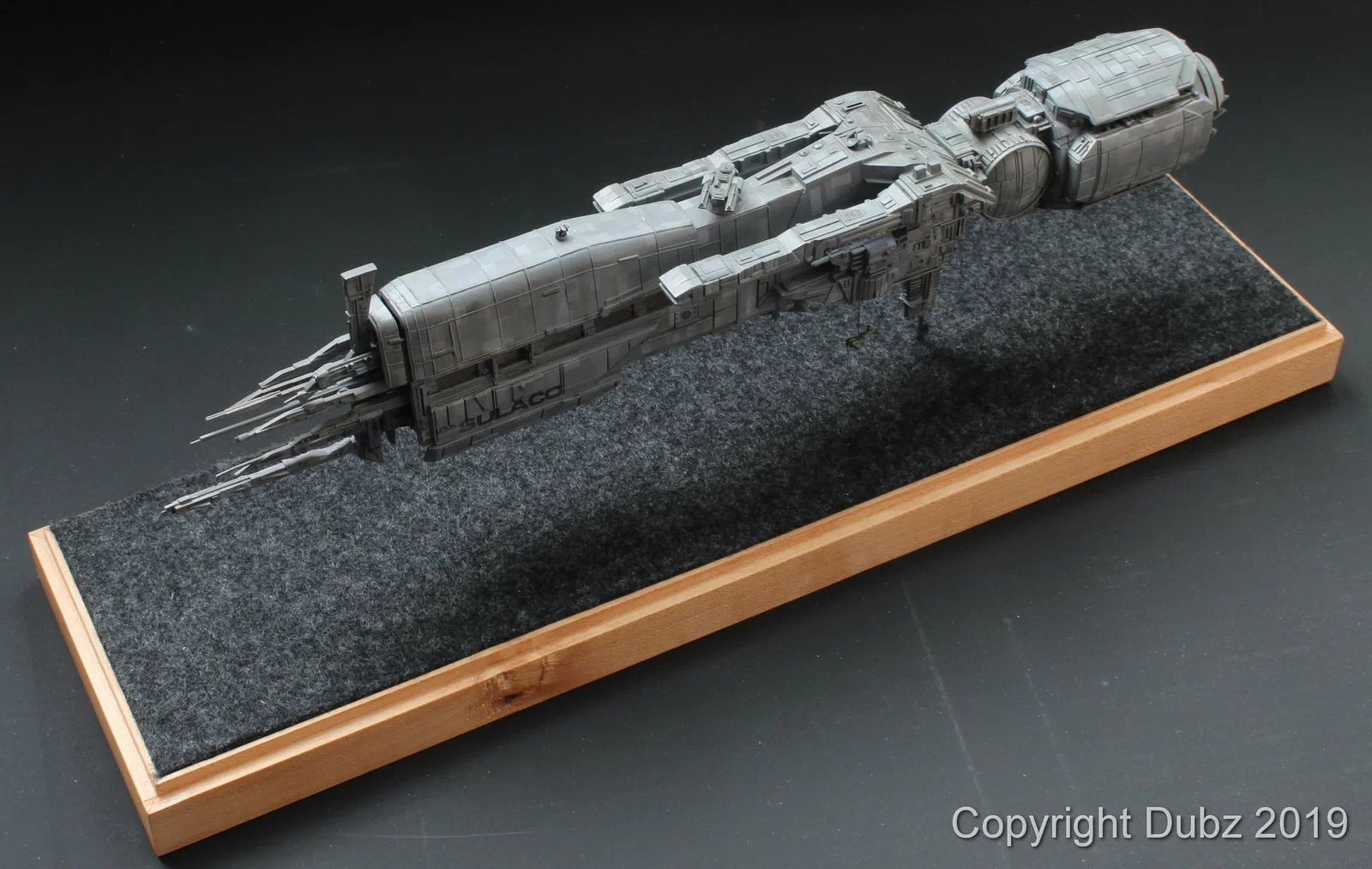
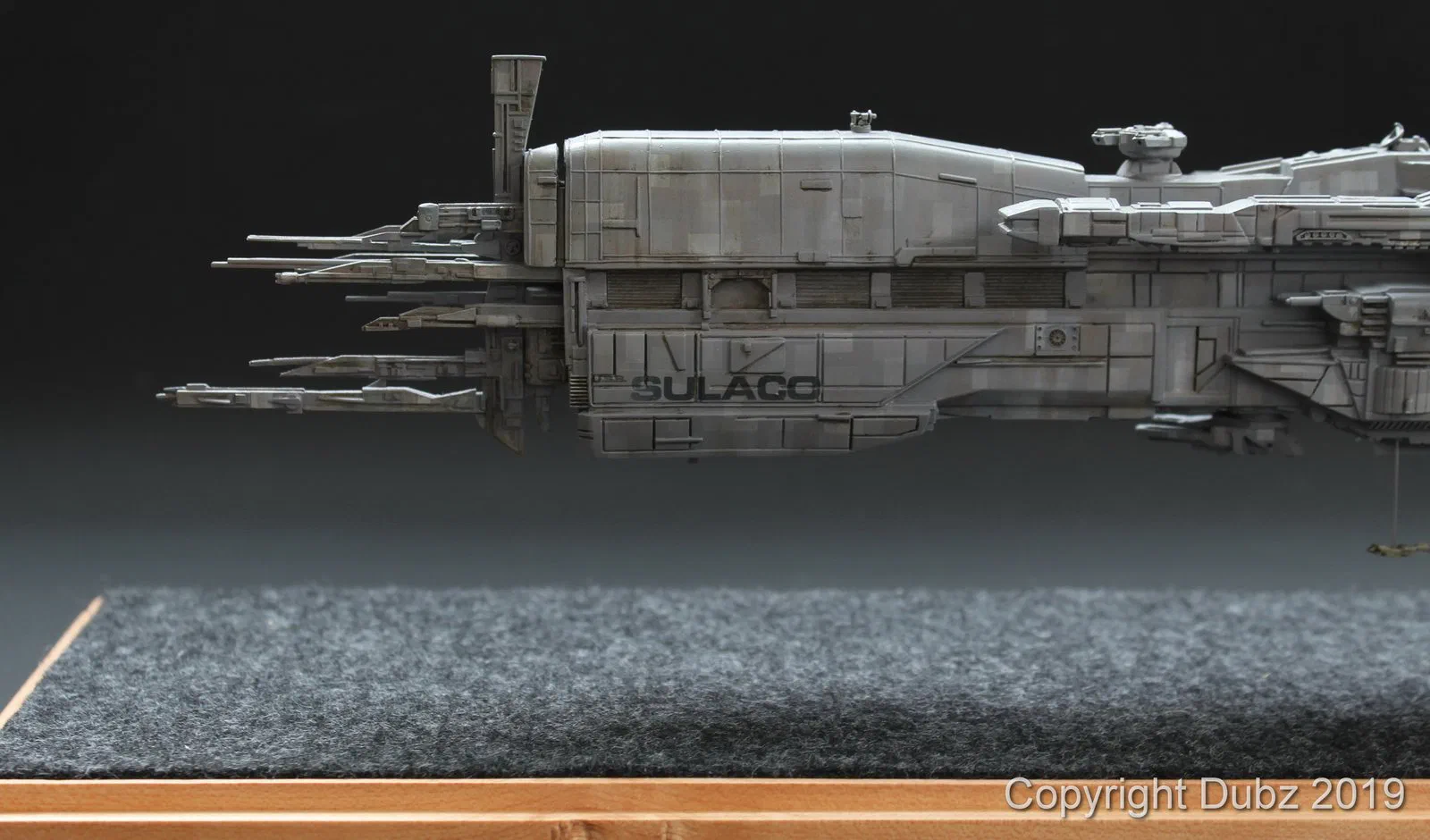
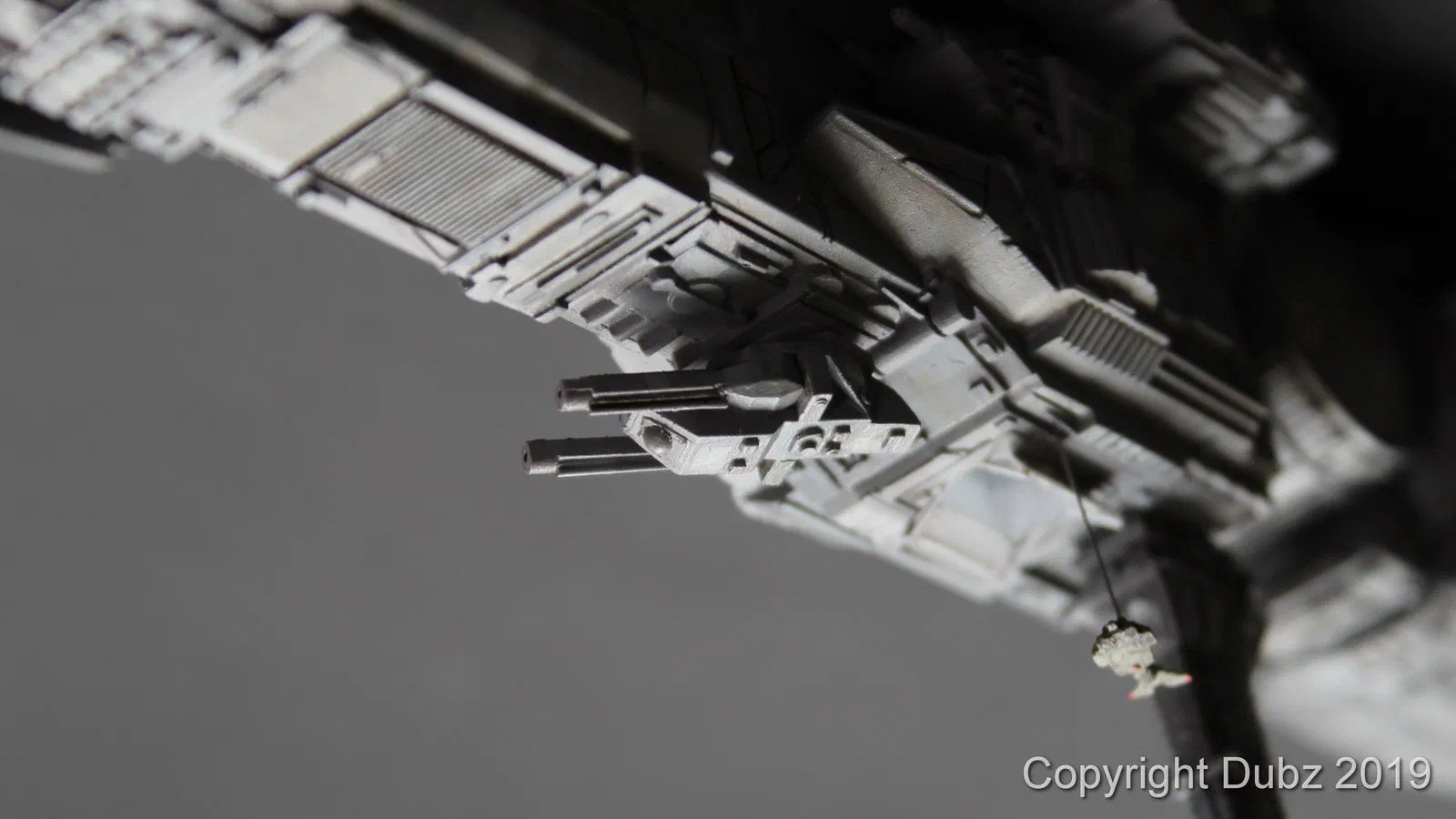
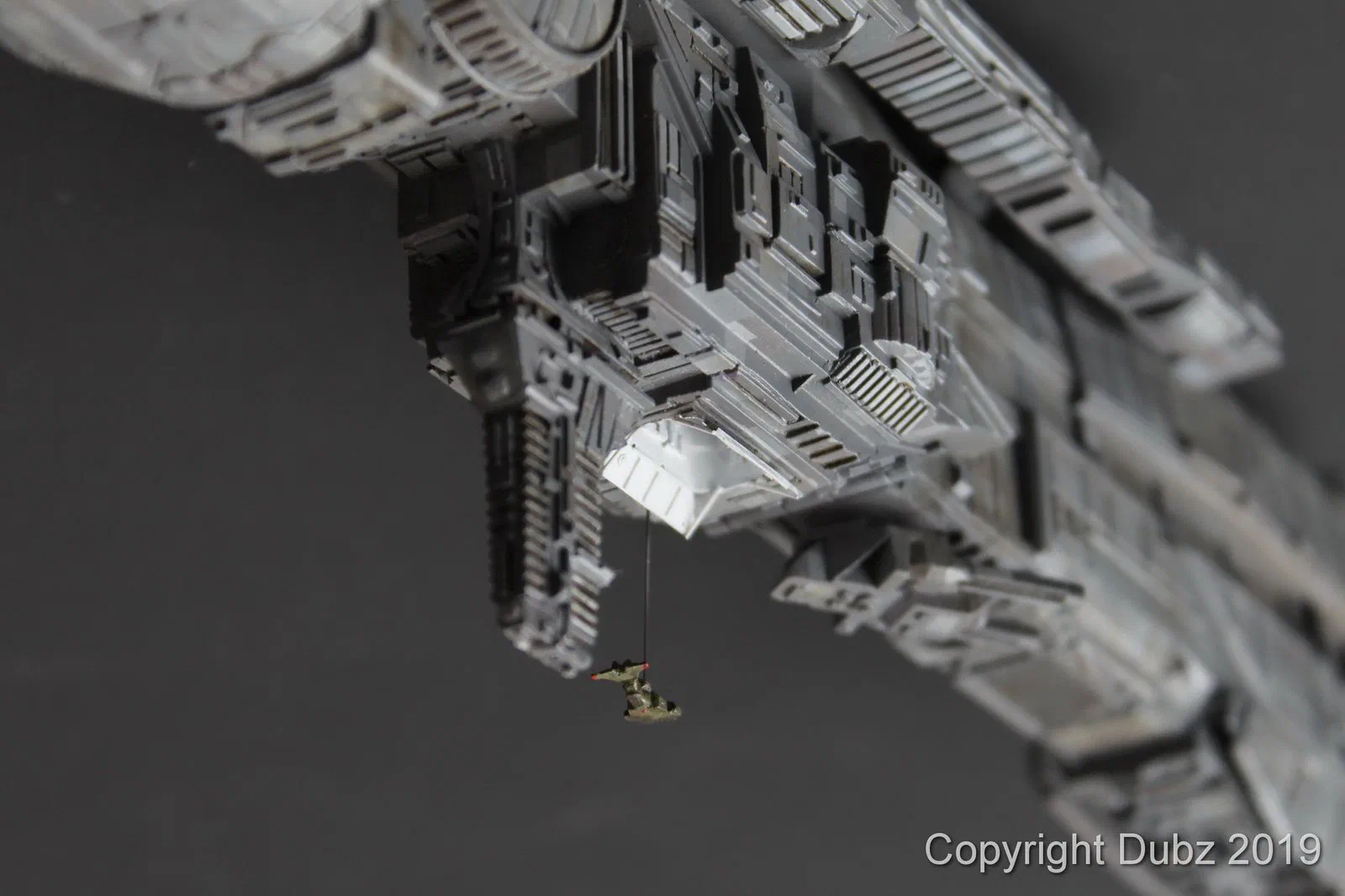
In 2022 I photographed her again, and in the same year she took 3rd place in the Lockdown 2022 contest.