
History
Large sailing ships never travelled alone: they carried their own small fleet of boats for every job that had to be done away from the ship – carrying anchors and cables, fetching water and stores, running messages, landing people and towing the ship when the wind failed. The boat in this kit is a 25-foot ten-oared boat of the Russian navy. According to Falconet it was suited as the standard boat for large Russian schooners such as the Grad and the Meteor and for the schooners of the Gonets type – the Lastochka, Strela, Zabiyaka and their sisters.
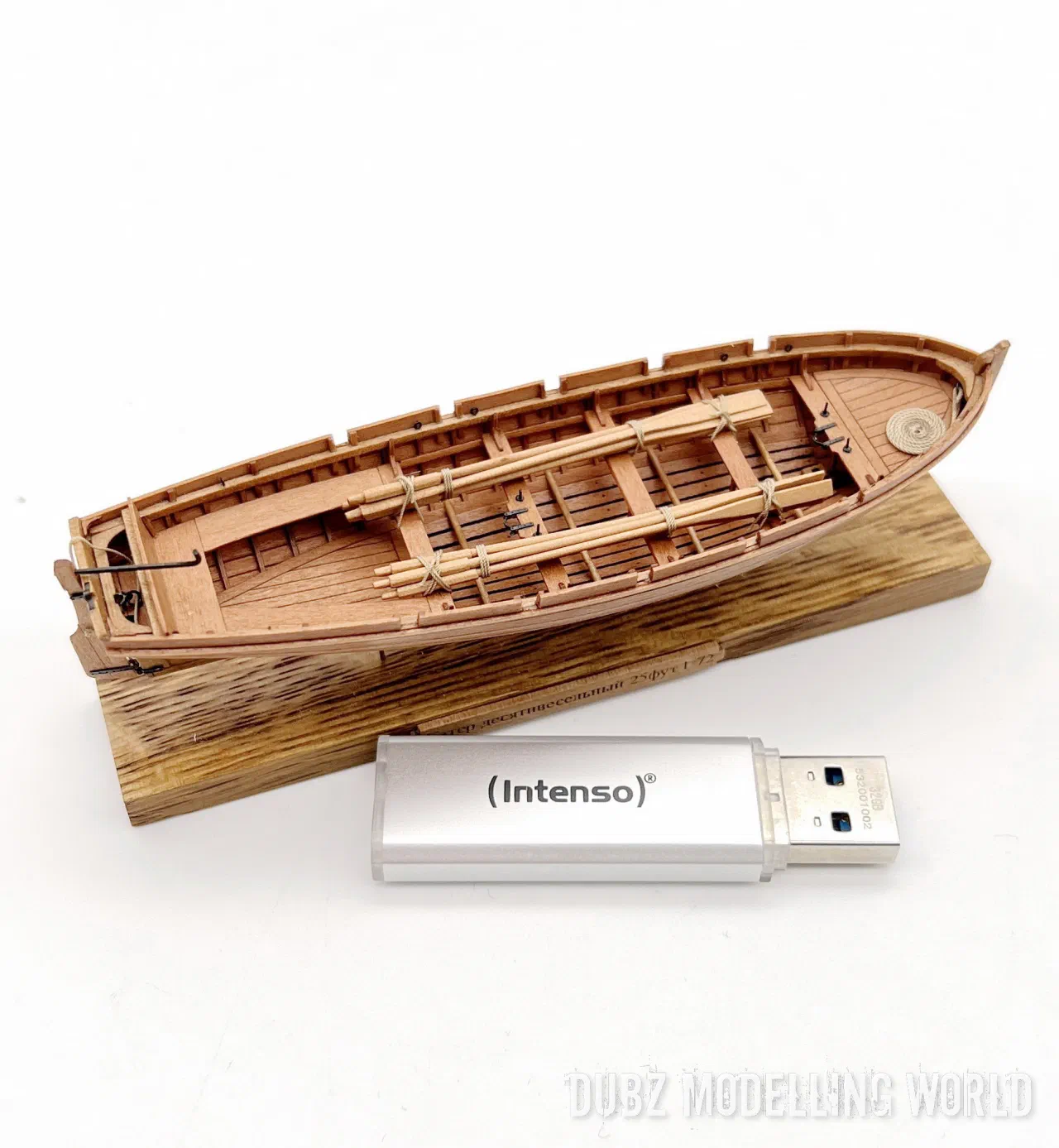
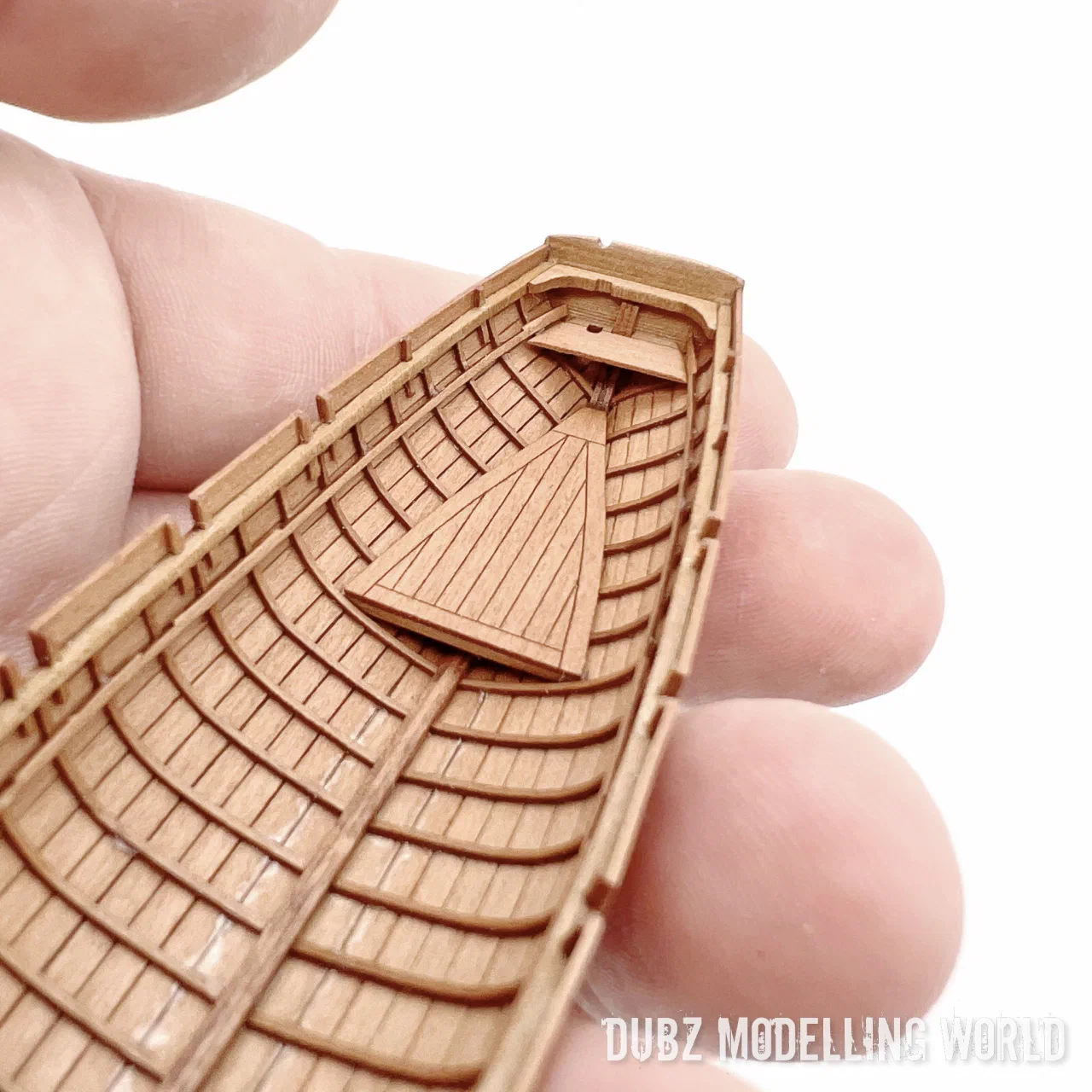
Twenty-five feet is a little under eight metres. Ten oars, a rudder with its tiller, thwarts for the rowers and a removable backrest aft – that is the whole boat. Scaled down to 1:72 it is barely ten centimetres long, and that is exactly what makes it so appealing: a complete boat with all its structure, built the same way as the real one, small enough to sit in the palm of a hand.
The kit
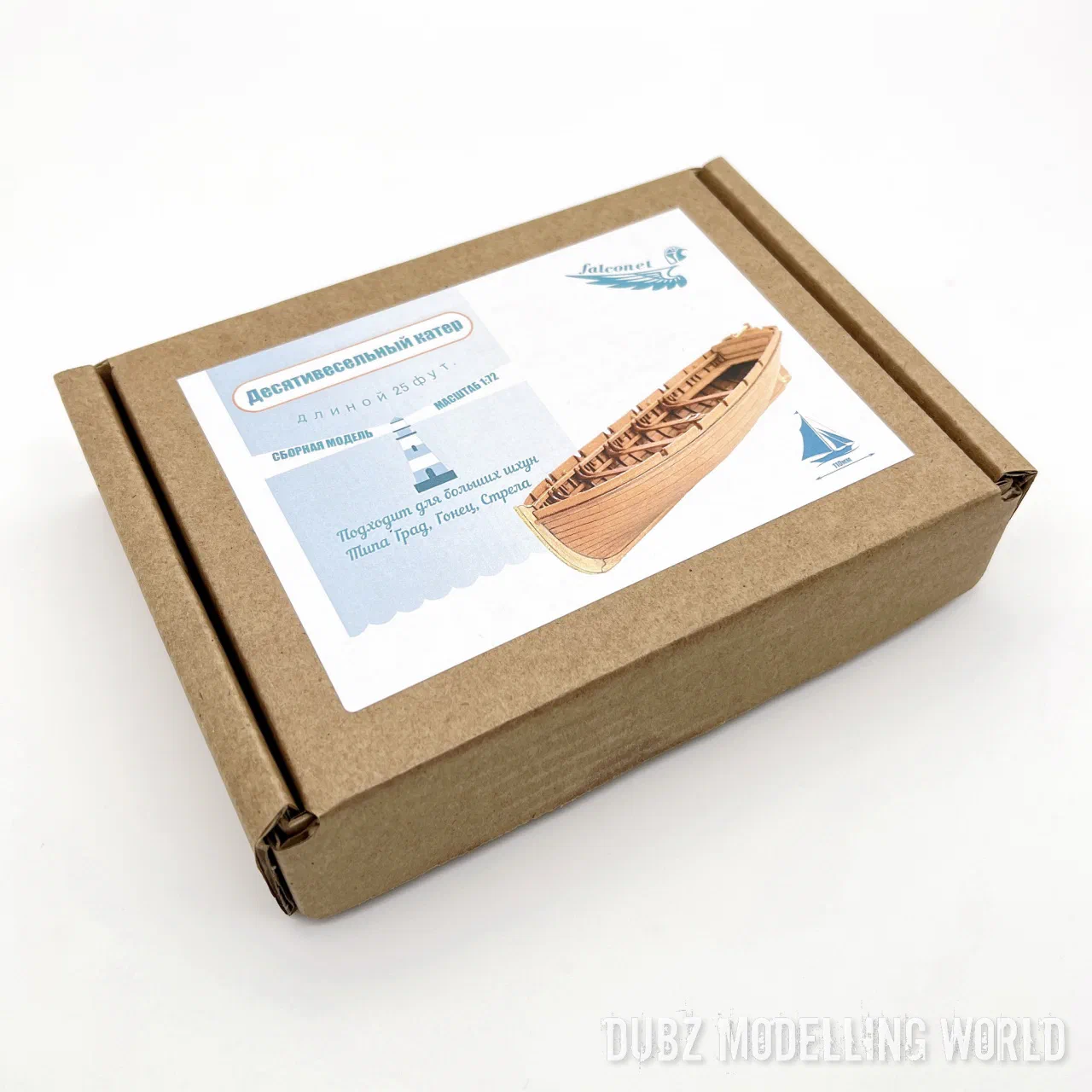
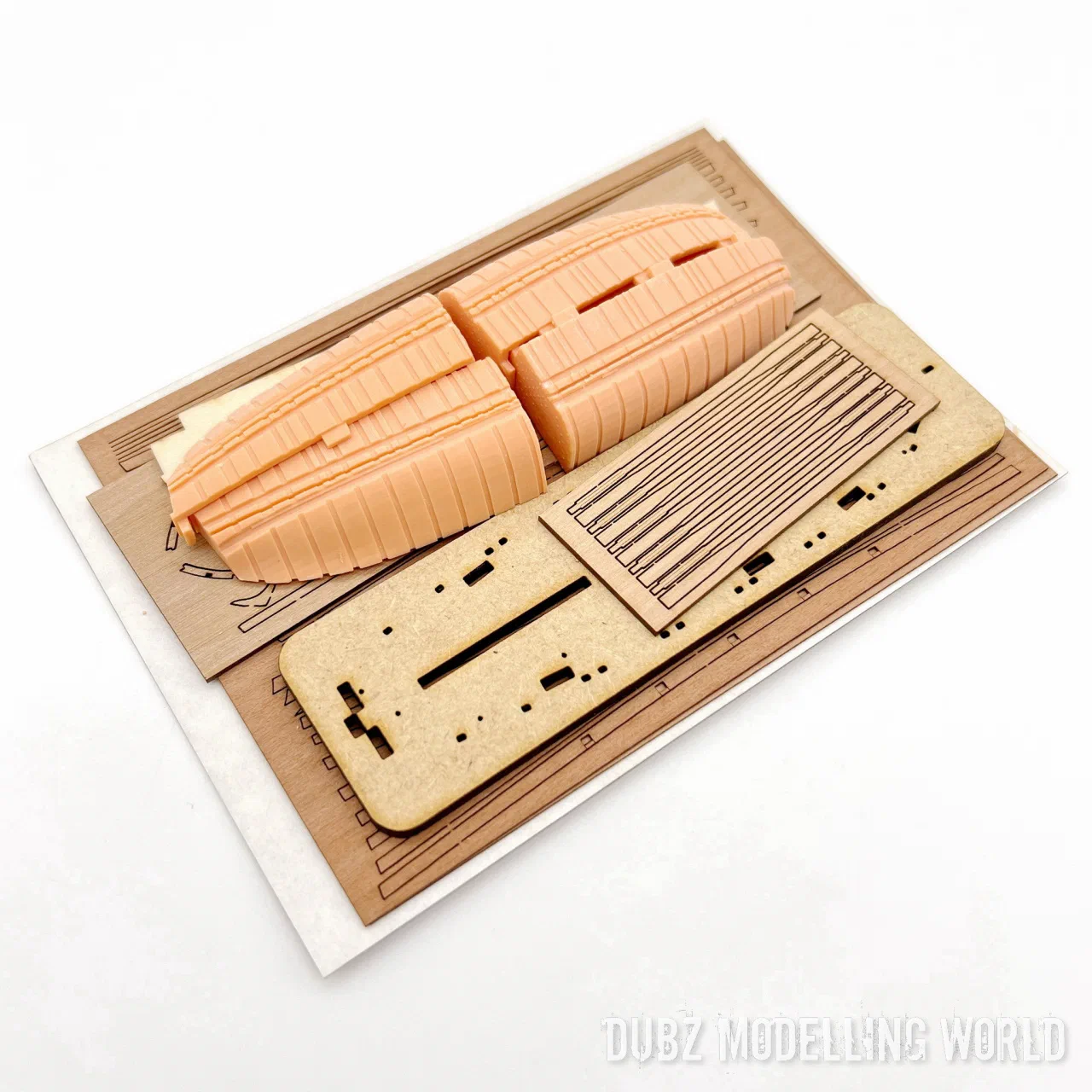
Falconet kindly sent me this kit for a review here on the site, and in the summer of 2024 it was time to build it. The box contains two sheets of pear veneer, two pear sheets, a building jig, a small sheet of two-layered photo-etched brass with very fine detail, brass wire and an image-based instruction manual in Russian. The manual is easy to follow even without reading a word of it.
Keel and jig
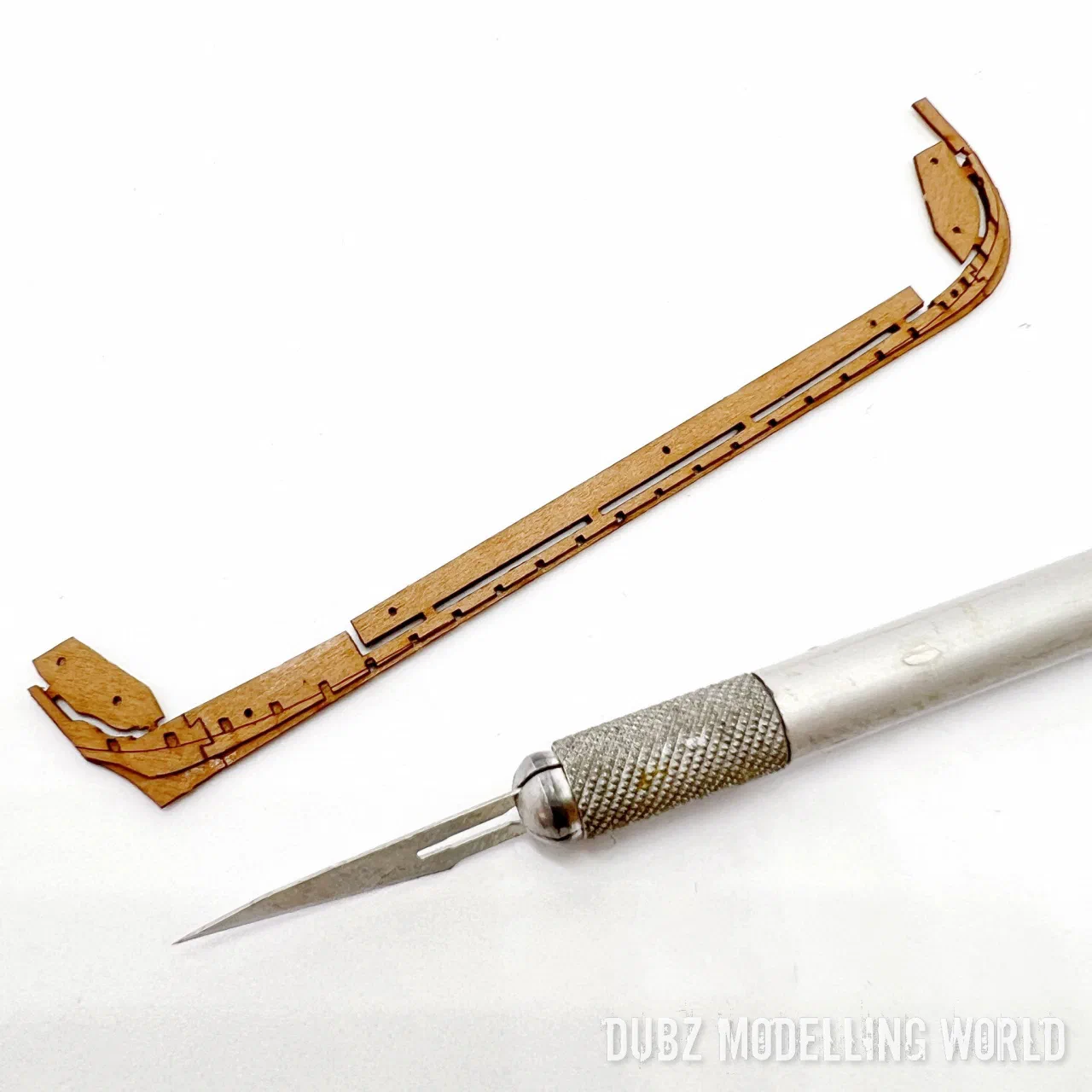
The keel comes in layers. Gluing them together gives strength and a sensible grain orientation, so that the long, thin part does not warp or break while it is handled. Removing the laser char is the first lesson of this kit: everything is so small that every burnt edge would show later.
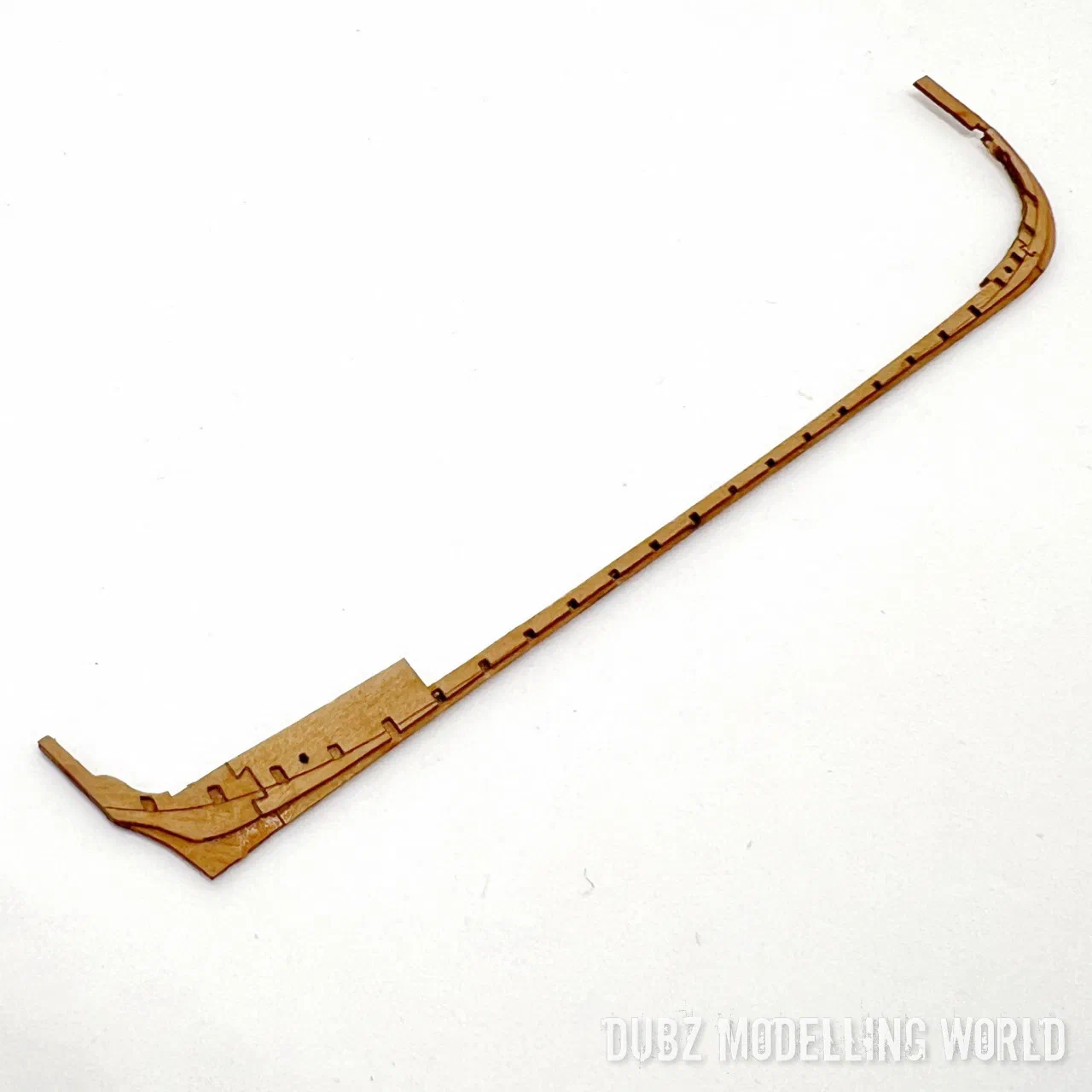
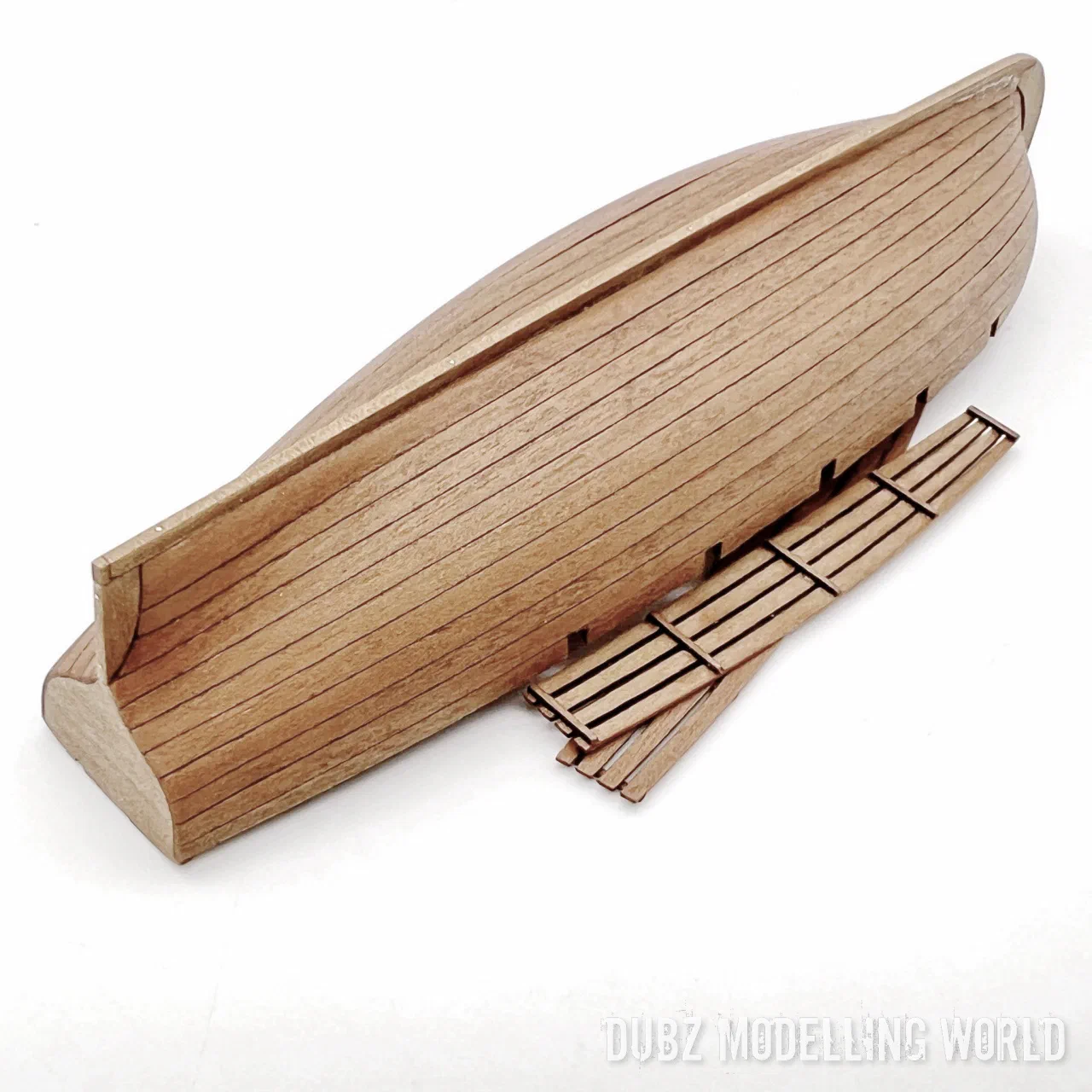
The heart of the kit is the jig, a mould on which the hull is built upside down. First I installed the gunwale beam and glued the oarlock pins into it. Then came the stern stay and the frames, which are bent over the mould and seated in its slots. When the last frame was in, I put the whole thing on my hand for the first time – and only then realised how tiny this boat is.
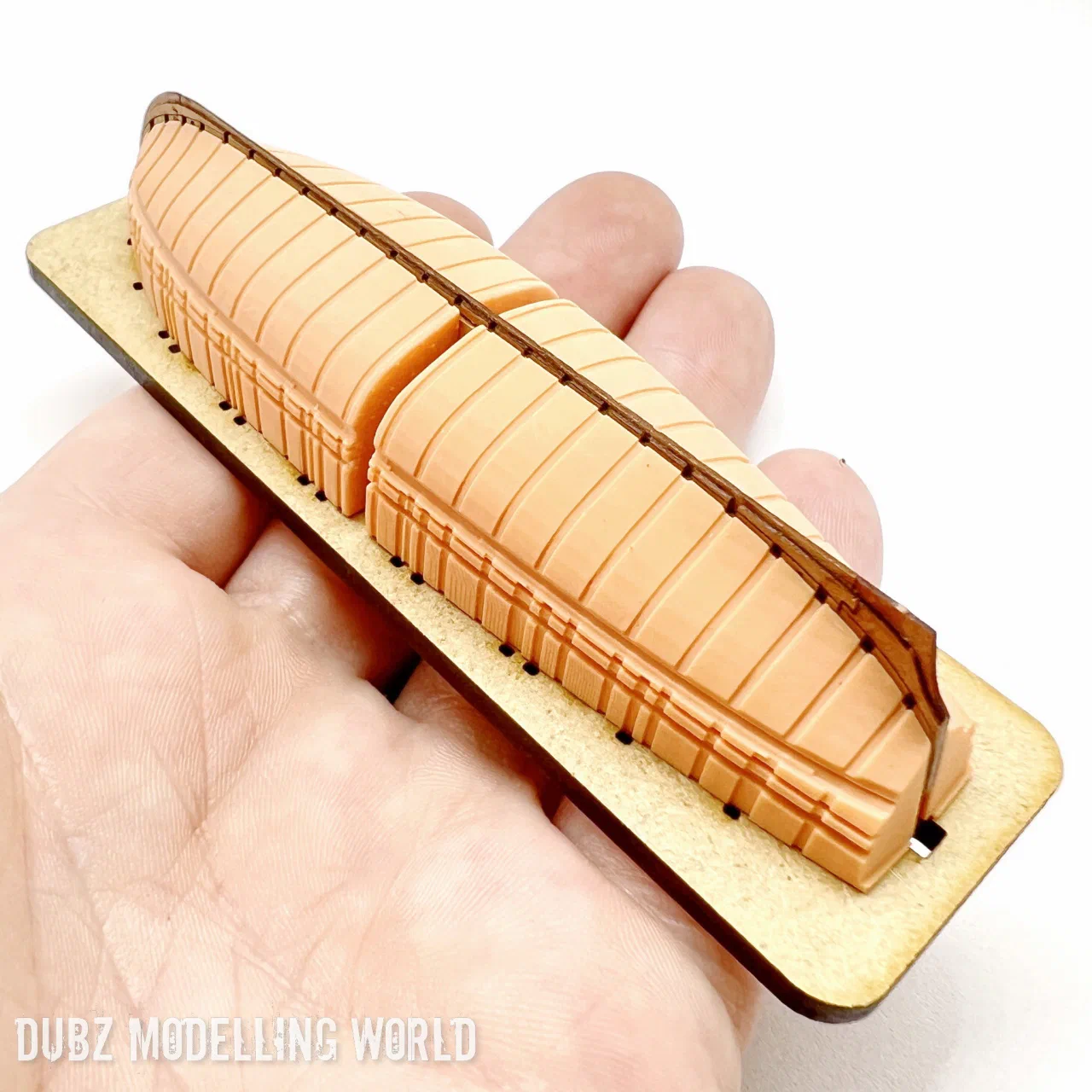
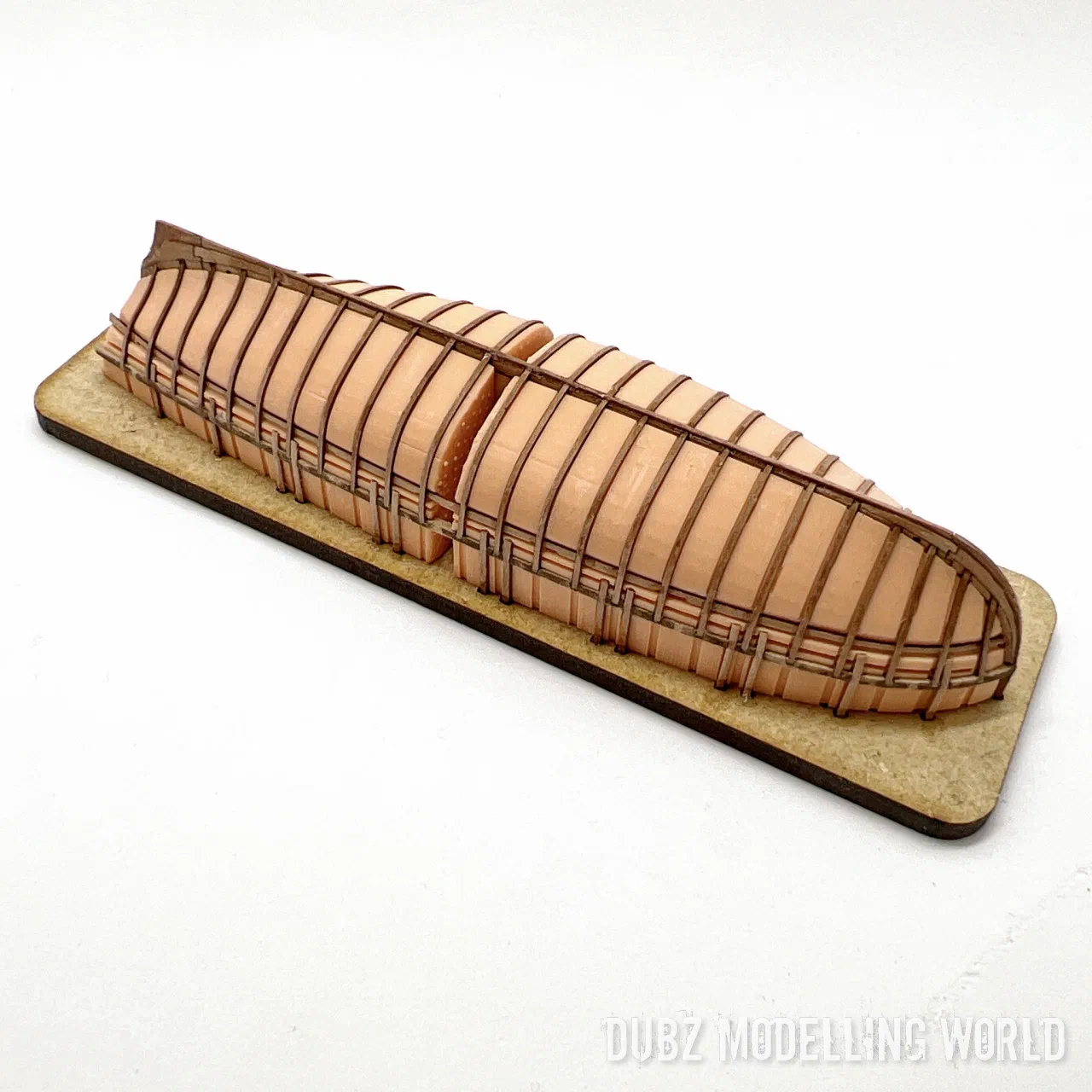
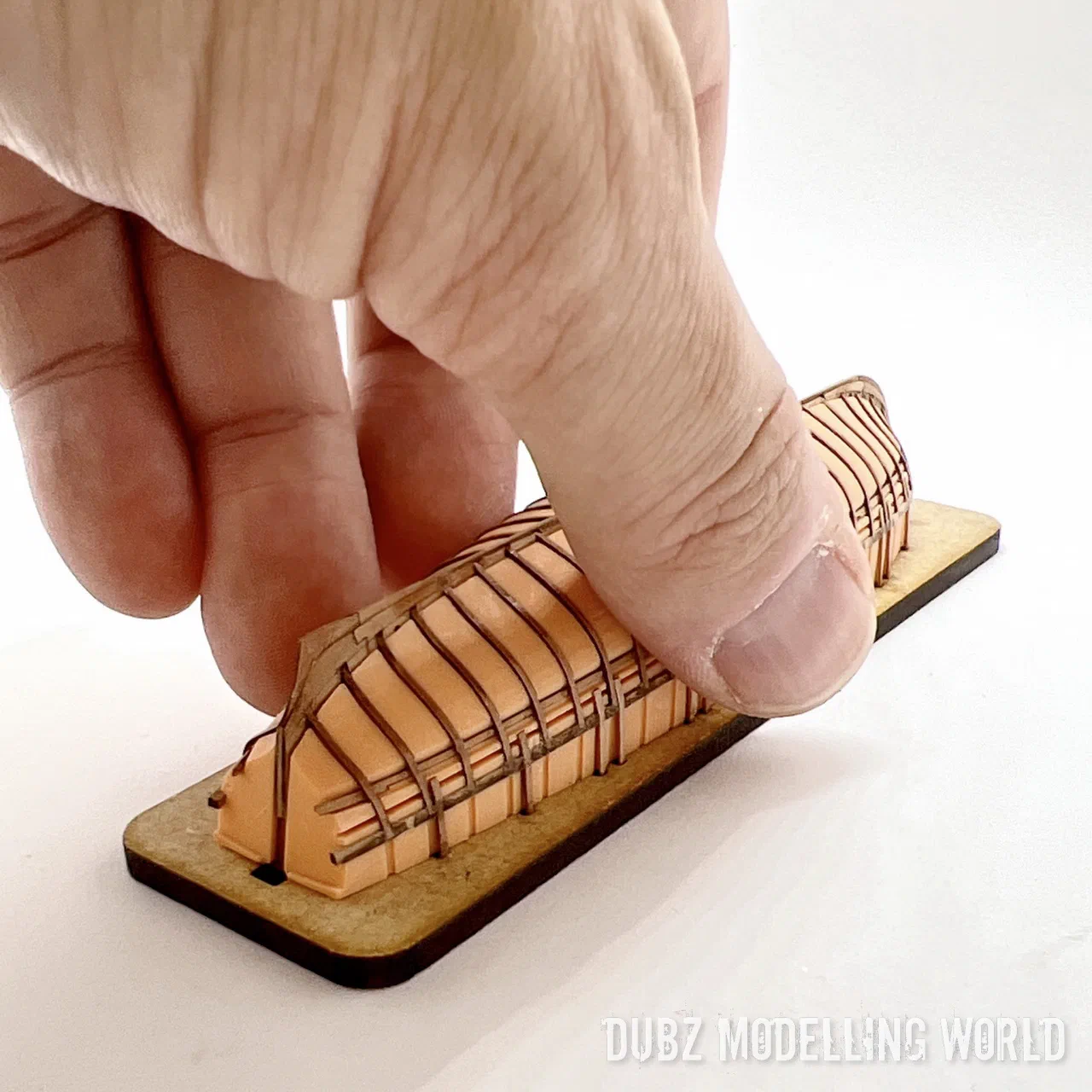
Planking
With the transom glued in, the first plank could go on. Falconet has a nice idea here: the plank is positioned with a strip of the remaining veneer inserted into a slot of the jig, so the most important plank – the one all the others follow – sits exactly where it should.
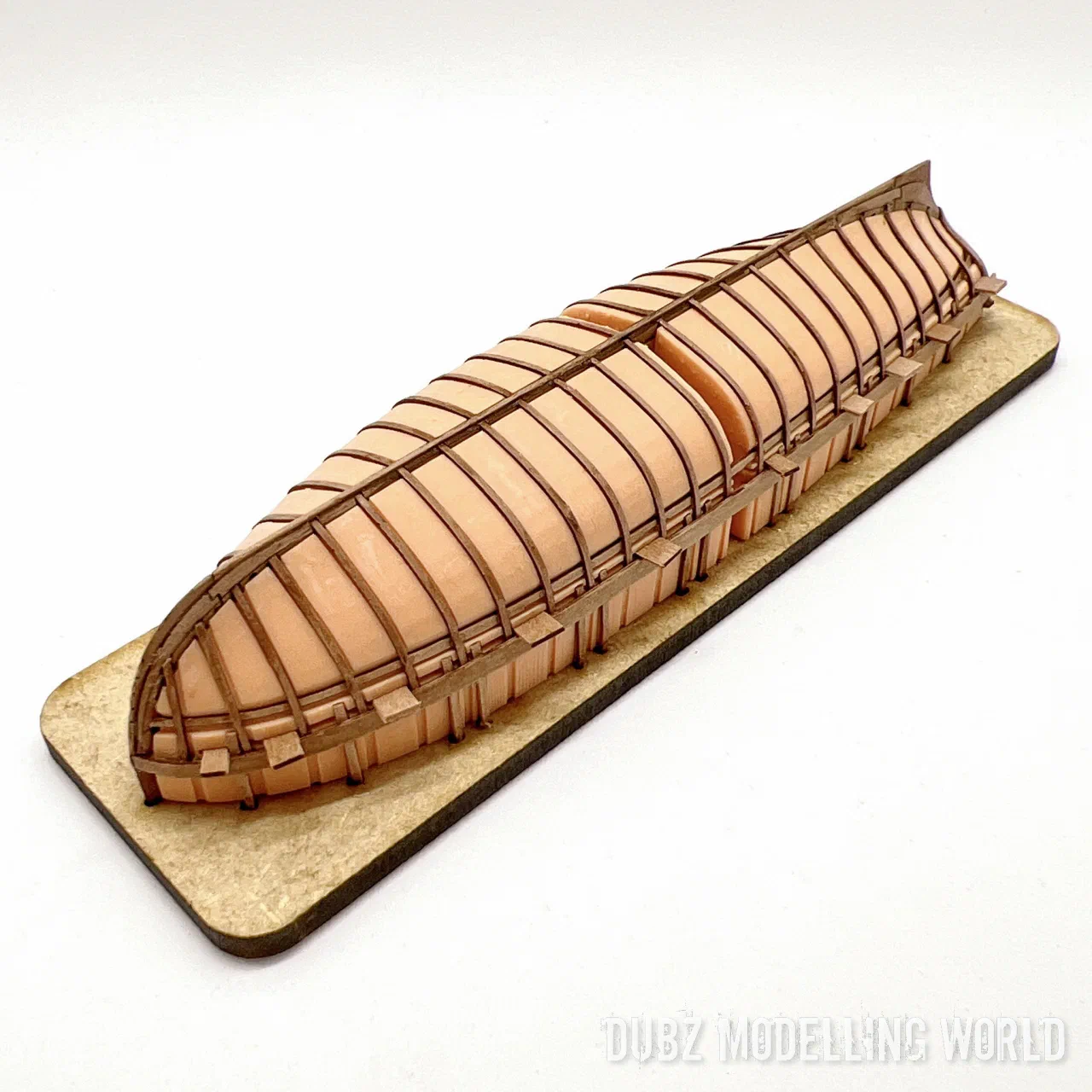
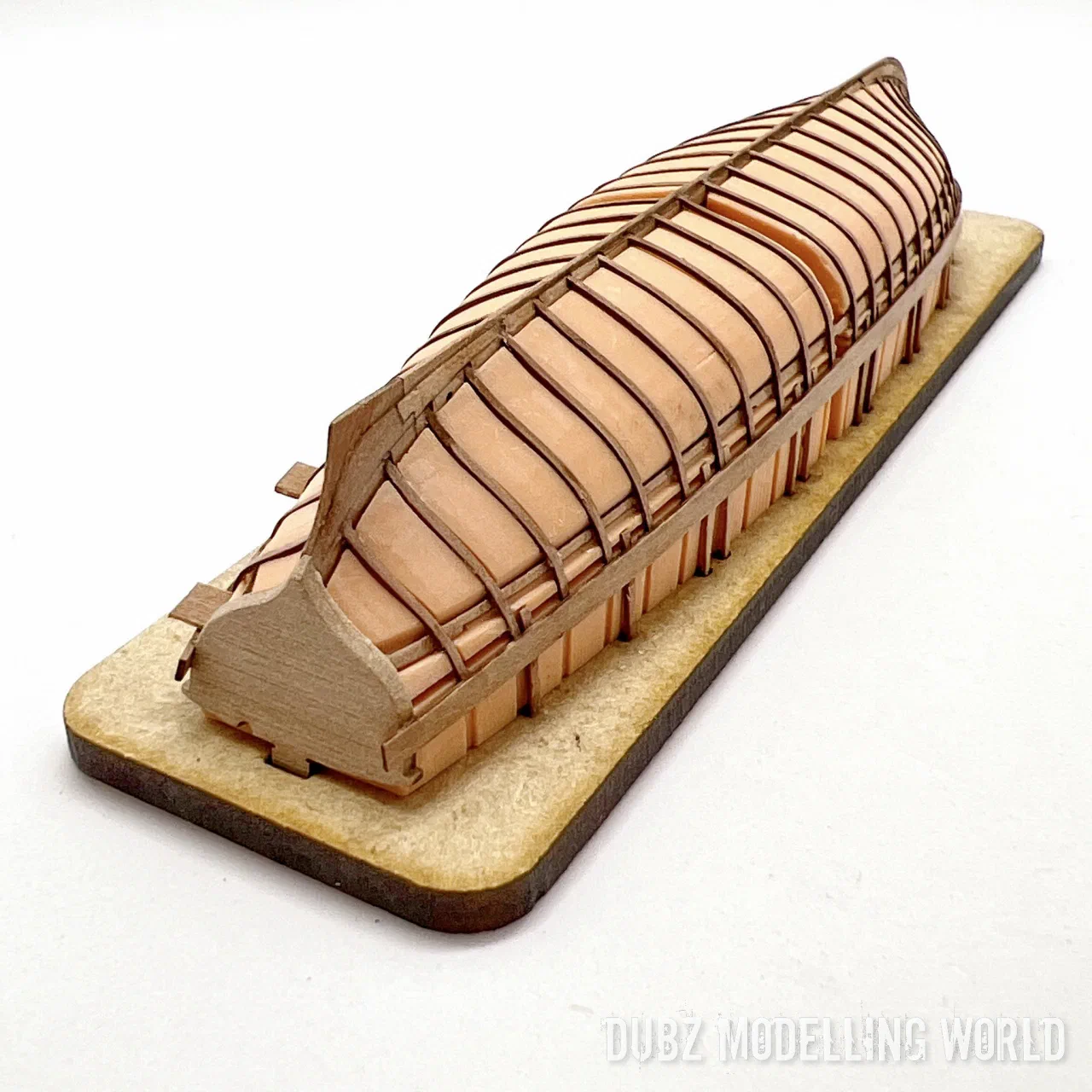
After that it is plank after plank. Planking is not my favourite part of ship modelling, and I am pretty sure others can do it better, but the pear veneer bends well and the run of the strakes came out clean.
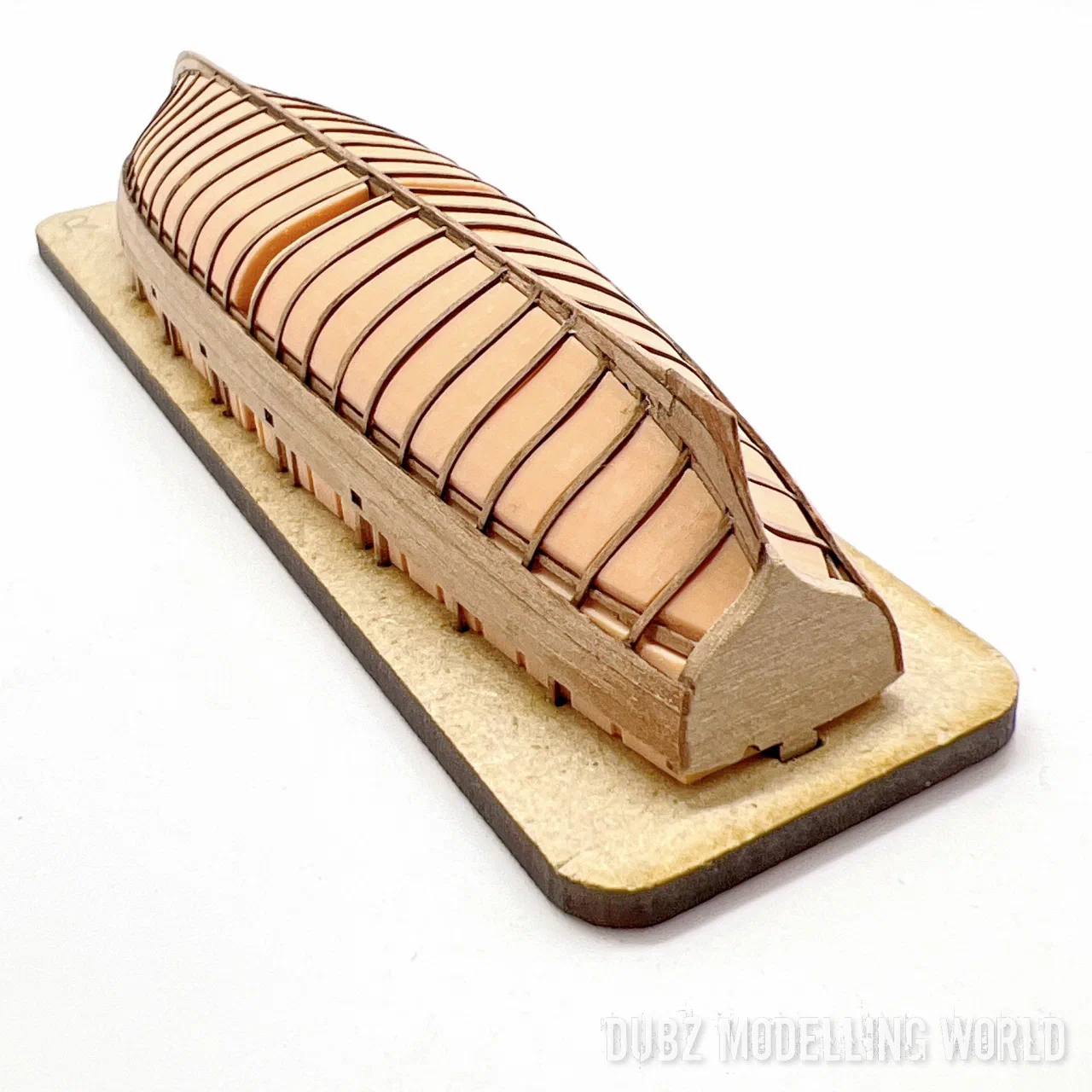
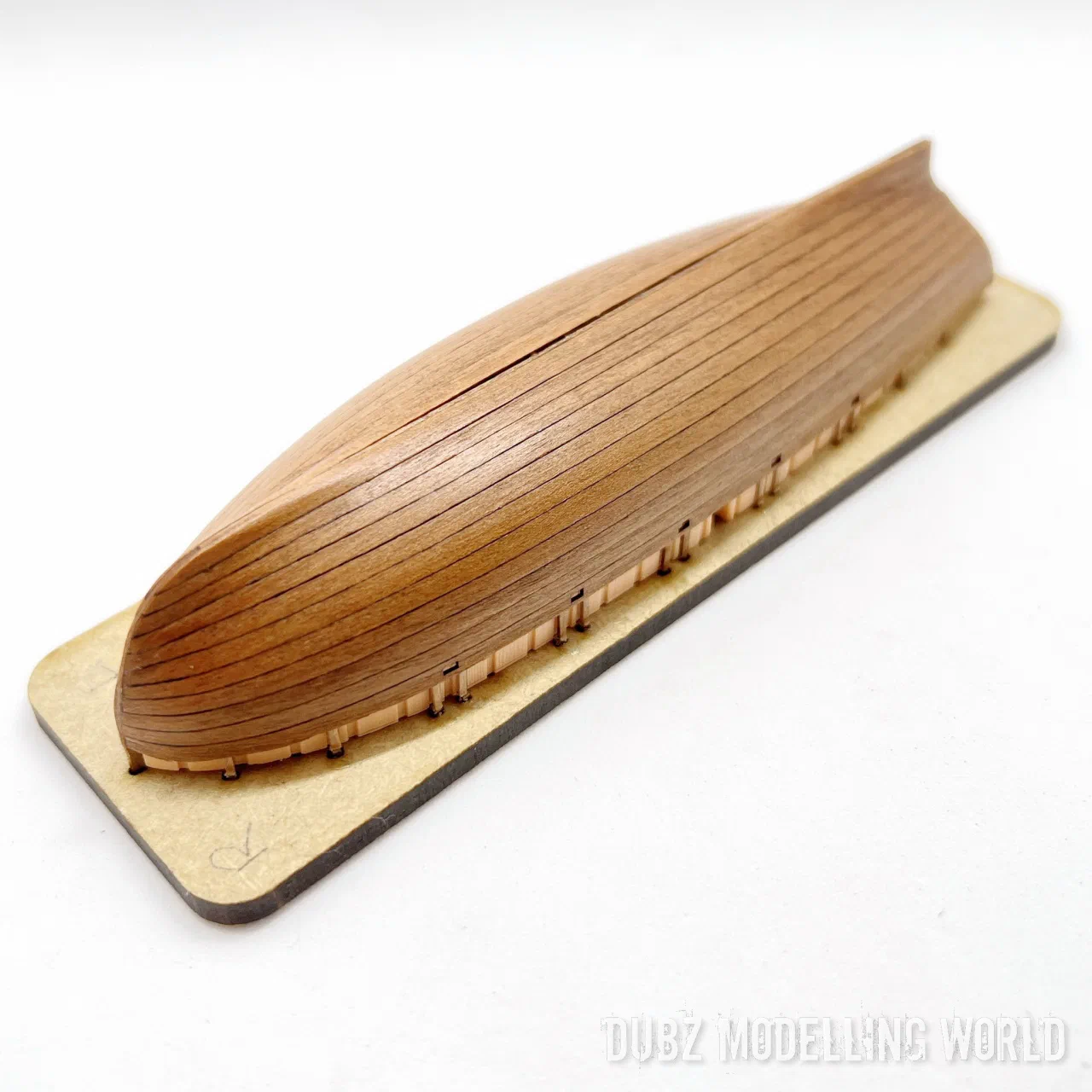
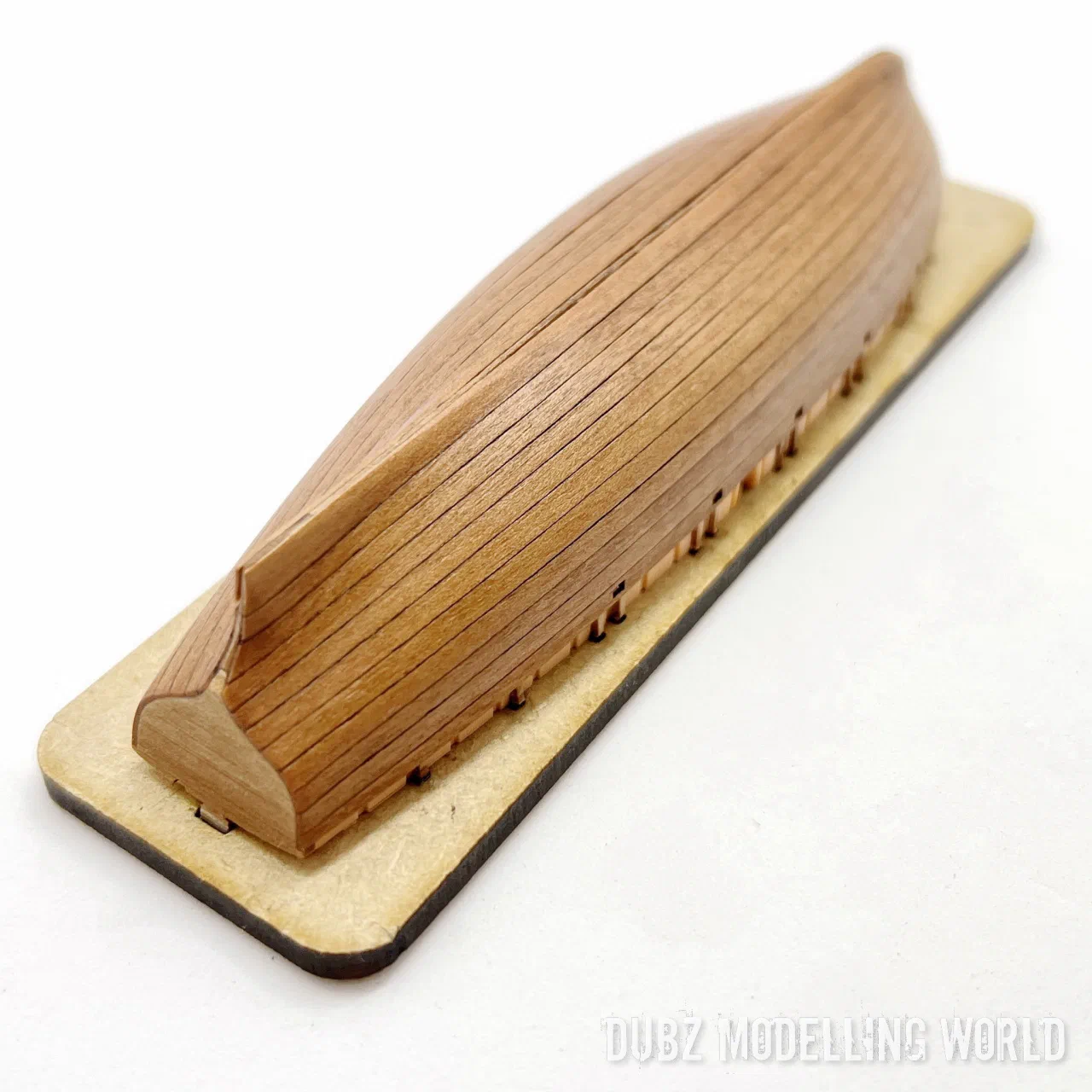
Off the mould
Getting the hull off the mould was the tricky part. The core of the jig has to be removed piece by piece, and with it some of the frames came loose. I had to reglue a lot of parts, but only one small piece broke, and that was easy to fix. Then, for the first time, the boat was a boat and not a shape on a jig.
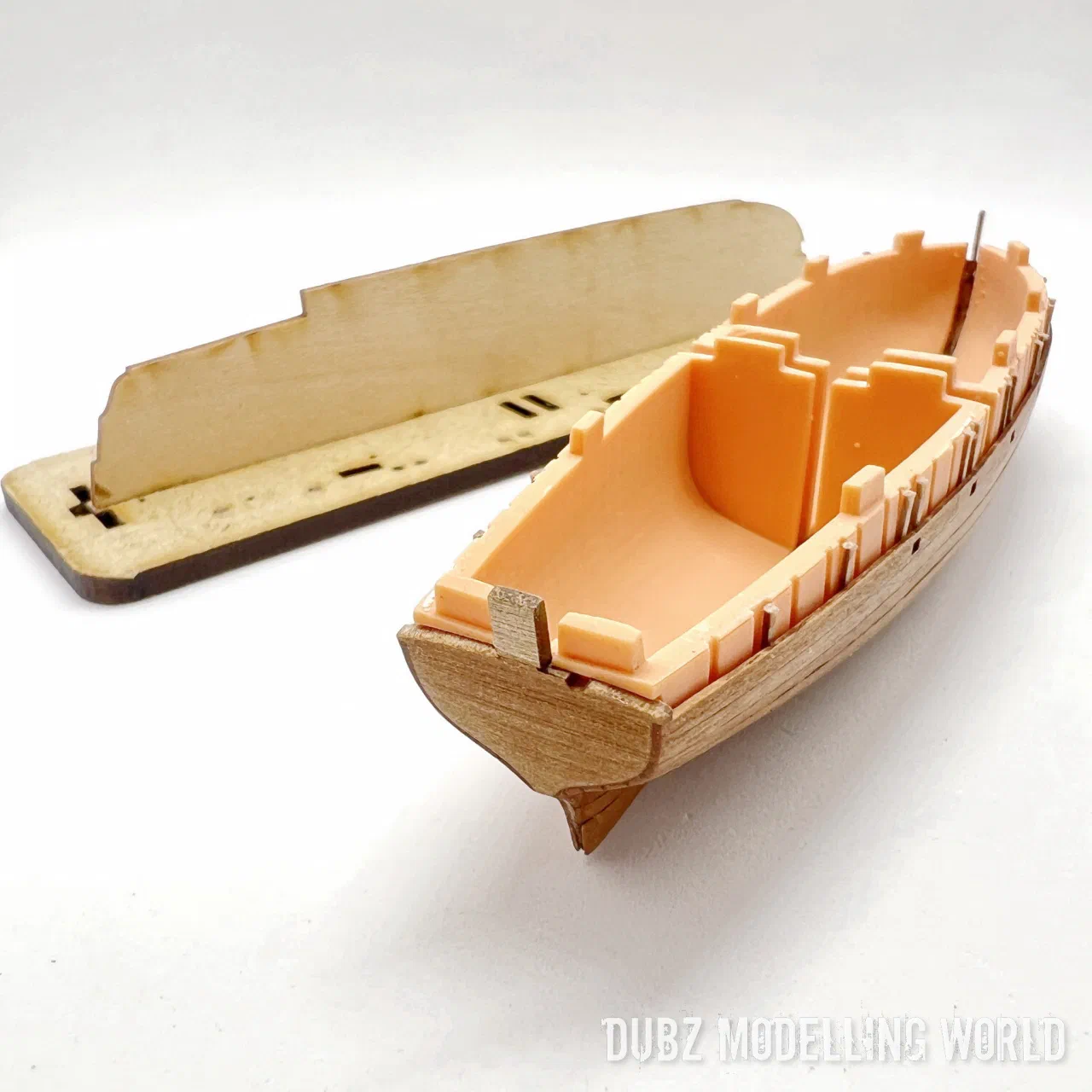
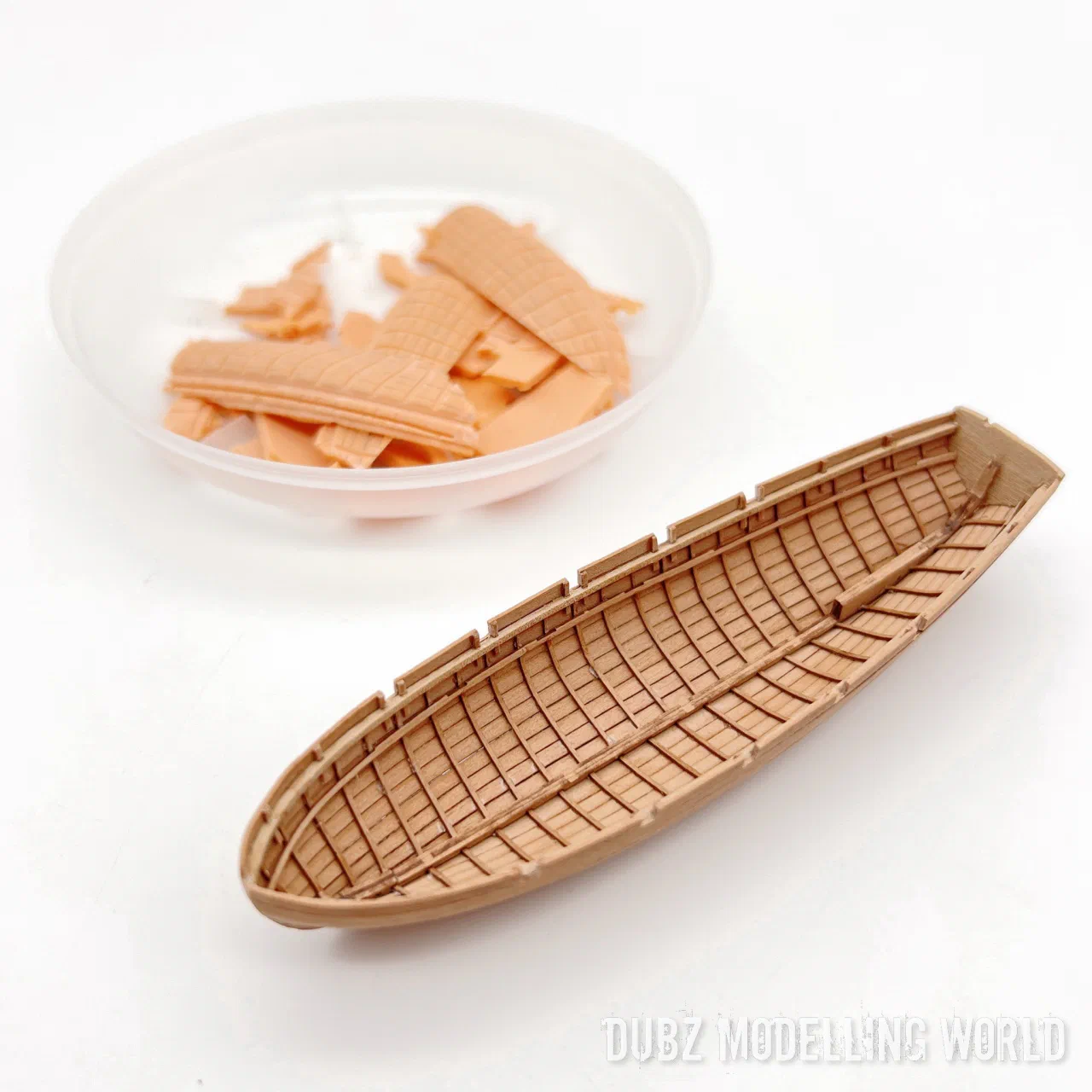
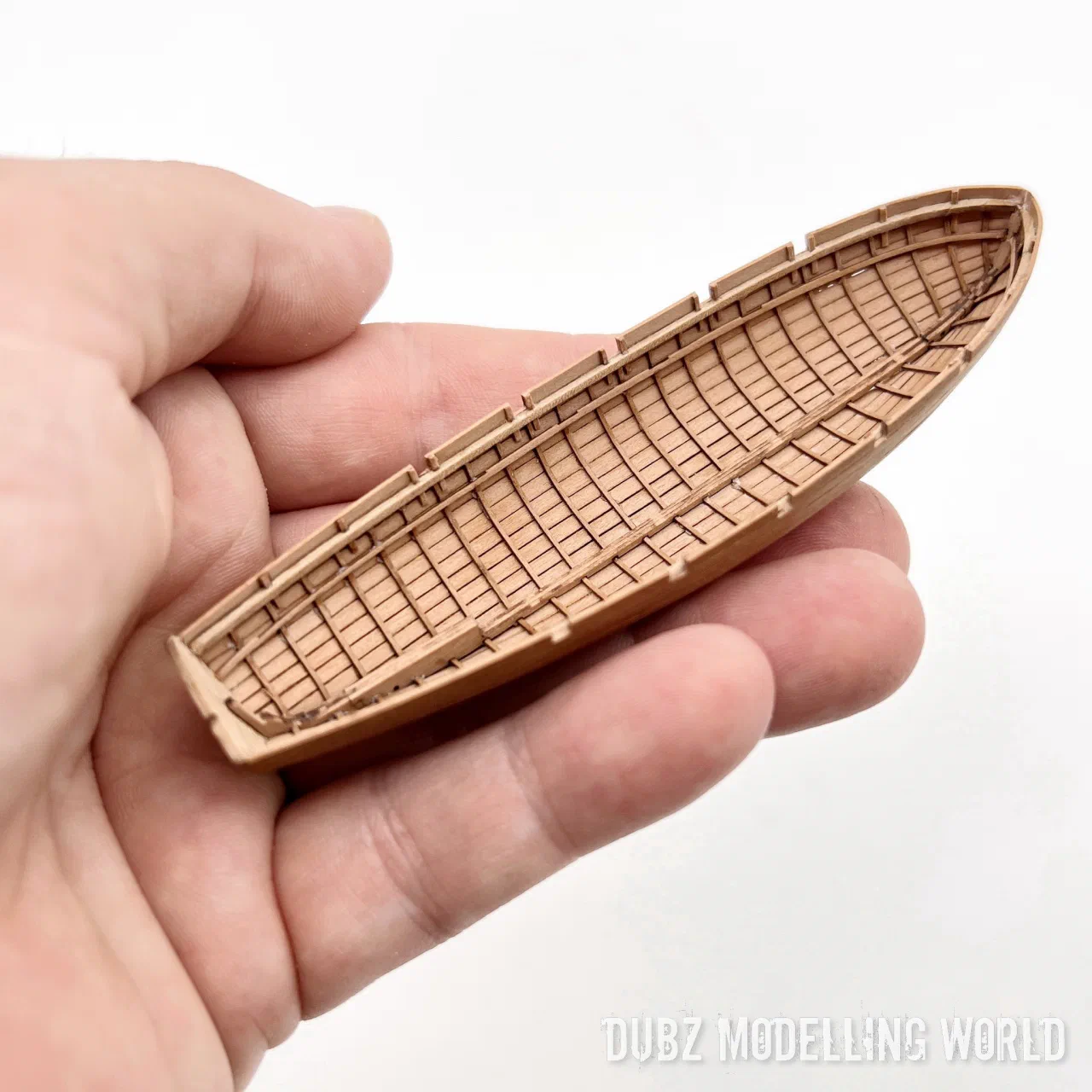
Stem, keel and the first interior
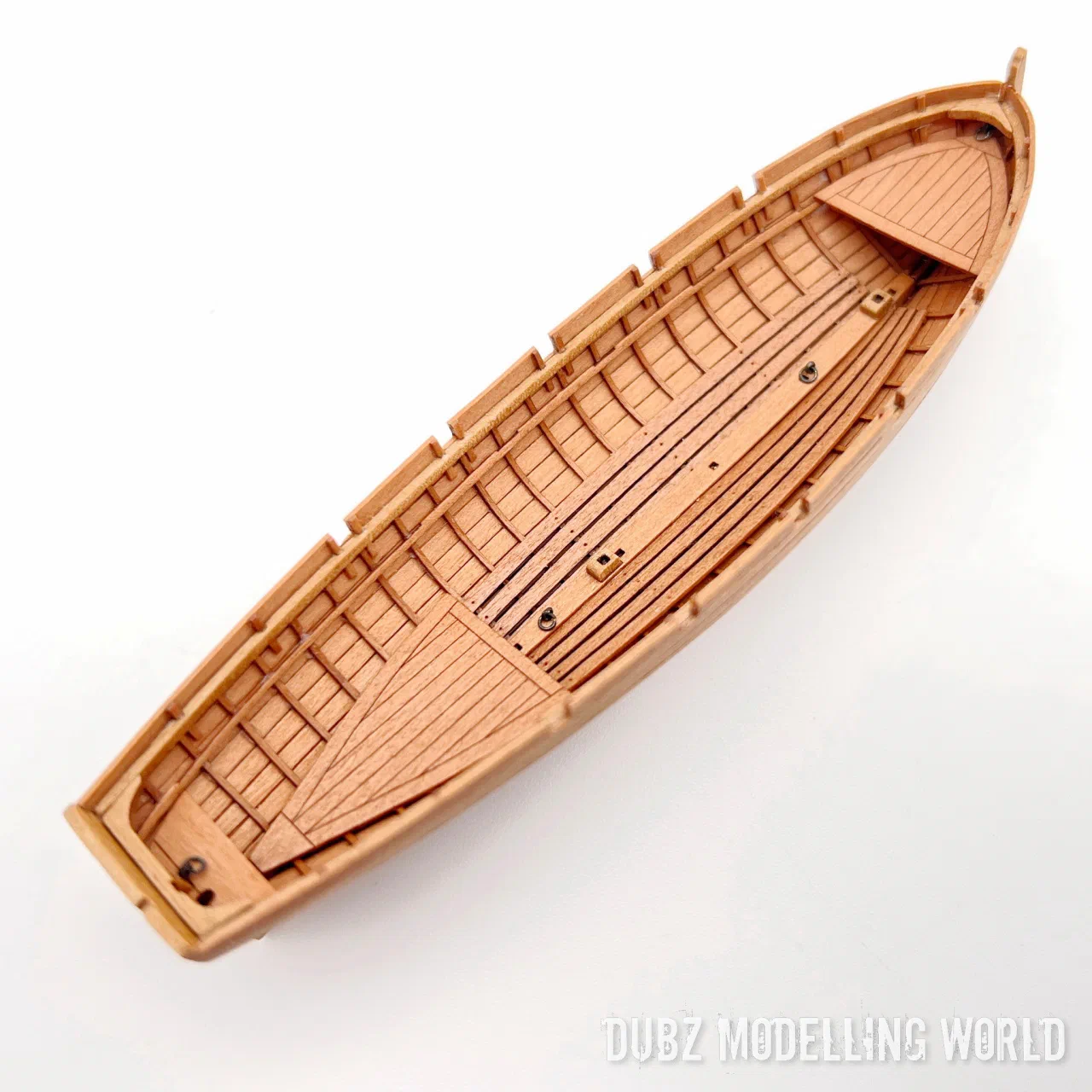
I had been too hasty while sanding the planking, and that left me with small issues in the lines at the bow. When I fitted the stem and the keel parts, some improvising was needed – and later a bit of hiding the flaws. Then I started on the interior. It is a beautifully detailed little boat and fun to build, because everything fits really well.
Thwarts, backrest and eyebolts
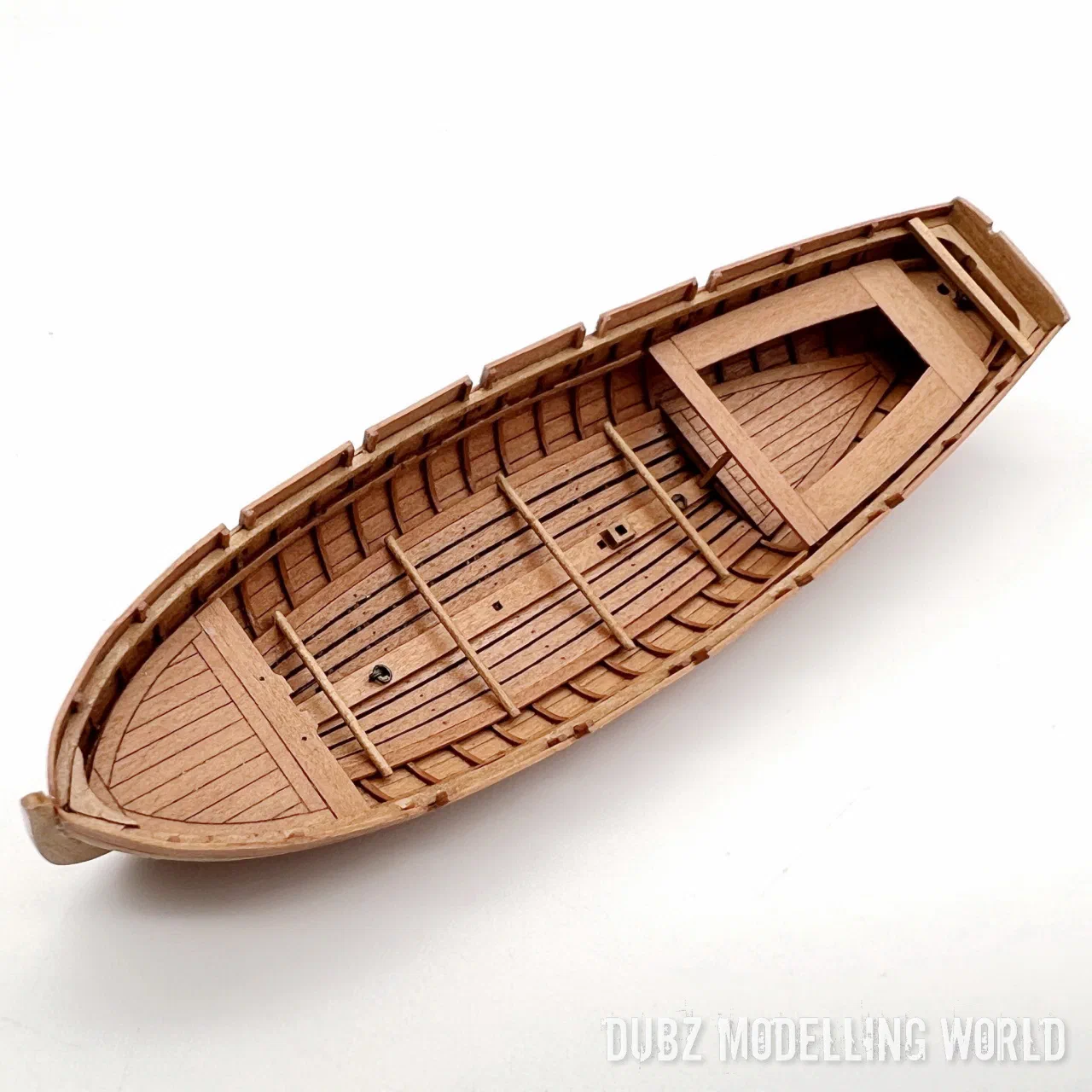
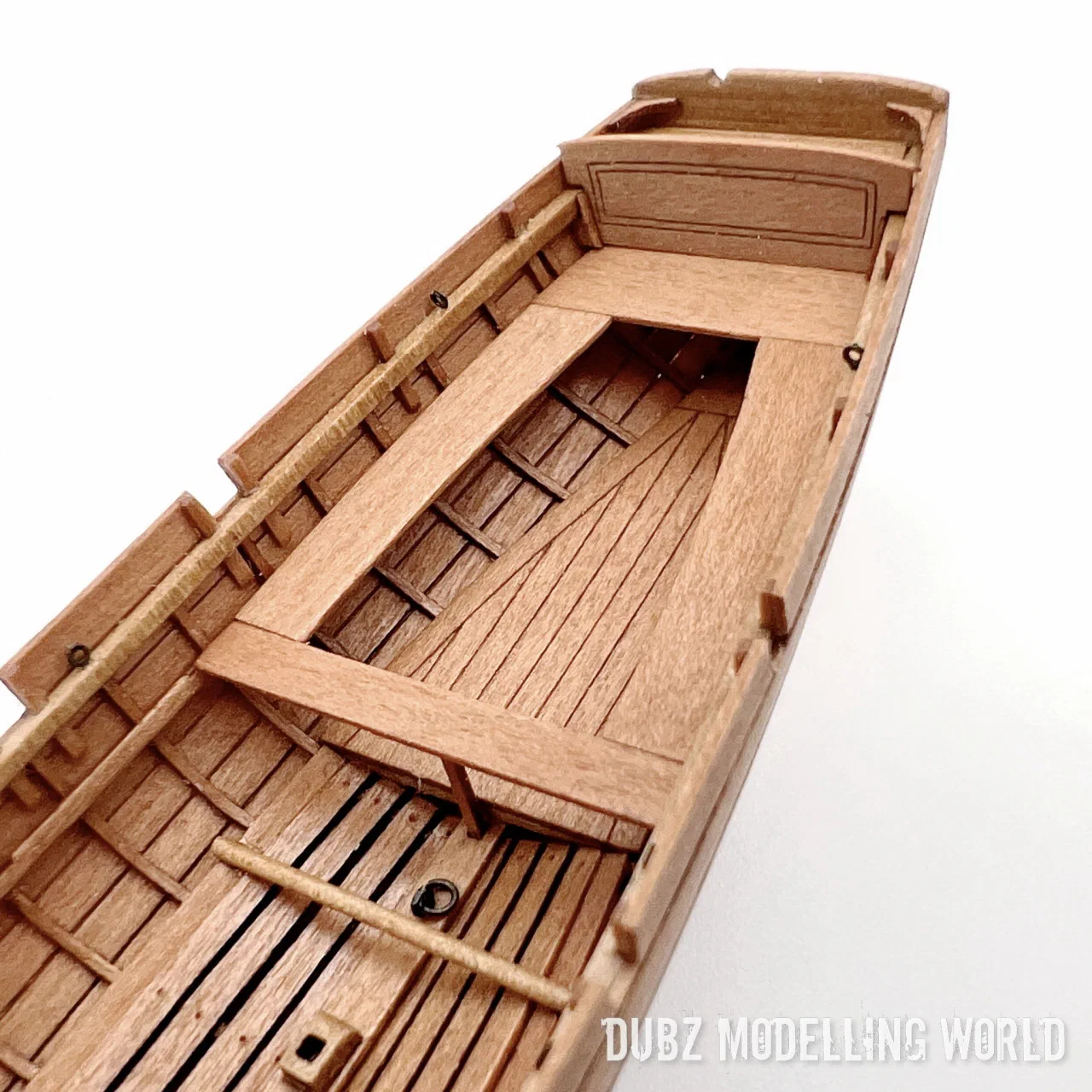
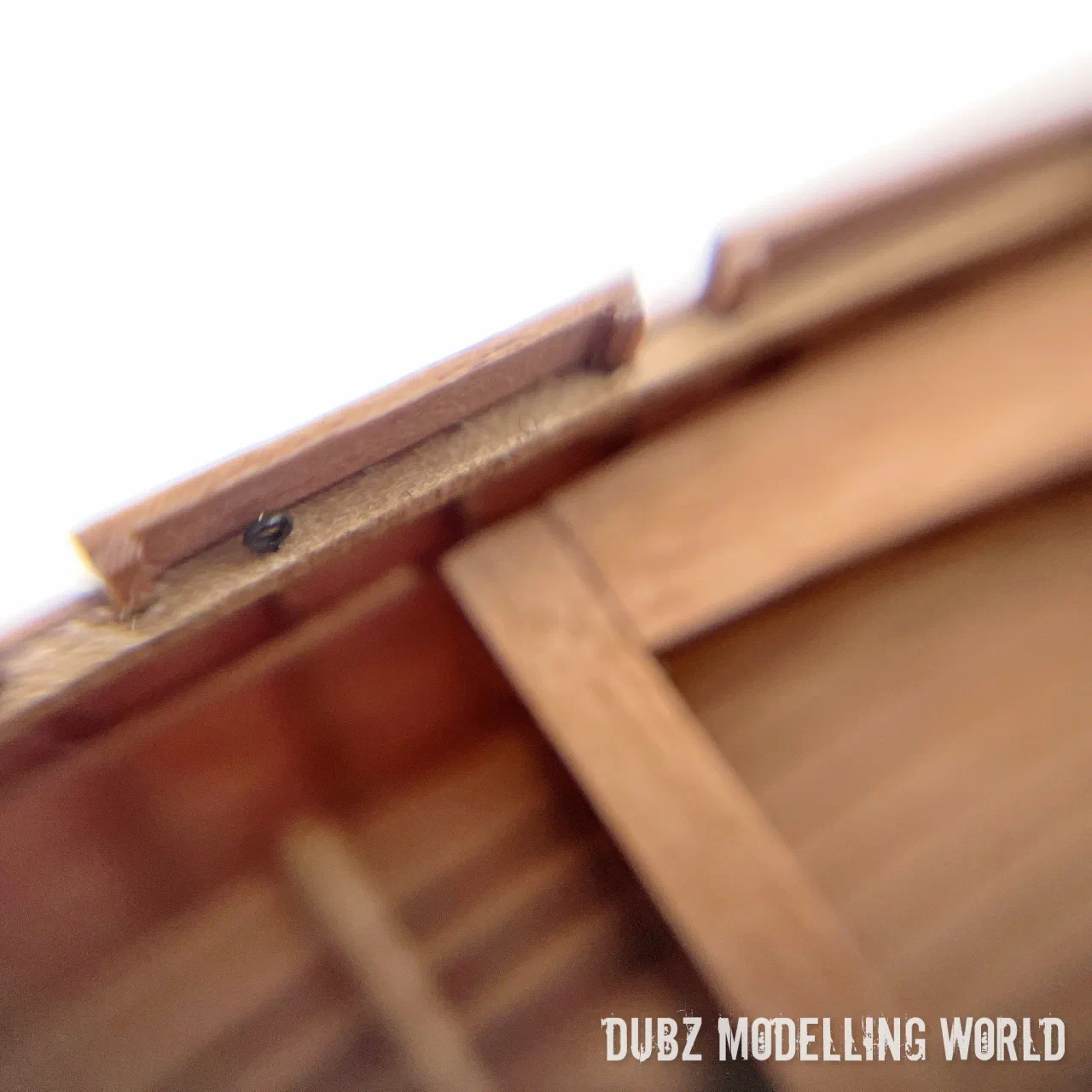
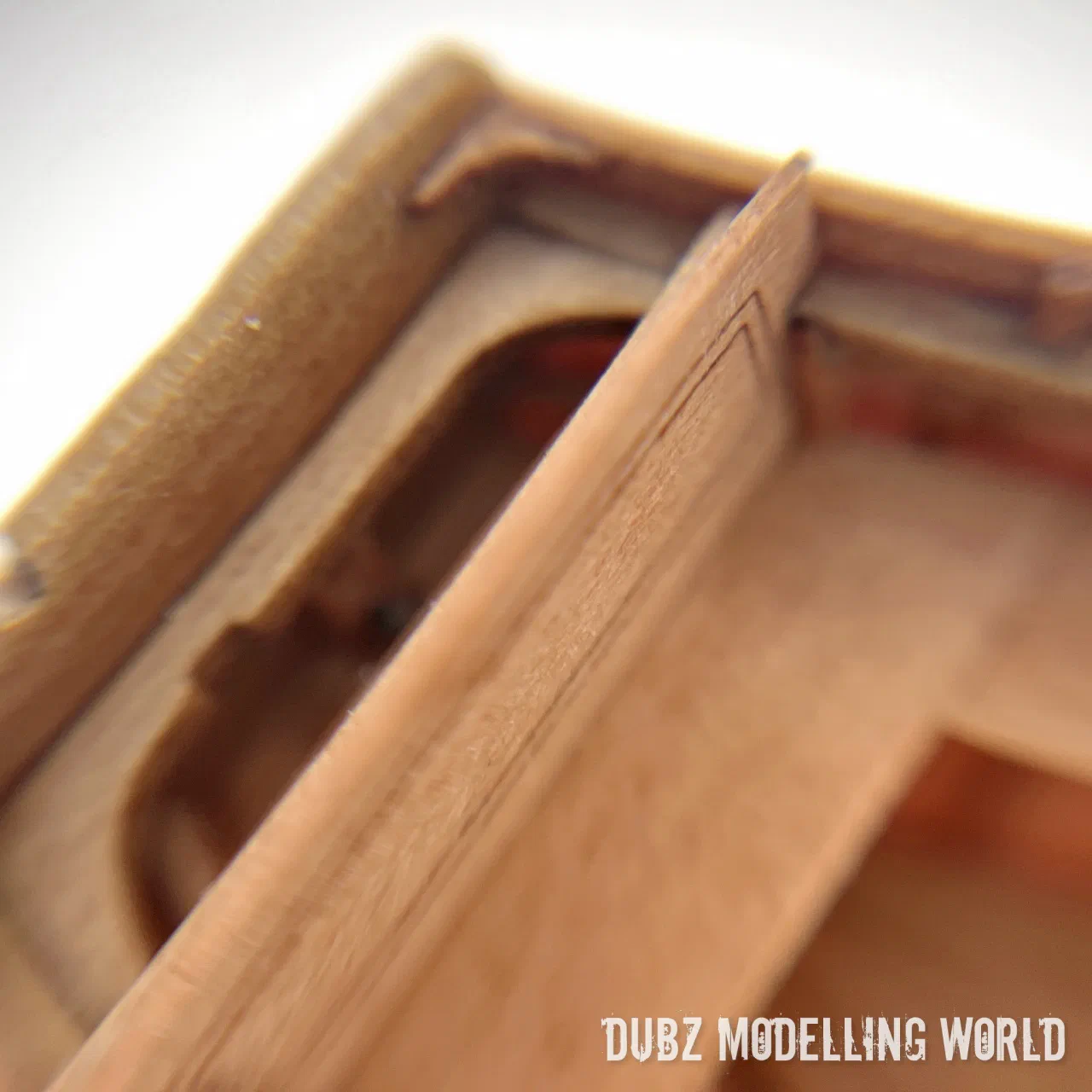
Next came the eyebolts, the removable backrest aft and the thwarts. Two of the thwarts I had to make again because they were not quite wide enough for my hull – maybe the humidity, maybe my planking.
The most important work at this scale is invisible in the end: removing the laser char from parts this small is very challenging, but it really matters. Every part was cleaned, sanded smooth to remove the burn marks, then given Danish oil and a little polishing. Without a smooth surface a model in this scale does not look good, however well it is built.
Metalwork and stand
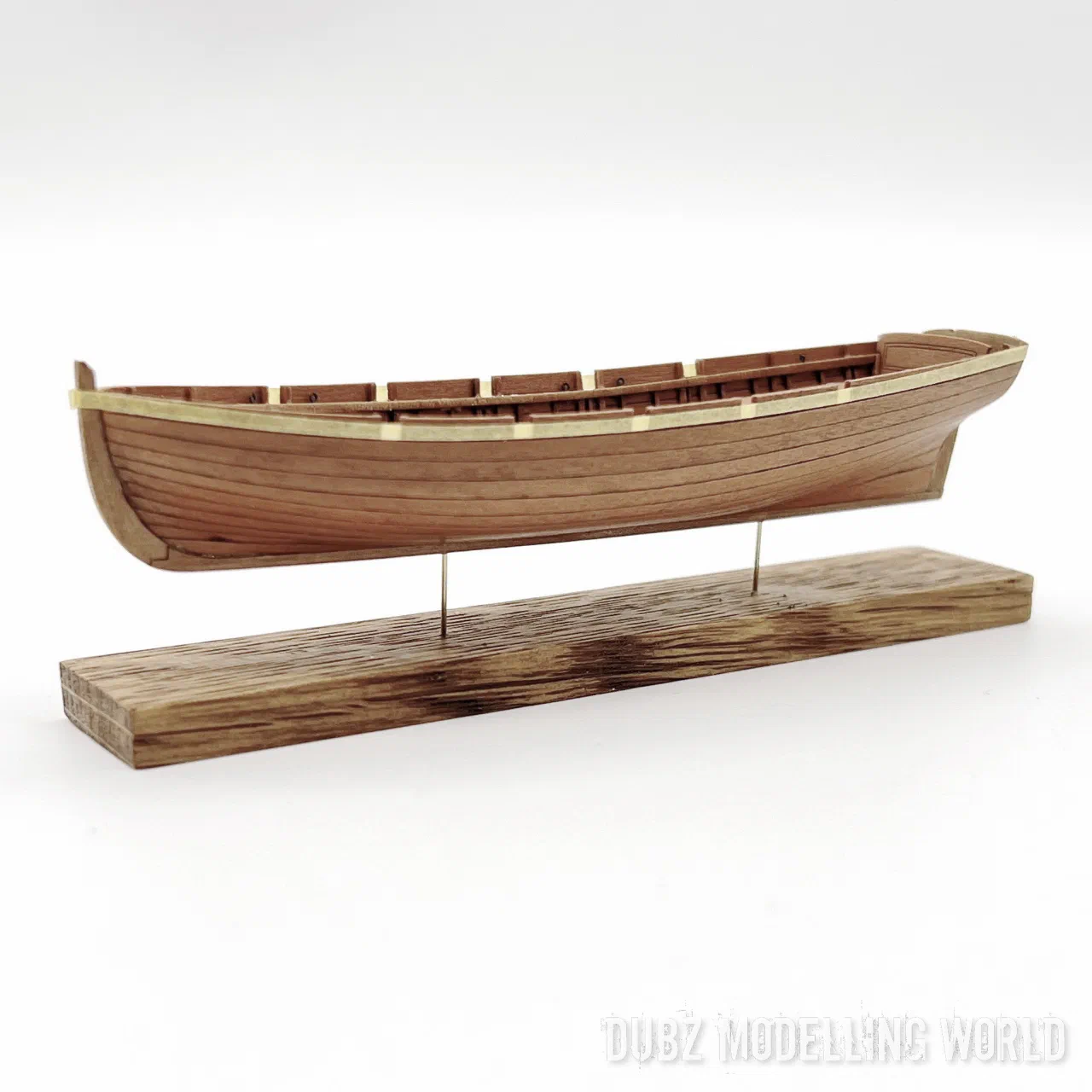
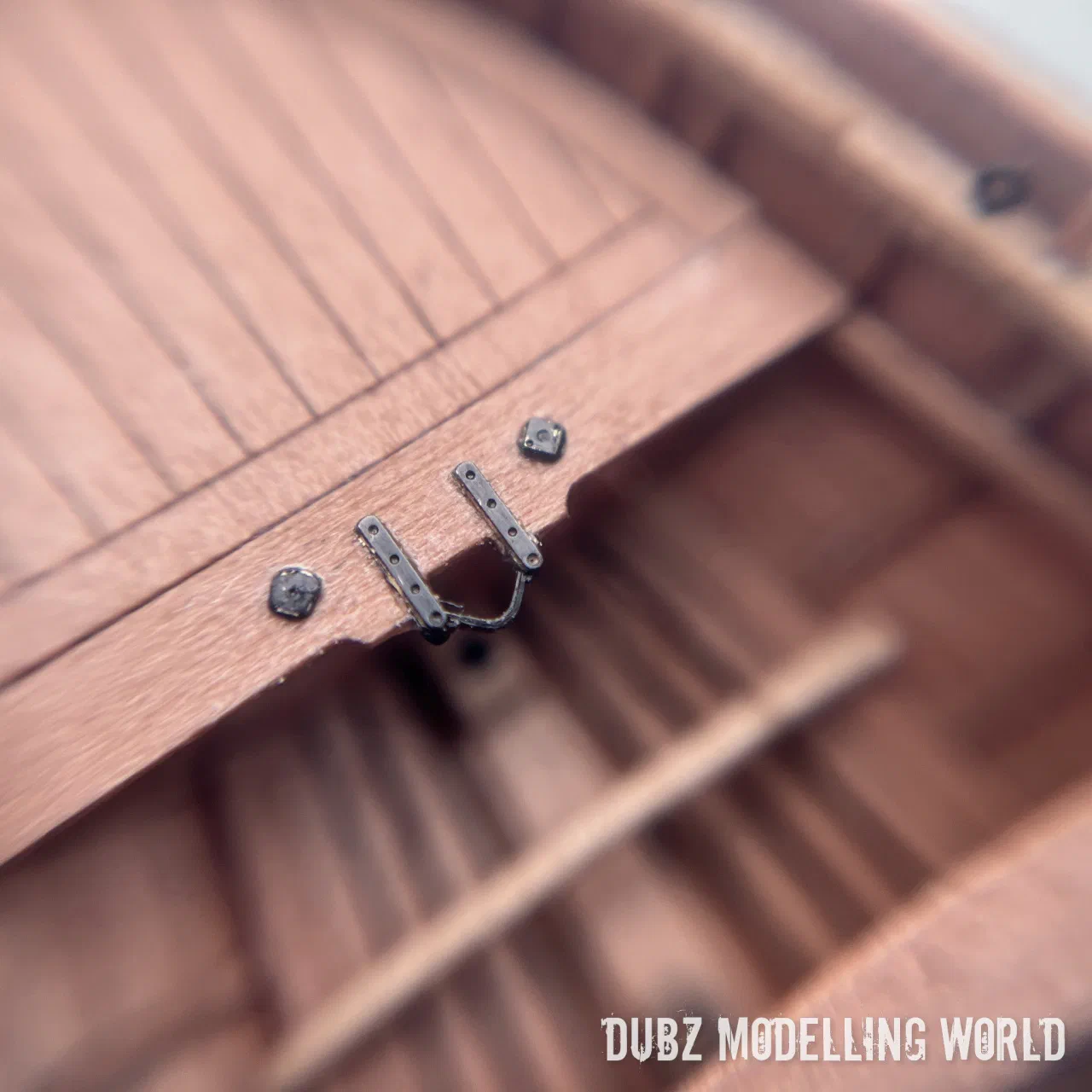
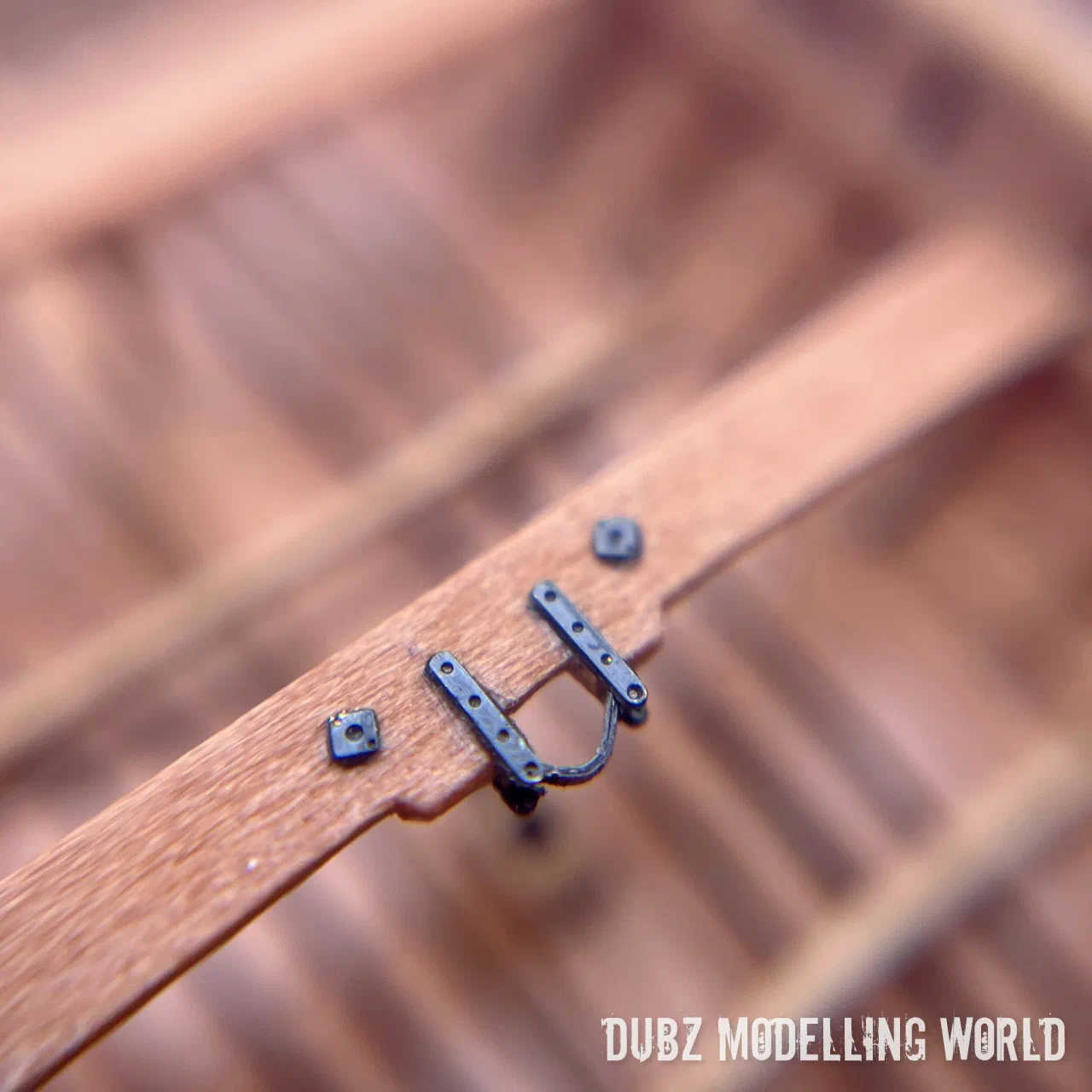
The metalwork is made from brass wire and the photo-etched parts. Bending loops around a 0.2 mm rod is not fun, I can tell you. At the same time I made a simple stand for the boat: a piece of old-looking wood with two thin brass rods, so that the hull floats above the base.
Knees, rudder and ten oars
Close to the finish line I made the knees for the thwarts, more metalwork, and attached the rudder.
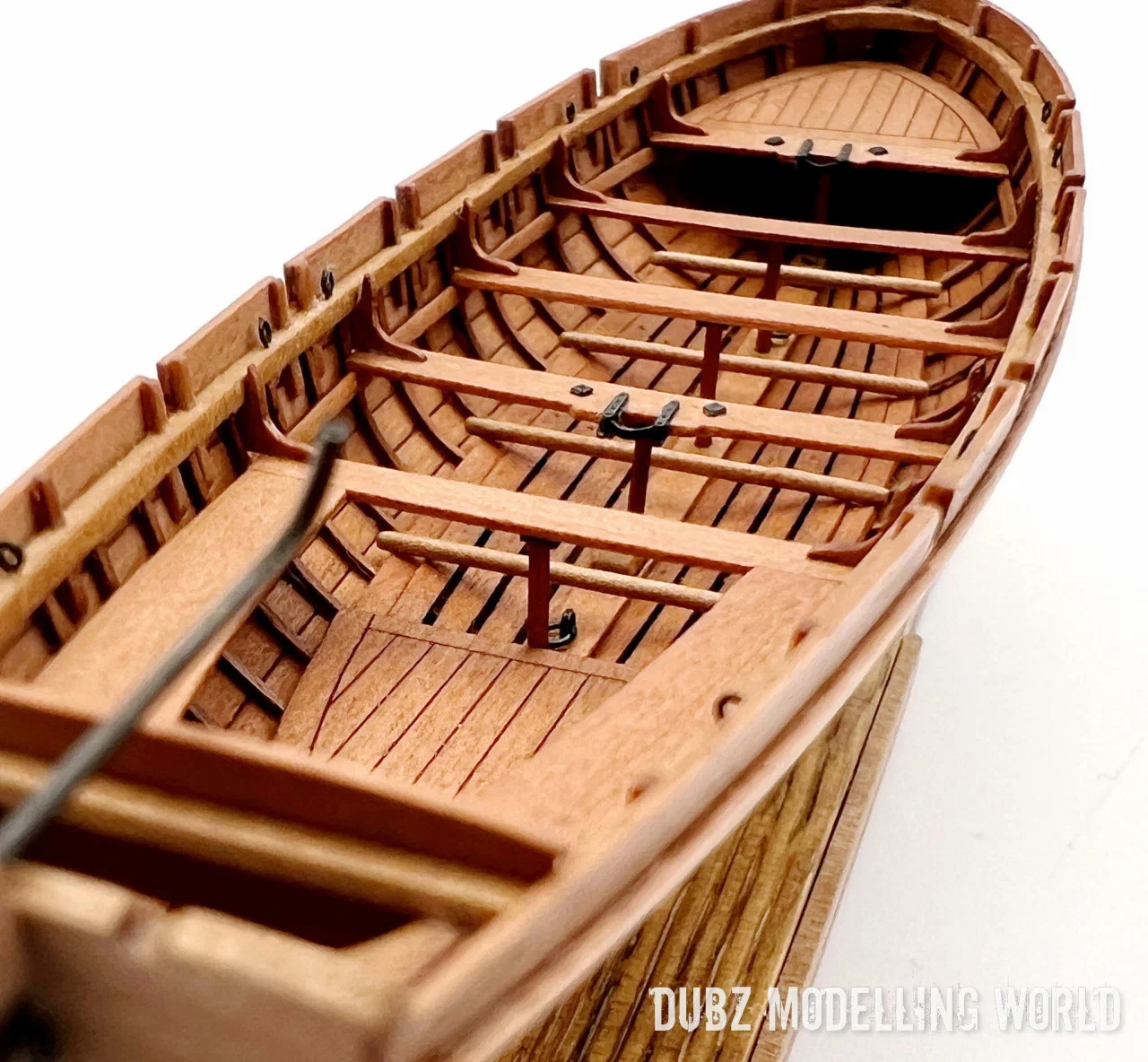
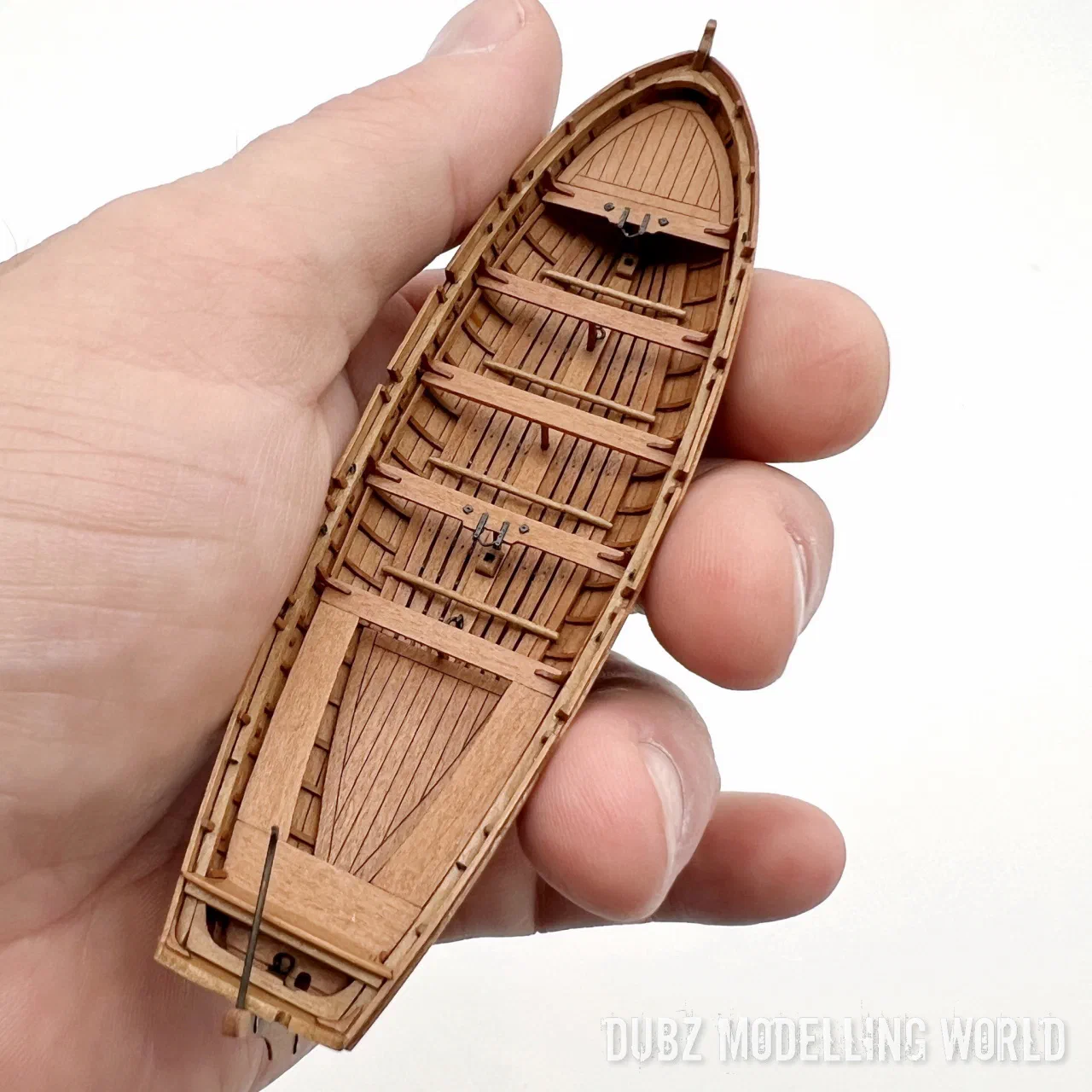
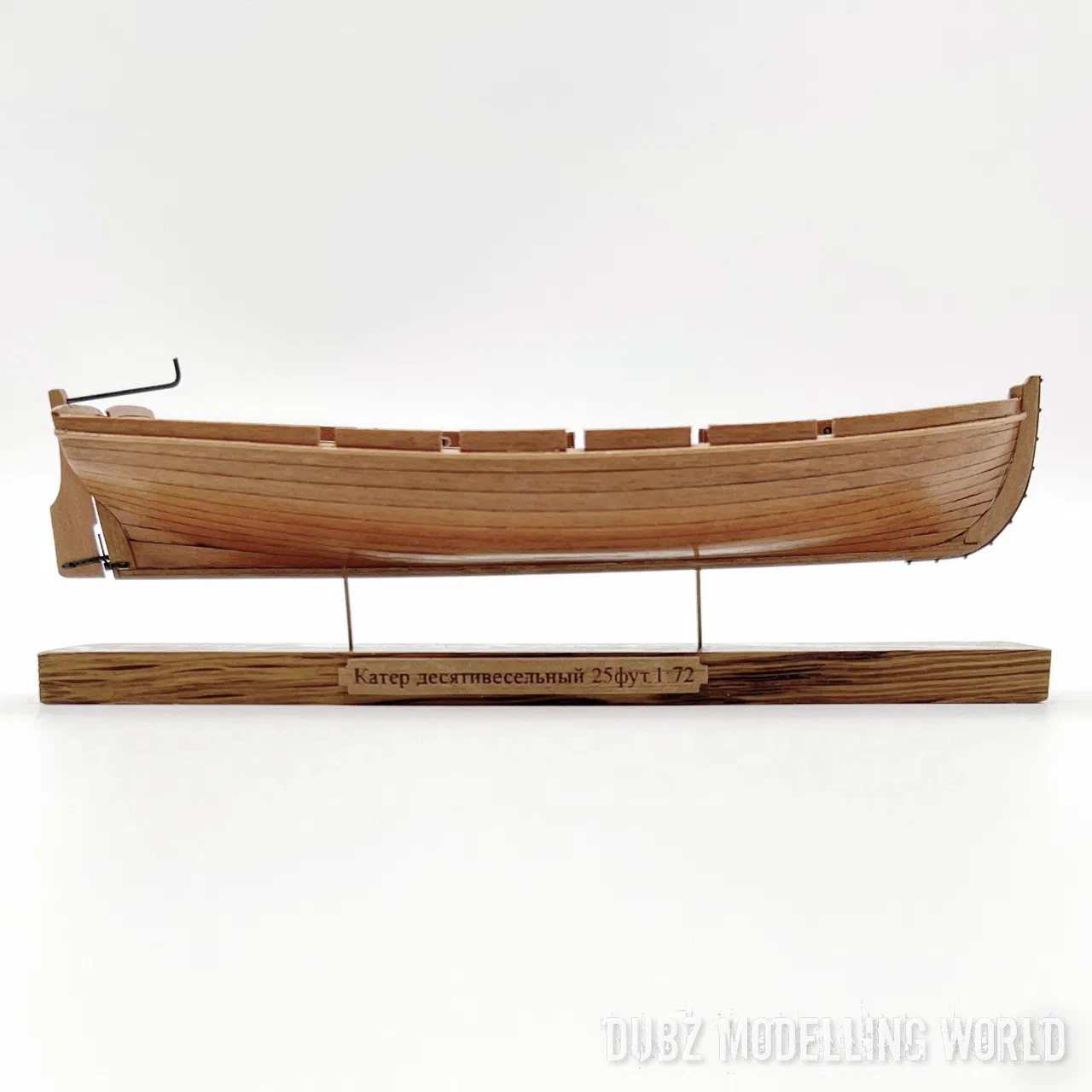
Then the ten oars. There is nothing difficult about them – they come nicely shaped – but I do not like repetitive tasks, and these are very small. Ten times cleaning, sanding and oiling the same tiny part takes patience.
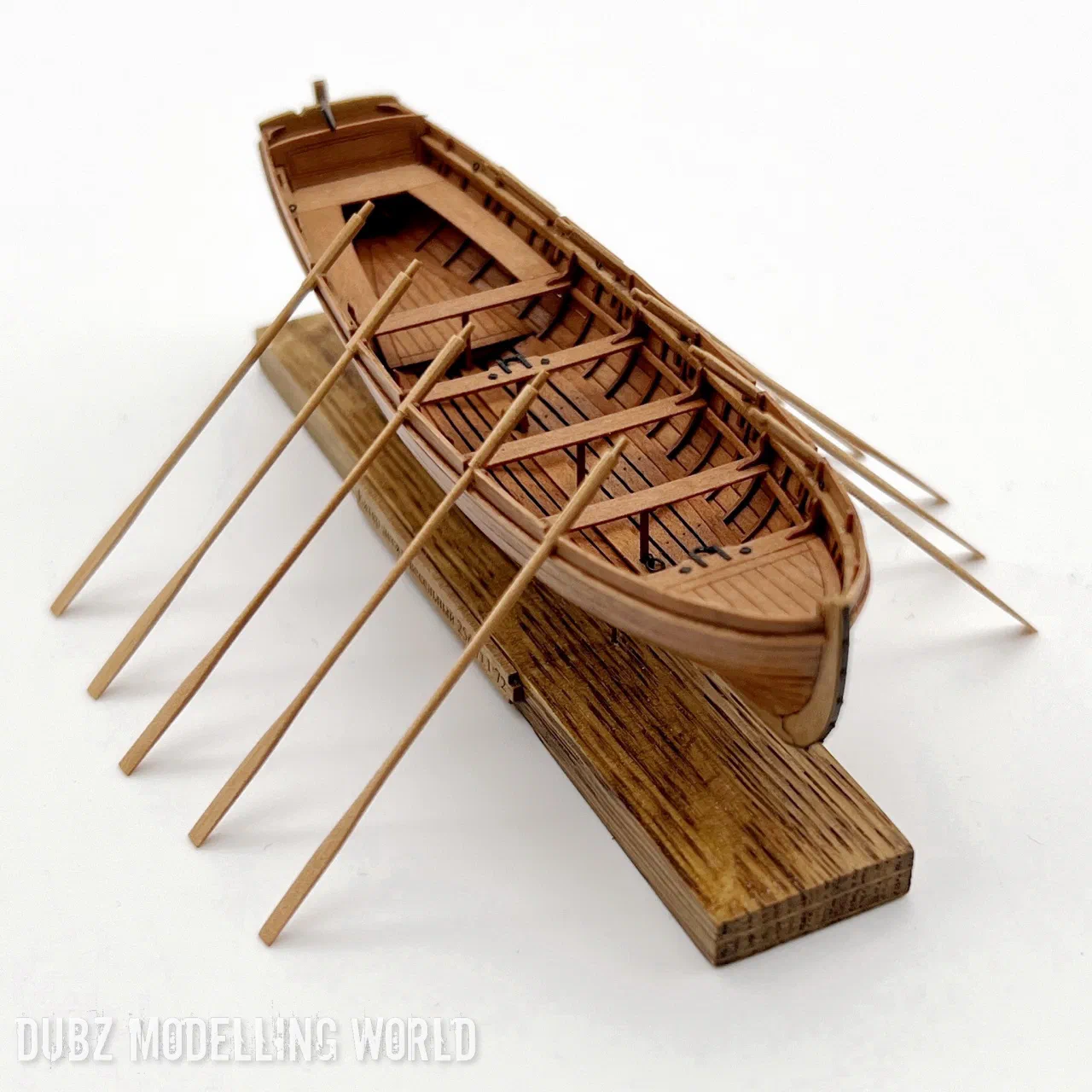
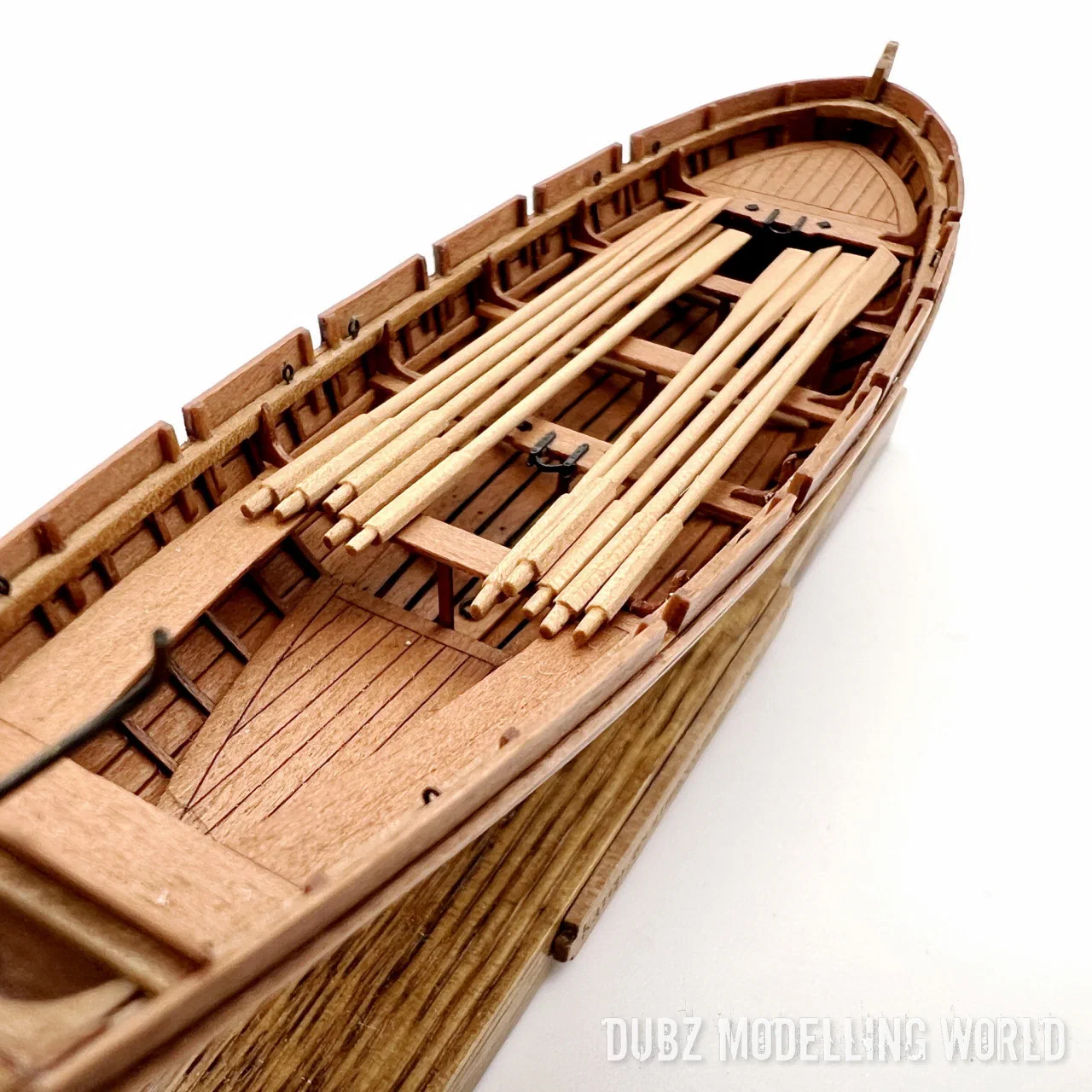
Finished
On 9 October 2024 I called her done – kit complete. I might play later and add a compass, a water barrel and a small anchor, but for now she is exactly what Falconet designed. What a fun little boat to build.
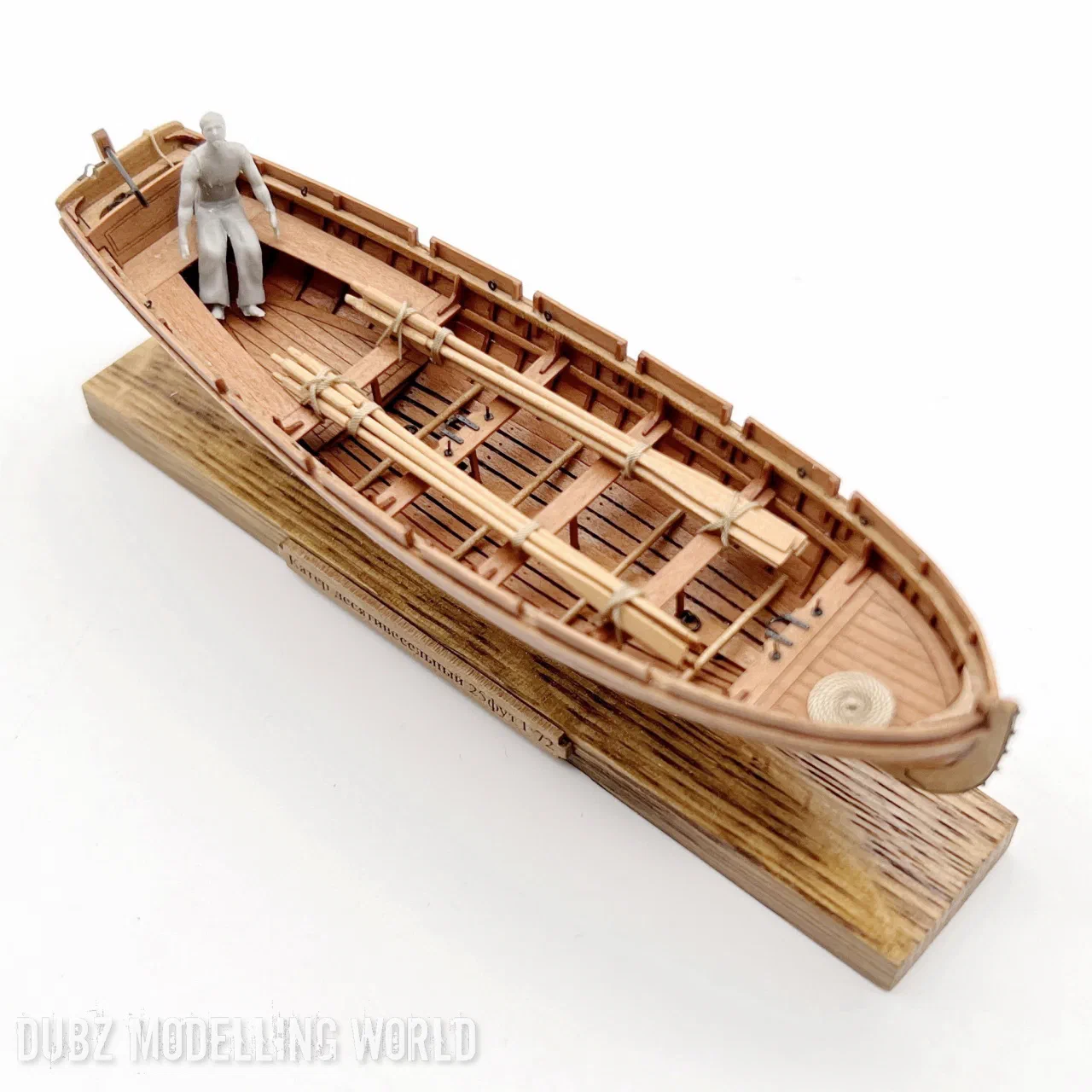
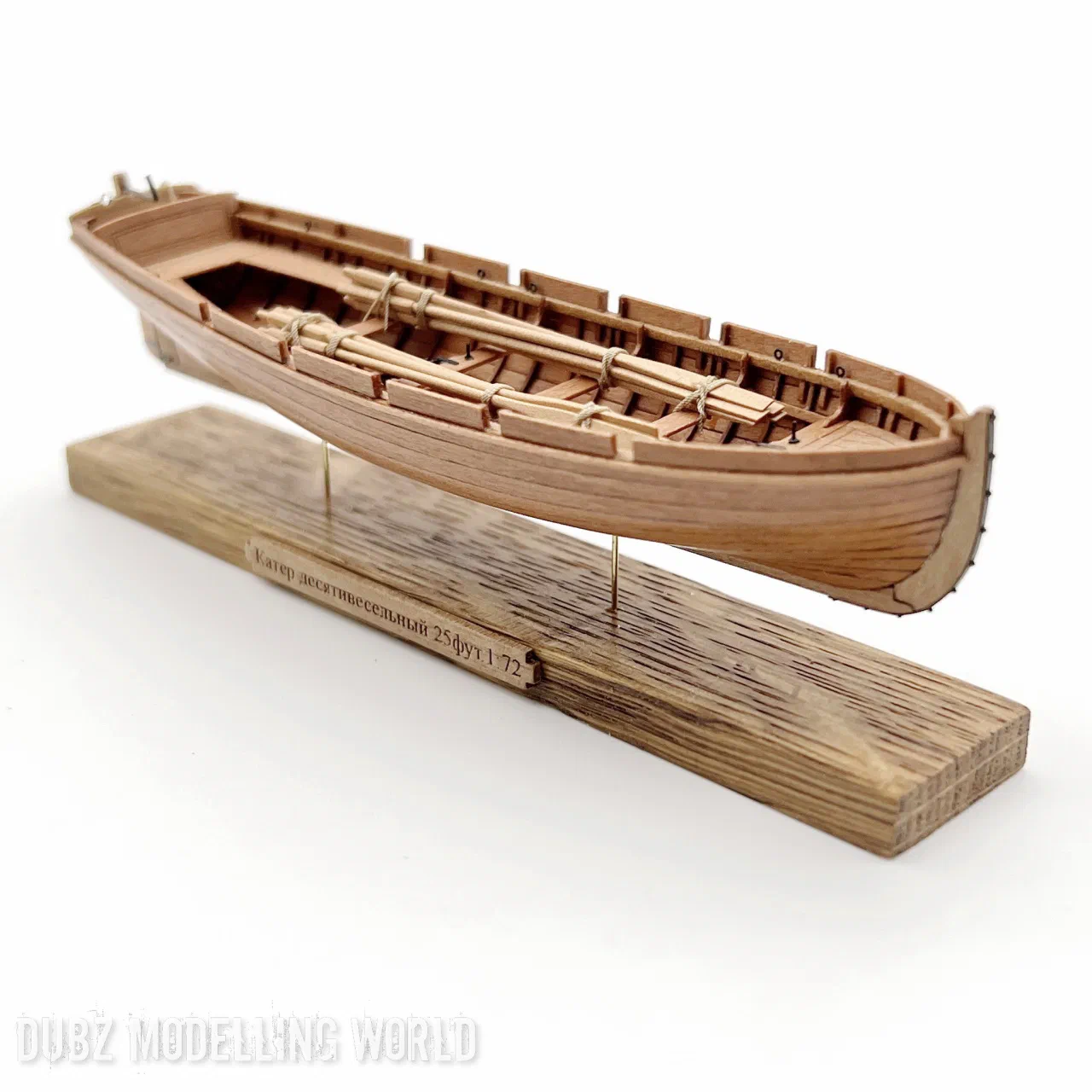
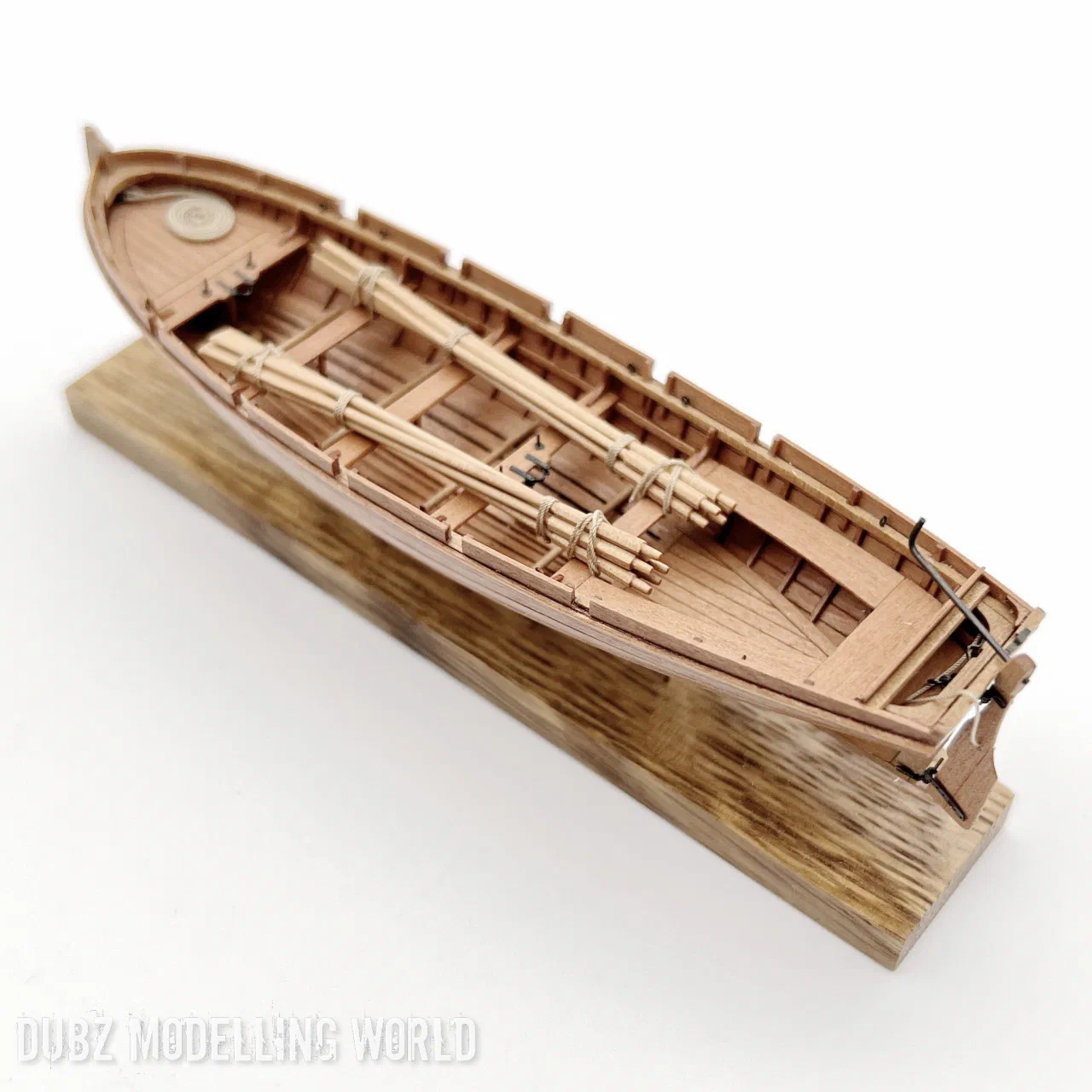
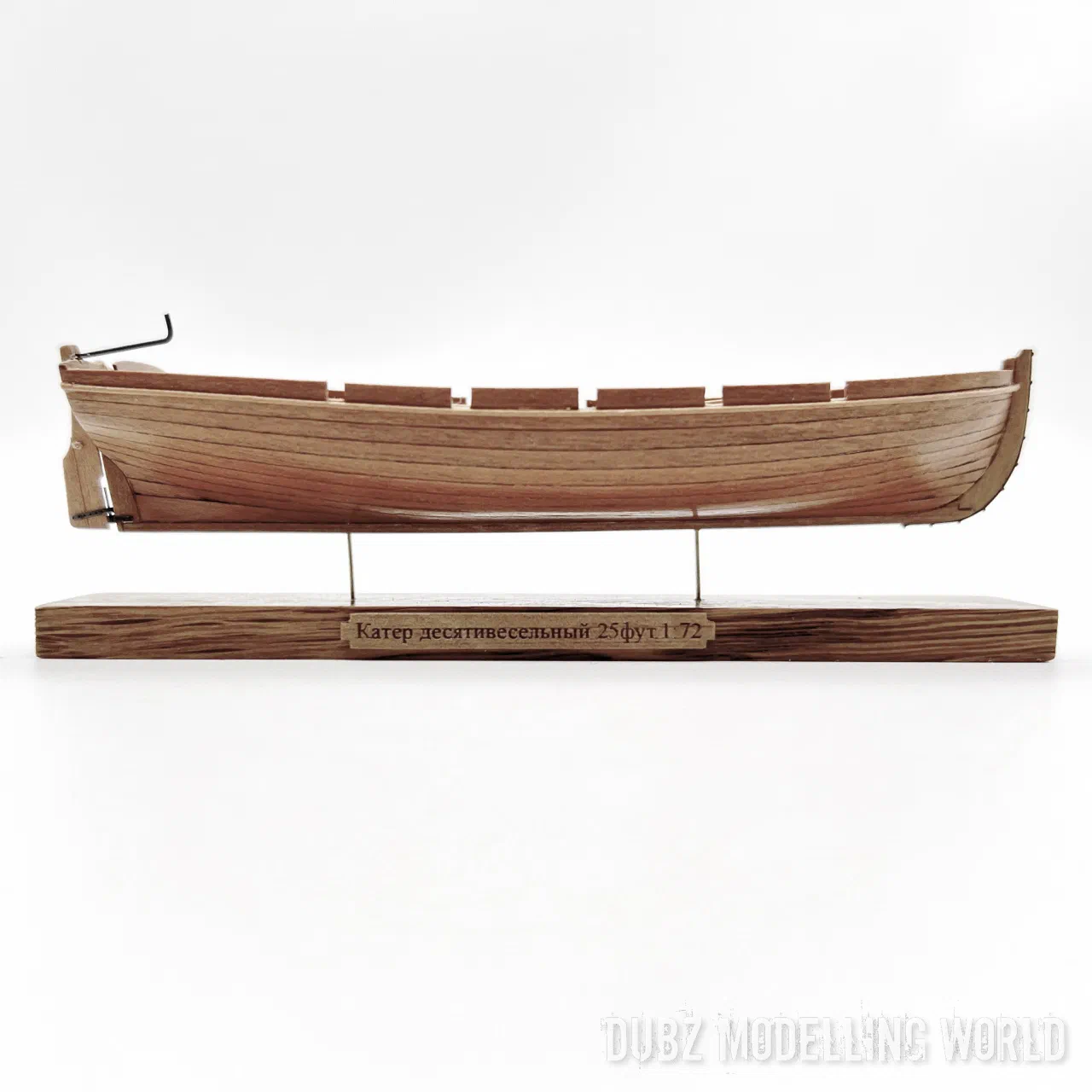
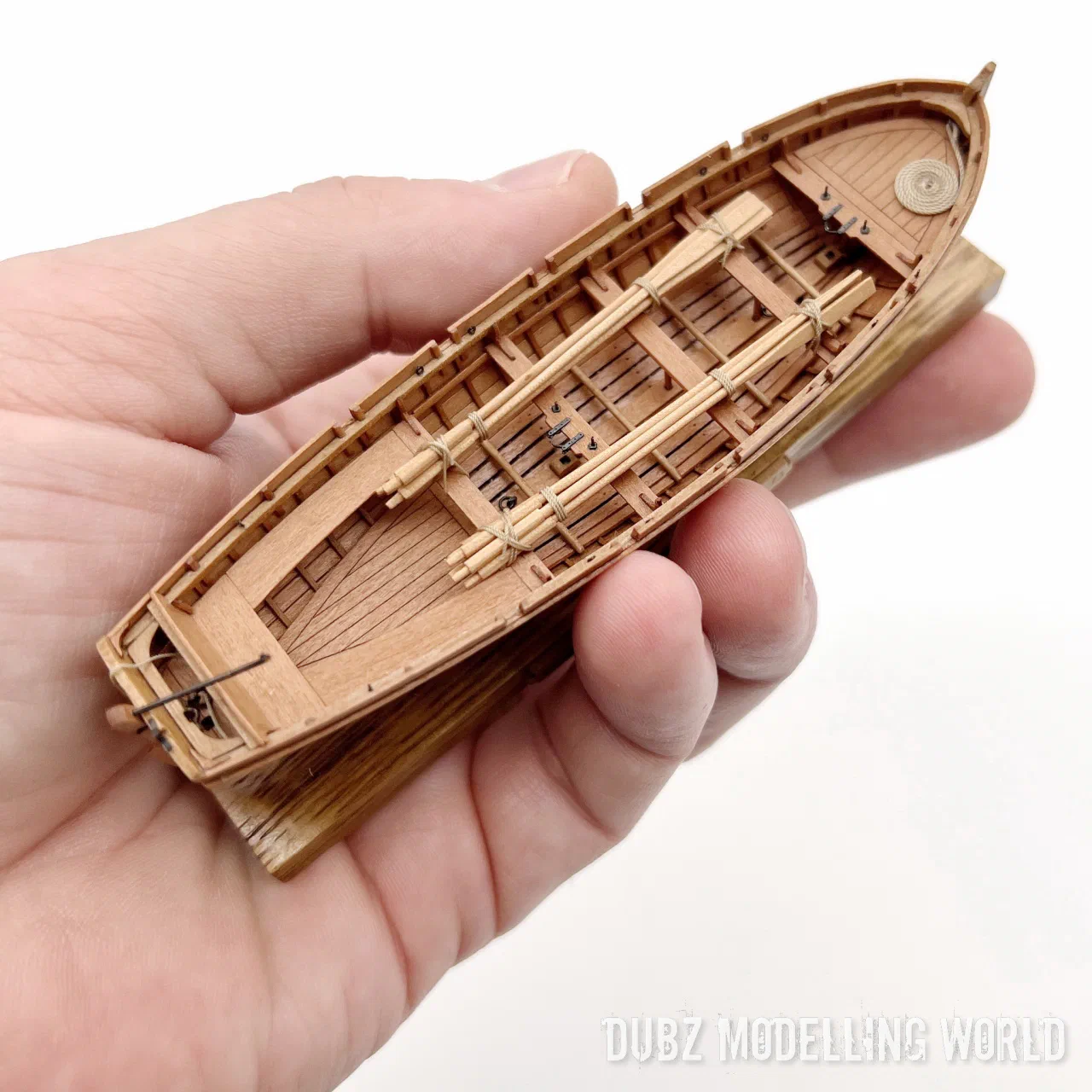
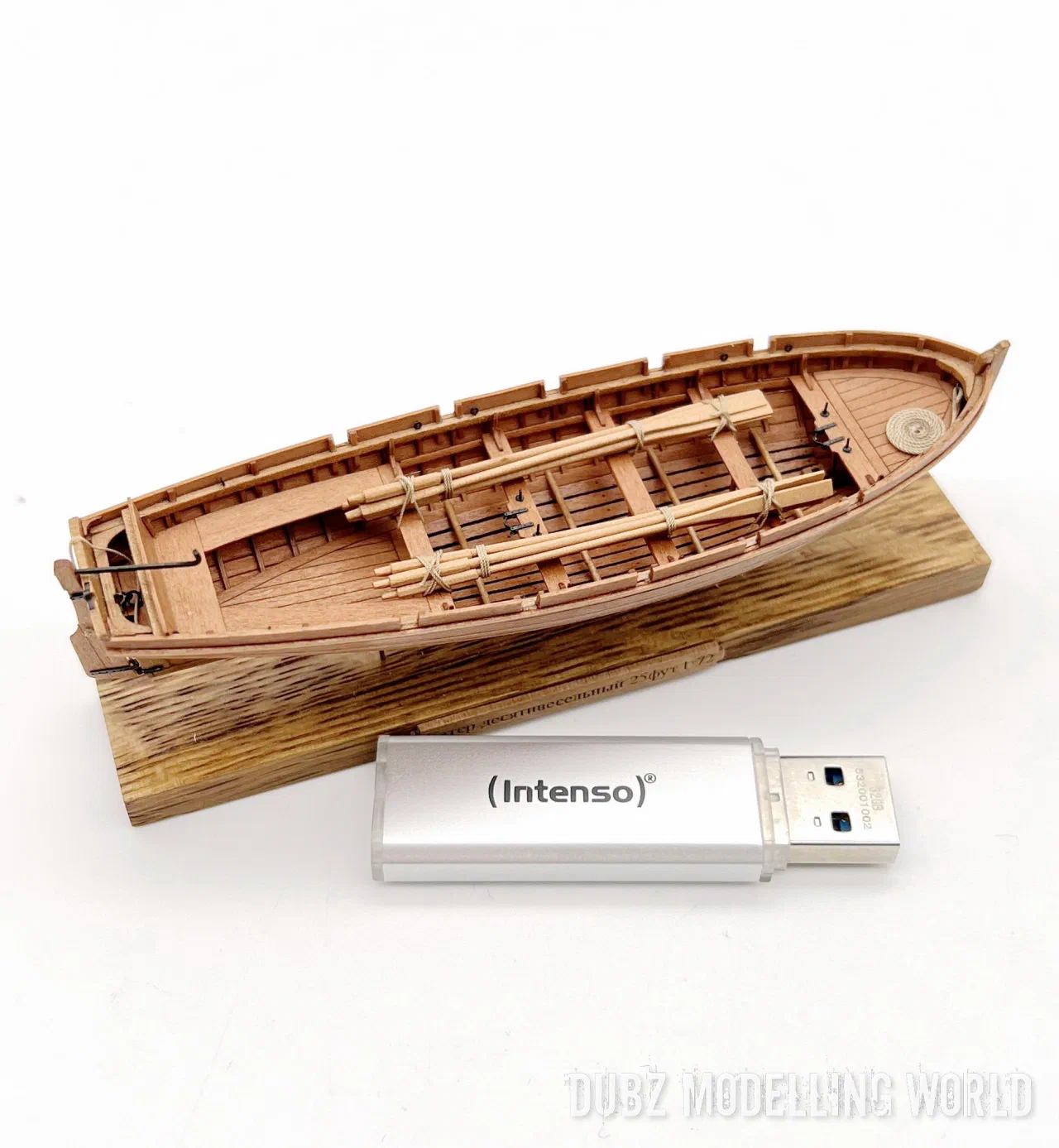
Falconet, like other Russian manufacturers, offers beautiful small models that give great results with high-quality materials. Small boats in this quality are rare – I would love to see more of them.