History
In the age of sail a gunboat was a small, usually undecked vessel that carried one heavy smoothbore gun in the bow, sometimes two or three guns, or a number of swivels on the rails. It could have one or two masts or be driven by oars alone. What made it dangerous was not the single boat but the swarm: gunboats were cheap and quick to build, they could work in shallow and confined waters where a frigate could hardly manoeuvre, and their guns were heavy – a 24- or even 32-pounder. One hit from a frigate’s broadside would destroy a gunboat, but a squadron of them could do serious damage to a frigate before it had sunk them all.
Nowhere were gunboats more important than in the Baltic. The skerries and archipelagos along the coasts of Sweden, Finland and Russia were ideal waters for them, and the rivalry between Sweden and Russia drove the development of new types from the 1770s onwards. In the Russo-Swedish war of 1788–90 the archipelago fleets met in huge numbers – at the Battle of Svensksund in 1790 hundreds of gunboats, galleys and other oared craft and more than 30,000 men were involved. Two variants were most common: the larger gun sloop (Swedish kanonslup) with two 24-pounders, one in the bow and one in the stern, and the smaller gun yawl (kanonjolle) with a single 24-pounder. Many Baltic navies kept gunboats in service well into the 19th century; Russian gunboats were in action against British ships off Turku as late as the Crimean War in 1854.
Master Korabel sells the kit as “Cannon Jolle 1801” – a gun yawl of this Swedish-derived type in Russian service, which is why I called my build log “Russian/Swedish Gunboat”.
The kit
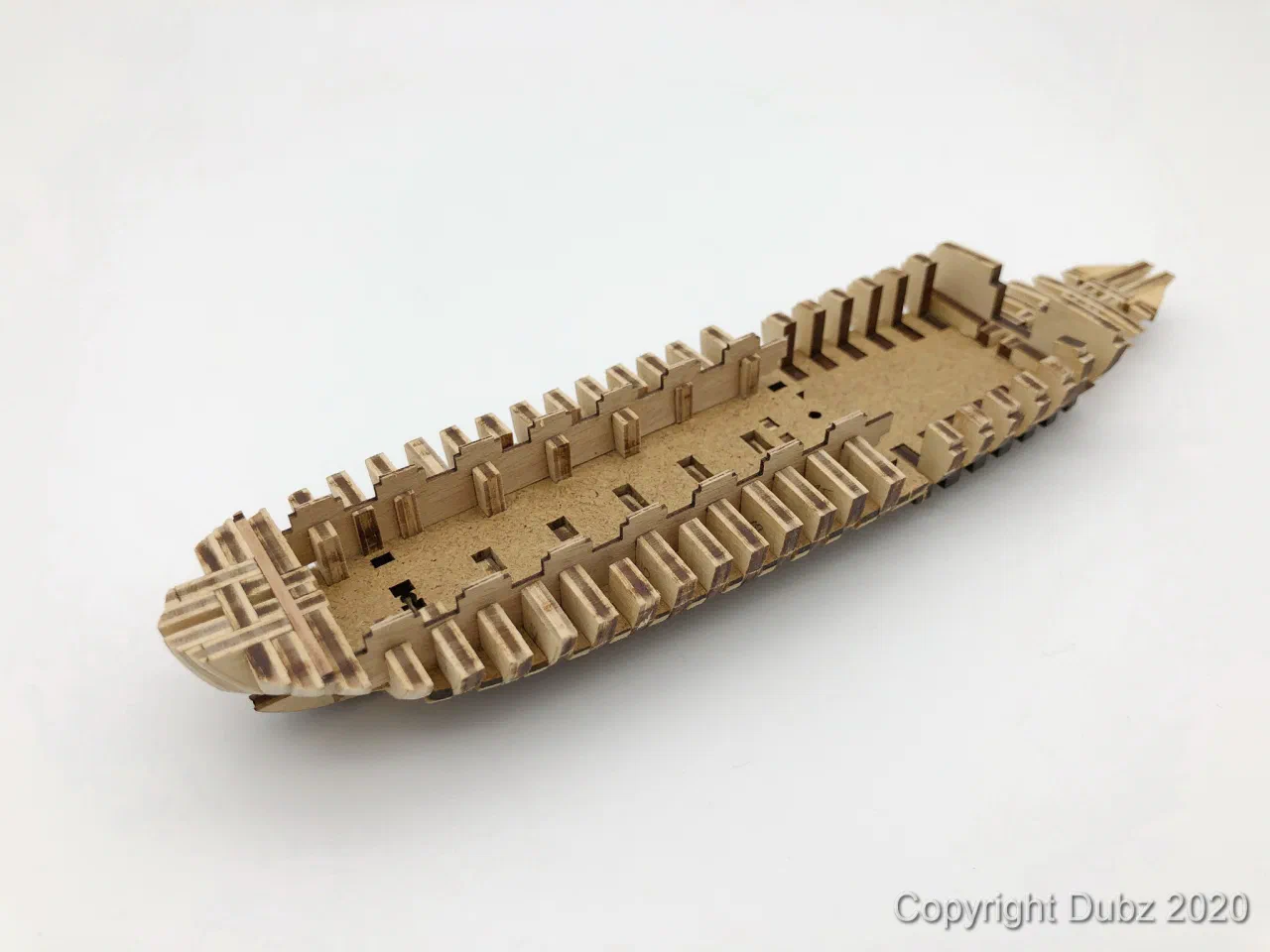
Master Korabel kits are a pleasure to build: precise laser-cut parts, pear wood and photo-etched parts of excellent design – the screw heads alone are a small work of art. The kit even includes a stand made of pear and a name plate, in Russian and in English.
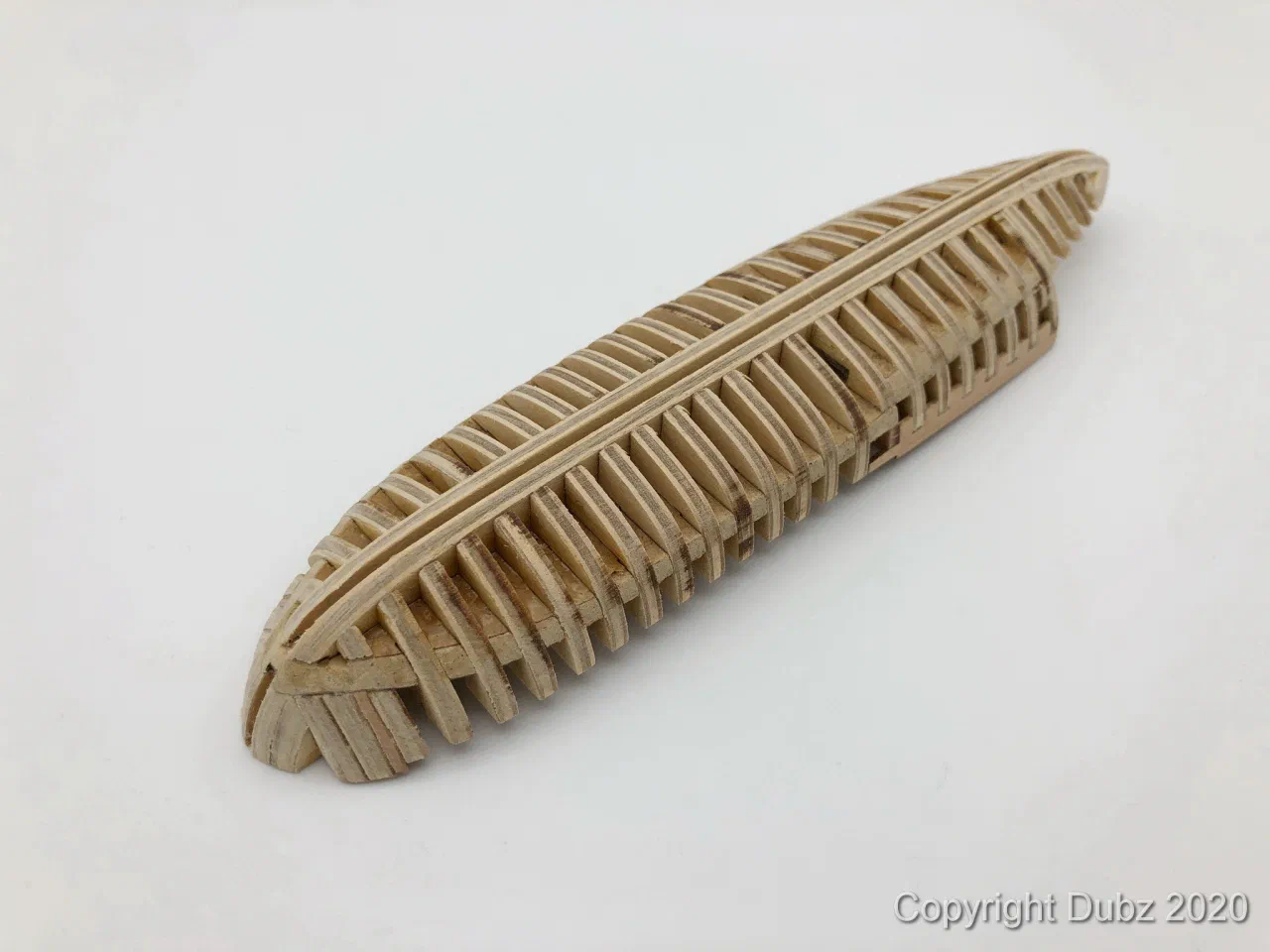
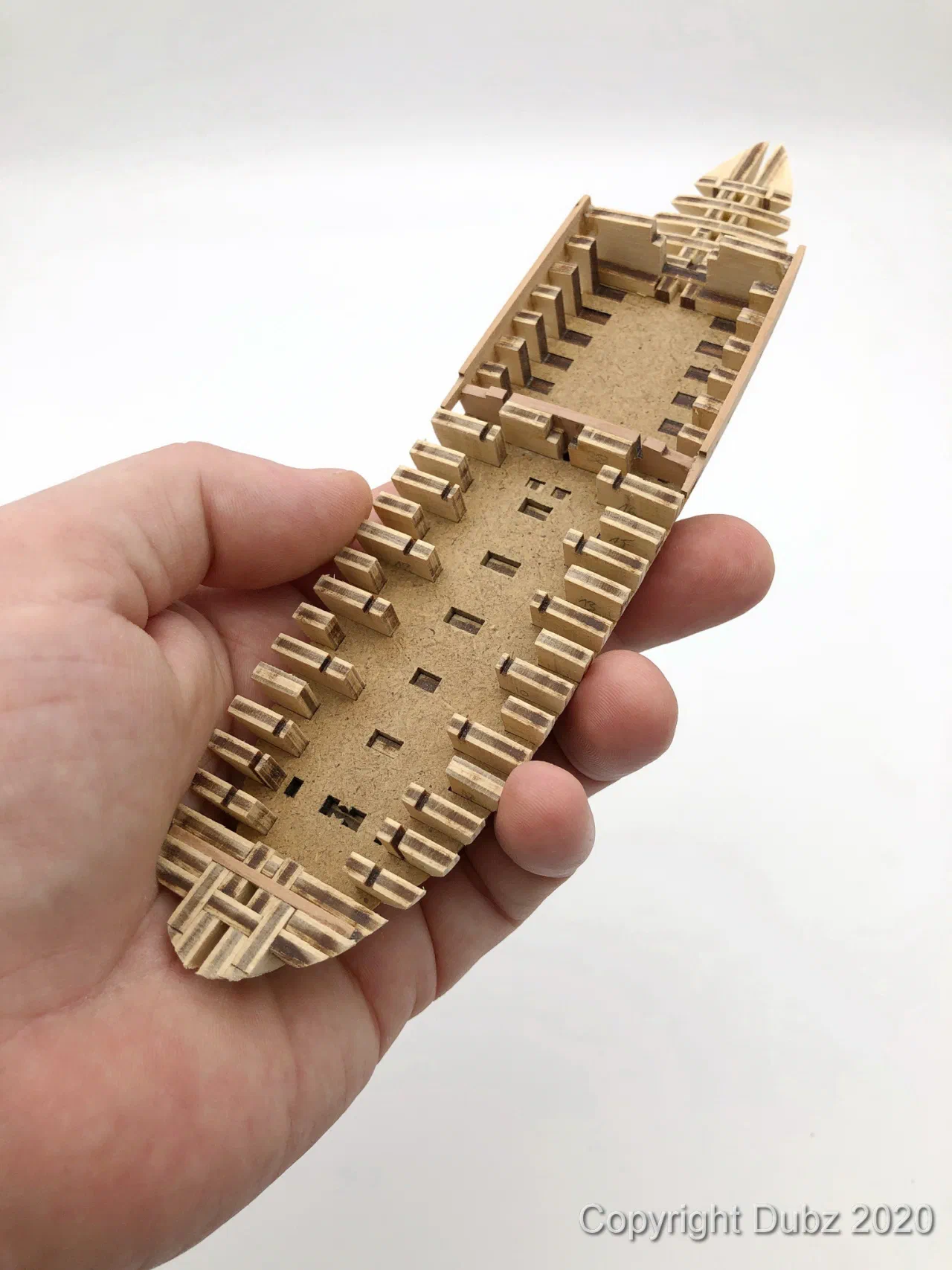
Gun and main deck
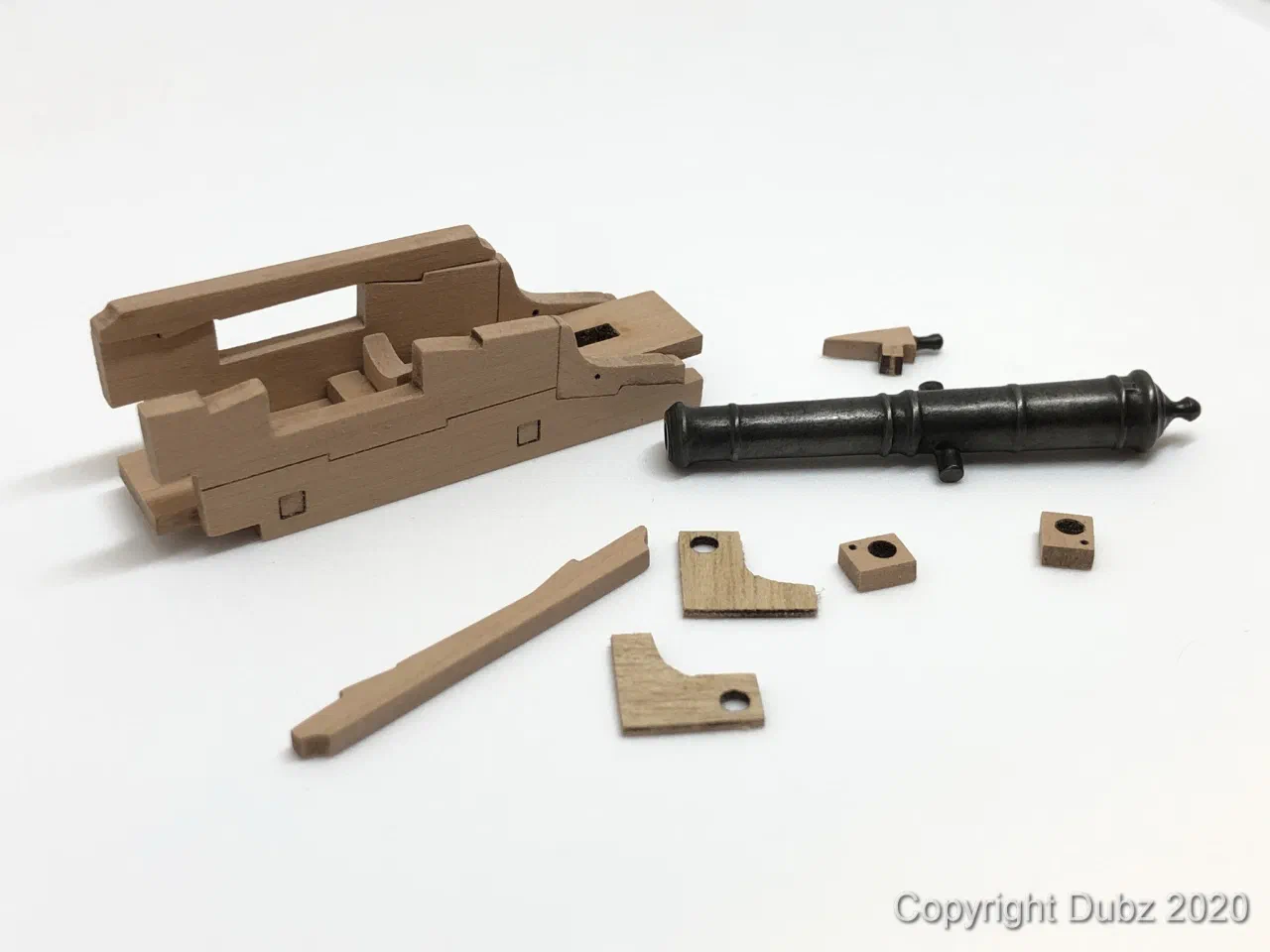
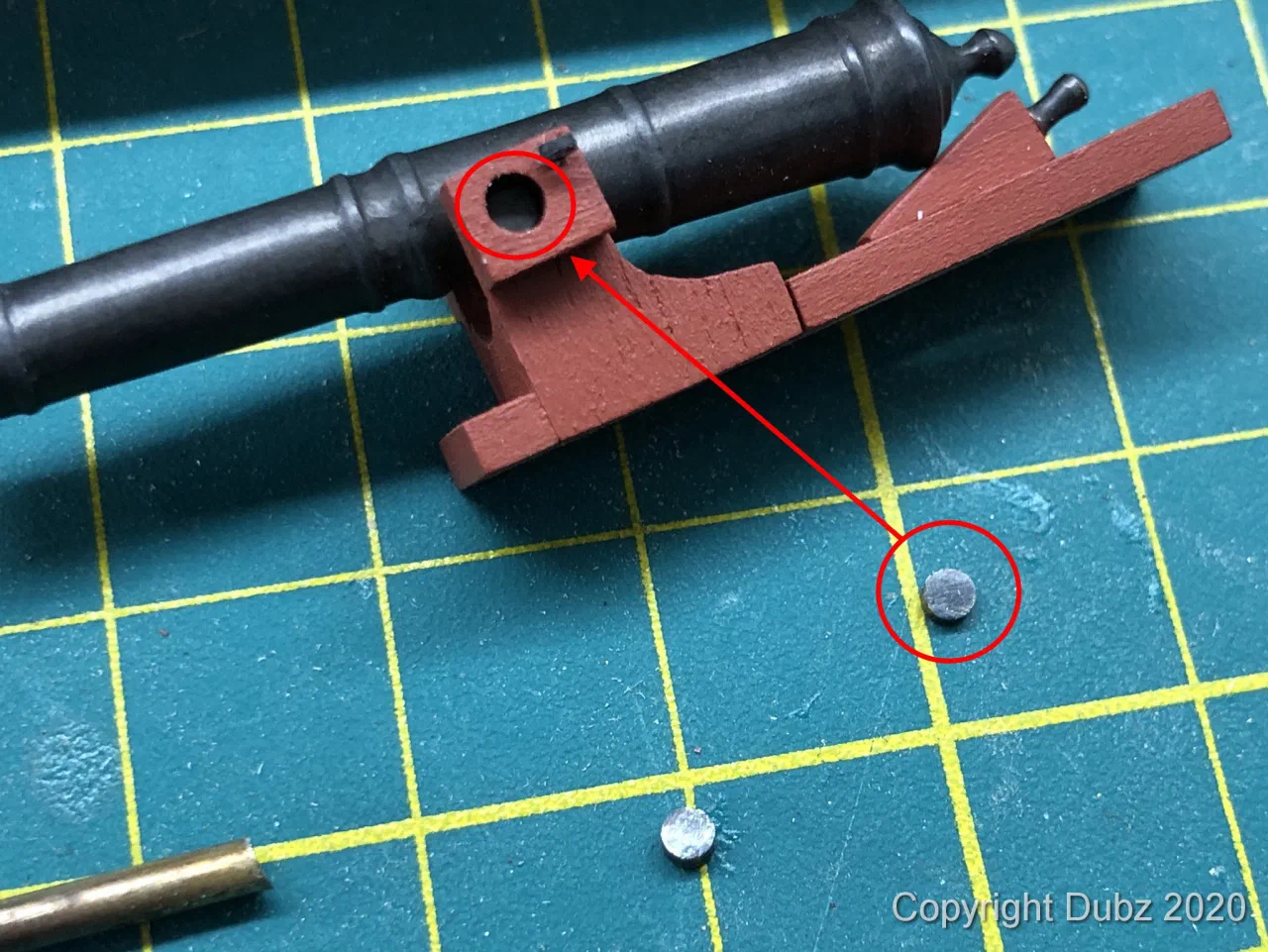
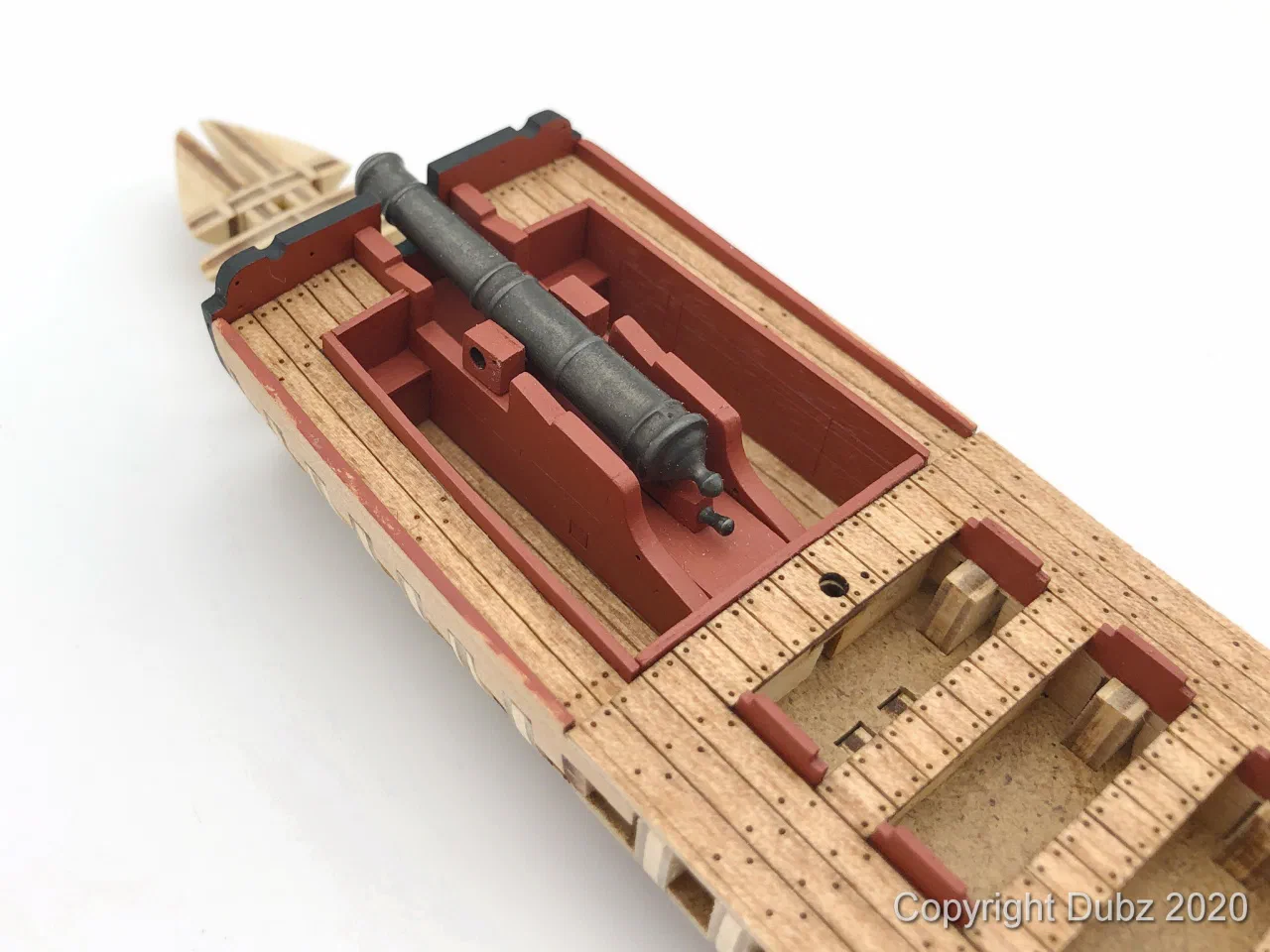
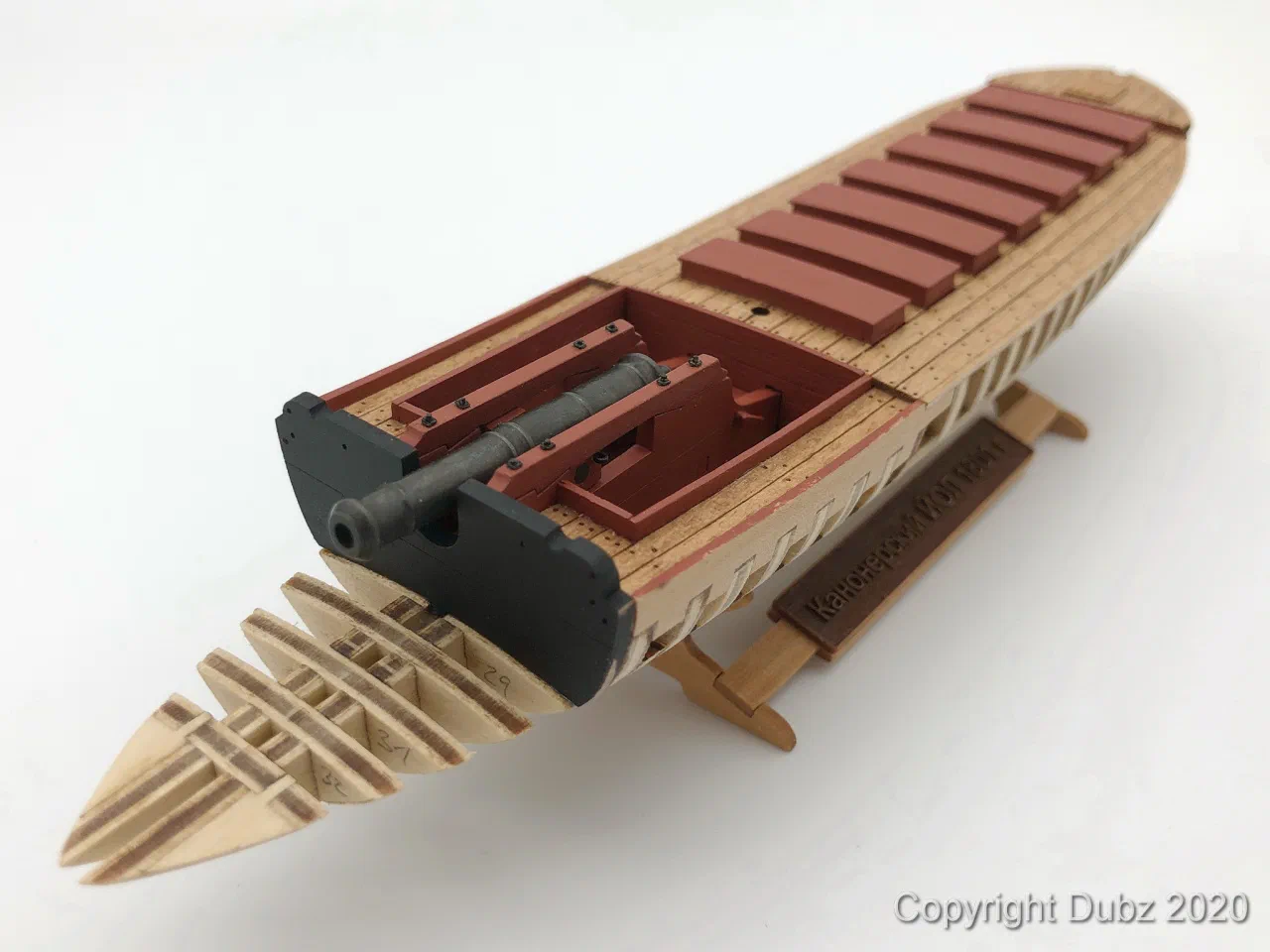
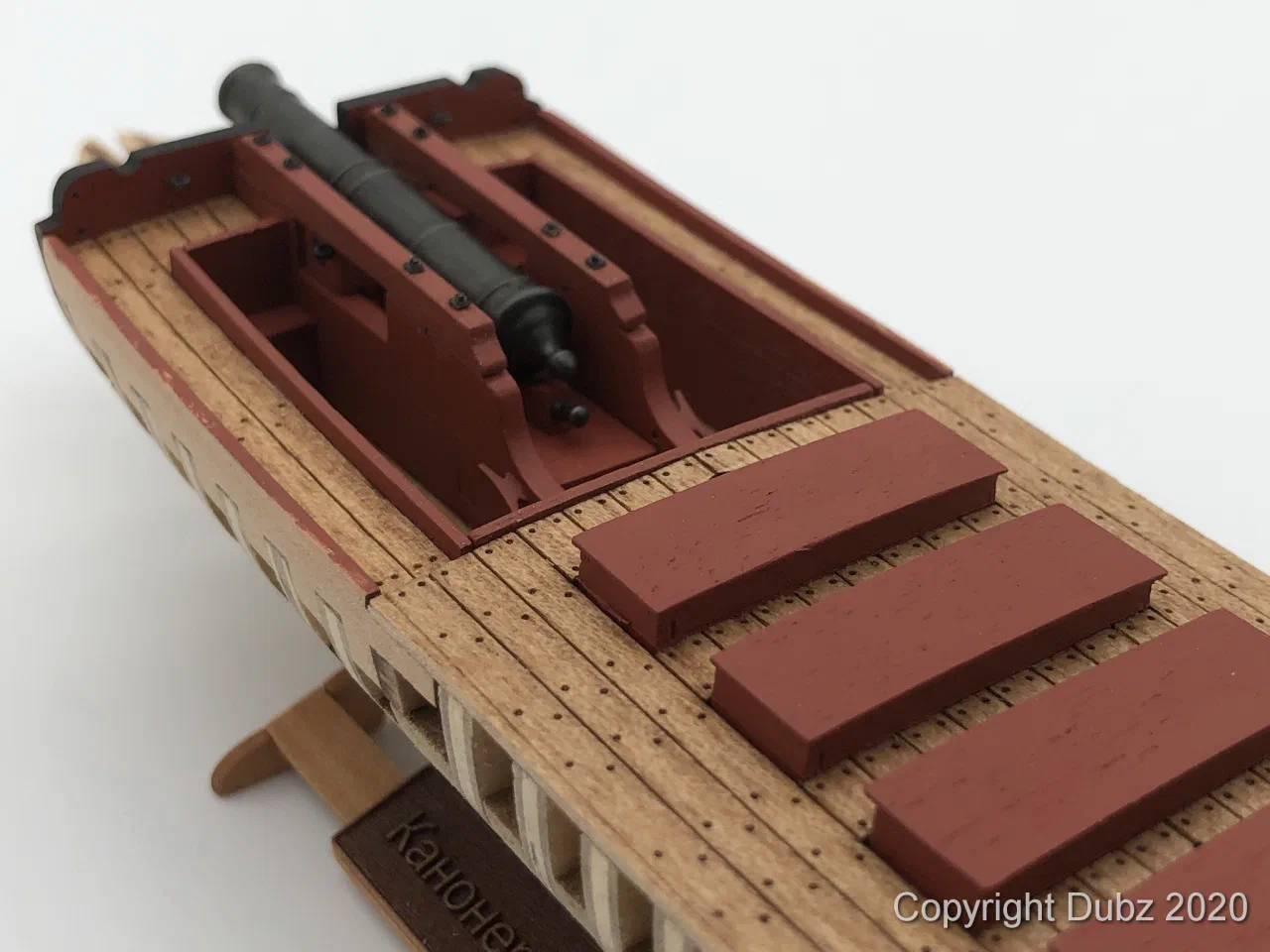
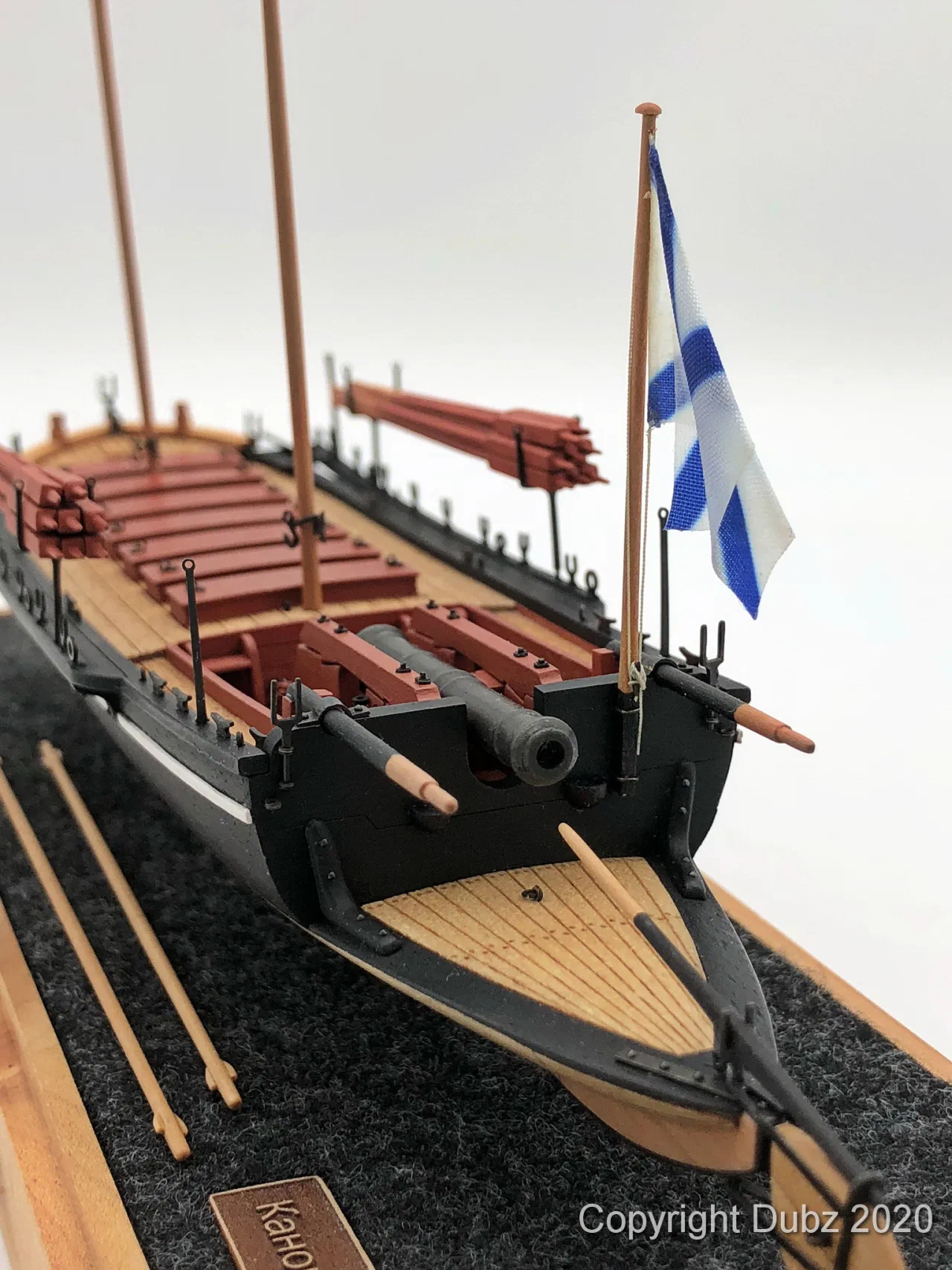
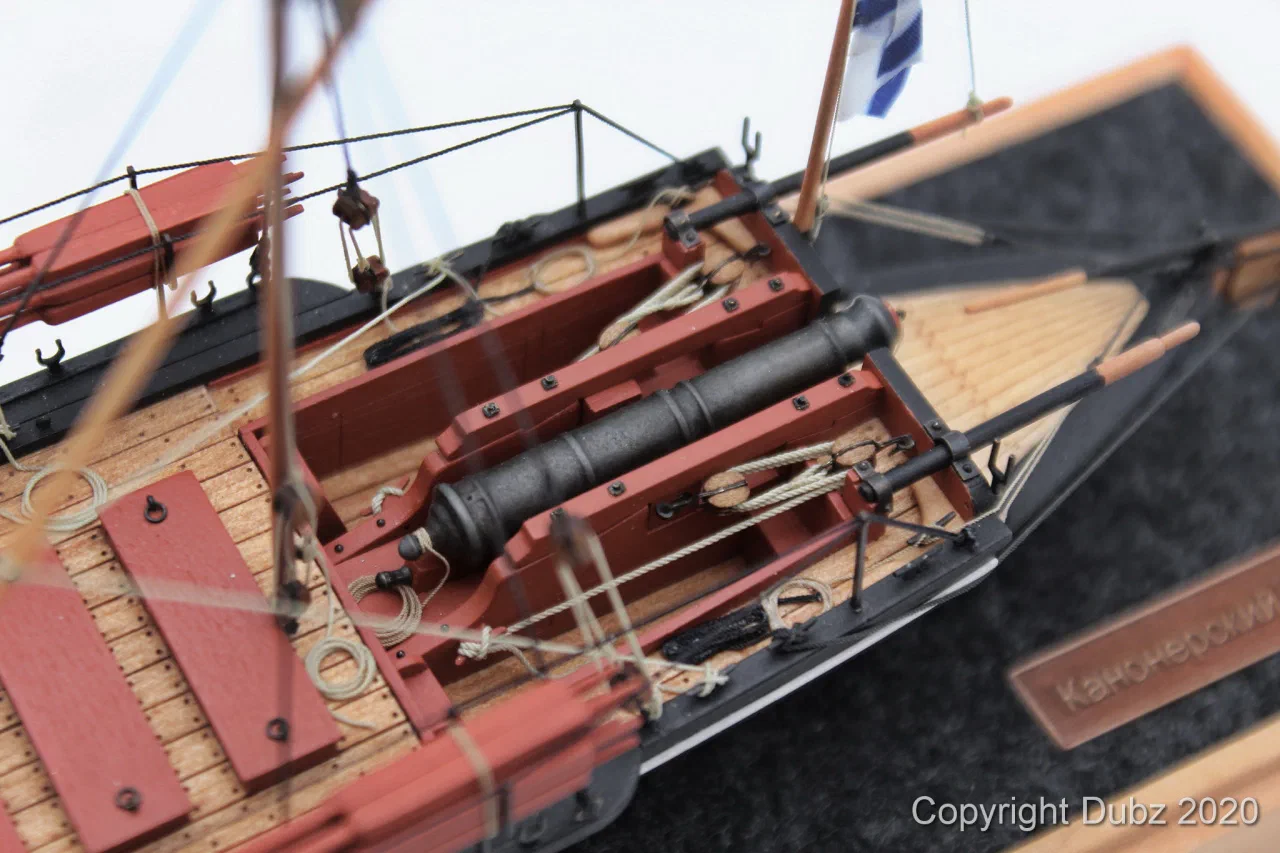
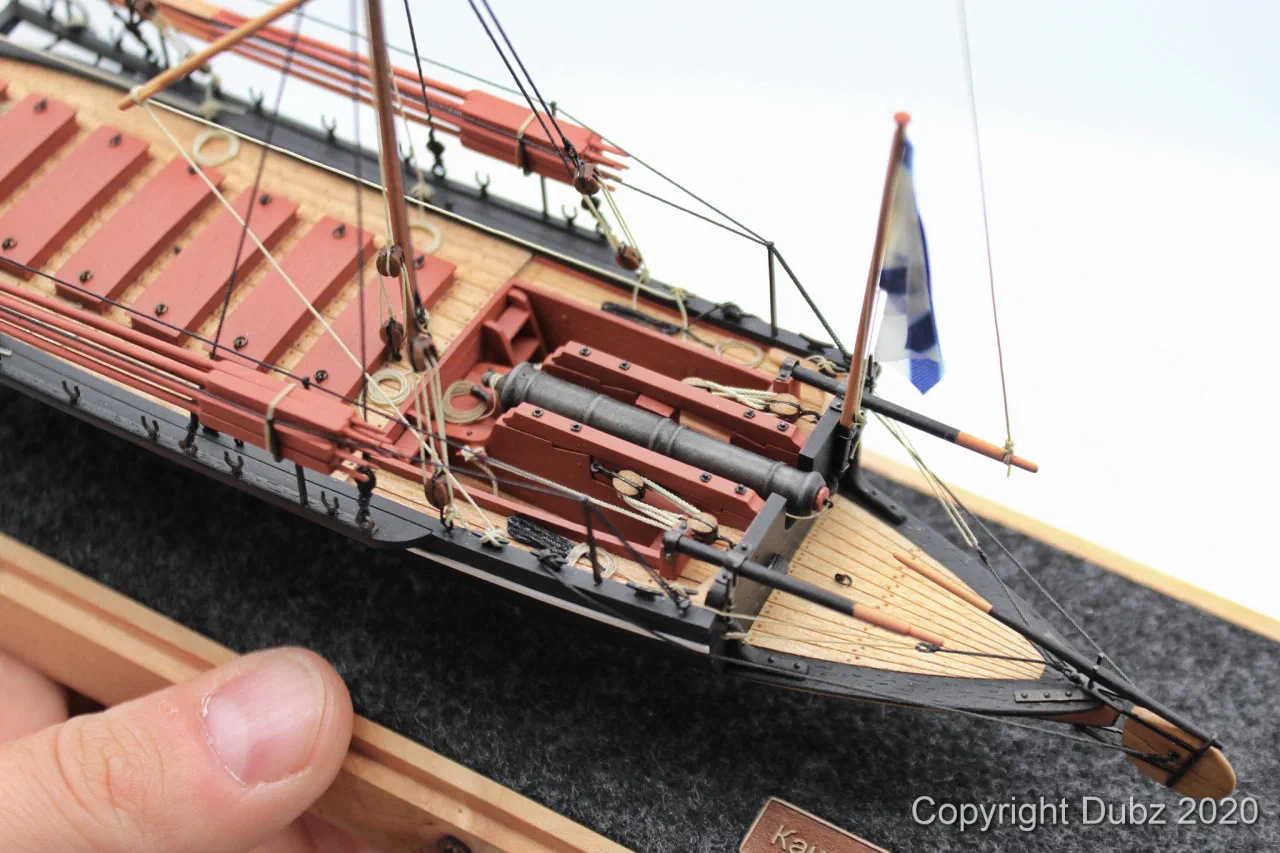
The big gun in the bow is the reason this boat exists, so it came early. Its carriage is built from laser-cut parts and photo-etch, and the first fitting checks showed how massive the gun is compared with the boat.
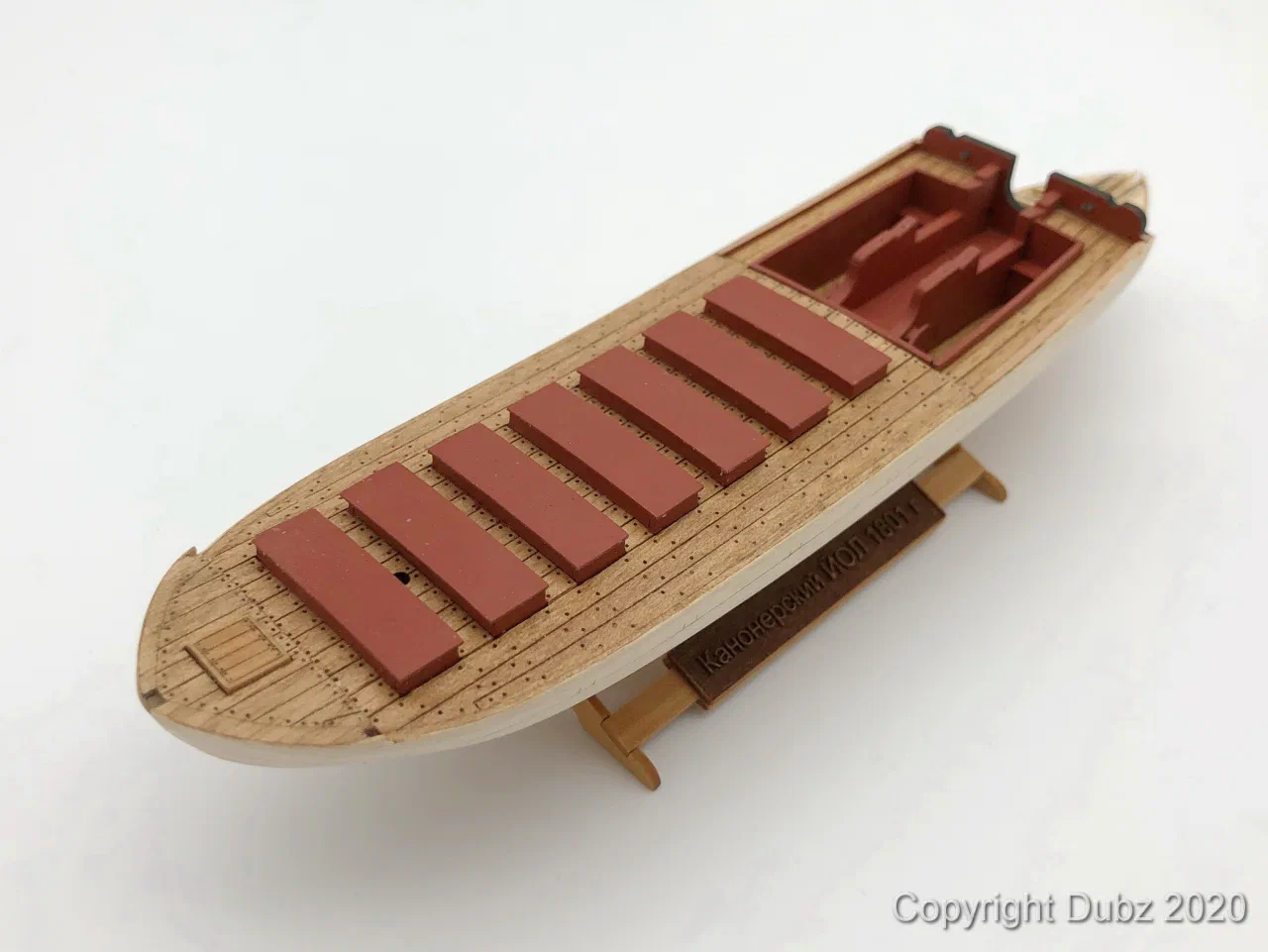
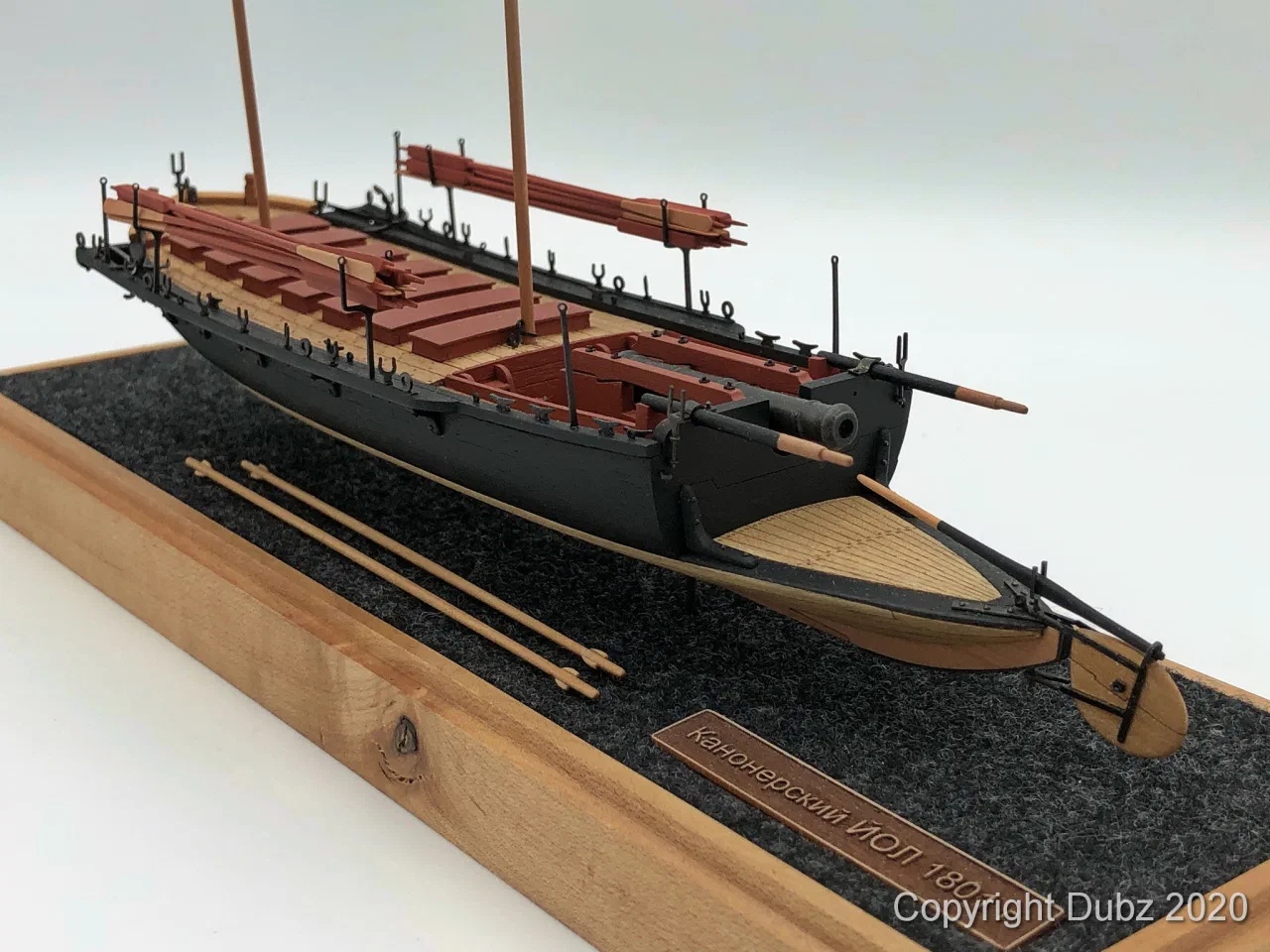
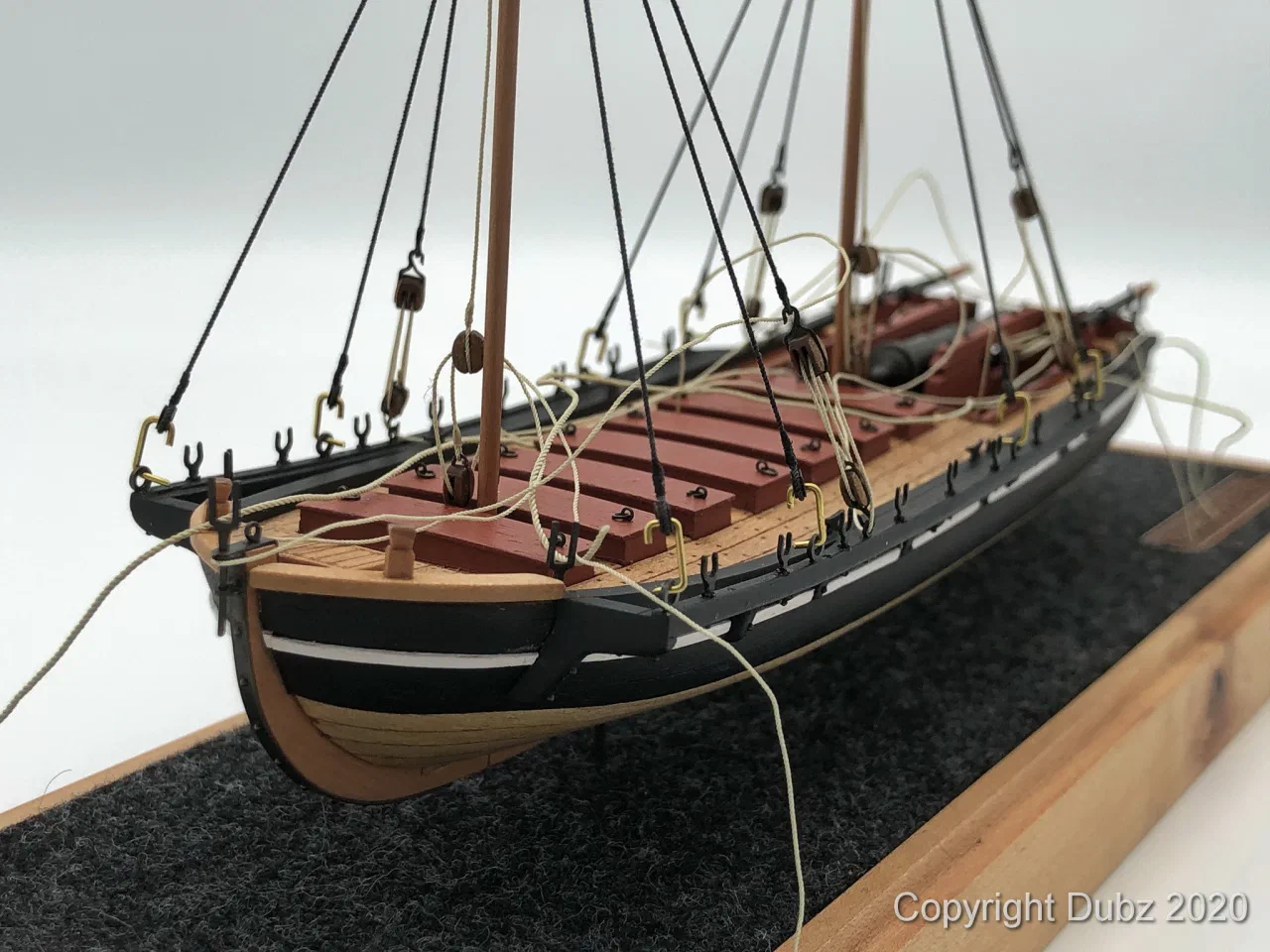
Then I started on the main deck: the planked platforms, the red-painted gun position and the long row of rowing benches.
Planking and colour
The planking went on without any problems – unfortunately I had a double mental drop-out while sanding, and had to repair what I had sanded away. Then there was colour: black for the upper hull, red for the inside, and oiled pear for the rest.
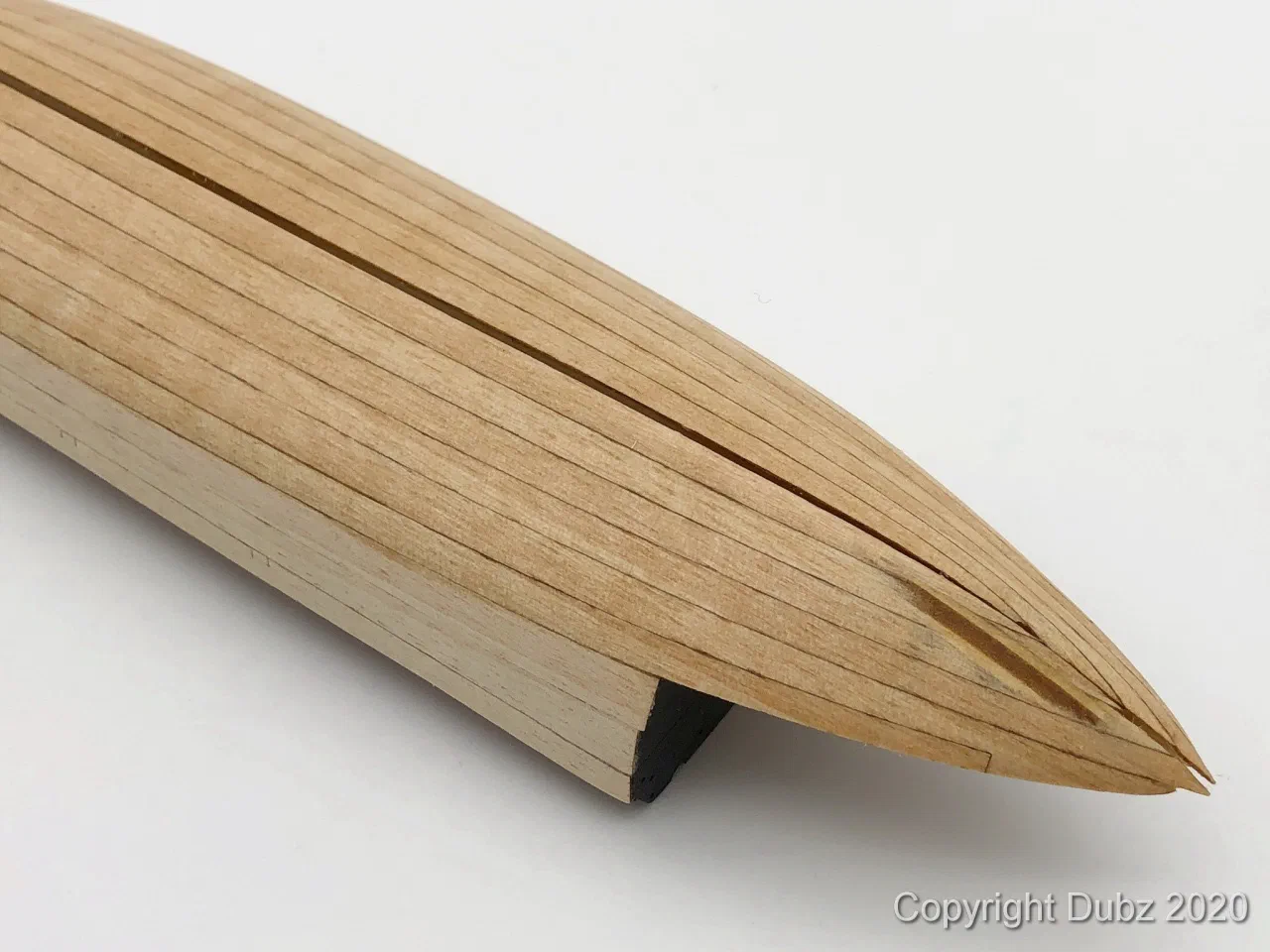
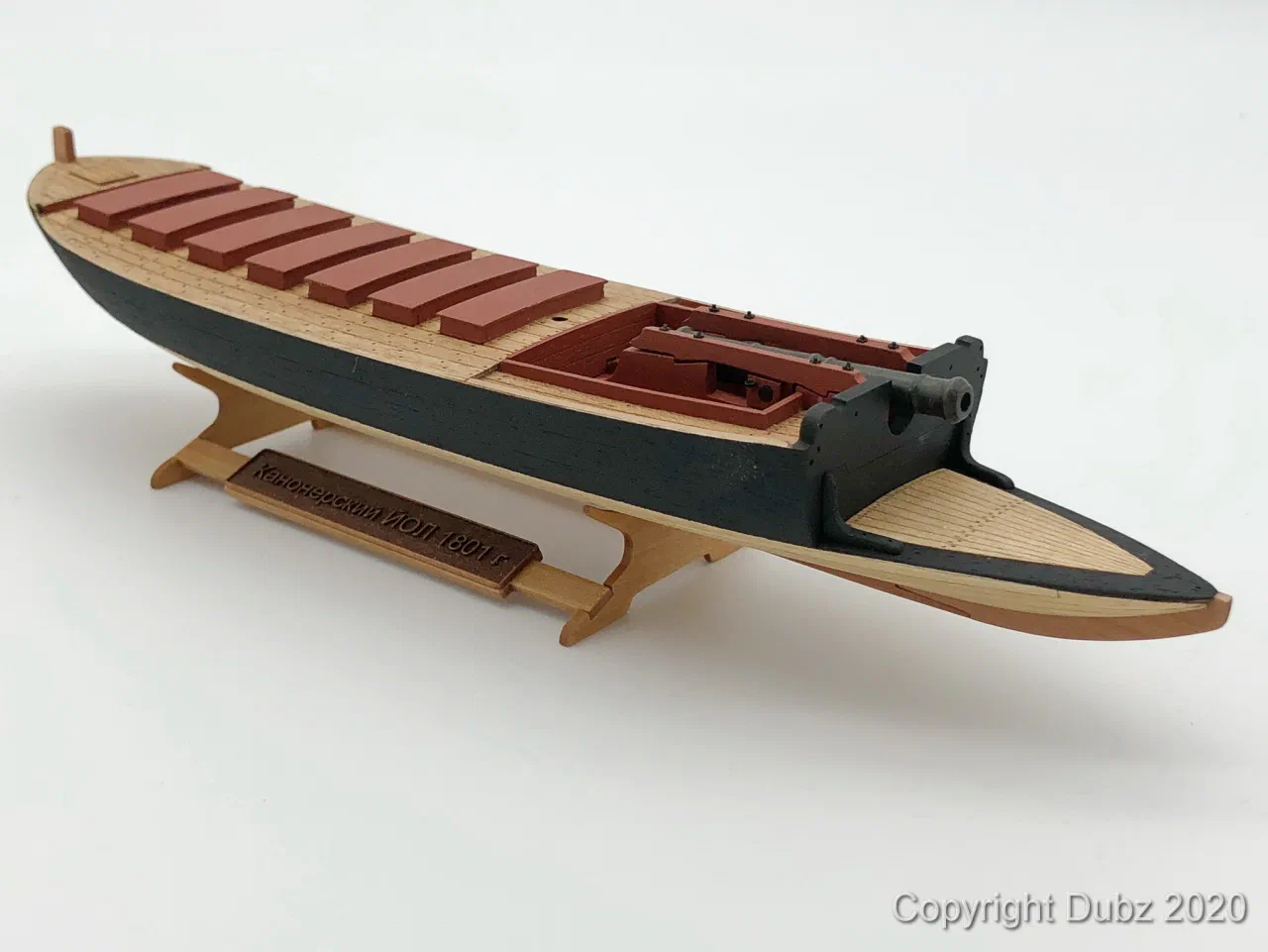
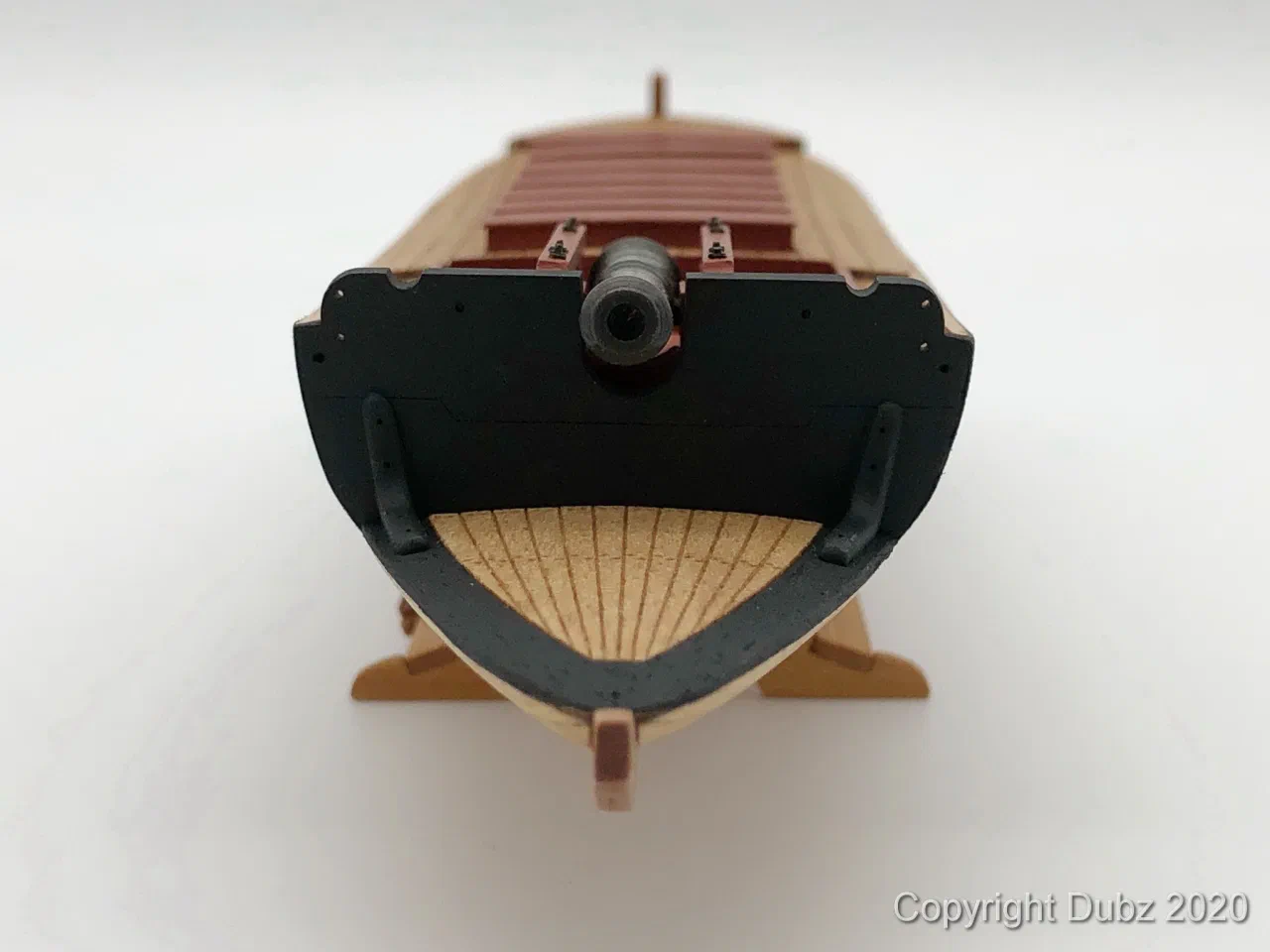
Photo-etch
Most photo-etched parts are etched from both sides, and there is almost always a minimal offset between the two sides. That makes it very important to file every part cleanly – only then is it macro-proof. Apart from my beloved miniature rivets and a few smaller eyebolts from a colleague, everything on this model is out of the box.
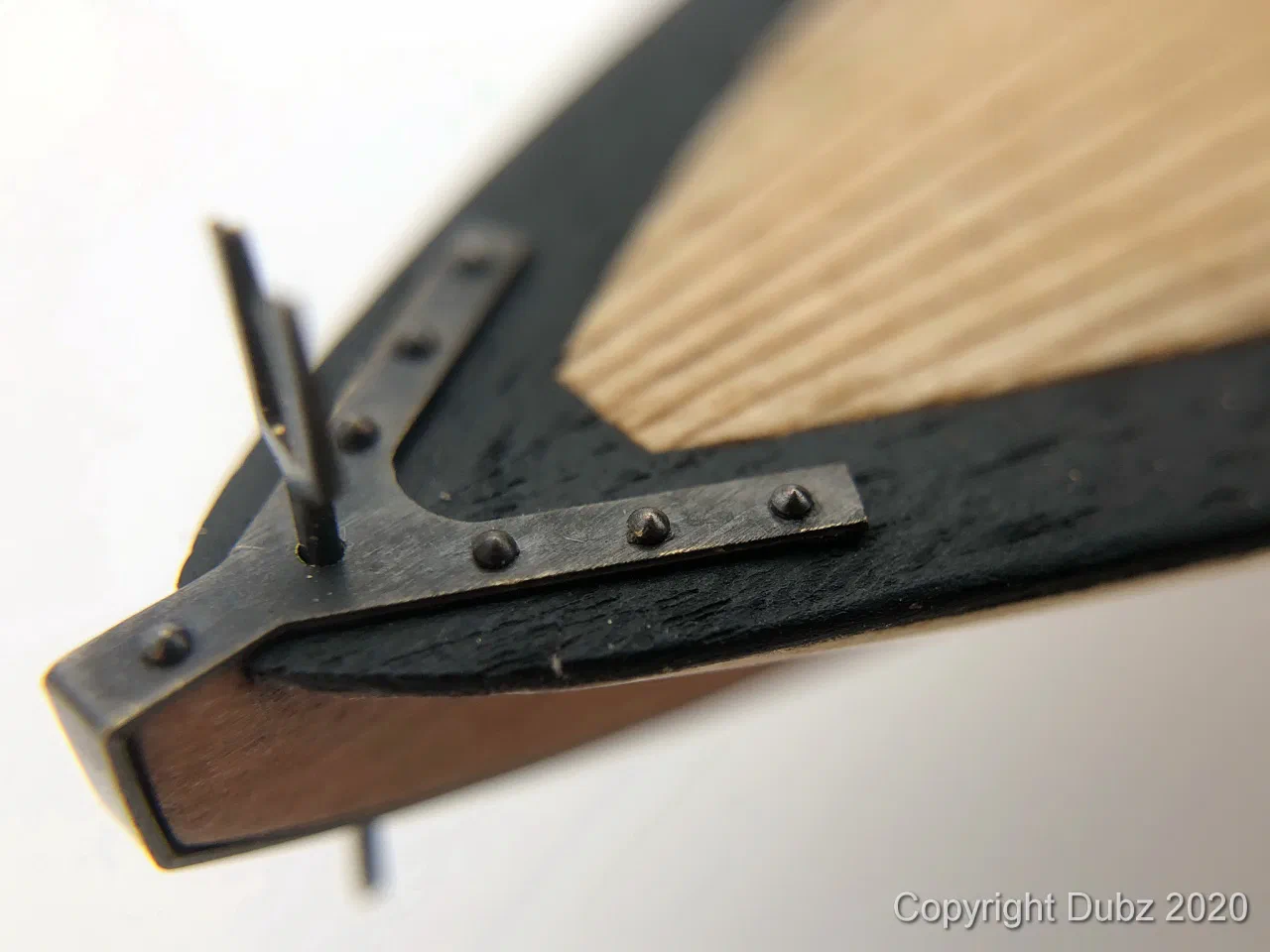
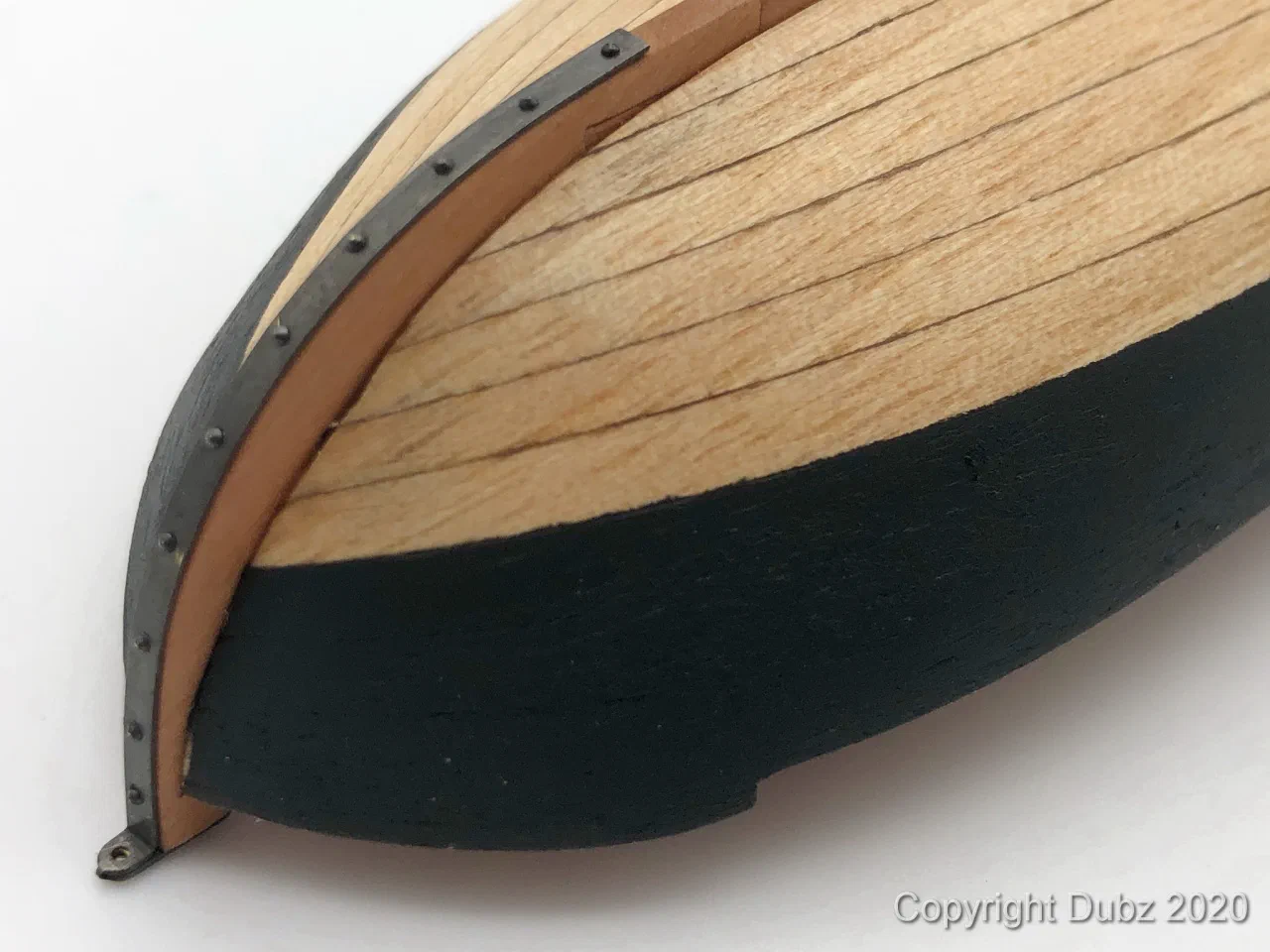
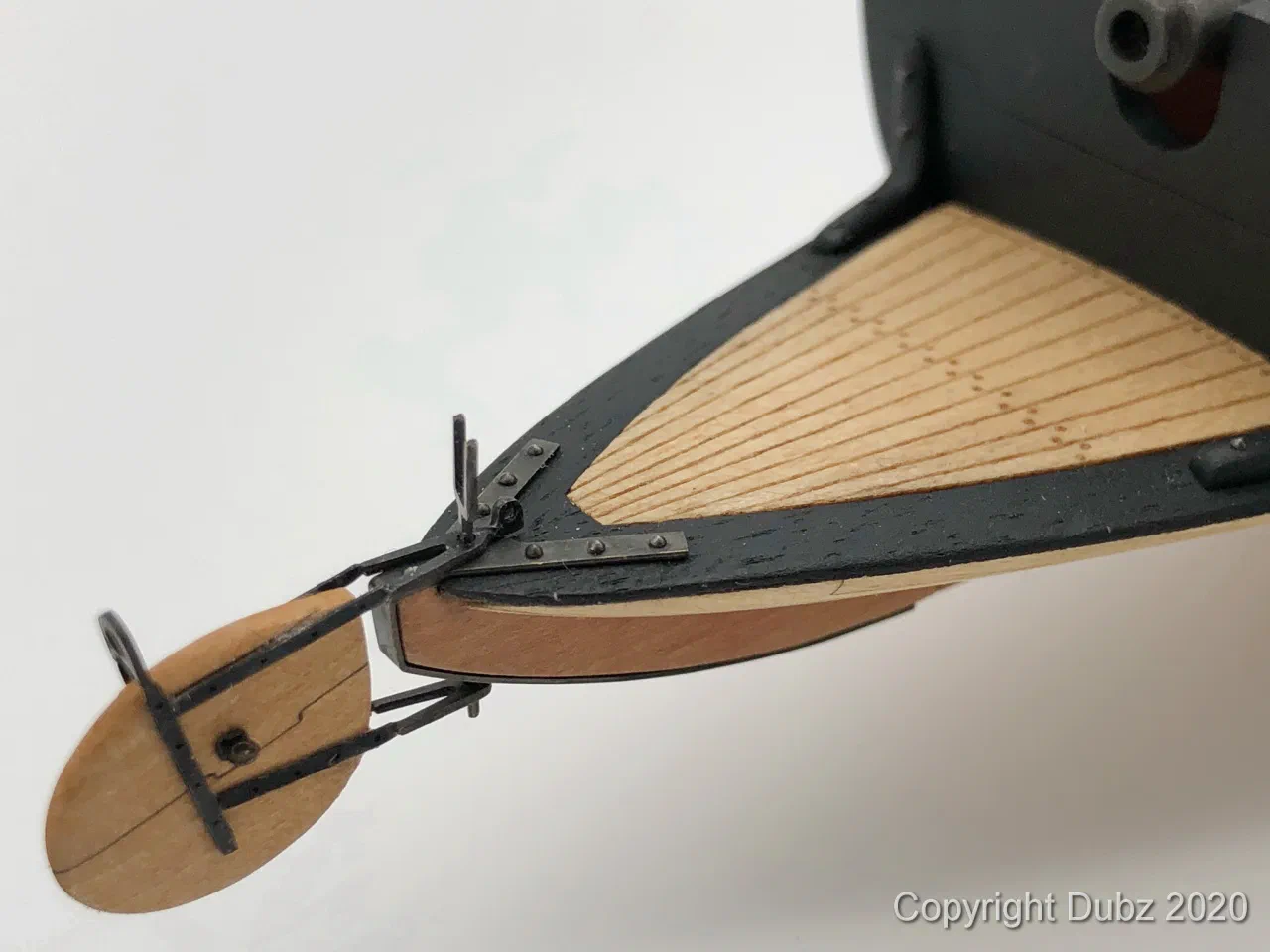
Stairs, lying knees and the frames for the oars followed. Not perfect, but OK.
Case and stand
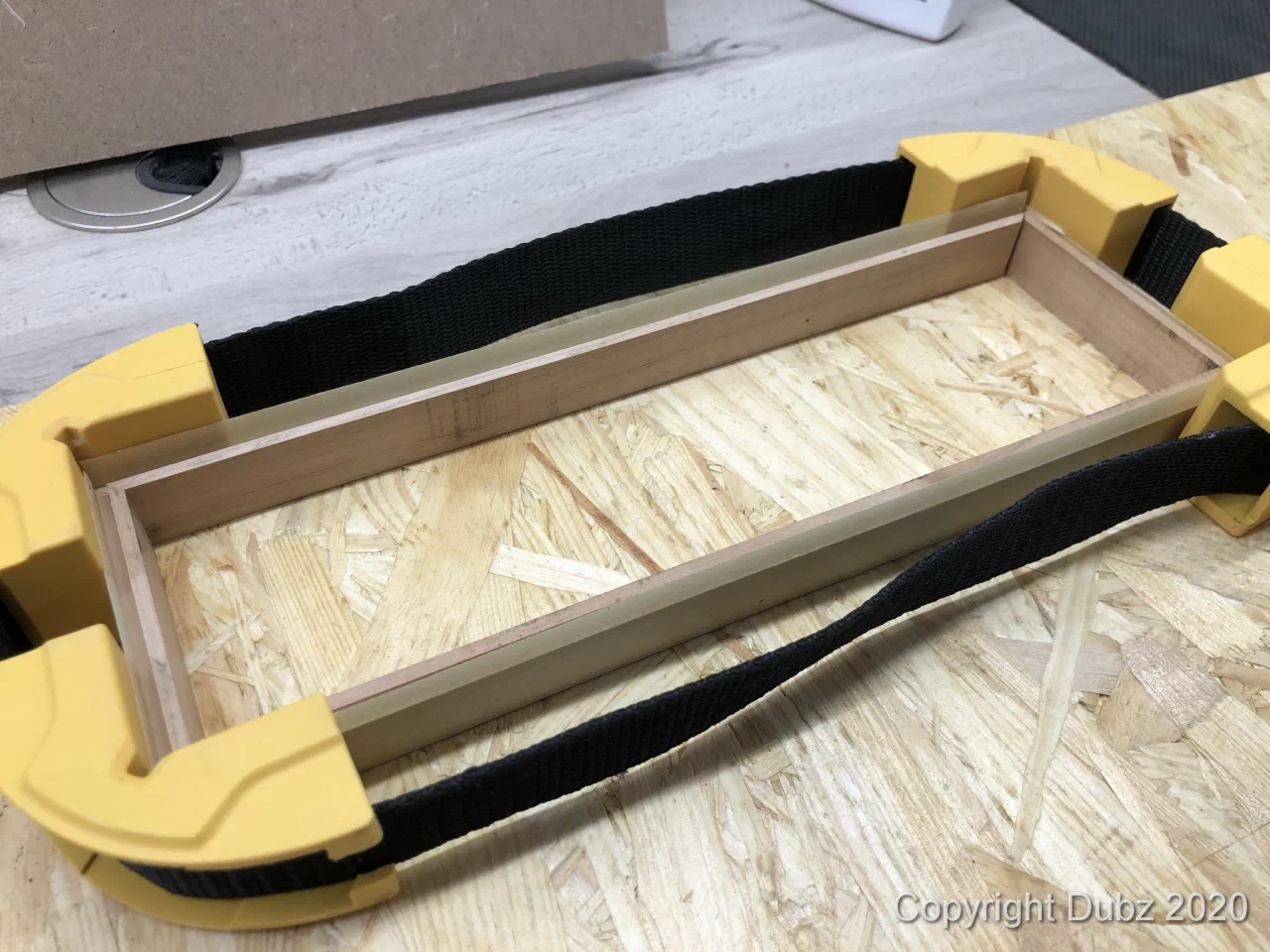
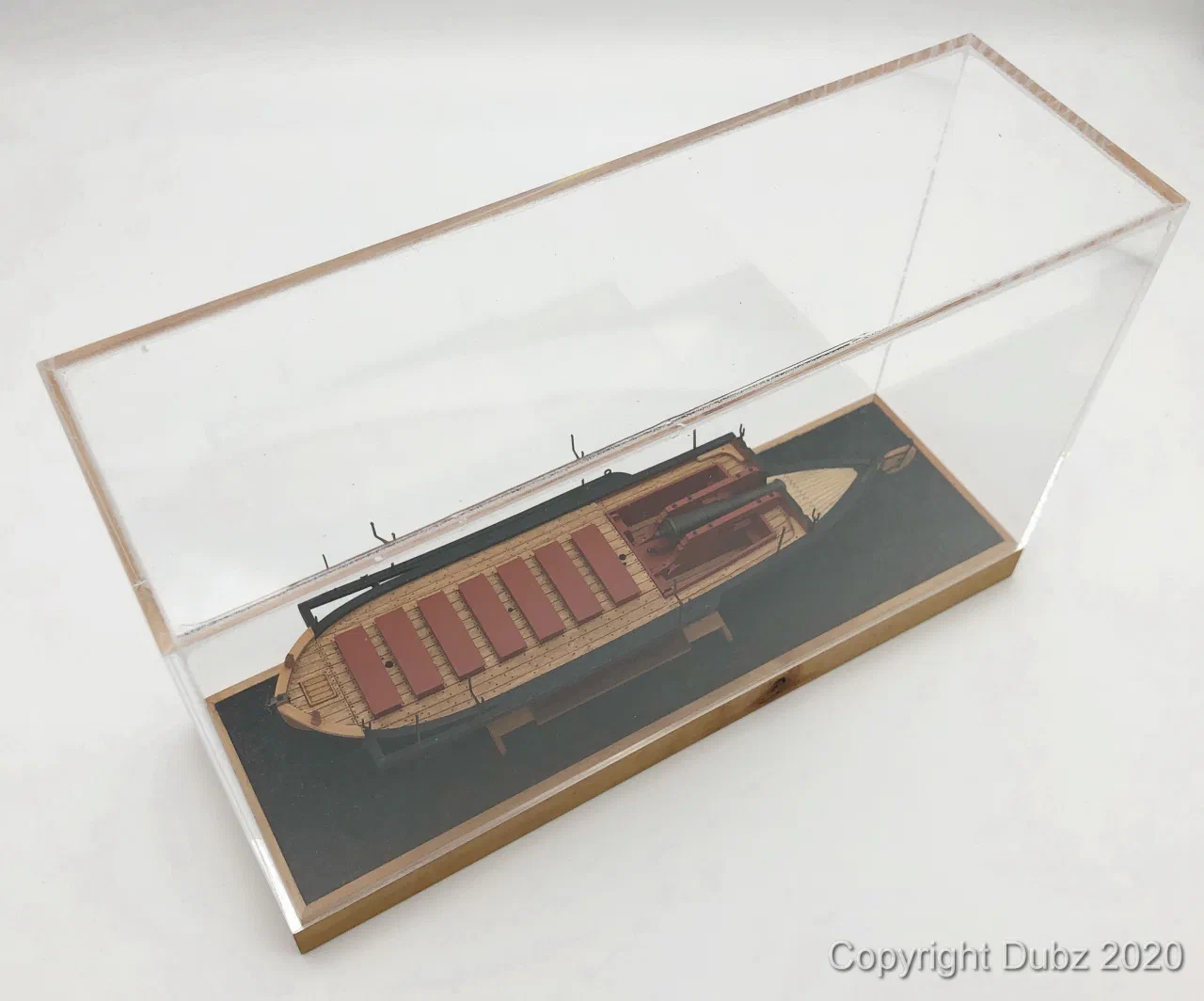
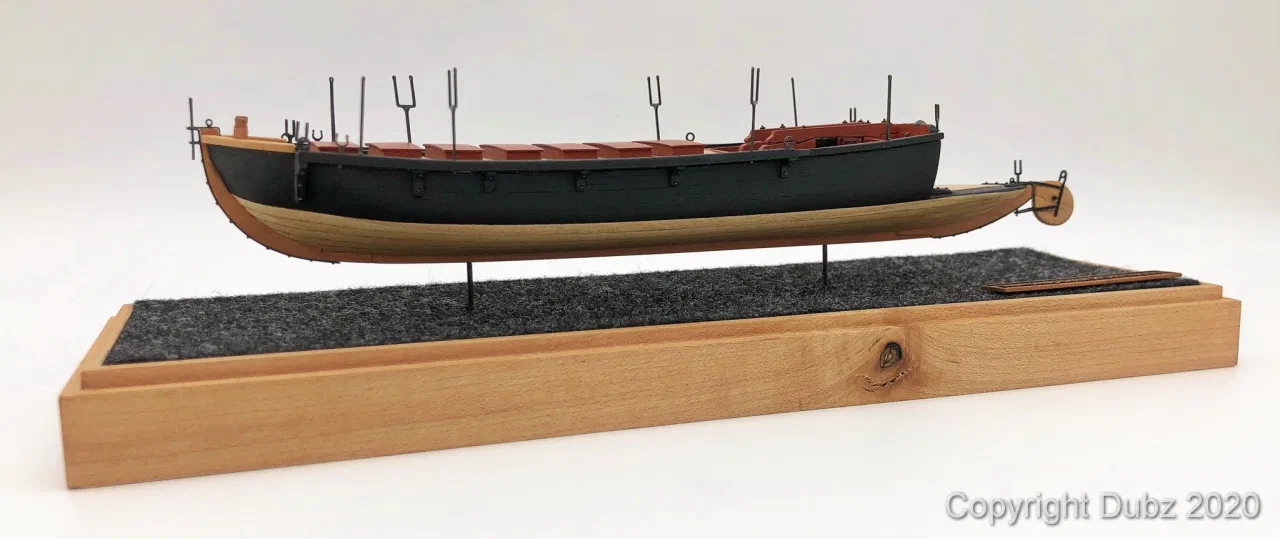
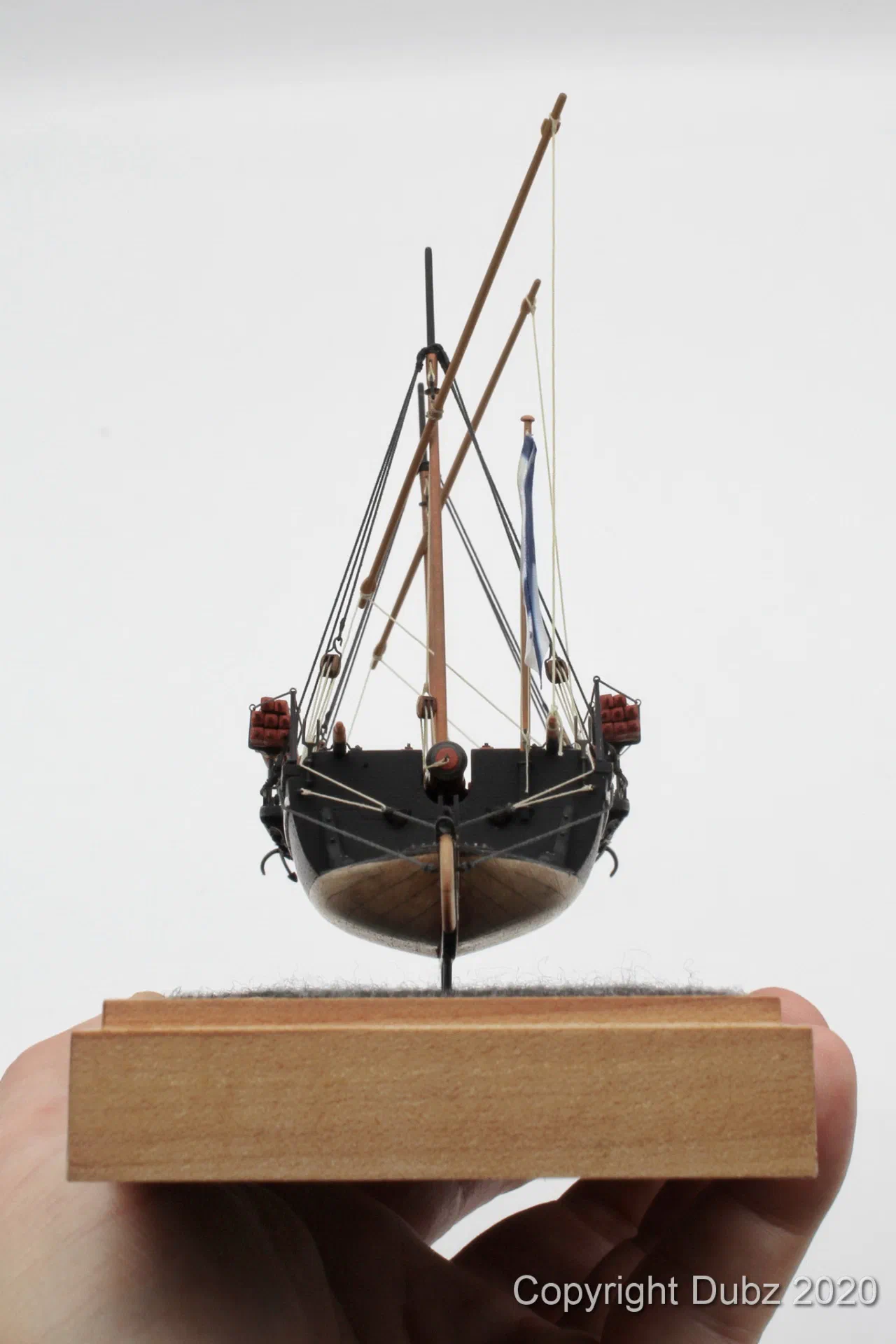
The case was built and more etched parts were filed and blackened. For the stand I preferred a “floating” solution that does not distract from the hull: the boat sits on thin rods above a dark base.
Oars, spars and flag
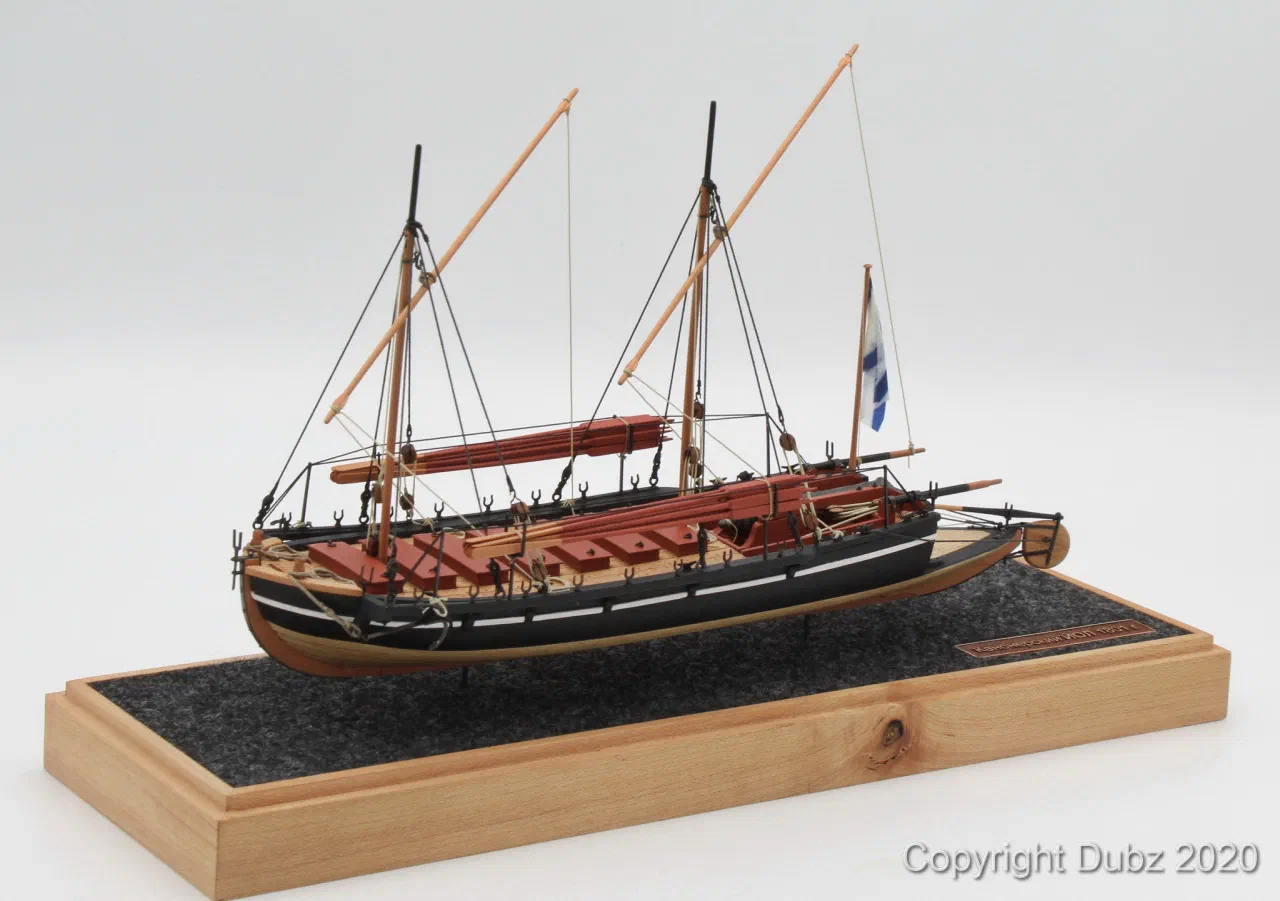
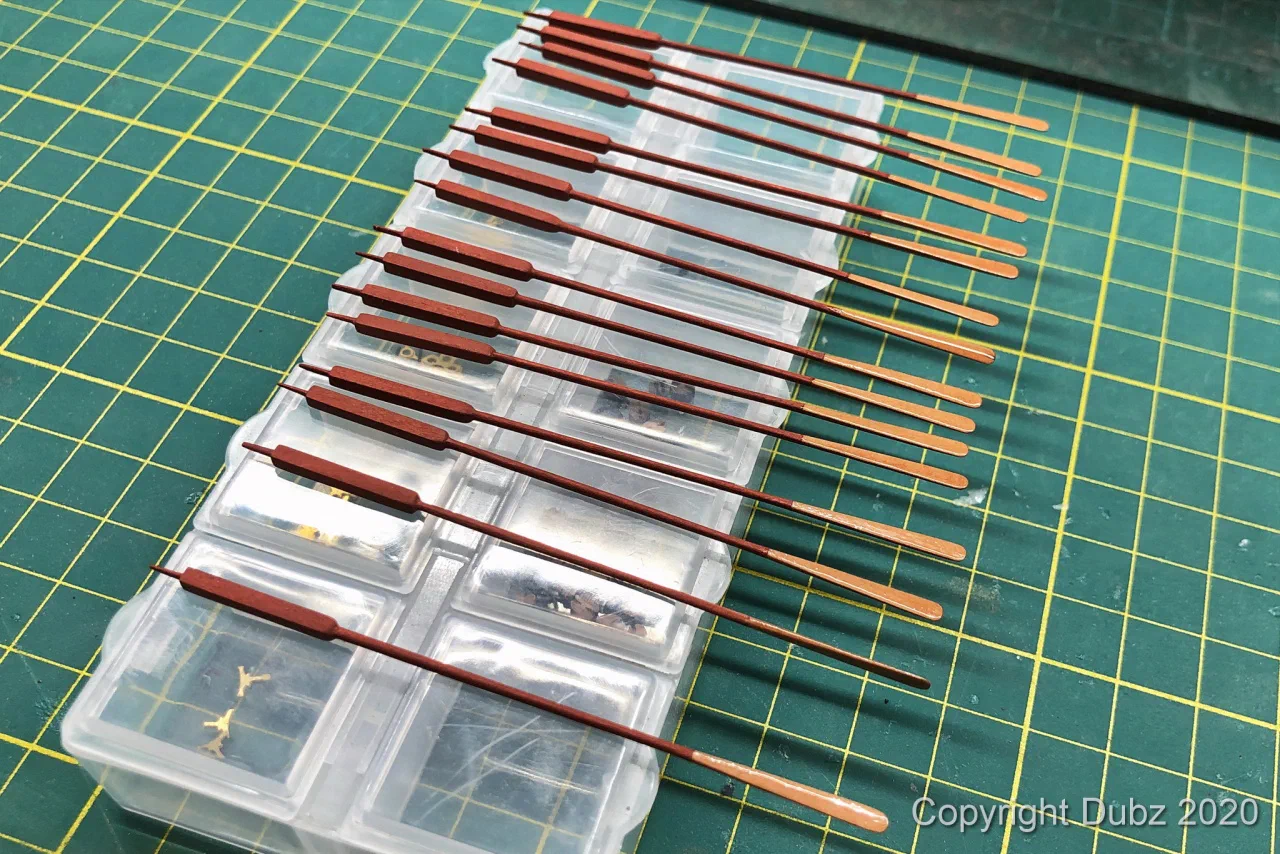
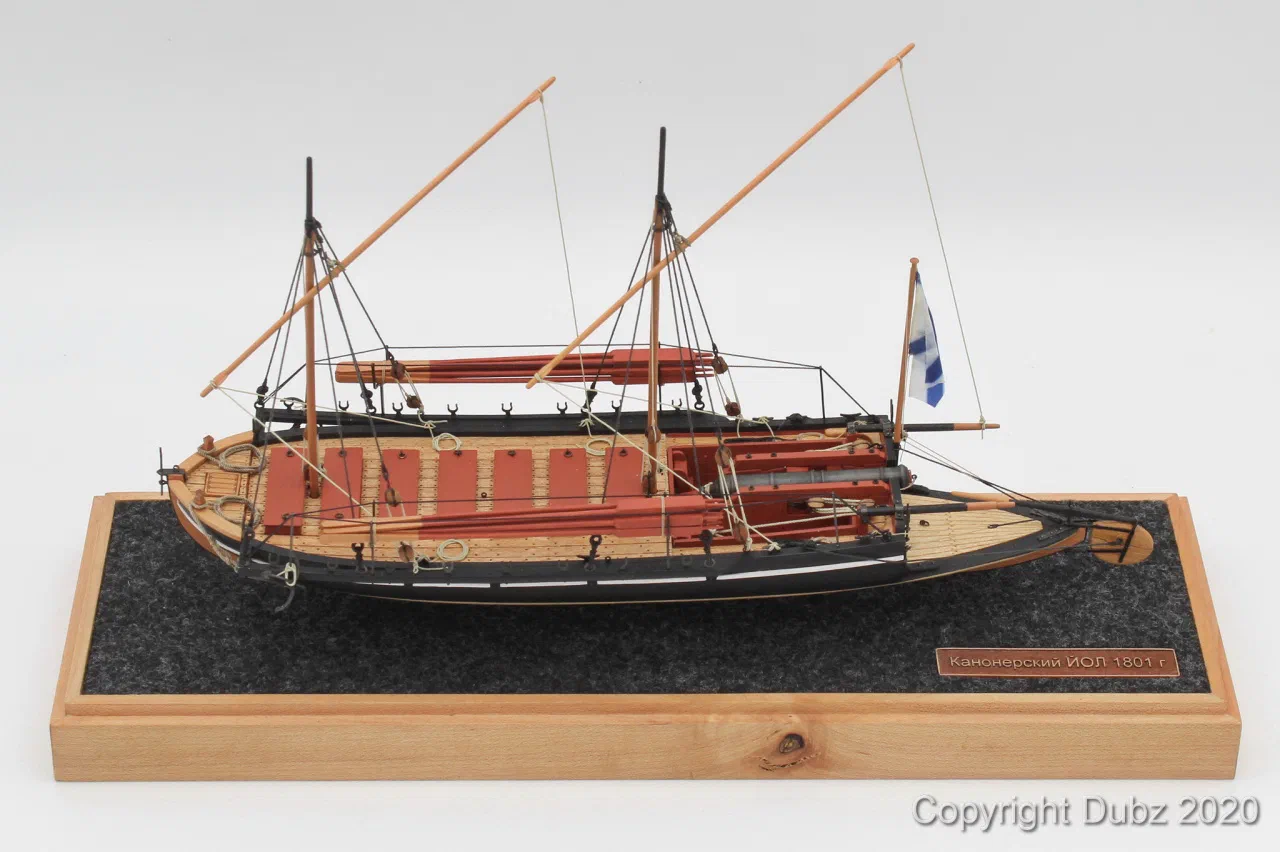
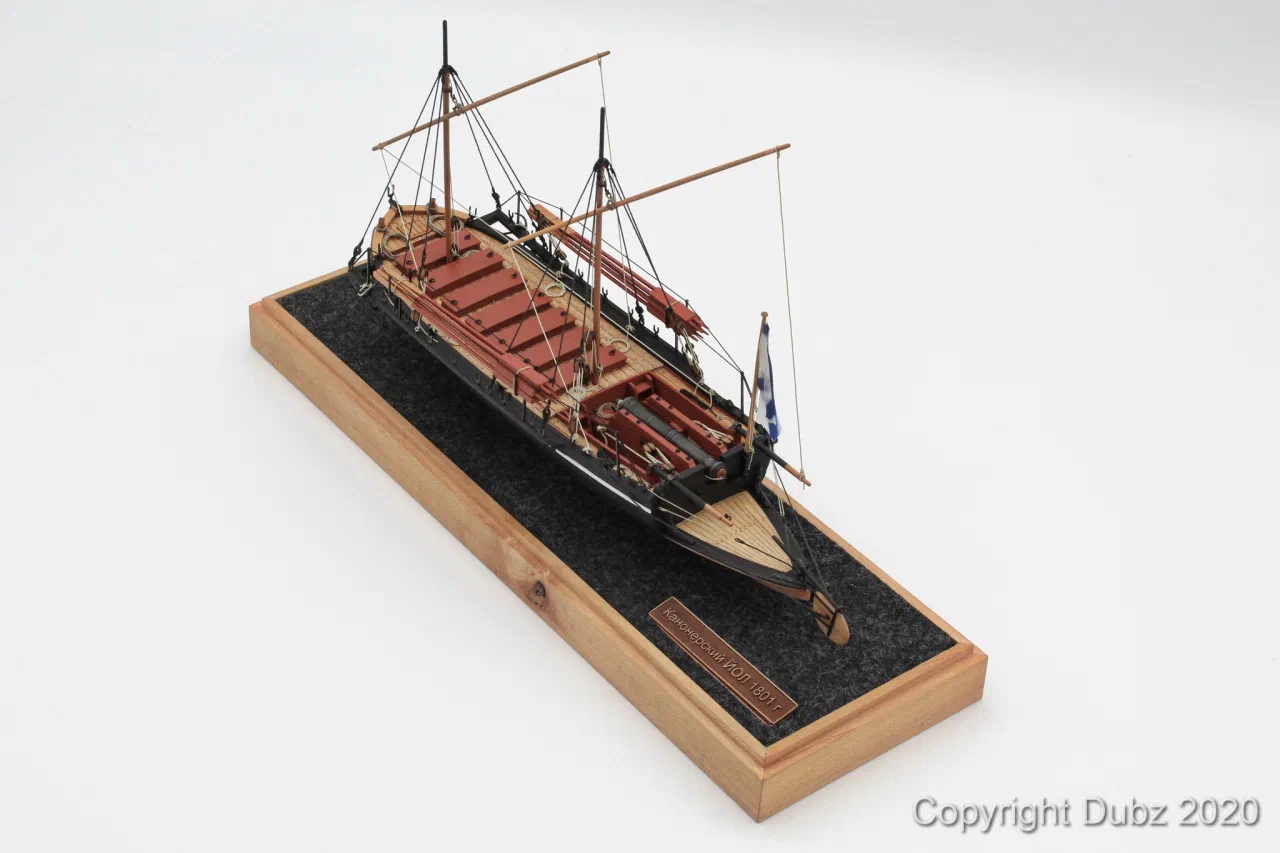
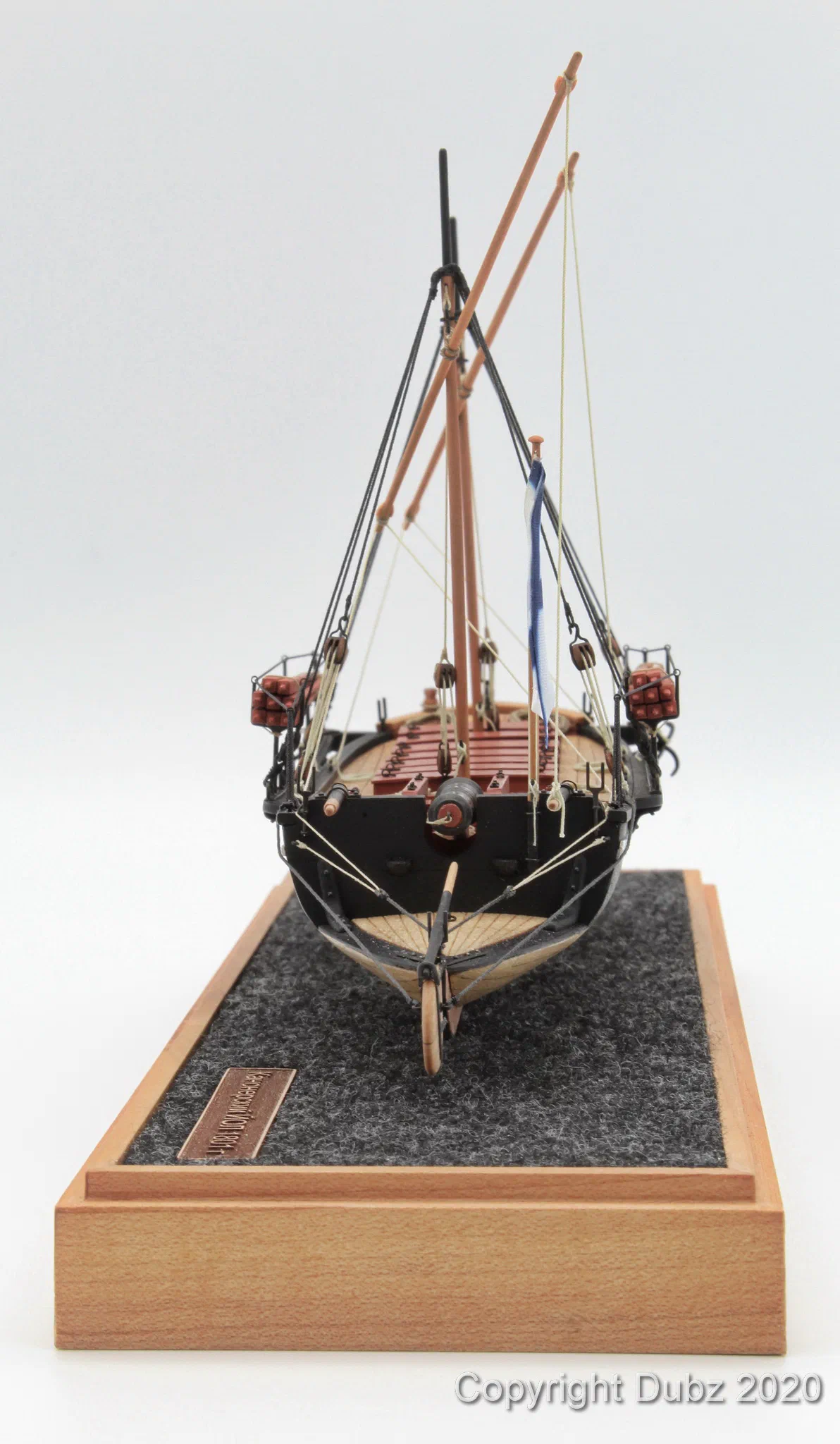
Next came the oars and the two spars, and after that the woodwork was done. A St Andrew’s flag and the stairs completed the hull.
Rigging
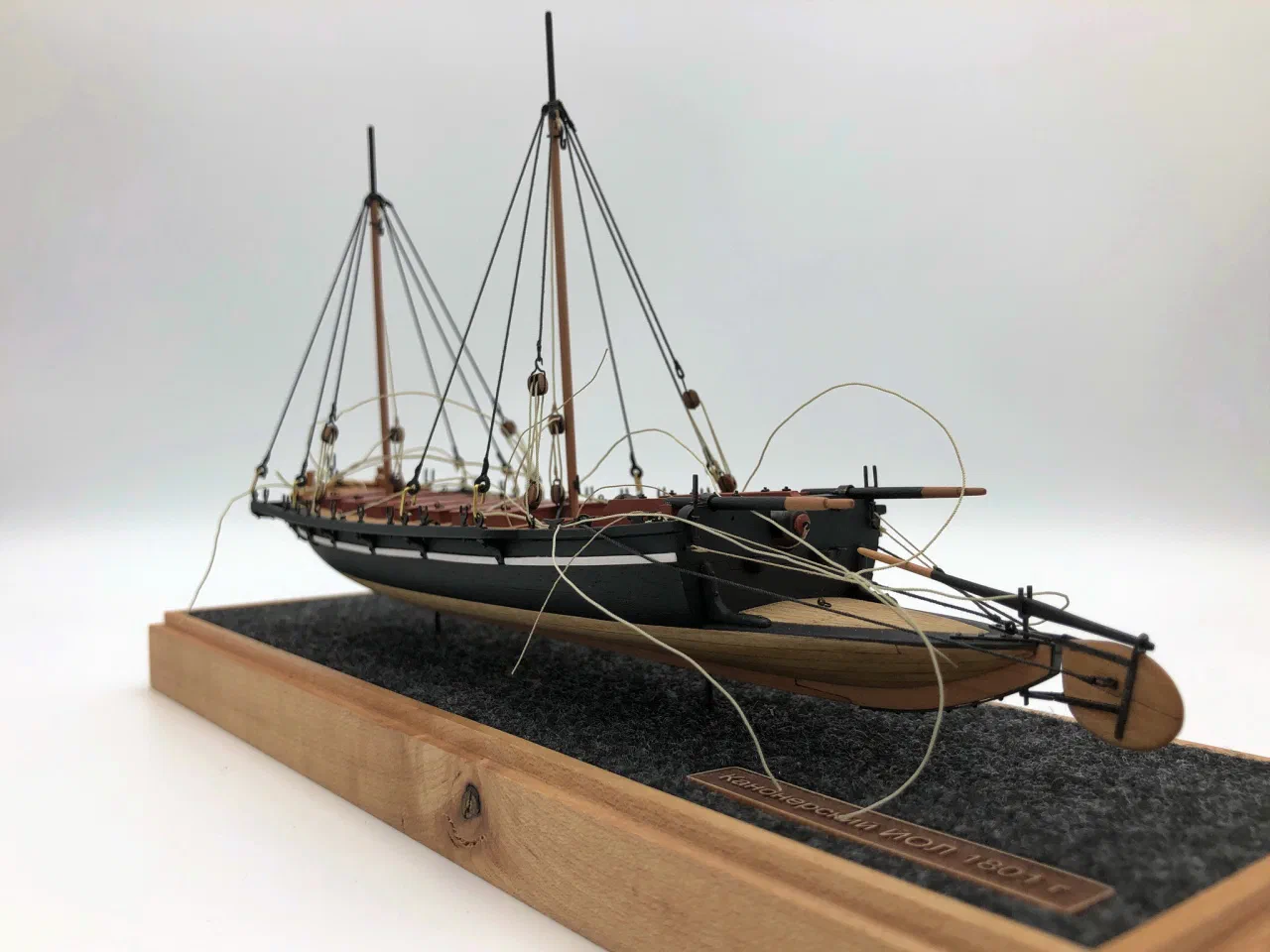
After a break I started the rigging. The gunboat is shown without sails, only with her lateen spars, which keeps the view onto the deck free.
Finished
In October 2020 I took the final photographs and called the build finished. A great kit from Master Korabel, and a lot of fun – and it was a great pleasure to be accompanied by so many kind comments during the build.
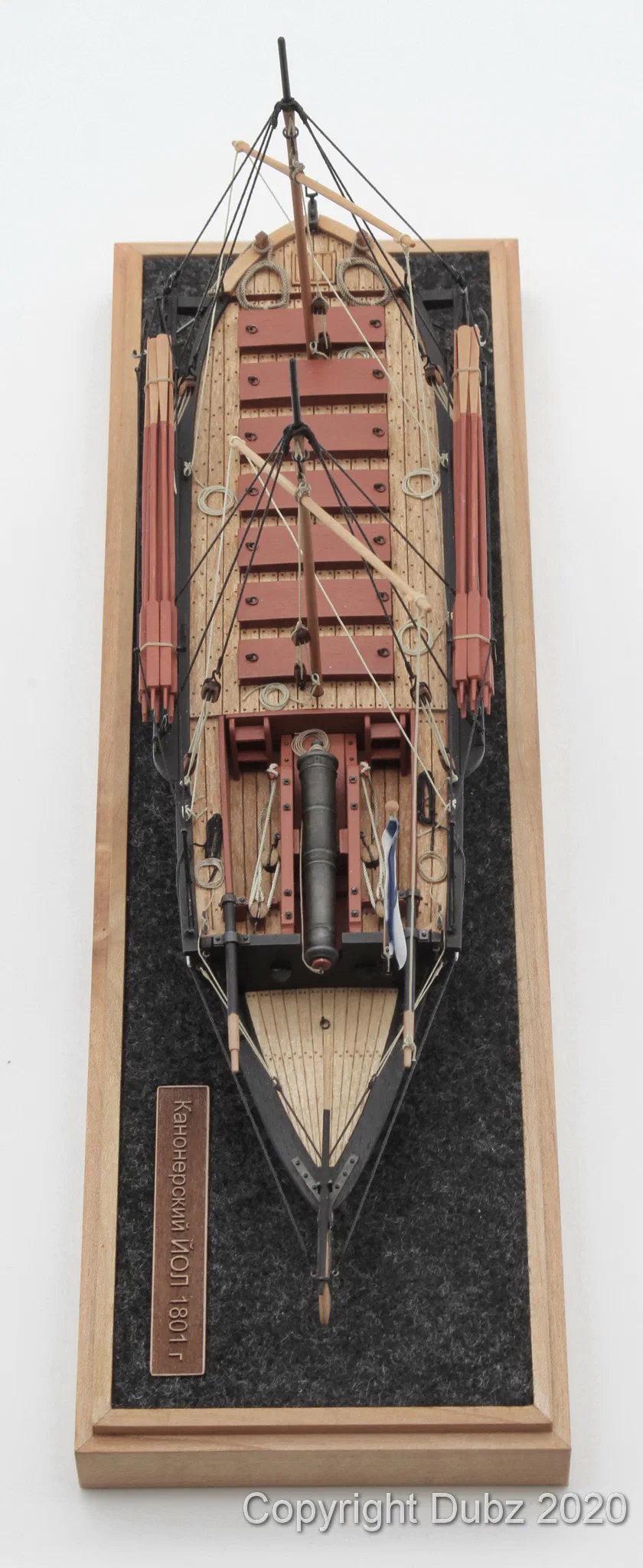
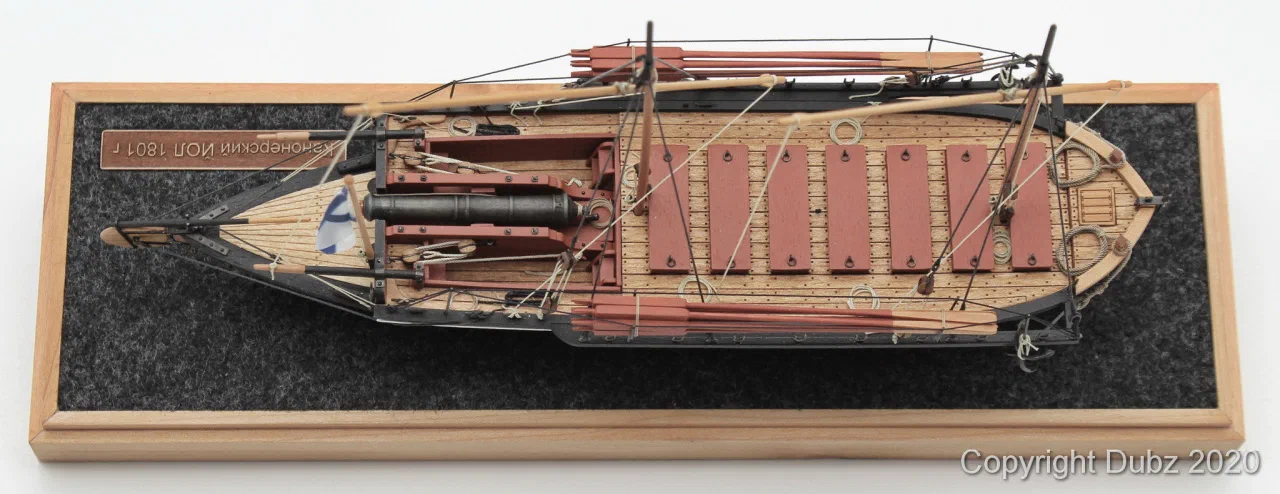
Awards
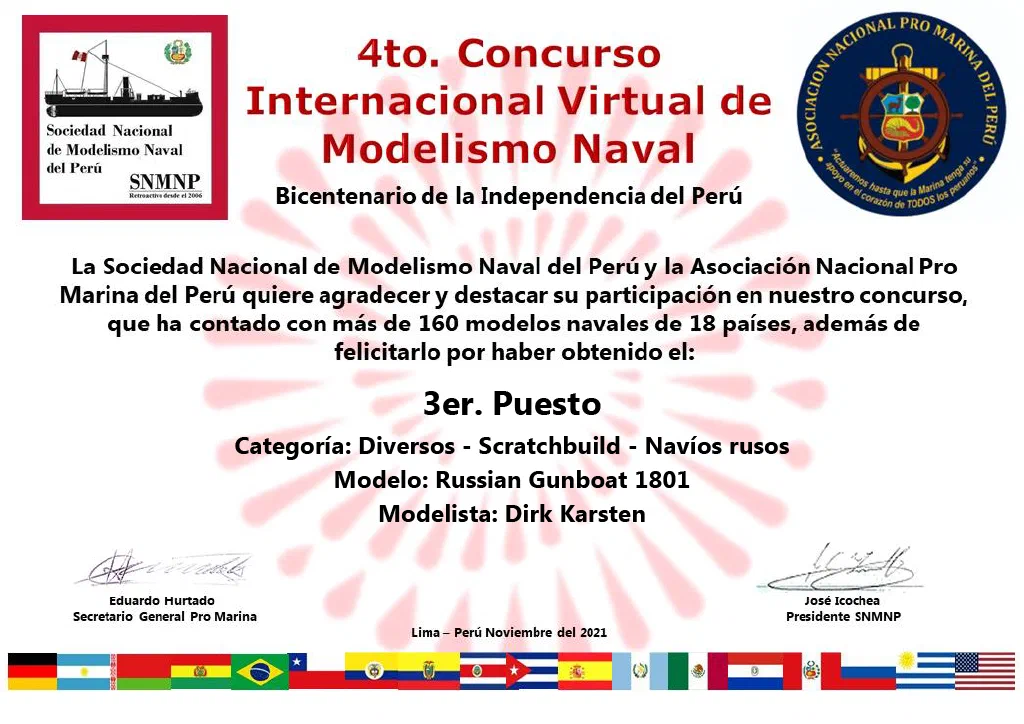
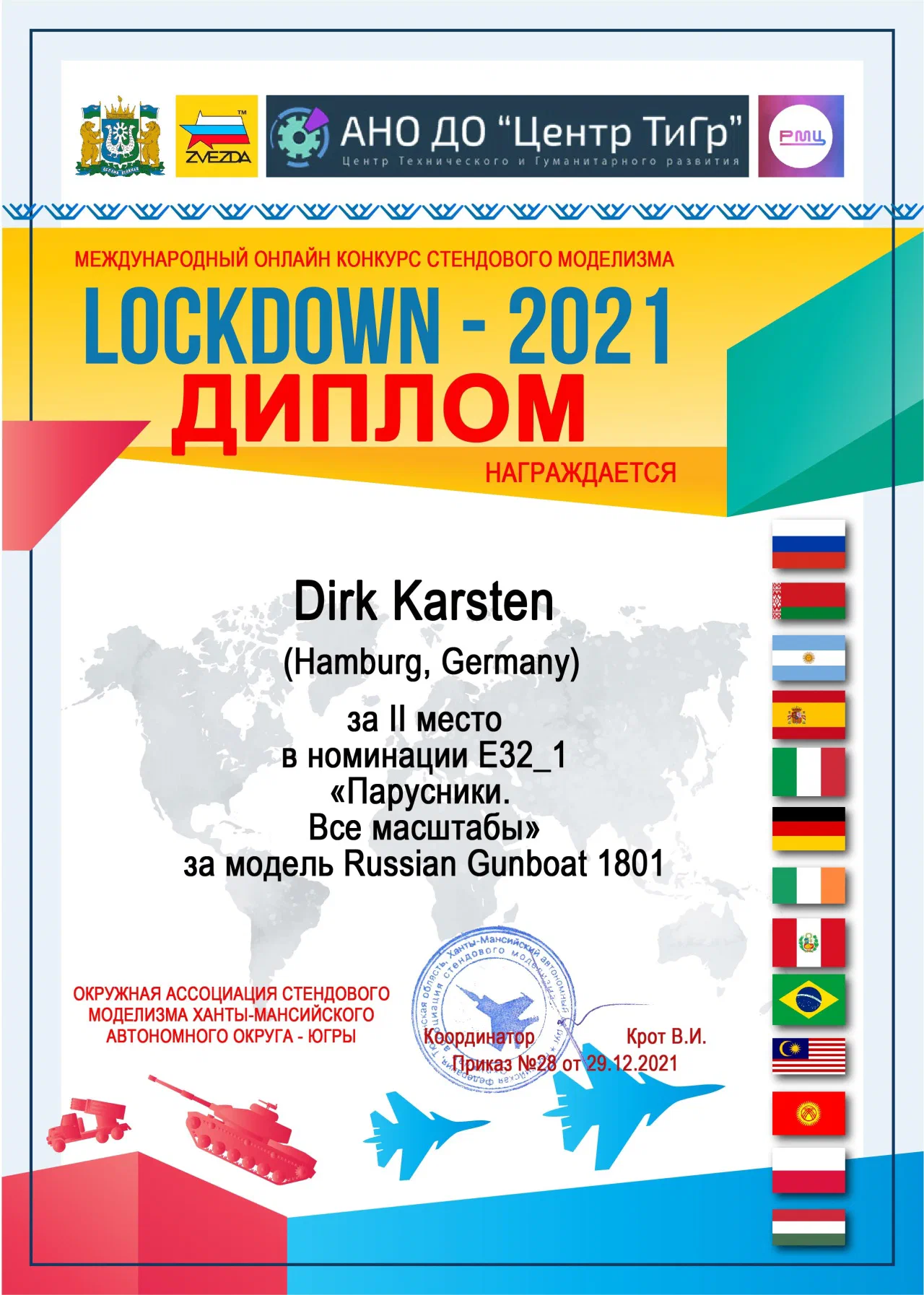
The gunboat took part in two online contests in 2021. At the 4th Concurso Internacional Virtual de Modelismo Naval of the Sociedad Nacional de Modelismo Naval del Perú – more than 160 models from 18 countries – she won 3rd place in the category “Russian Navy”. In the Lockdown 2021 contest she won 2nd place among the sailing ships.