
History
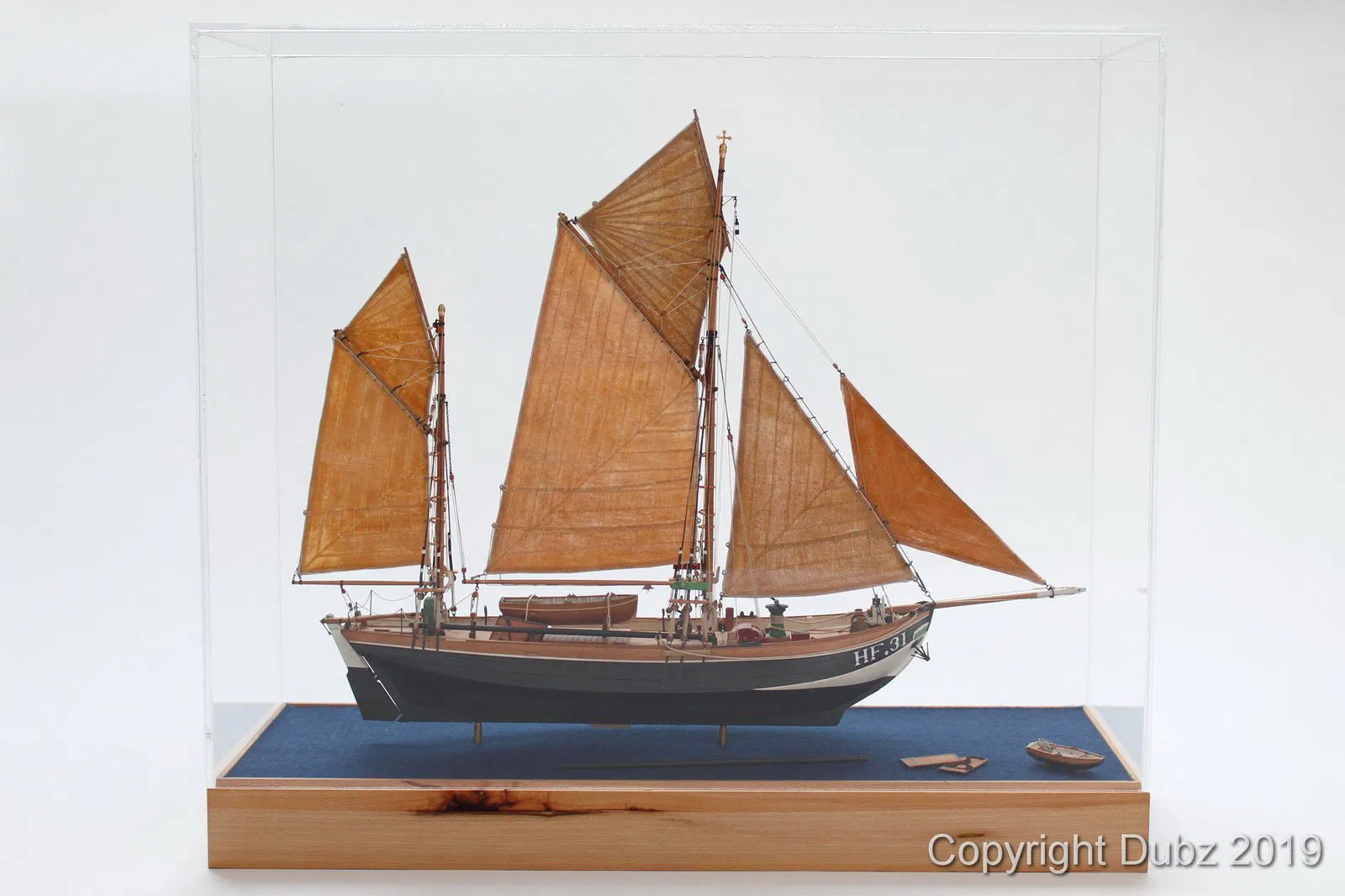
The Maria is a wooden fishing ewer from Finkenwerder, the fishing village on the Elbe that is now part of Hamburg. She was built in 1880 at the yard of Heinrich Sietas in Cranz on the Lower Elbe for the Finkenwerder fisherman Johann Bahde. Her measurement certificate dates from 4 December 1880, and on 9 March 1881 she received the sea-fishing number HF 31. She was about 19.2 metres long overall, 5.96 metres in the beam and drew 1.8 metres, measured 36 gross register tons and carried around 160 square metres of sail with a crew of three.
By design she was one of the last of the classic ewers with the flat, keelless box bottom and side leeboards. During construction, apparently impressed by the success of fishing craft built on a keel, the builders changed course and bolted a bar keel under the flat bottom. The leeboards were probably never fitted – the Maria shows no trace of the brackets they would have needed.
Bahde fished with her for twenty years before he retired in 1901 and sold her to another Finkenwerder fisherman, Johann Heinrich Lübben, whose own ewer had just been lost in a collision. The Maria brought him no luck: on her first trip under his ownership a breaking sea washed his two crewmen overboard, and in 1905 illness forced him to give up fishing altogether. The new owners, the fishermen Hermann Jacob Winter and Willi Carl Emil Meyer, made her a success and fished with her for no less than 45 years, even through both world wars.
In 1924 she was one of the last Finkenwerder boats to be motorised. A 30 hp engine from the Deutsche Werke in Berlin went in – at a price for which the two owners went deep into debt – together with a closed wheelhouse aft that changed her appearance considerably. In 1930 she sank in the harbour of Heligoland after a neighbouring boat pushed in one of her planks, but she was raised the same day. In the spring of 1940 she was requisitioned with her crew and converted into a tug for the planned invasion of England; when that operation was abandoned, she was converted back for fishing in 1941 and fished on into the post-war years.
Winter and Meyer retired in 1950, and with them the hopelessly outdated Maria came to the end of her working life. After a brief career as a houseboat she sank into the mud of the river Stör. In January 1957 the Deutsches Museum in Munich bought the wreck, had her raised, restored at the Eckmann yard in Finkenwerder and cut into sections that would fit on railway wagons. She arrived in Munich in April 1957, was put back together and has been on display there since the opening of the new shipbuilding hall in 1958 – one of the best-preserved vessels of her kind.
The kit
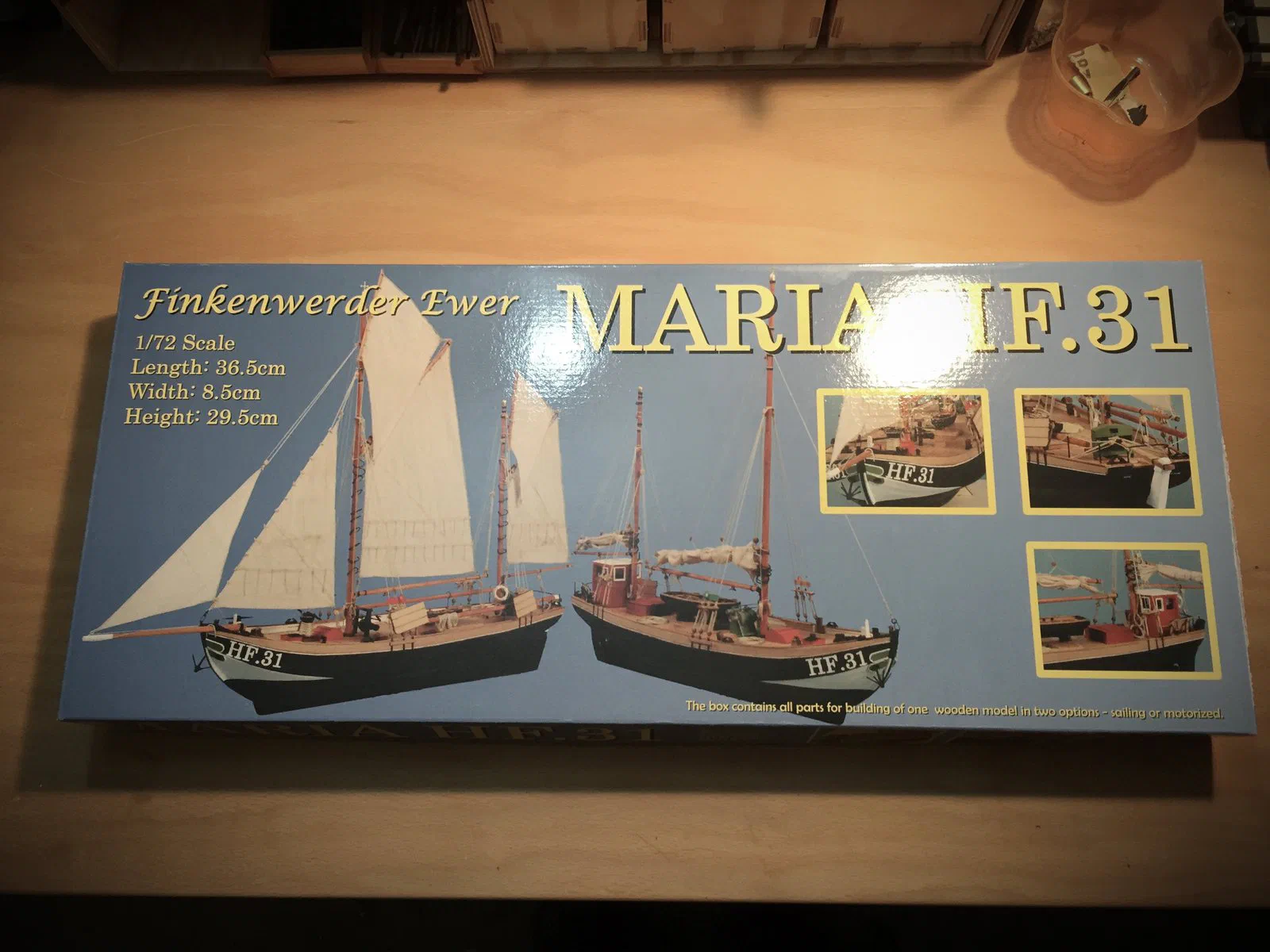
The Maria started as an in-between project, when the repetitive work on the Syren and the Sherbourne needed a break – and as a Christmas present for my father. I was also curious about the kits from Daniel Dusek, which looked very promising in everything I had read and seen. They are.
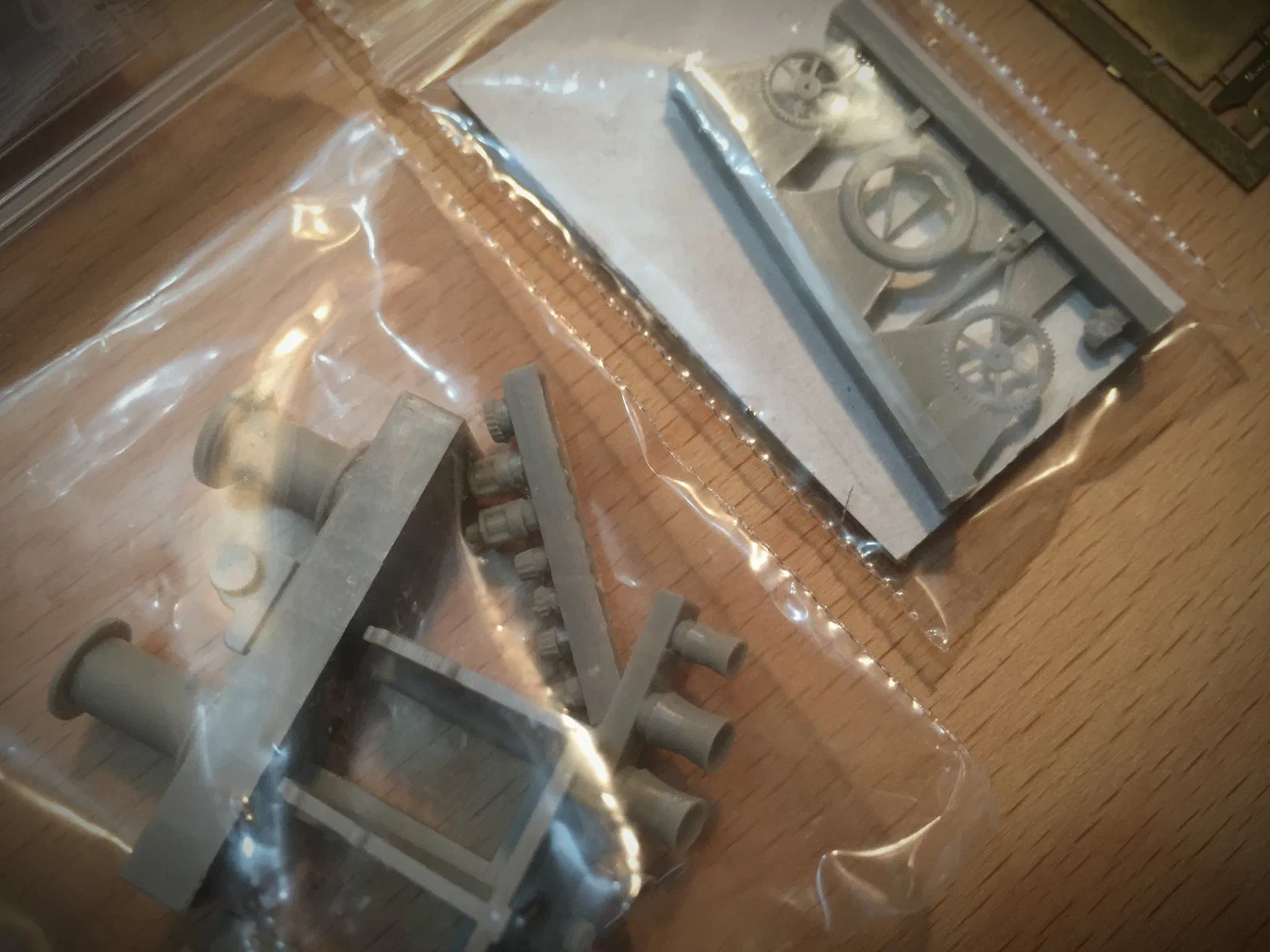
The kit contains everything needed to build the Maria either as the sailing ewer or in her motorised form; I built the sailing version. The quality is excellent: very good wood – pear for the visible parts –, very good laser cutting, fine photo-etched parts, fully lasered planks for a double planking, a solid construction and an affordable price. My only real criticism concerns the instructions and the pictures on the box. Even the smallest parts are robust enough that they do not break while the laser char is sanded off, and the photo-etched name plates are readable even at this tiny size. It is honestly hard to “pimp” this kit, because so many of the usual upgrades are already in the box.
Hull and planking
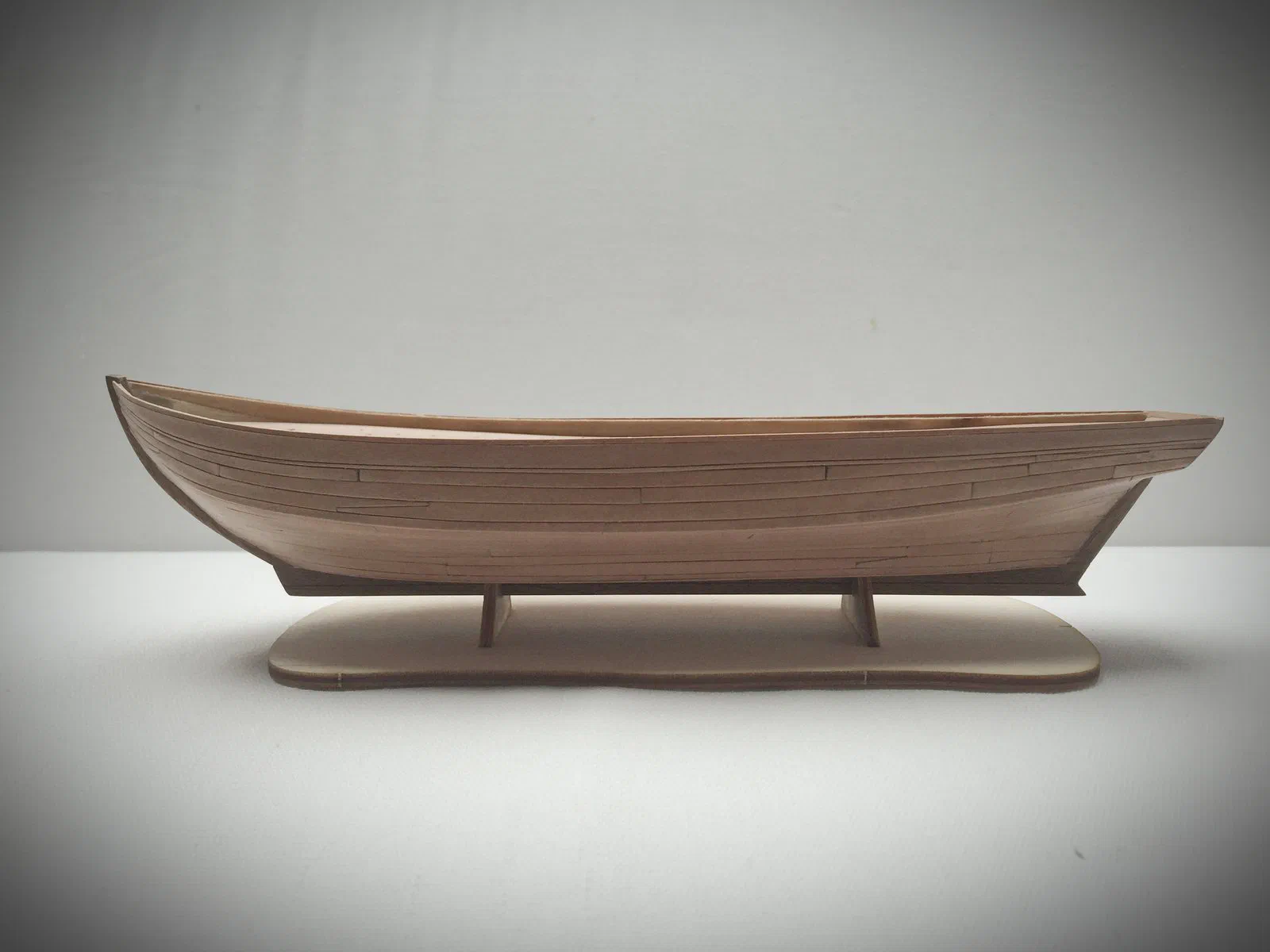
The build began with the keel, which was perfectly straight. The first planking is plywood – thin, practically indestructible and not really bendable, so the curve at the stern had to be achieved by sanding. The second planking is pear veneer, very thin but robust, and I think it is the best wood I have ever had in a kit. With the second planking and the stern post done the hull took shape quickly; only at the stern did I have to improvise a little.
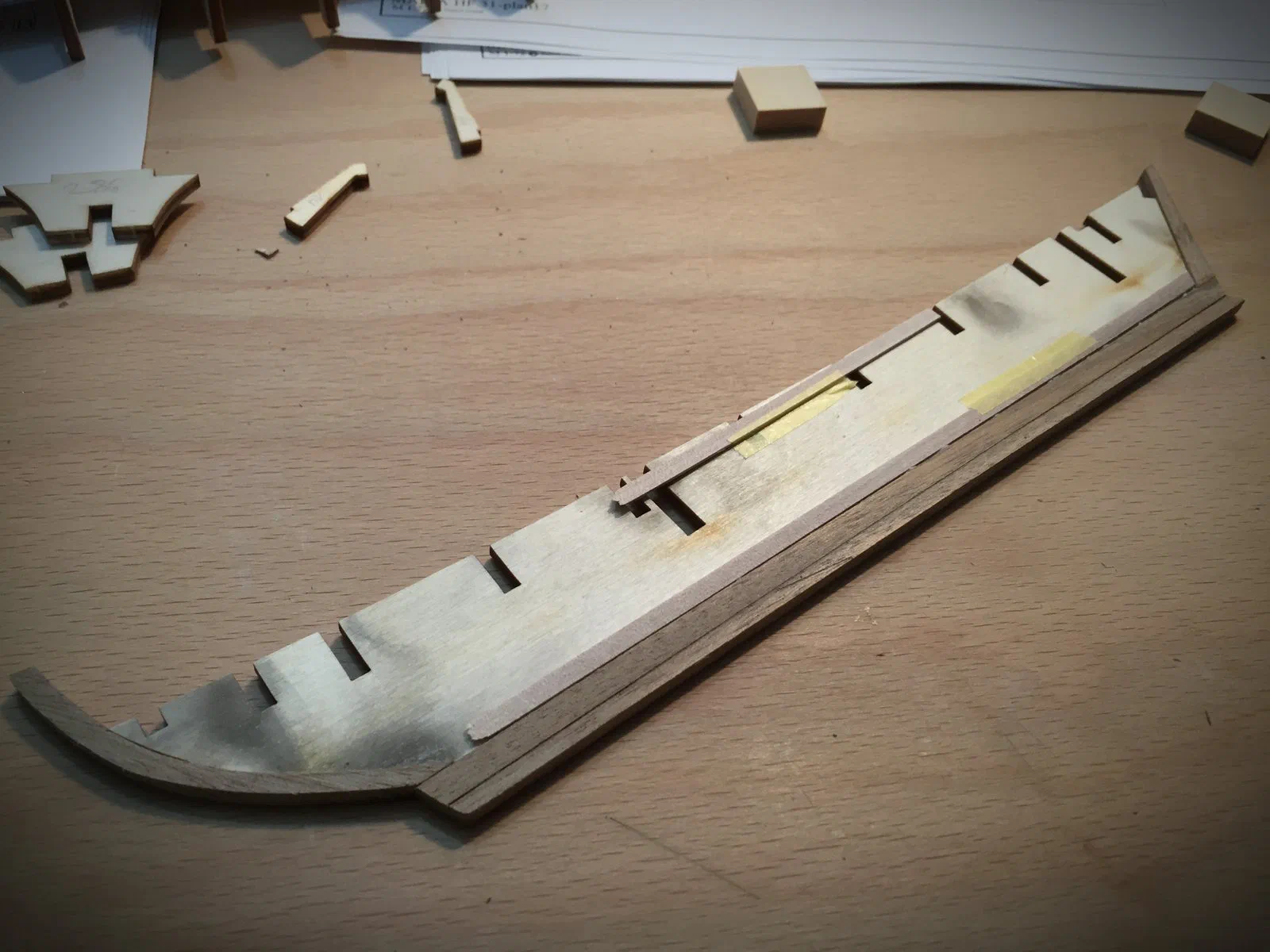
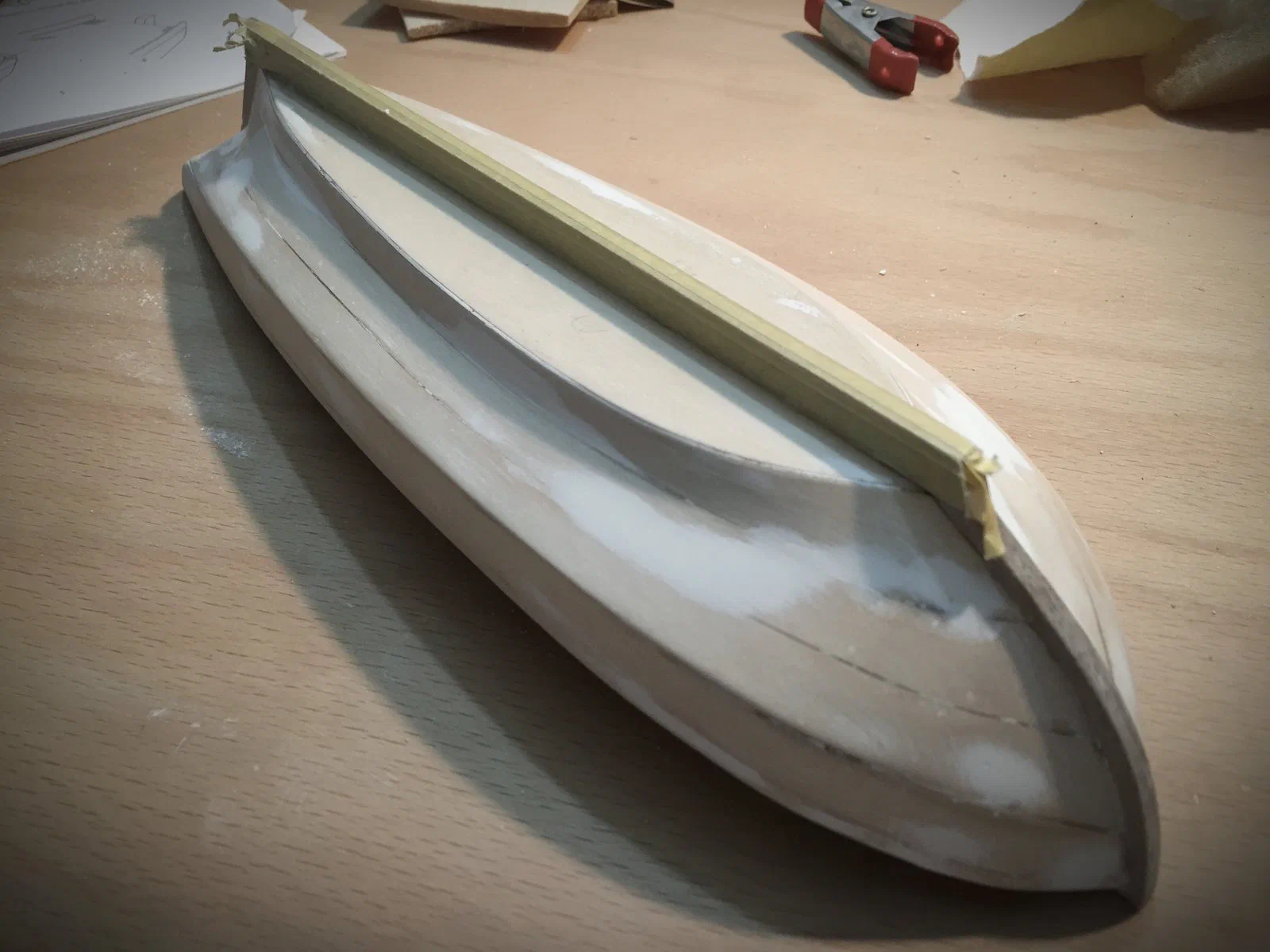
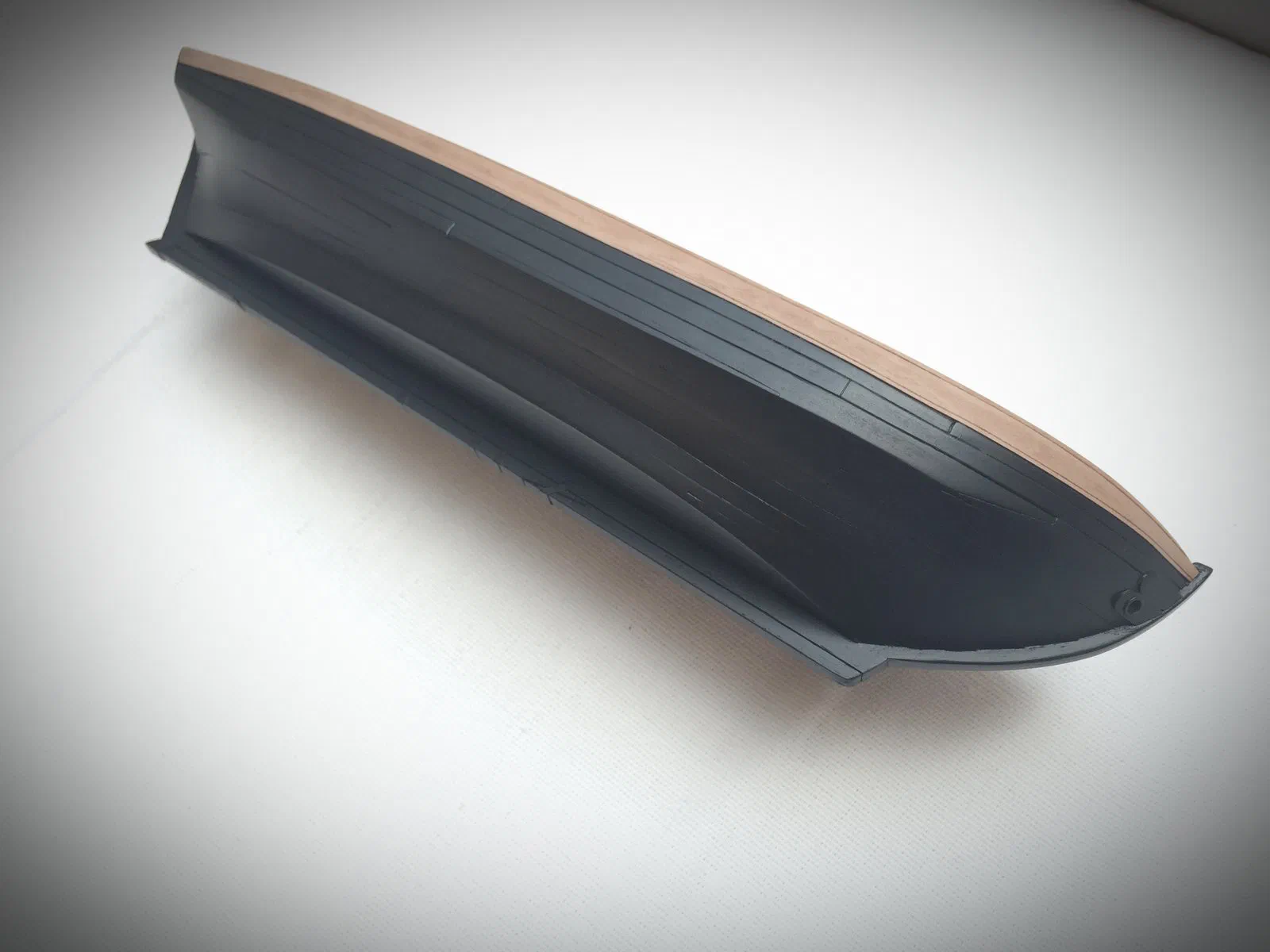
After oiling, the wood showed some colour differences that I had to live with, and for a while I could not decide whether the Maria should be painted at all. In the end she was – with a racing heartbeat. One question that comes up again and again with laser-cut kits is how much of the char should, or has to, be removed so that the parts still fit. A little checking before gluing saves a lot of trouble.
Deck fittings
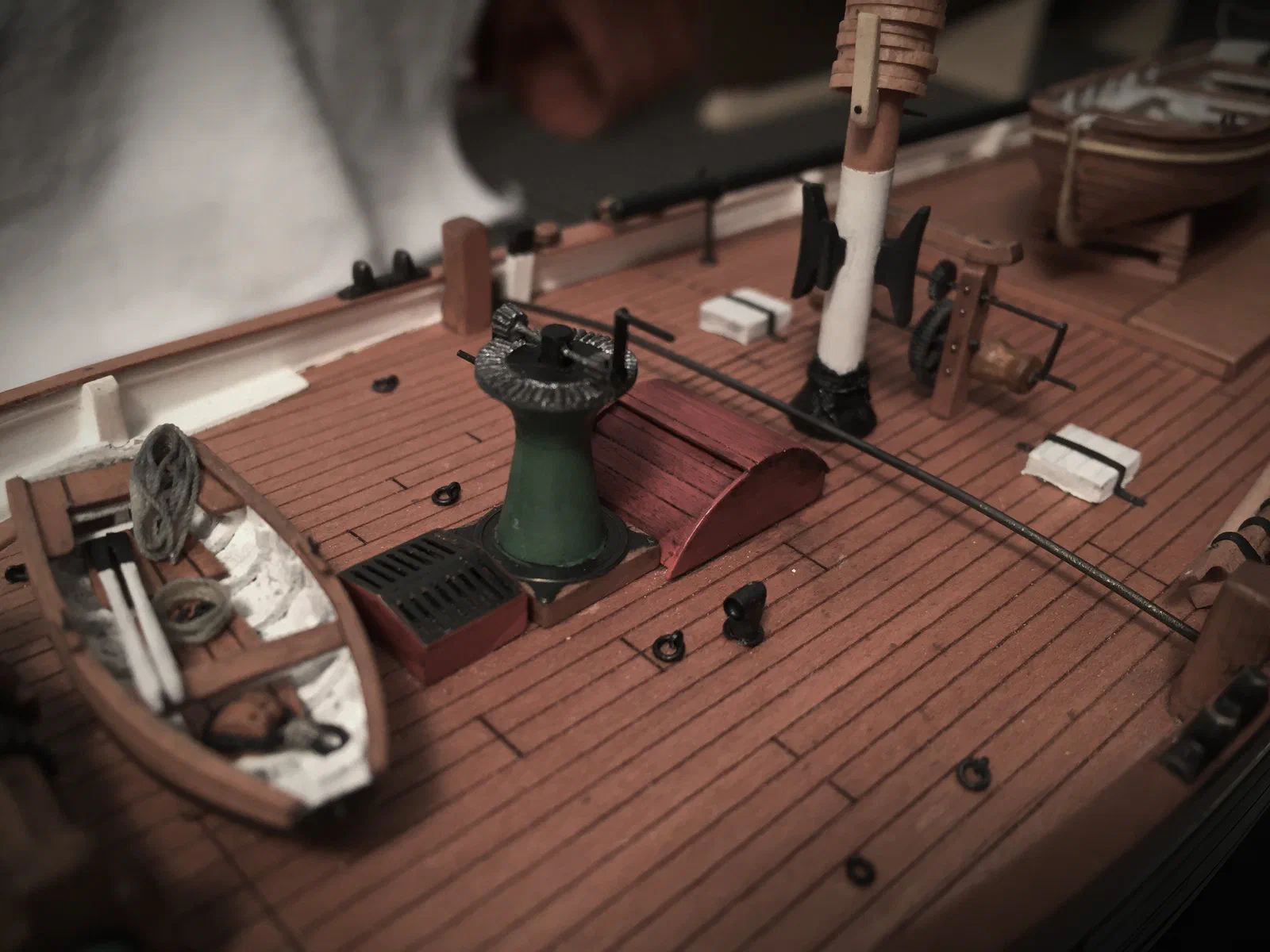
While I waited for a replacement deck with a finer laser structure – Daniel’s support was excellent throughout – I started on the deck fittings, each of them a small model of its own: the skylight, the companionway, the stern hatch. My first small upgrade was the binnacle, because the one on the original in Munich looks different from the kit part.
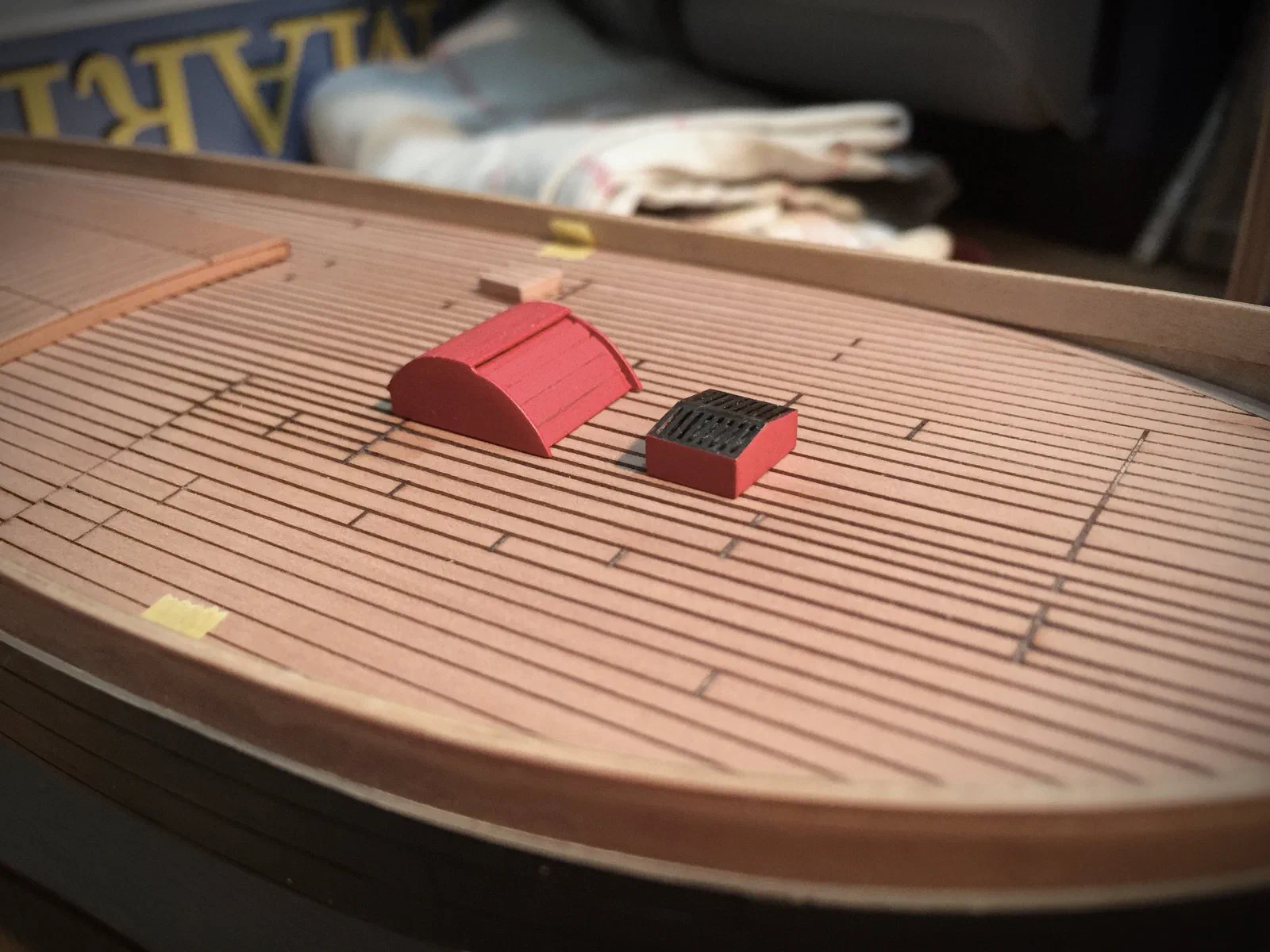
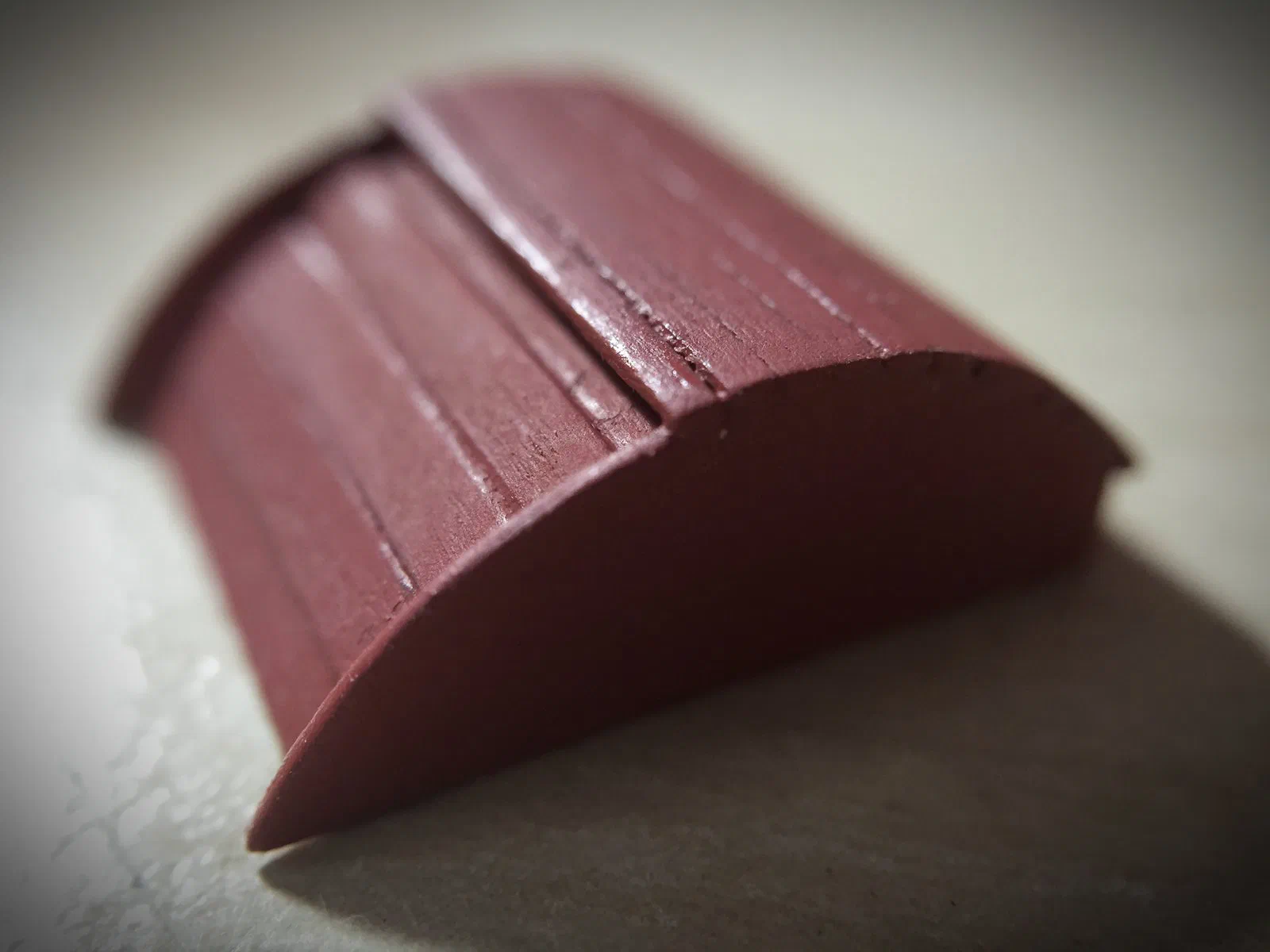
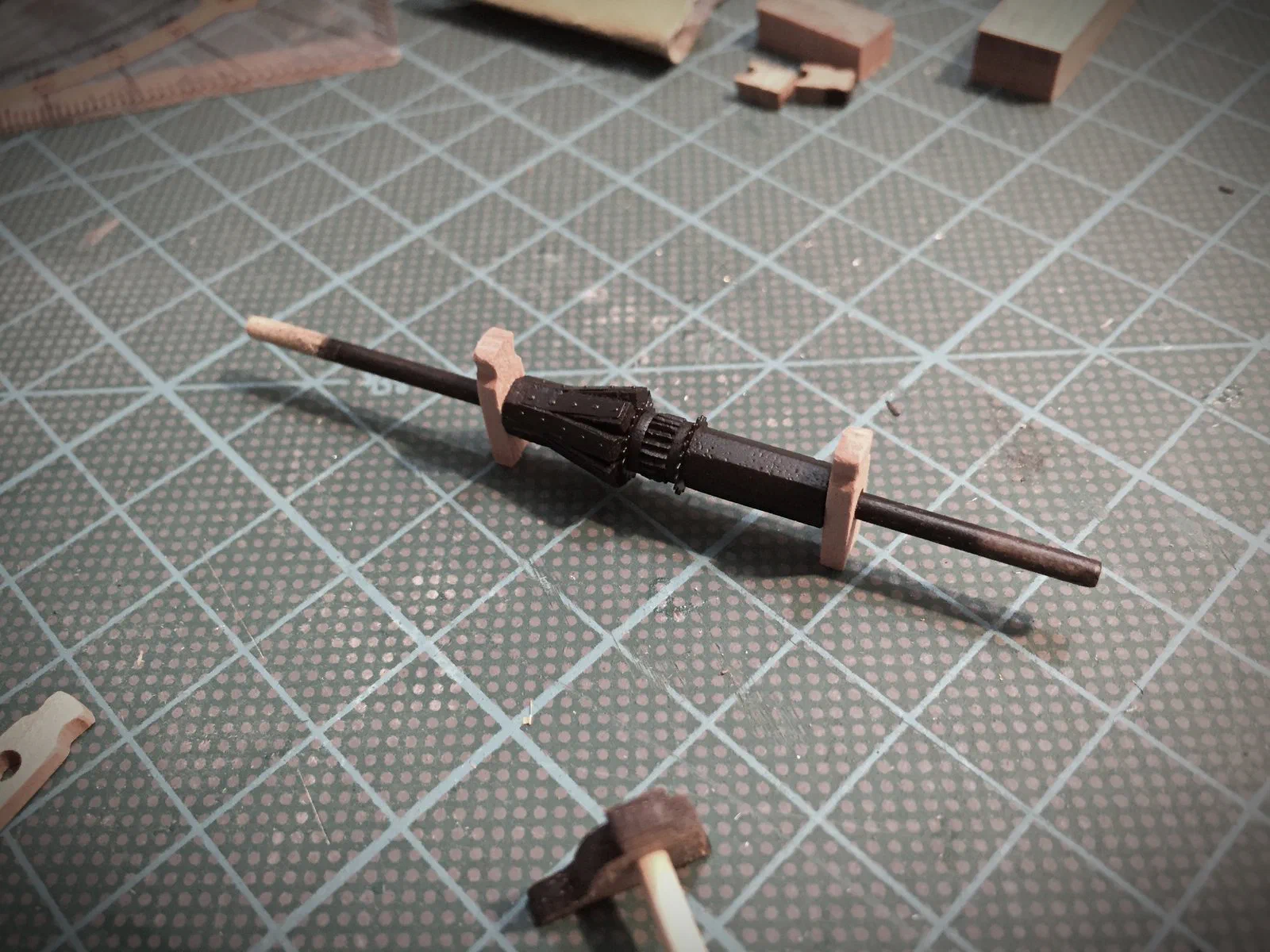
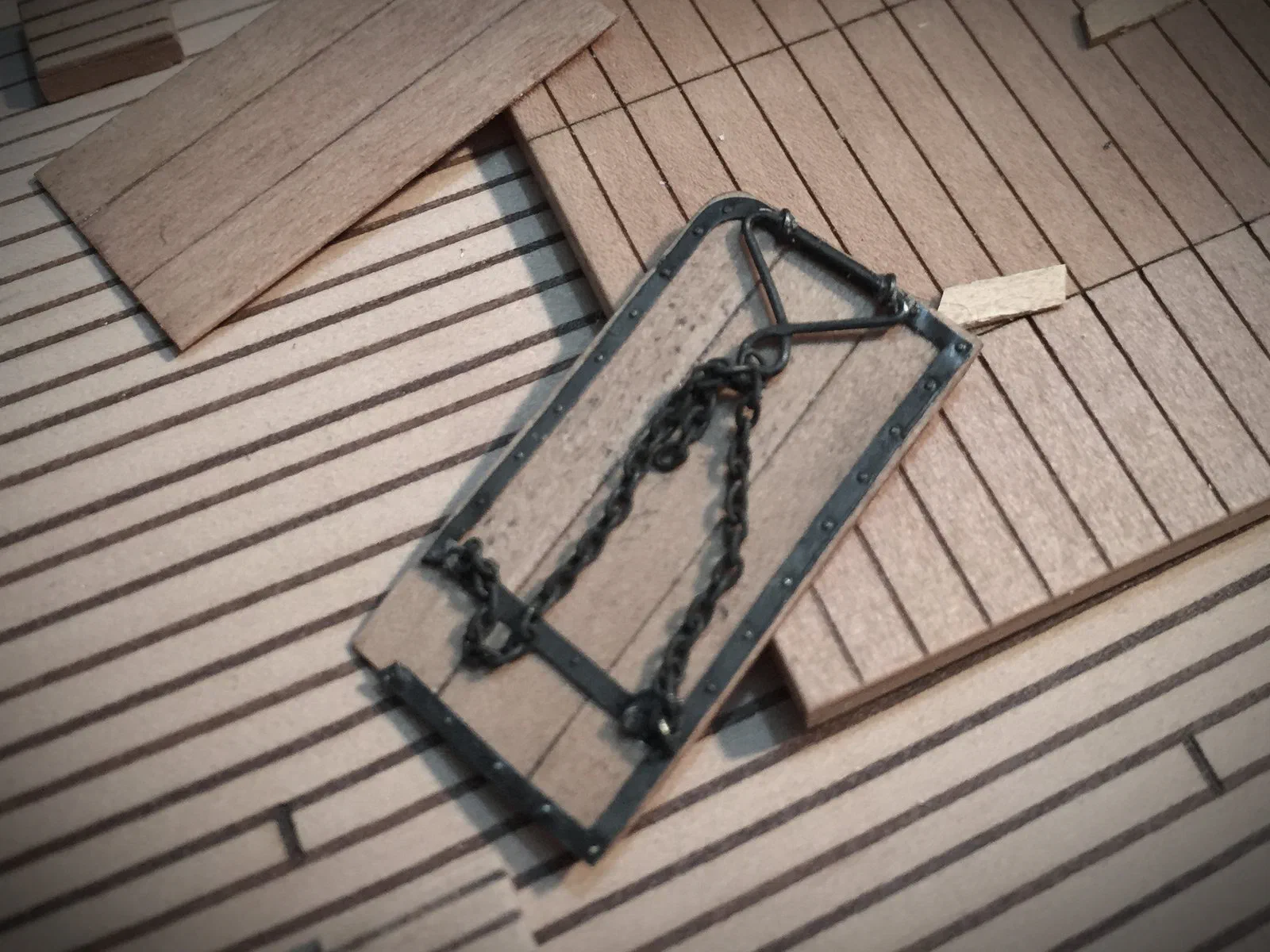
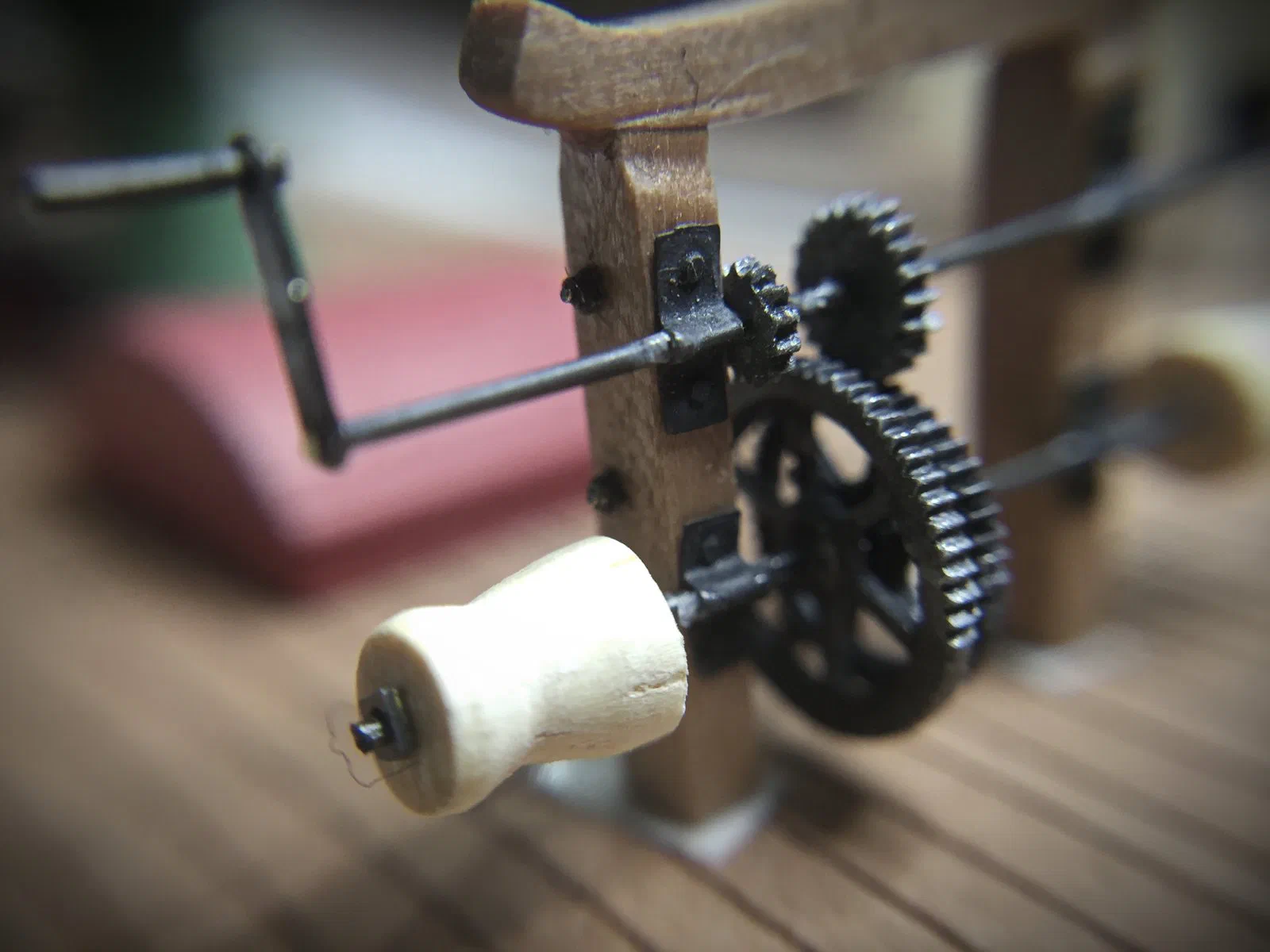
The windlass turned into a longer story. The kit parts are made of a nut wood that is far too soft and coarse-pored for parts like this, so I started to remake them in pear. Daniel then offered to laser these parts in pear for a small fee – something I can only recommend to anyone building this kit. The otter boards for the trawl were another lesson: my first attempt at silver soldering burned through a second too late, the second one went together mainly with CA, with a finer chain than the kit provides.
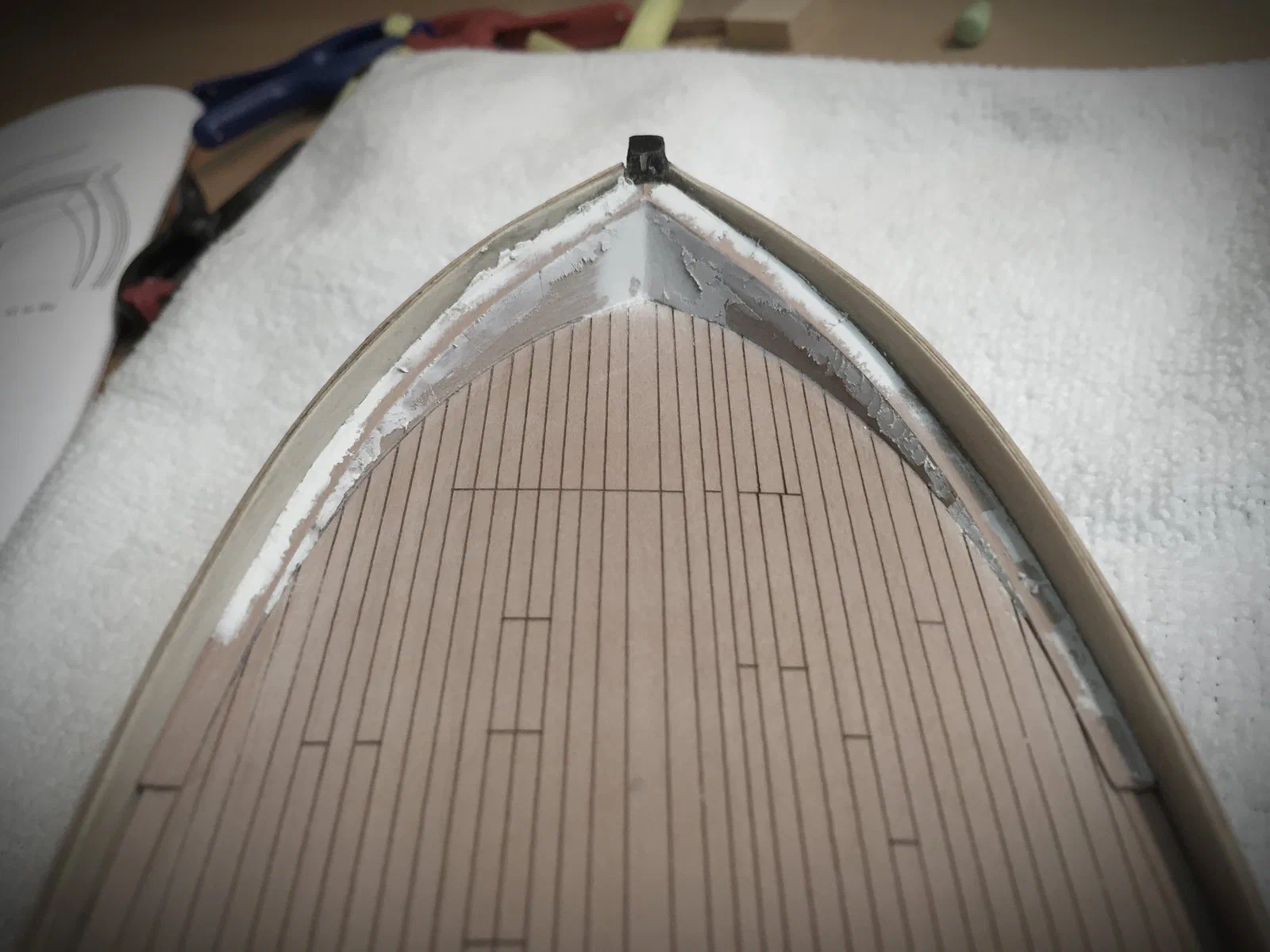
When the new deck arrived it was a clear improvement and went in immediately. The bow received its inboard details, built up as a small sandwich and sanded to shape, and the knee was made much thicker than the kit part after comparing photos of the original.
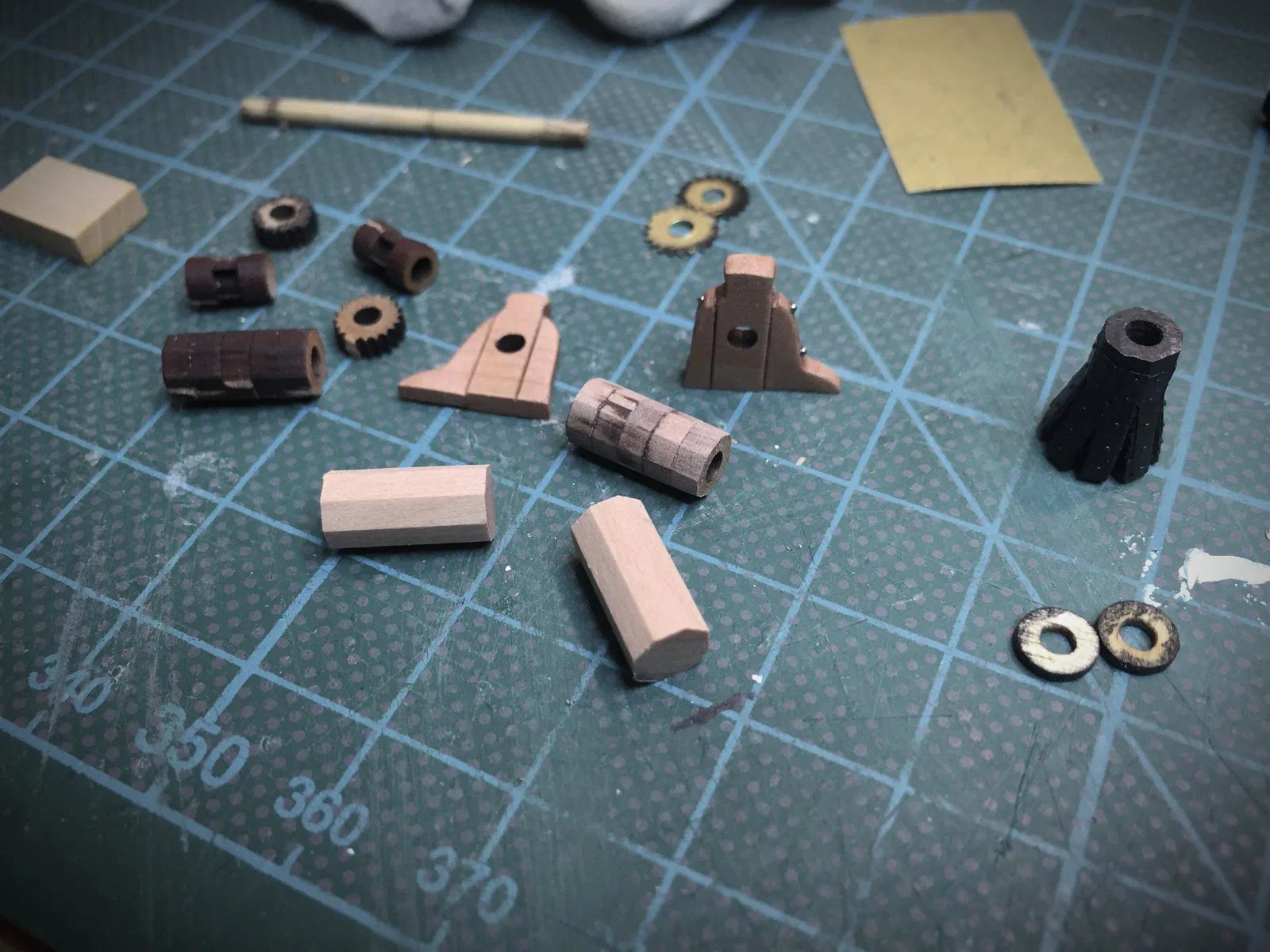
Capstan, rudder and the details in between
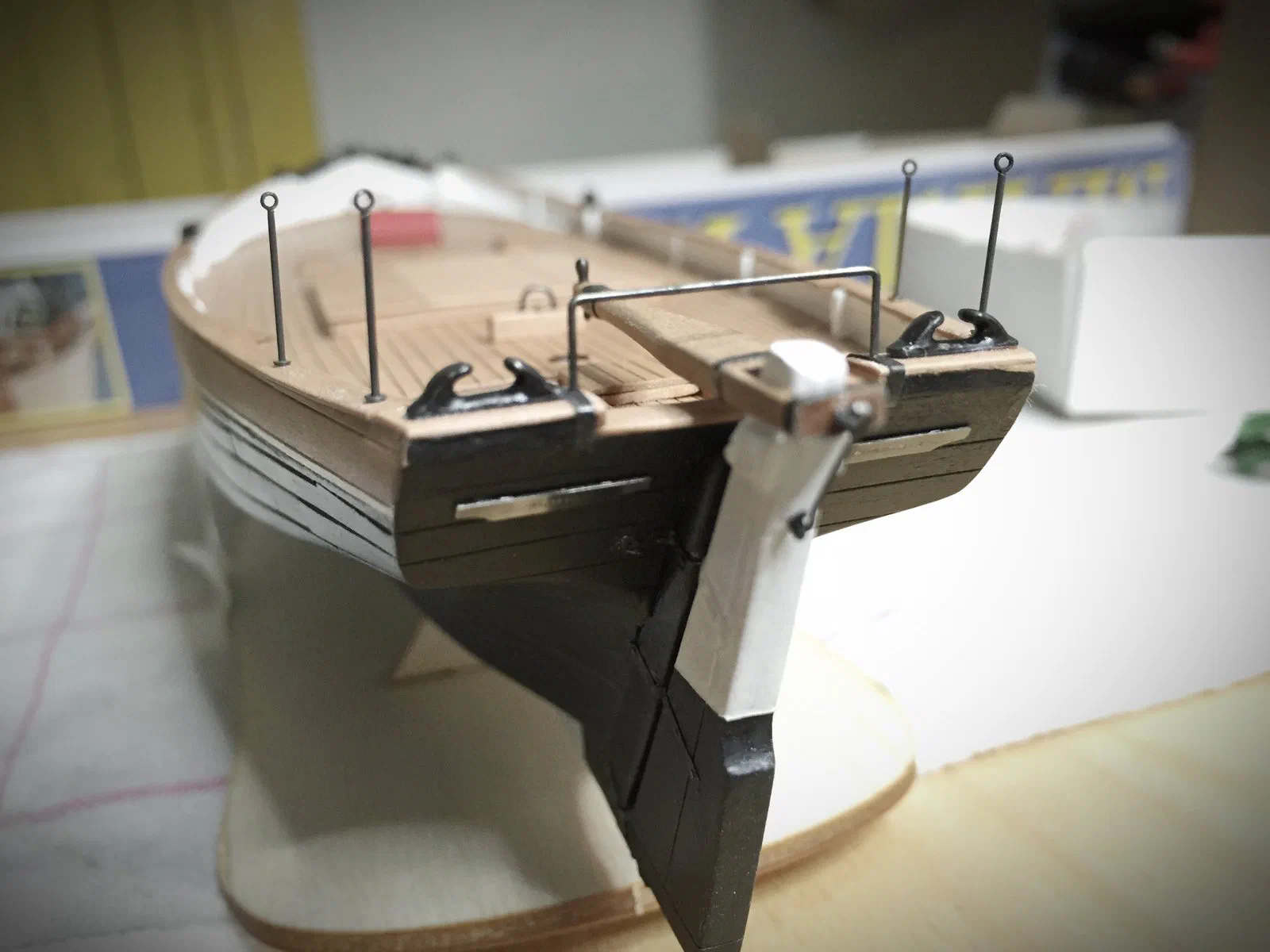
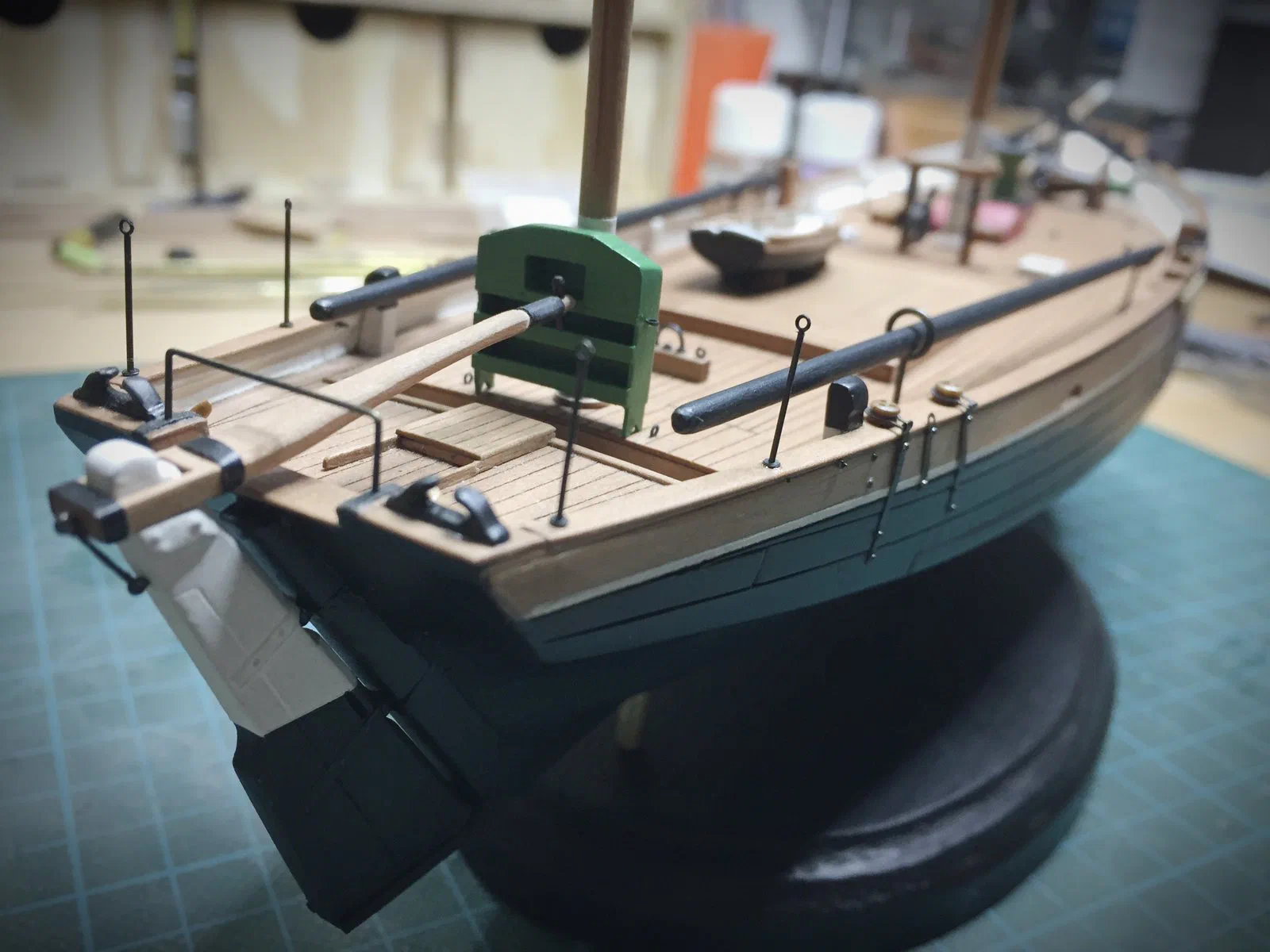
The capstan is another well-thought-out part with nicely etched details on its base. I built it mostly out of the box and gave the silver paint a light weathering with black. The rudder I remade in pear for sharper contours, which meant new pintles and gudgeons as well – silver-soldered, with my beloved micro tubes of 0.5 mm inside diameter, then blackened. Interestingly the tiller had to be shortened to clear the binnacle.
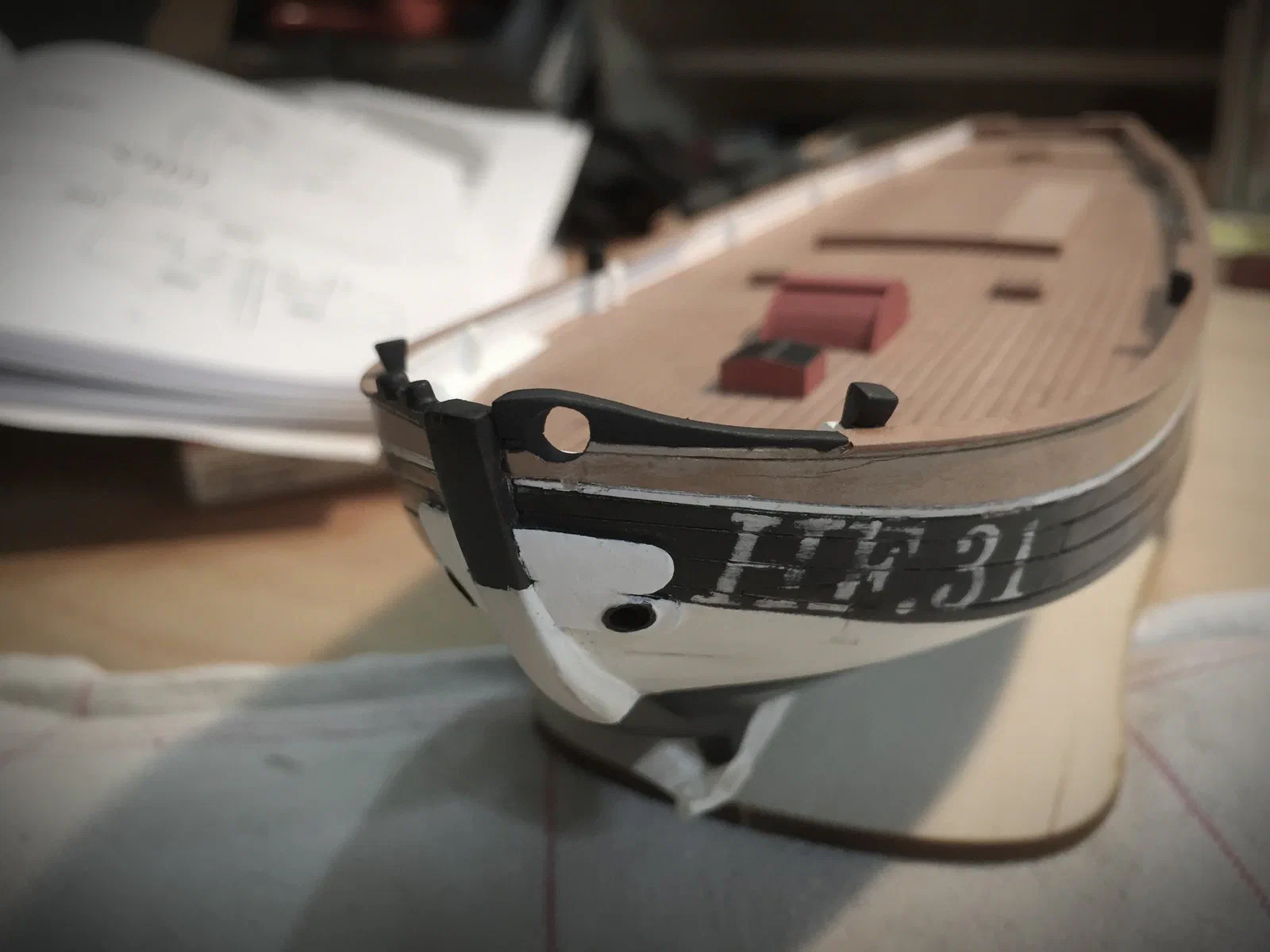
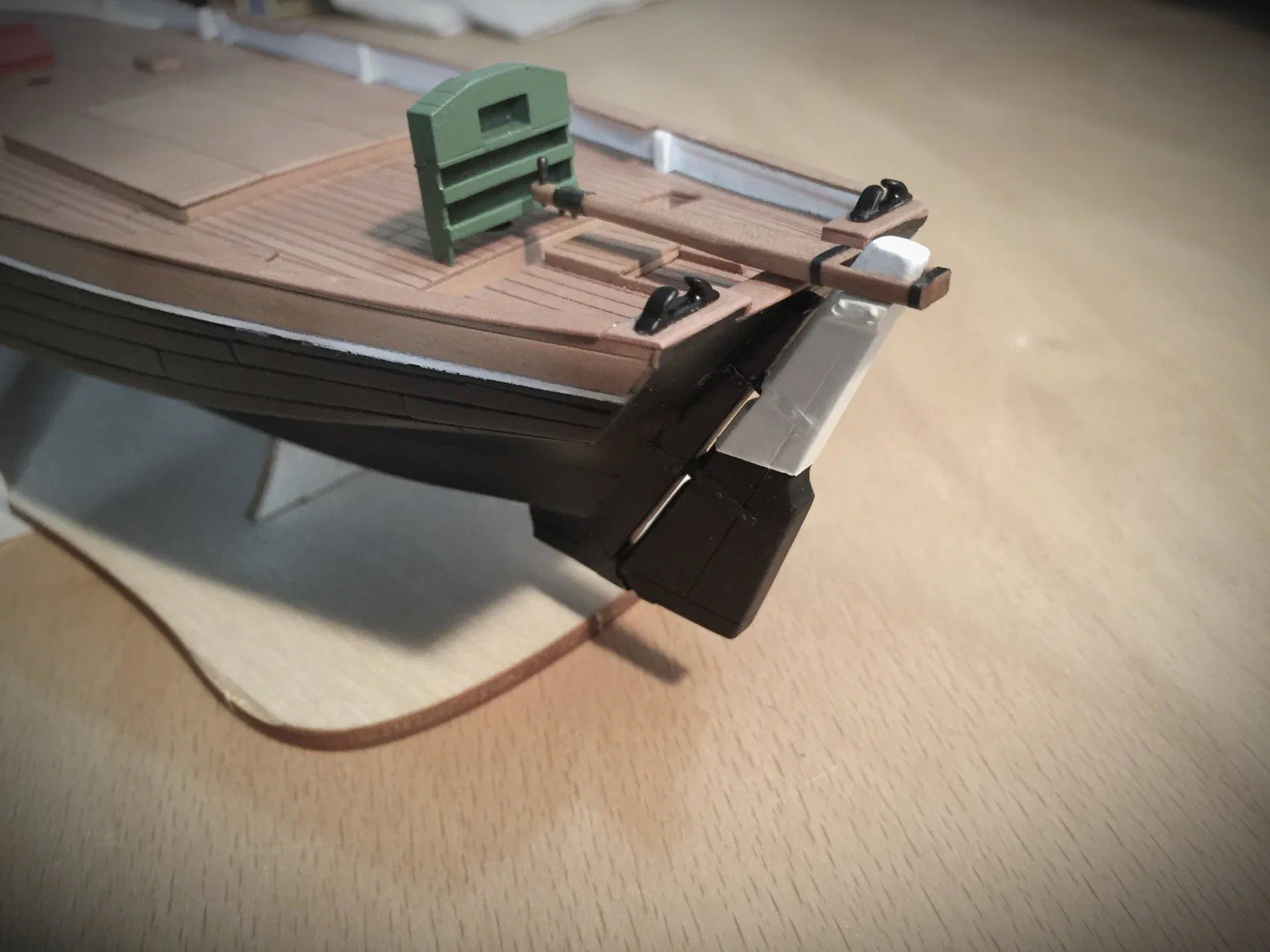
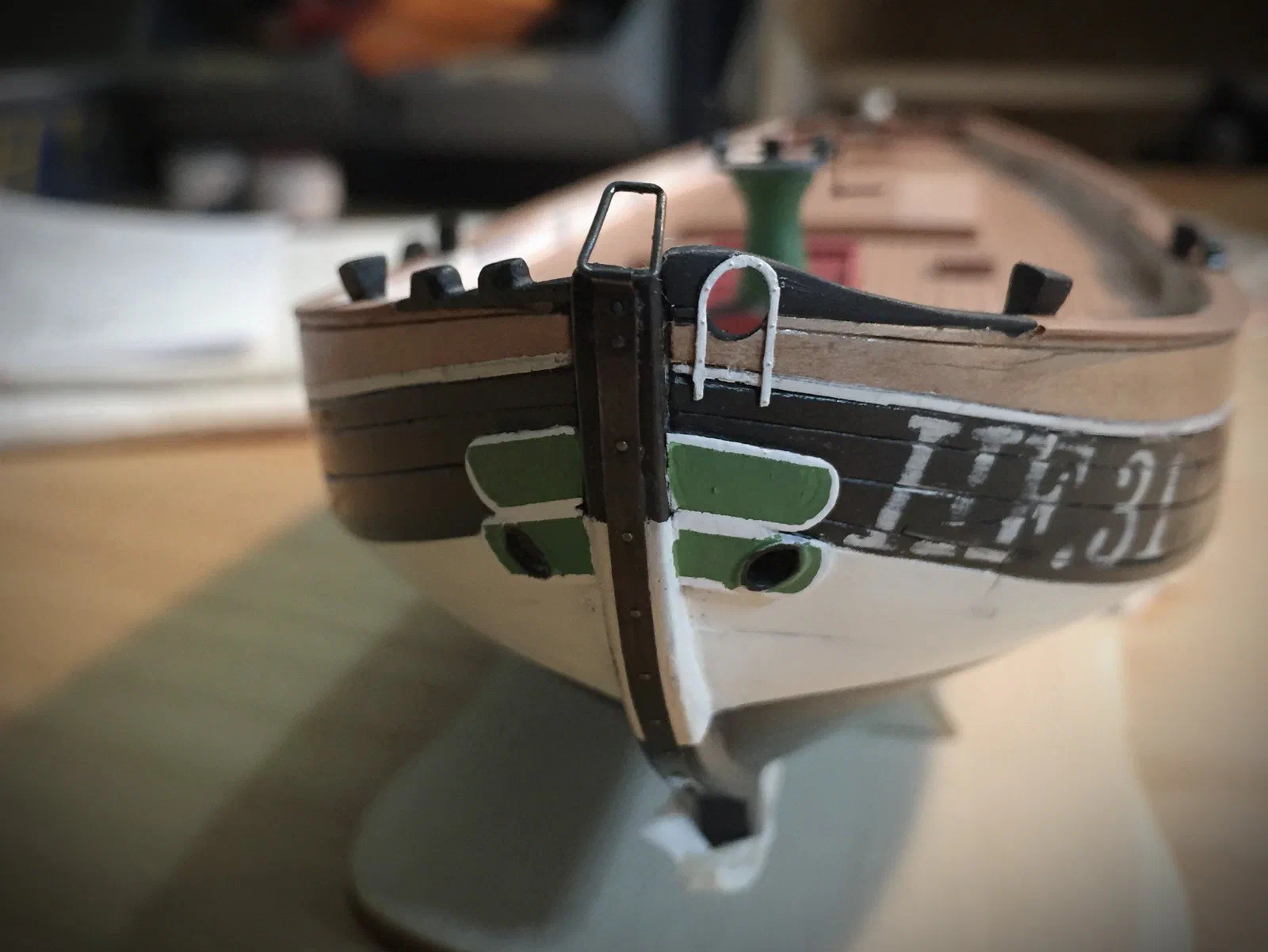
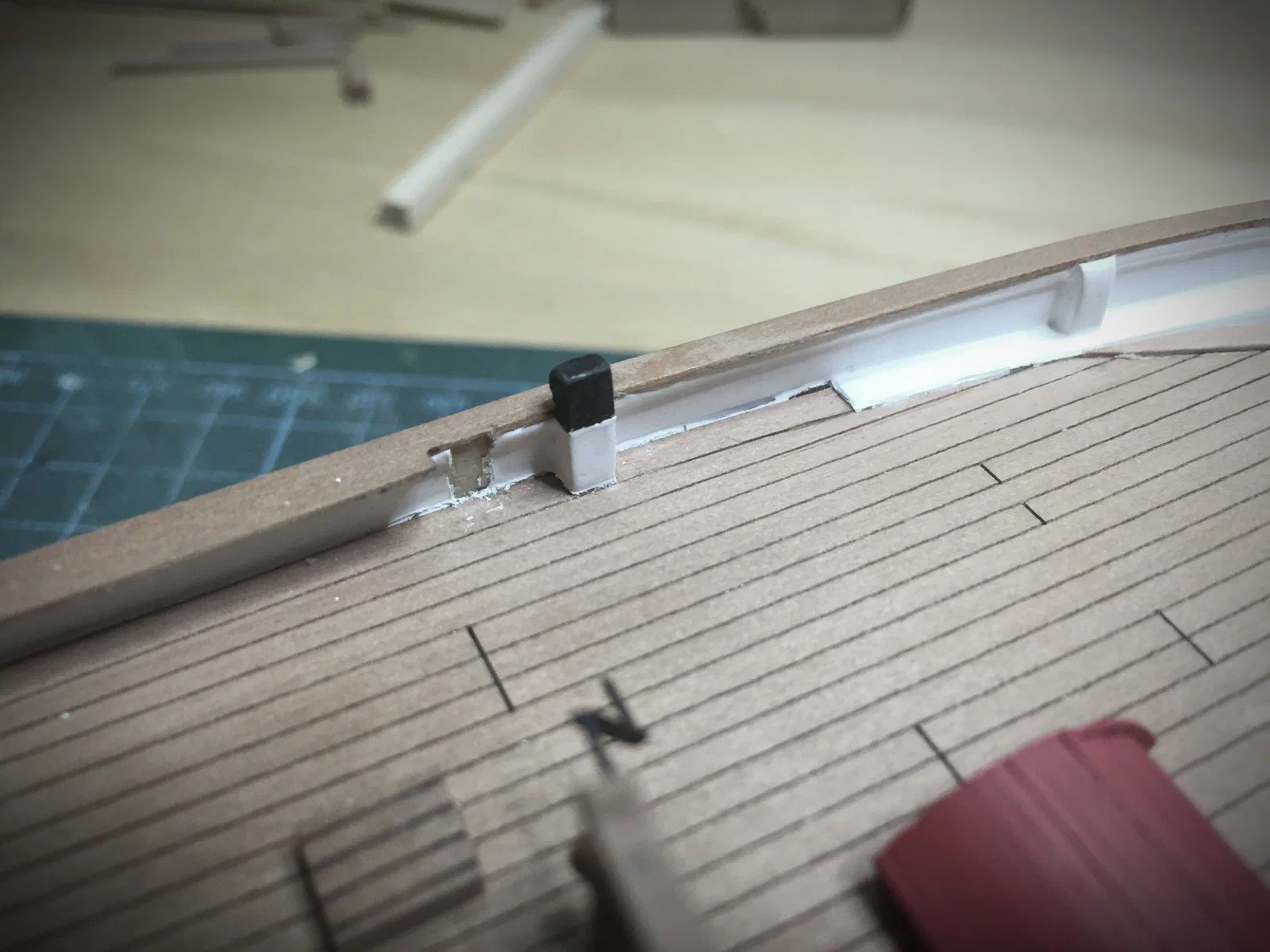
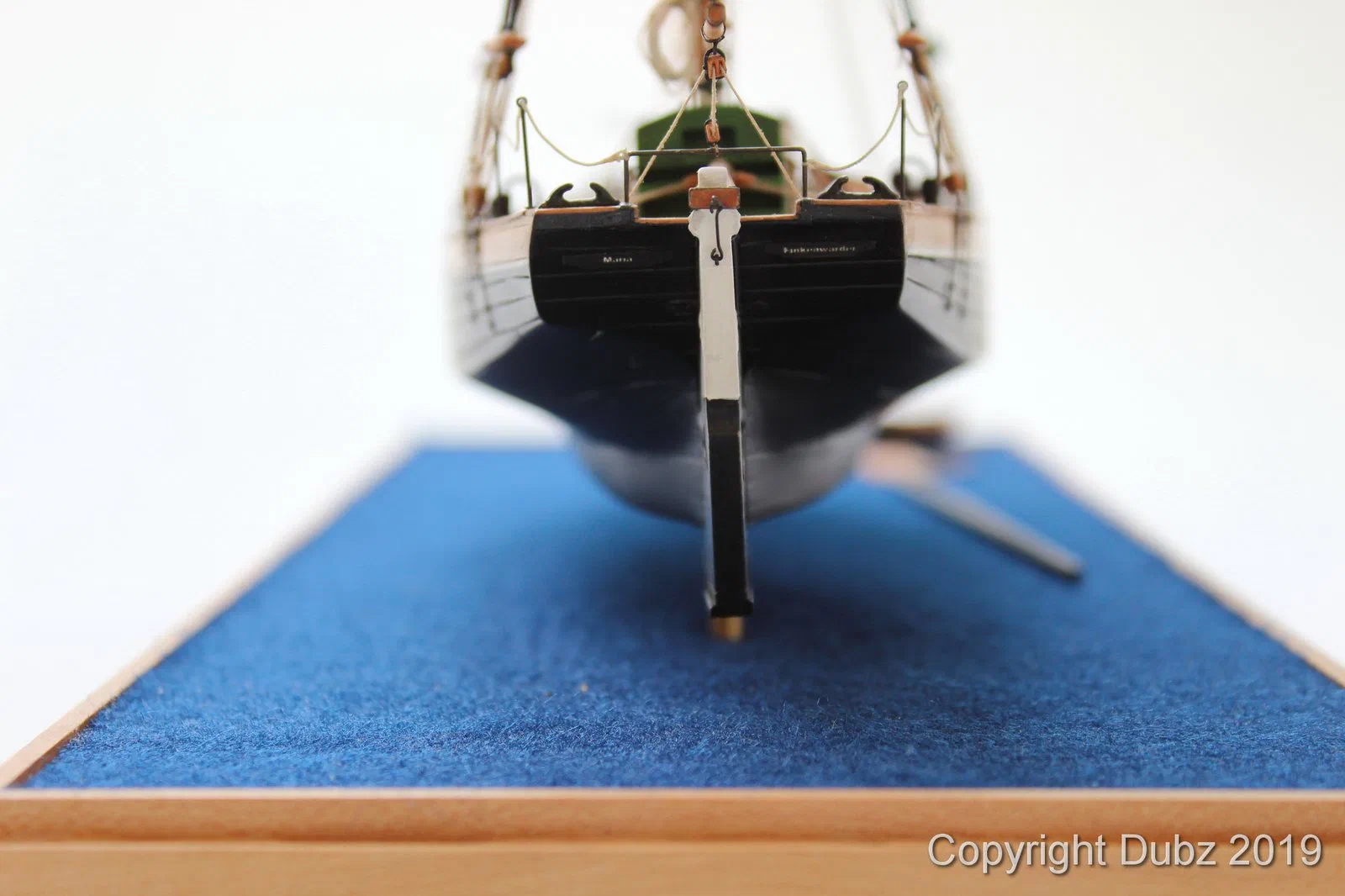
Then came a series of small corrections and additions: a hatch that sat too far aft and was missing a strip, a block where the kit only shows an eyebolt, something to secure the tiller, a railing made of micro tubes, micro washers and micro eyebolts, and the name plates – painted, scraped back with a knife, blackened and glued. The windlass in pear was finished at the end of September, along with missing bollards on the inner bulwarks, a bollard that was too small and new brass cleats near the main bollard, made in the rough style of the original and, as usual, secured with micro rivets.

Paint, green and a call sign
The paint work on this little ewer was my least favourite part. The line of the white area was not parallel to the keel, which bugged me until I repainted it – in fact several times, after paint that lifted the layer beneath it and a thumbprint that probably only I would ever have noticed. The green areas were the part I was most afraid of. Masking with Tamiya tape and Humbrol Maskol worked much better than my first attempt, although the clear coat afterwards did not get along with the green everywhere.
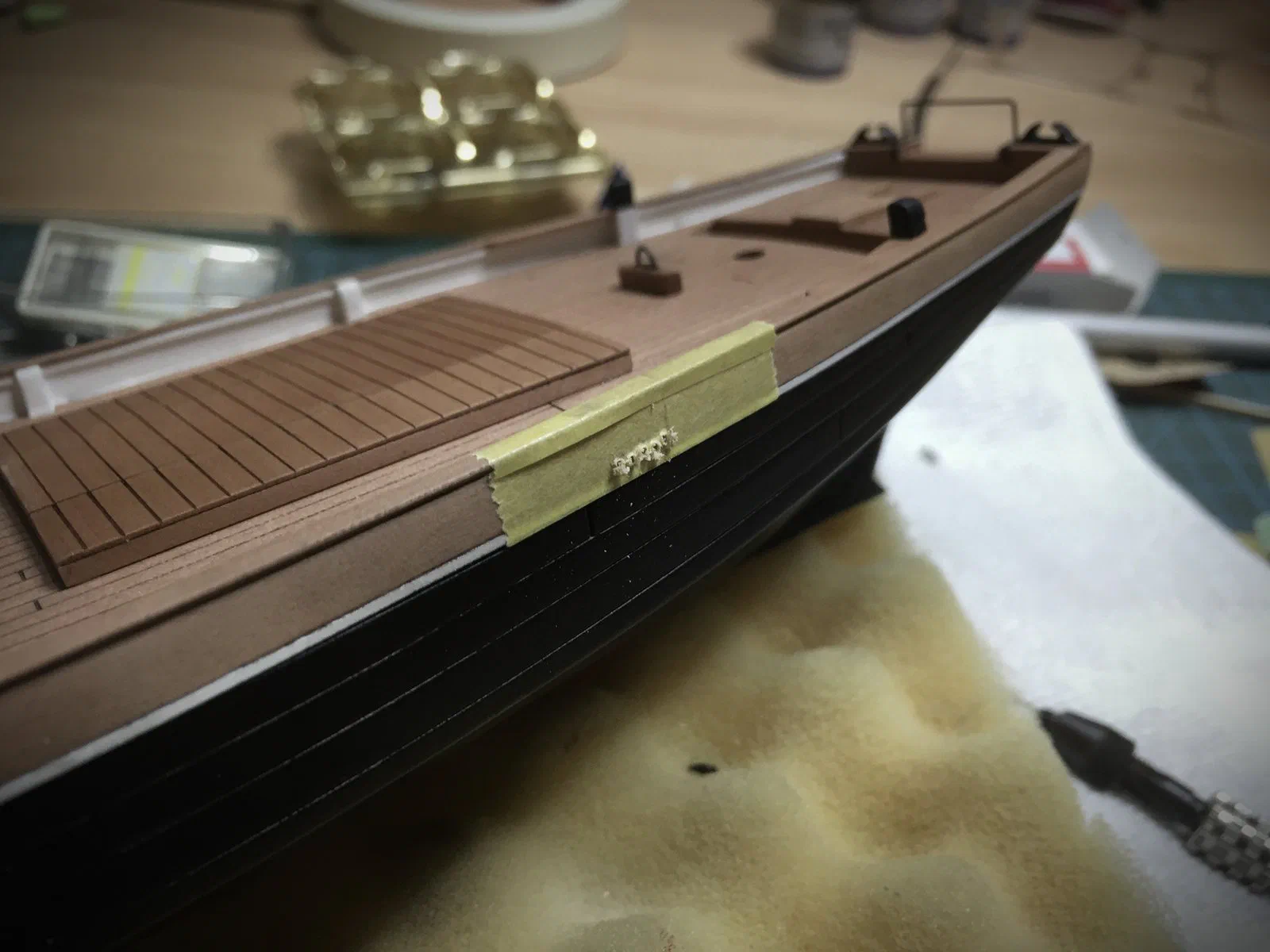
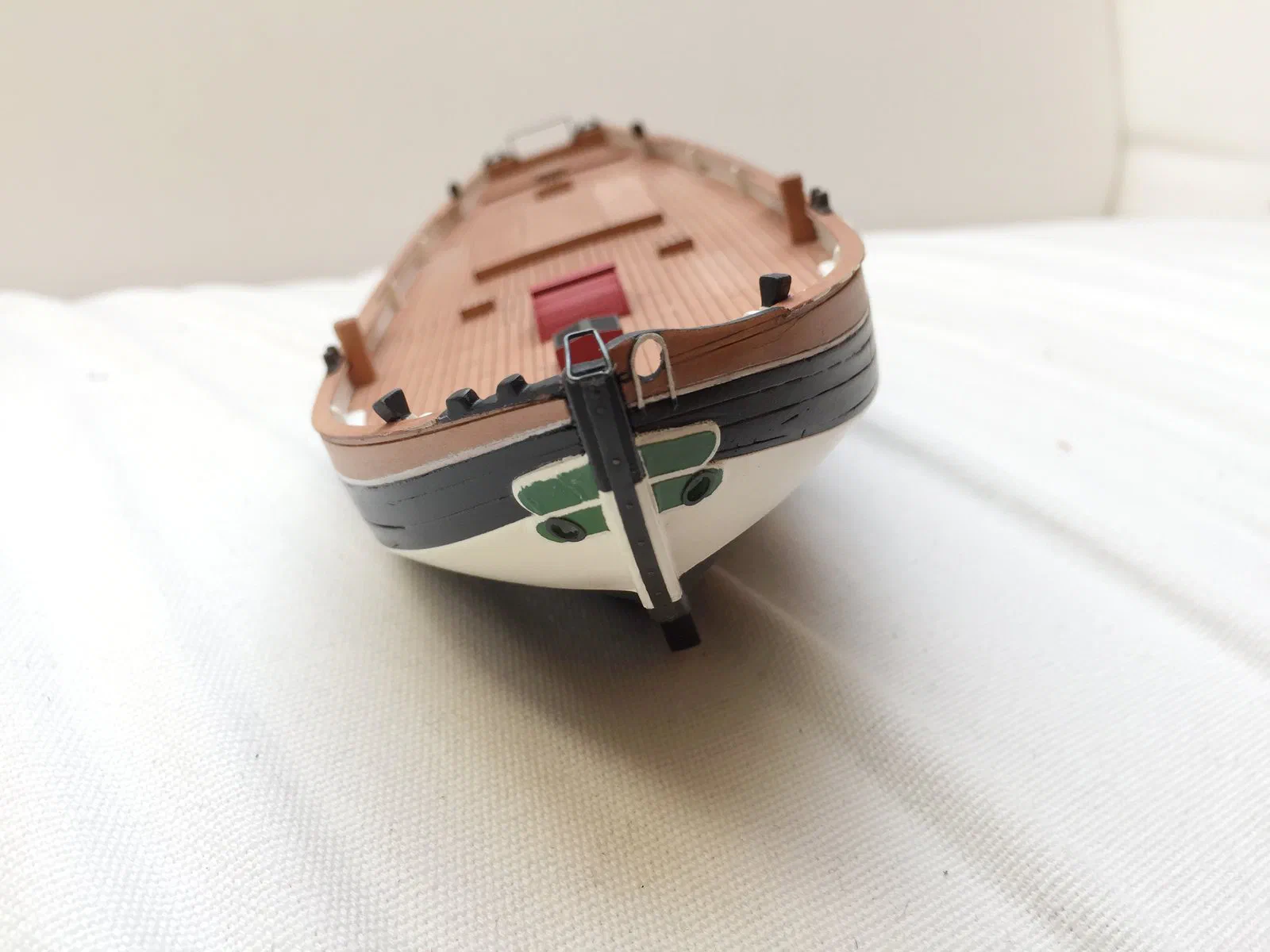
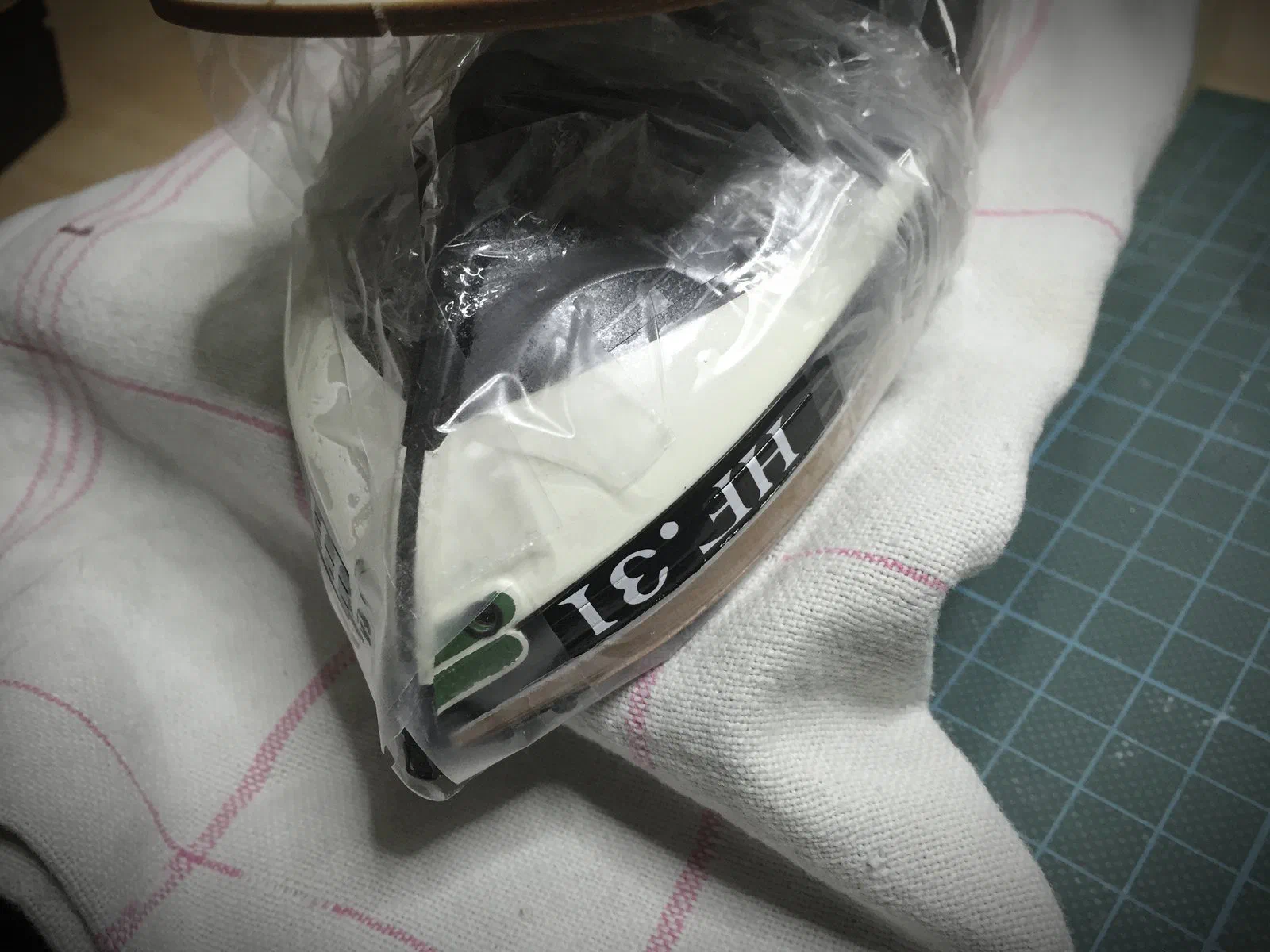
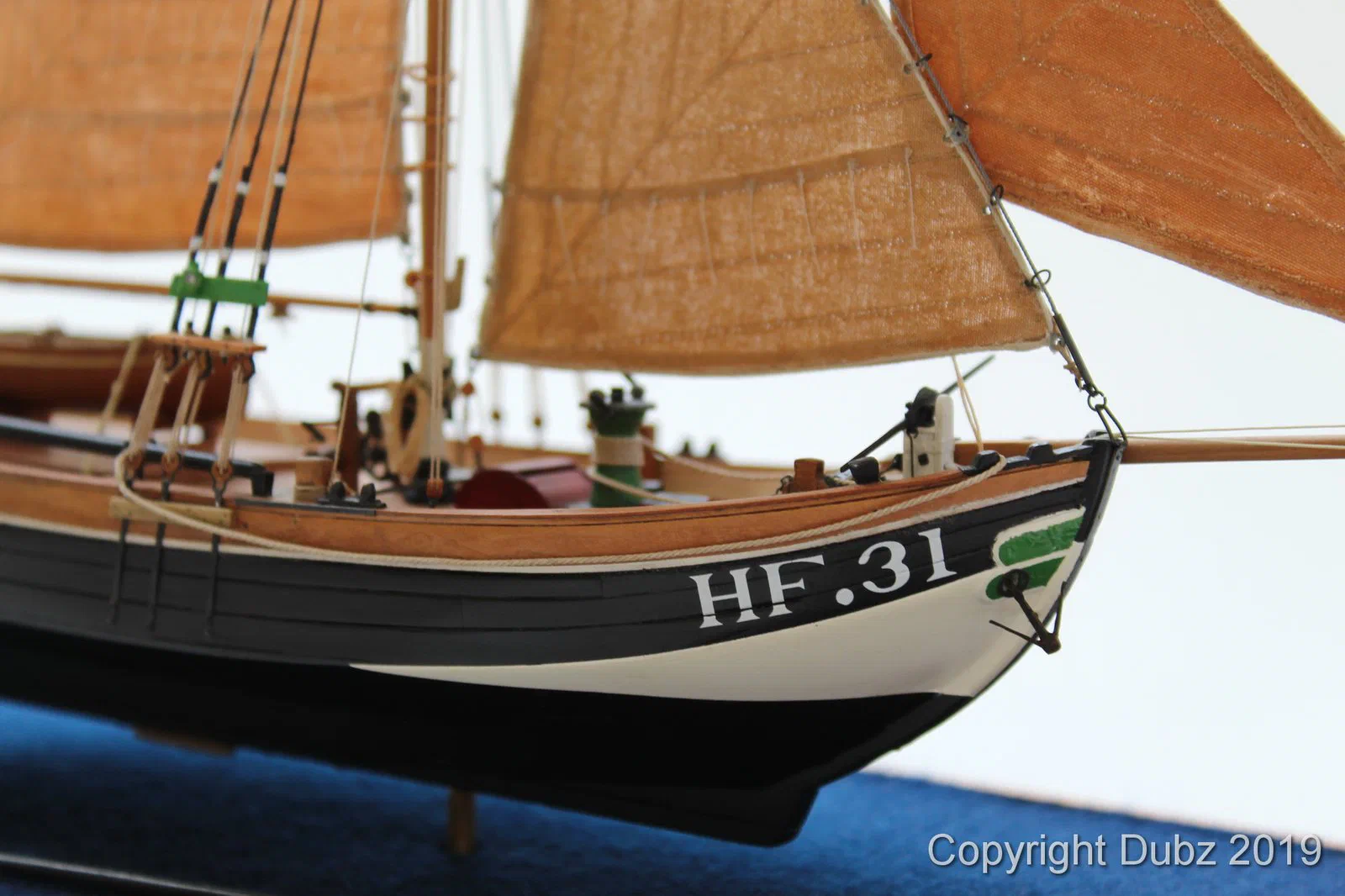
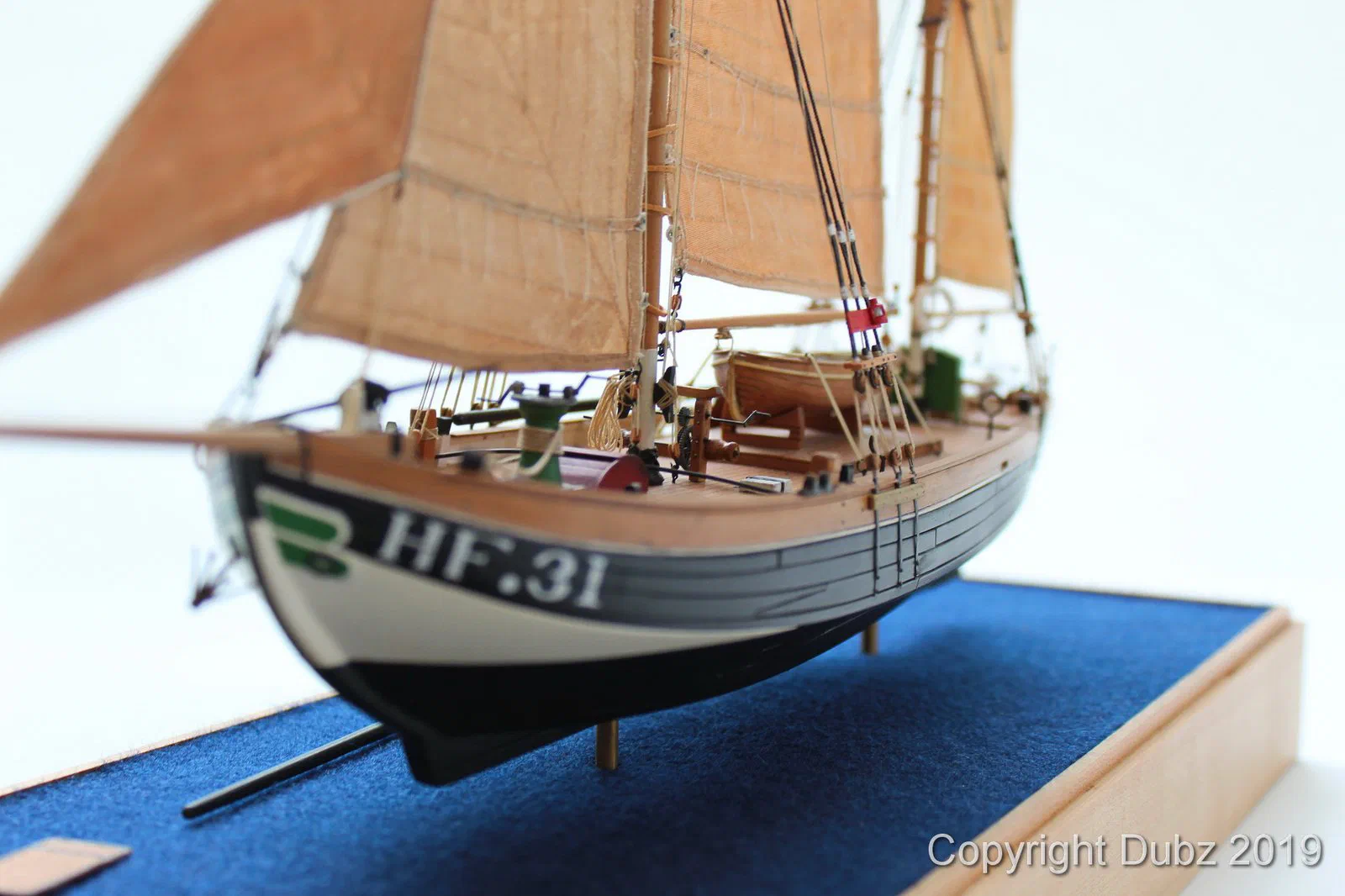
For the call sign HF 31 on the bow I went the decal route with a new and much better mask from Daniel. It is not perfectly the right typography, but the result is pleasing. The points were not part of the decals, so I made them myself, then secured everything with clear coat and polished the shine back down.
The boats
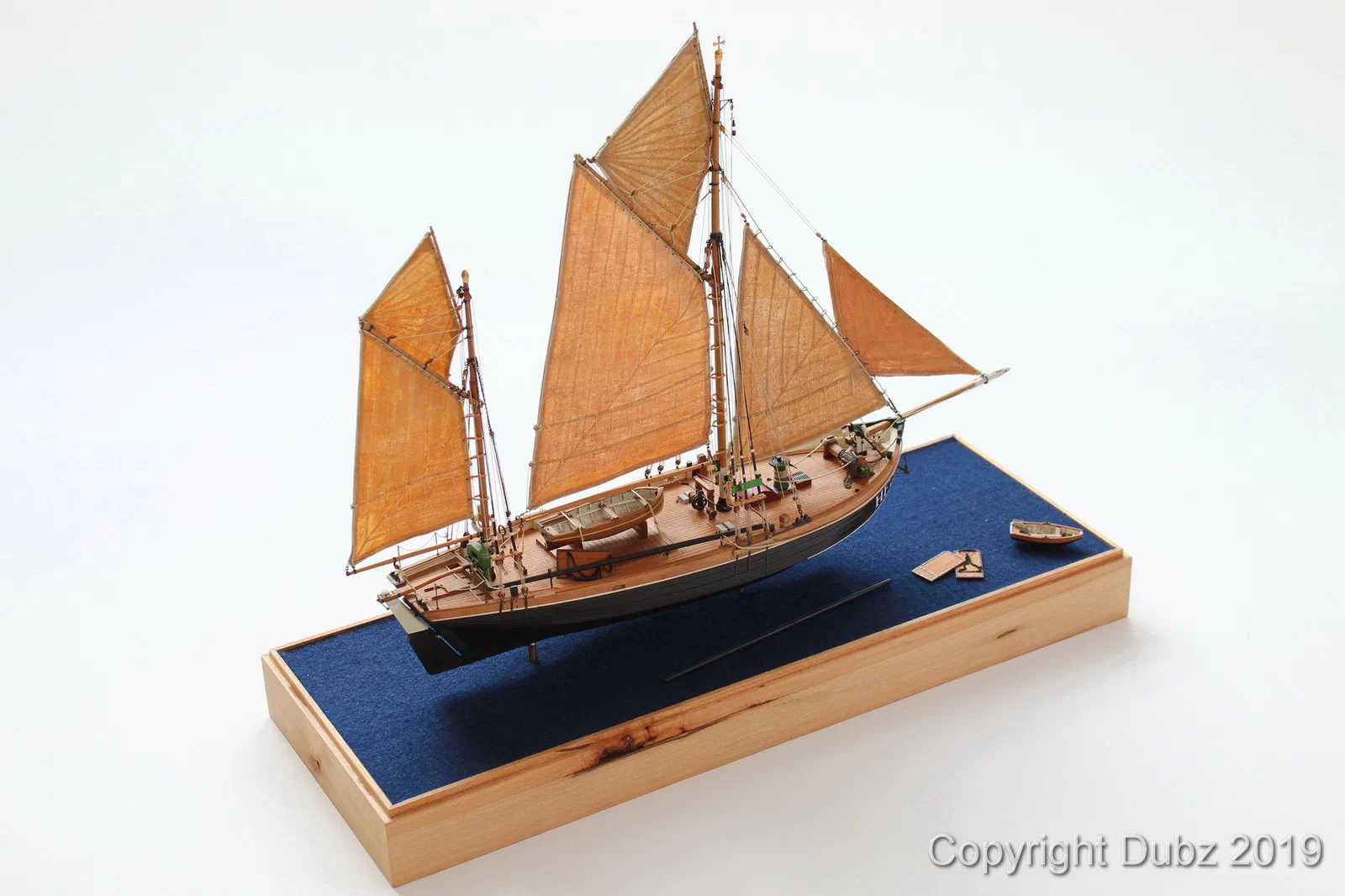
The kit contains two small boats, one for the sailing and one for the motorised version, each of them a model in its own right. The sailing version’s boat is really tiny, but very stable thanks to the plywood frame and planked in pear. A tip for parts this small: hold them in pliers while removing the laser char, and sand the pear planks thinner so they bend more easily.
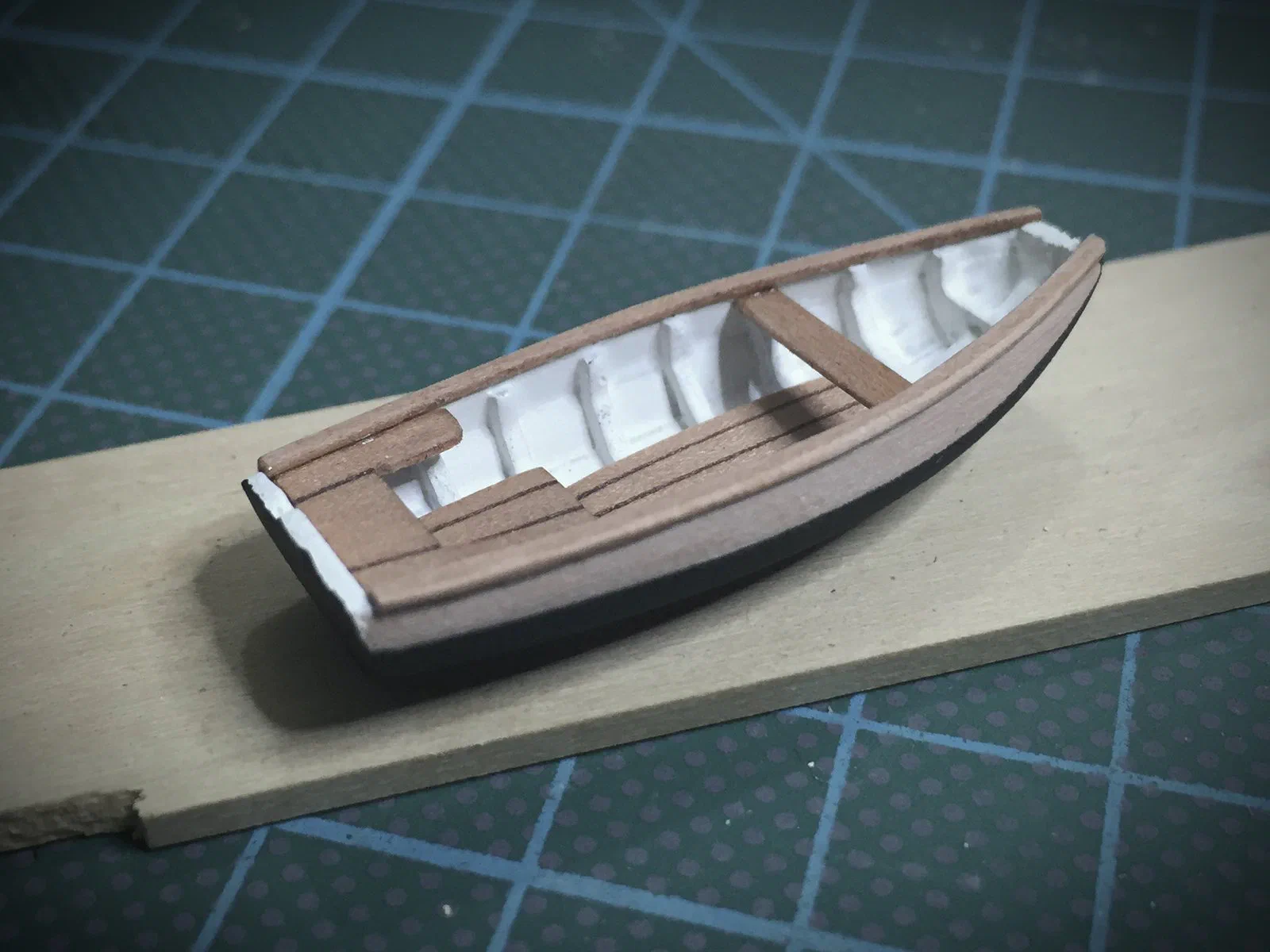
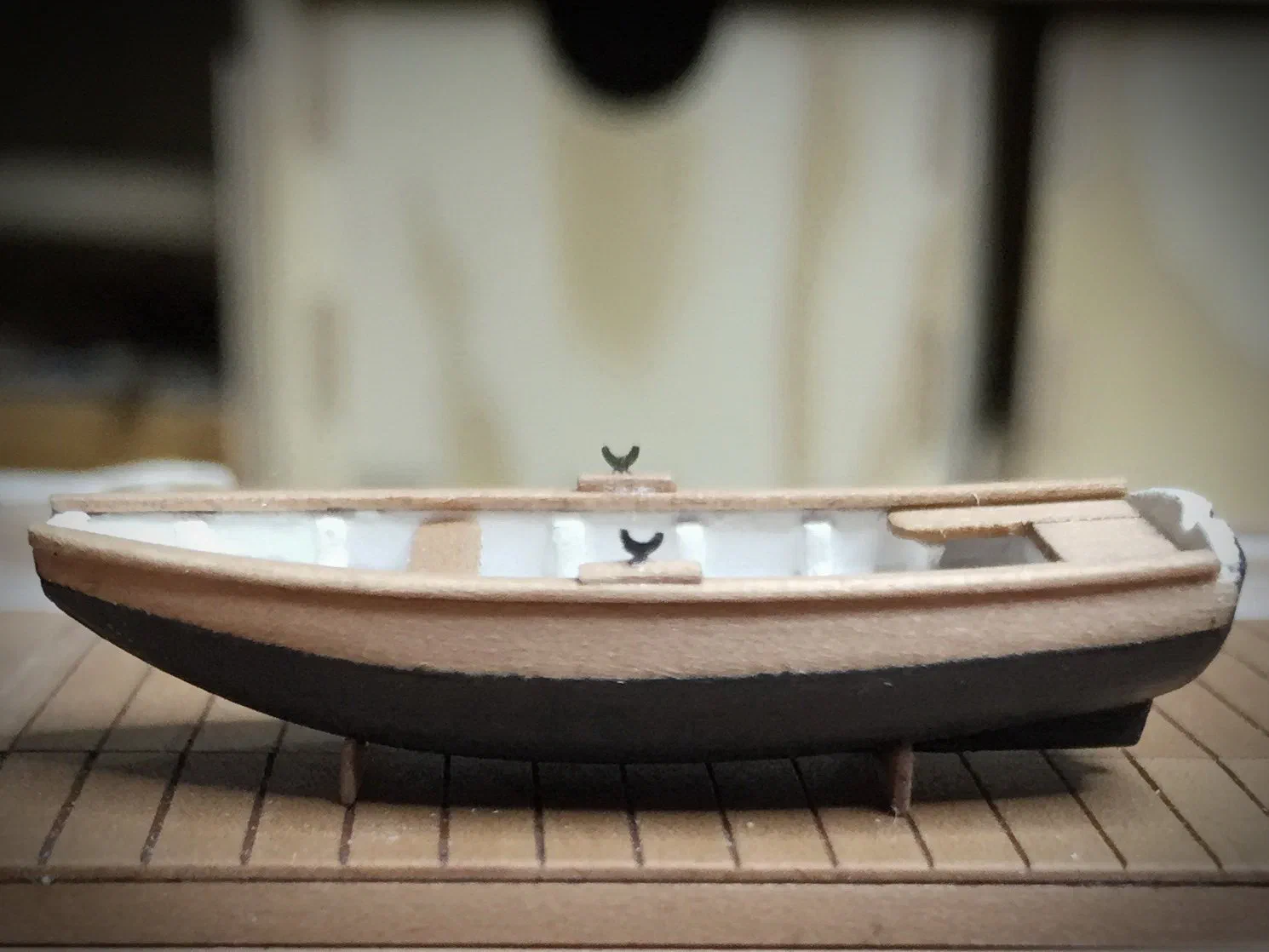
Then a knowledgeable colleague in a German forum pointed out that this boat was wrong for a fishing ewer – it is not an ewer boat. That left the choice between the Maria as she is shown in Munich, with the small boat on board, and the Maria as she might have looked a hundred years earlier. The boat for the motorised version looks much more like an ewer boat, so I built that one as well. Its instructions do not show how the first plank sits at the keel, and carefully cleaning the laser char from every plank costs about a tenth of a millimetre each – with ten planks, that is a full millimetre. I suggested to Daniel to give the planks a little buffer in length and height; the last plank at the keel I made from scratch.
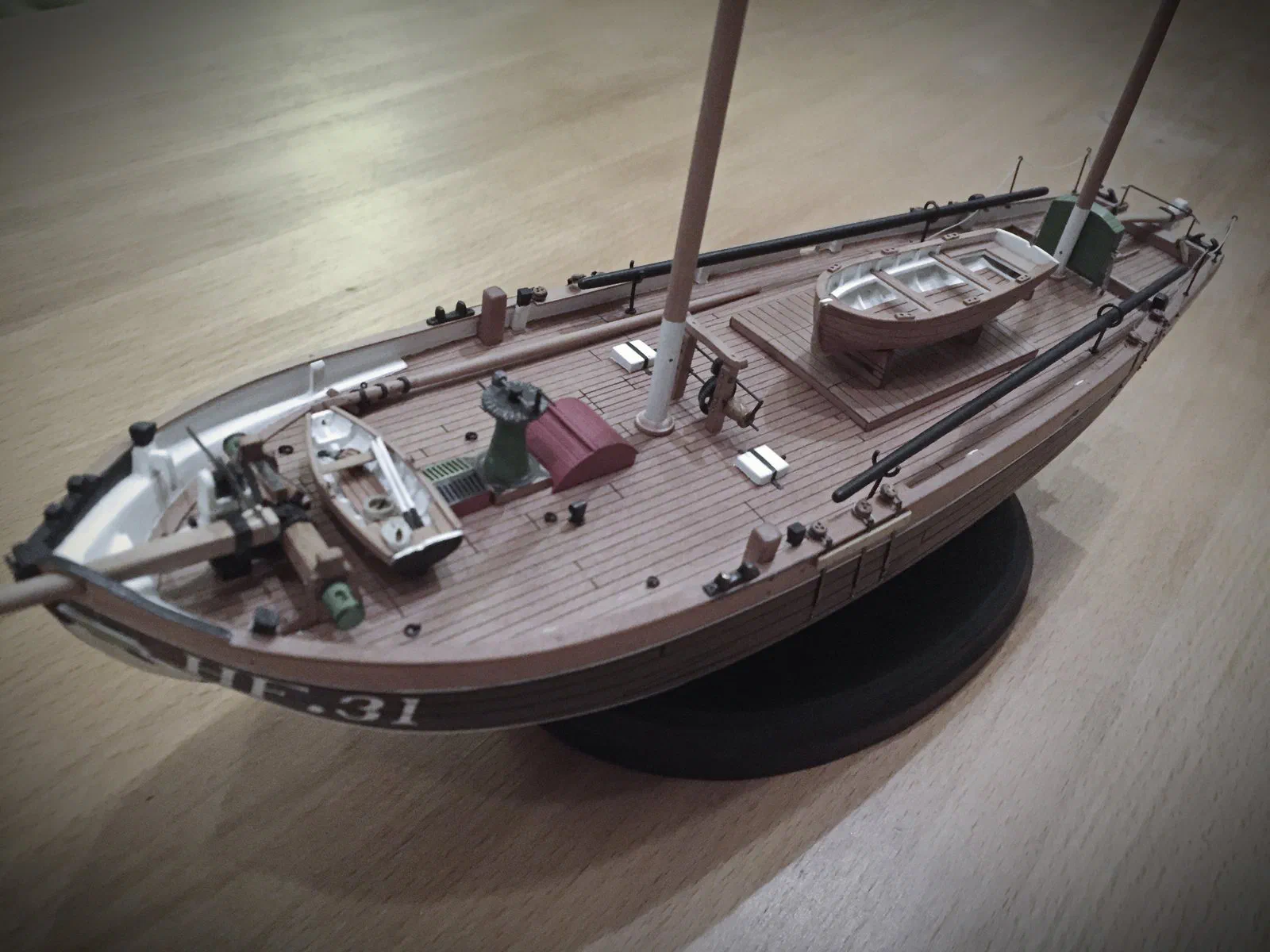
Masts and the pump windlass
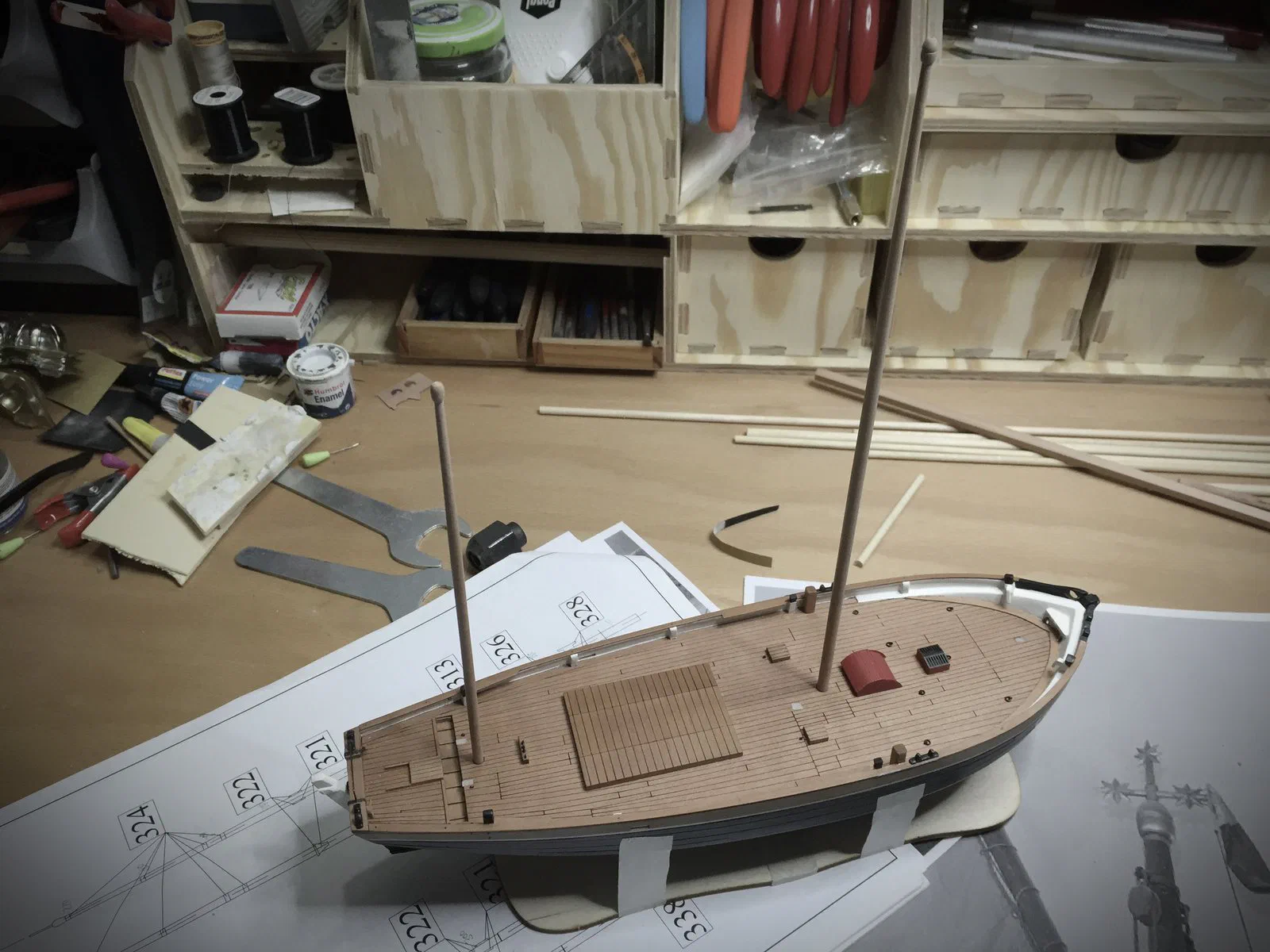
The masts are made from pear. The dowels in the kit are excellent, but a little light for my taste, and I did not want to paint them. The masts offer a lot of possible details: protection strips, the mast foot, the mast clamps. In 1:72 the “nails” are simply holes pricked with a needle and filled with pencil. I also remade the bowsprit in pear, because the square section of the kit part was too thin to align it without a gap.
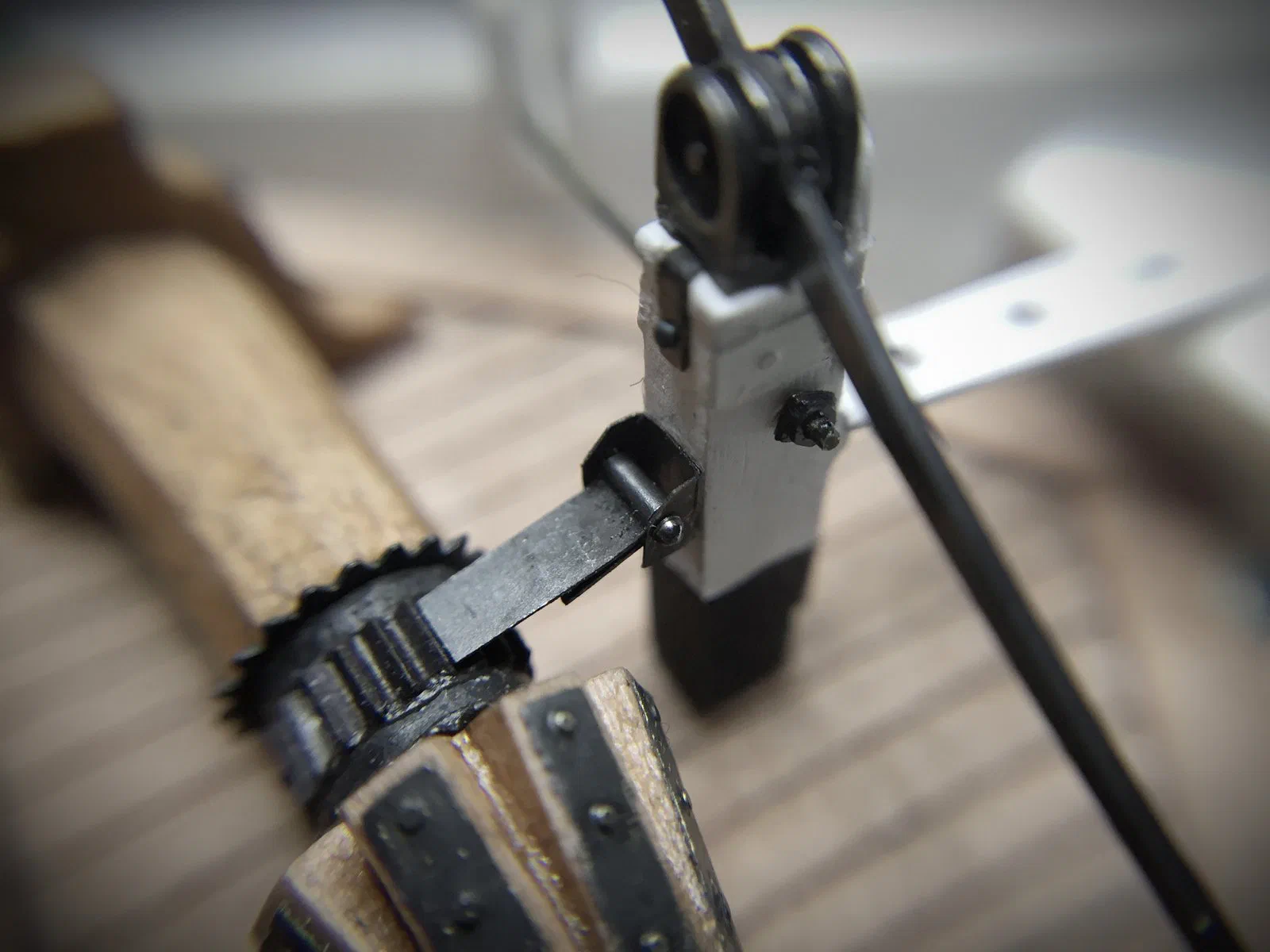
Along the way I learned that what I had taken for a pump lever is in fact a pump windlass. So I built it in more detail – including mechanical parts that are missing even on the original in Munich. The second iteration was much better: silver-soldered brass, rivets, a handle, pawl boxes connected via link rods to the rocker, small nuts from a photo-etched set – and yes, it moves. To use the pump windlass, the bowsprit has to be removed, which is correct. I also remade the tiller, whose characteristic shape I find typical of an ewer, and added the extendible centreboard.
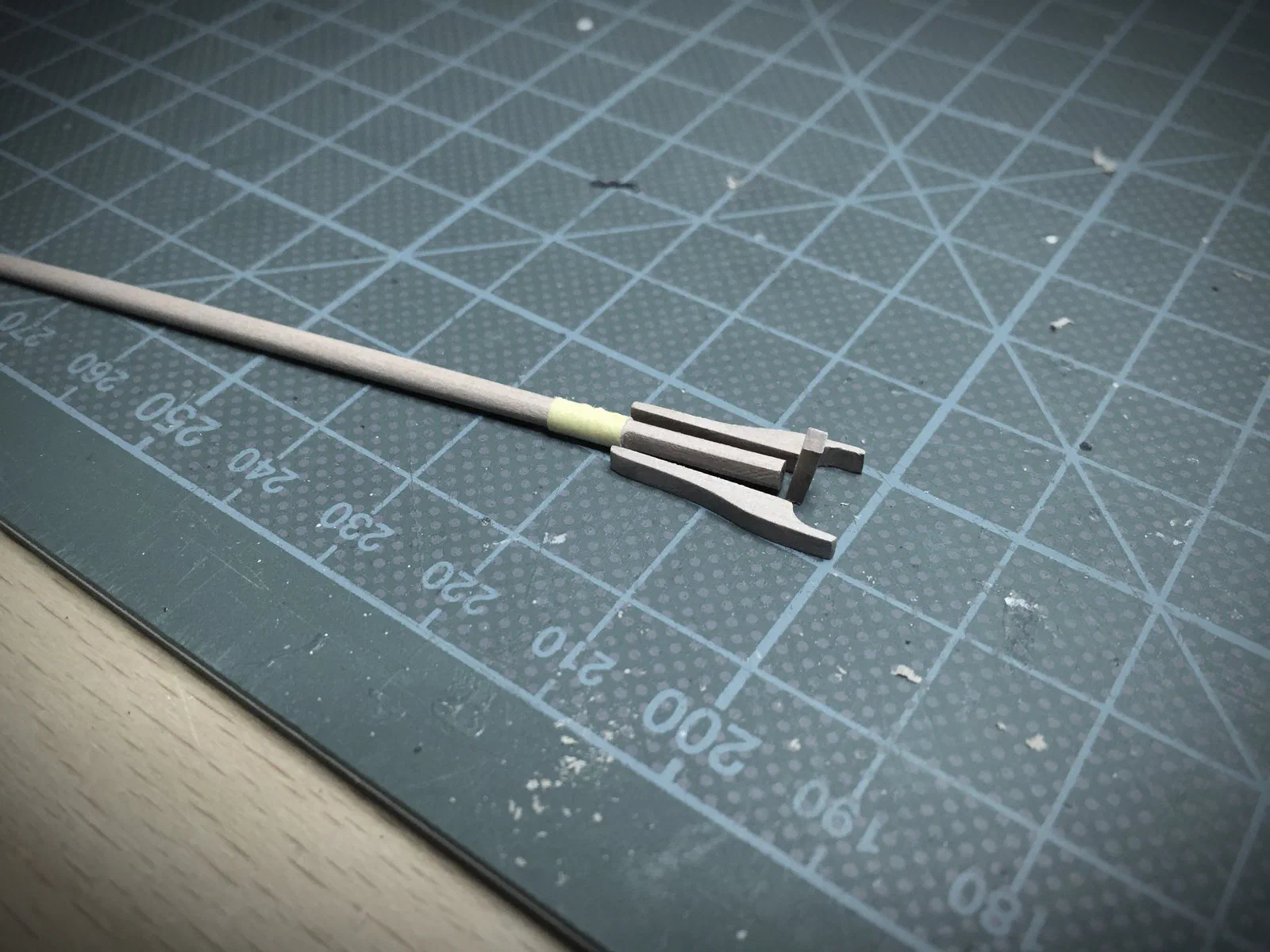
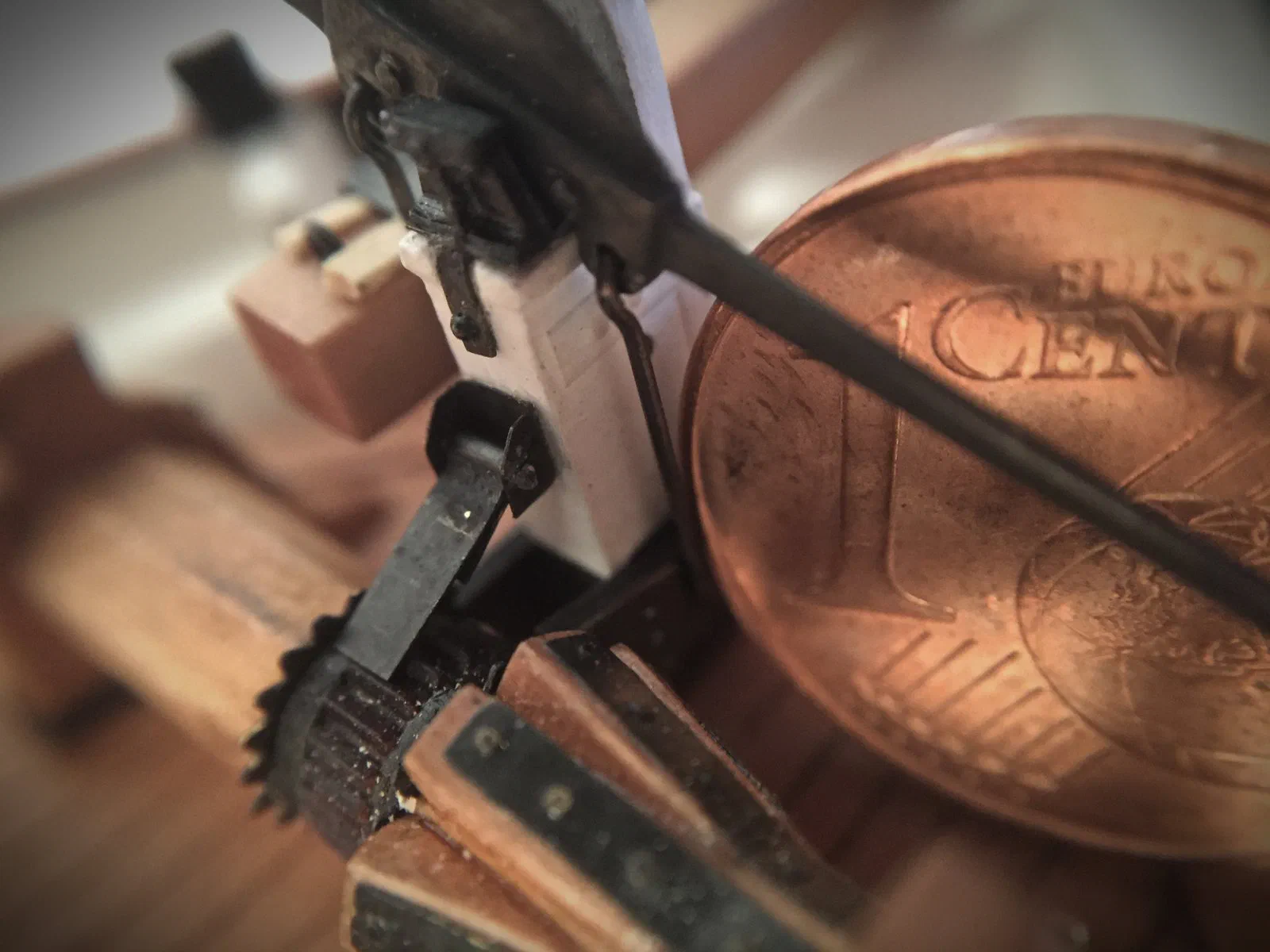
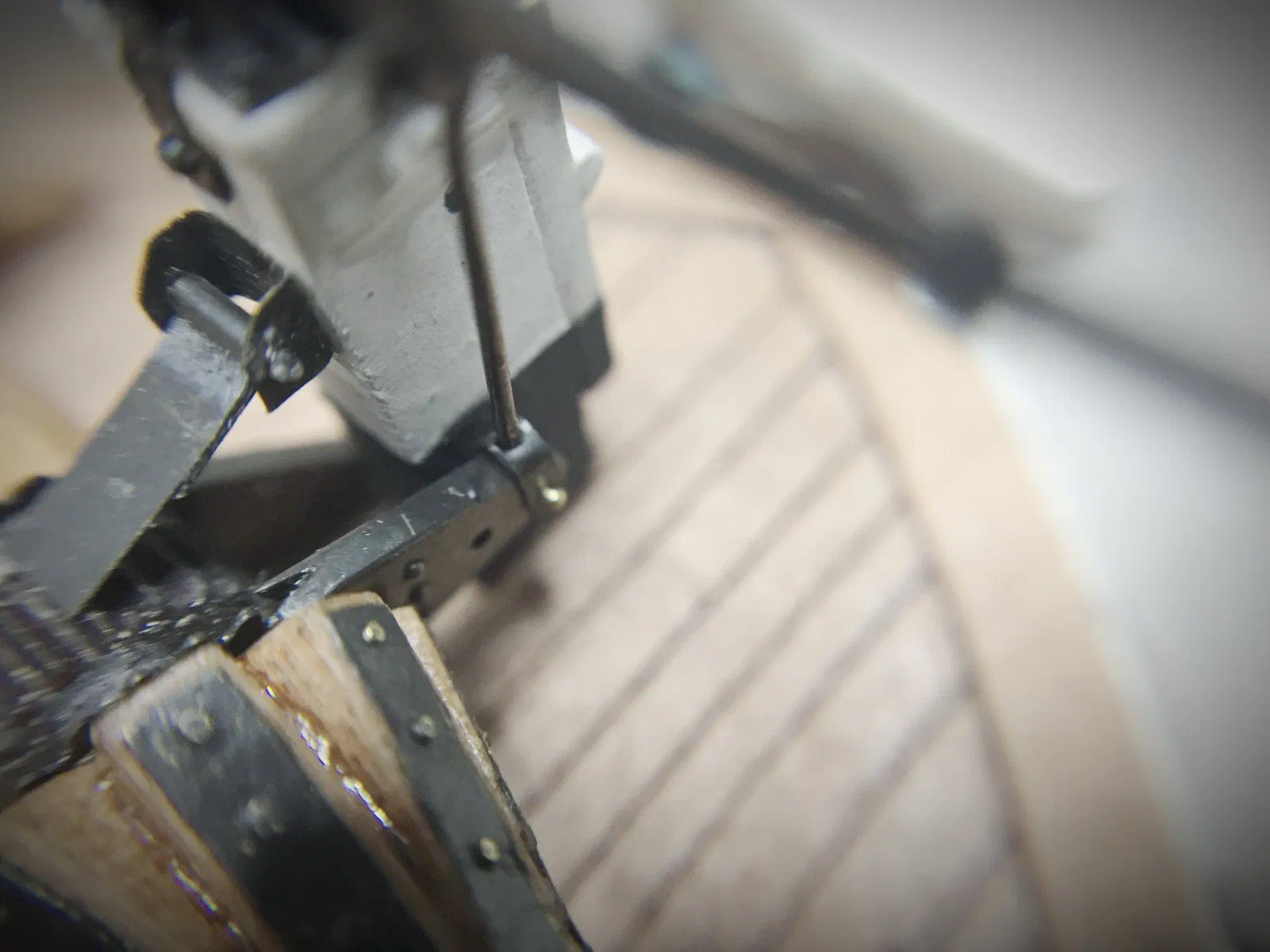
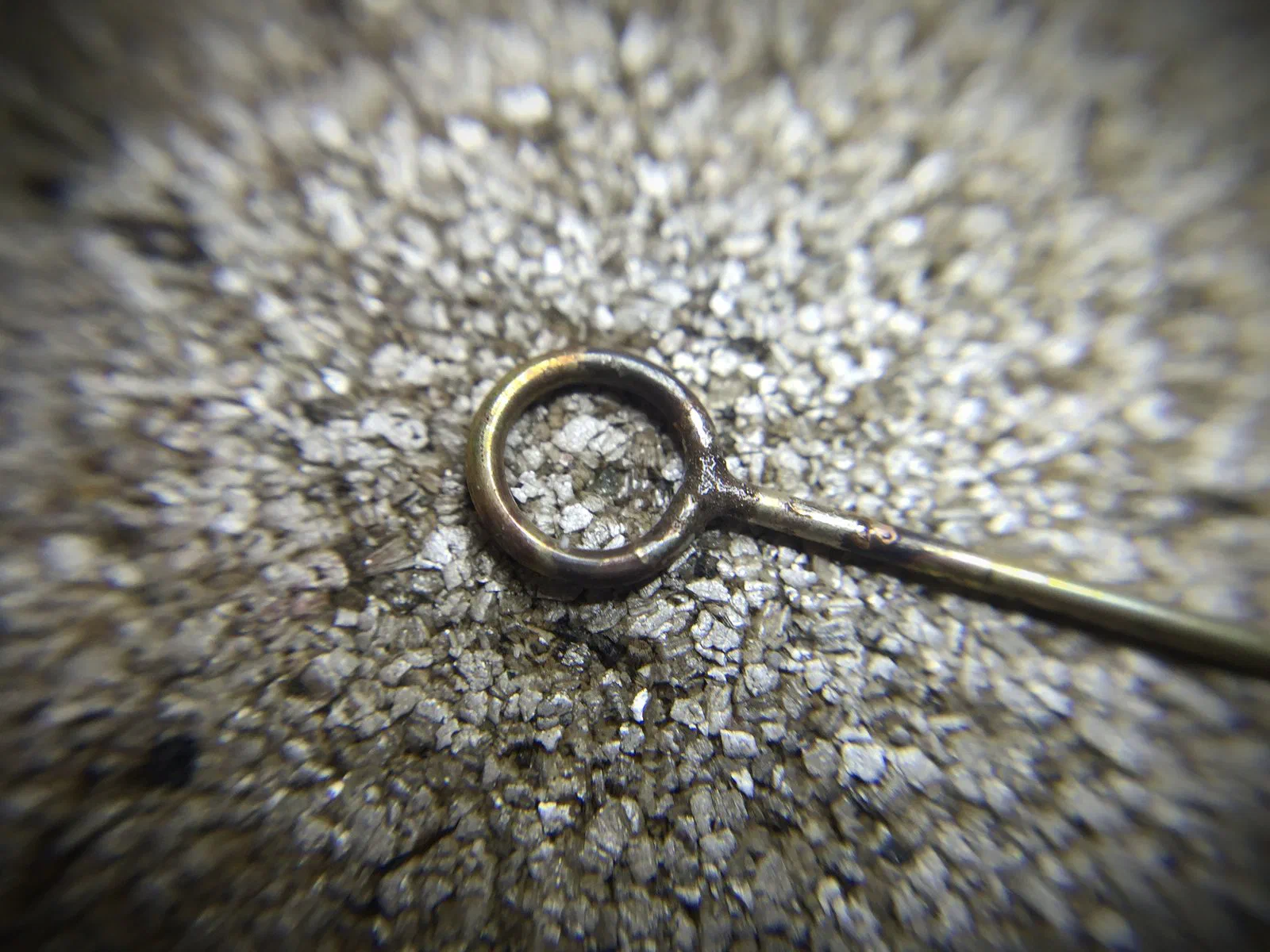
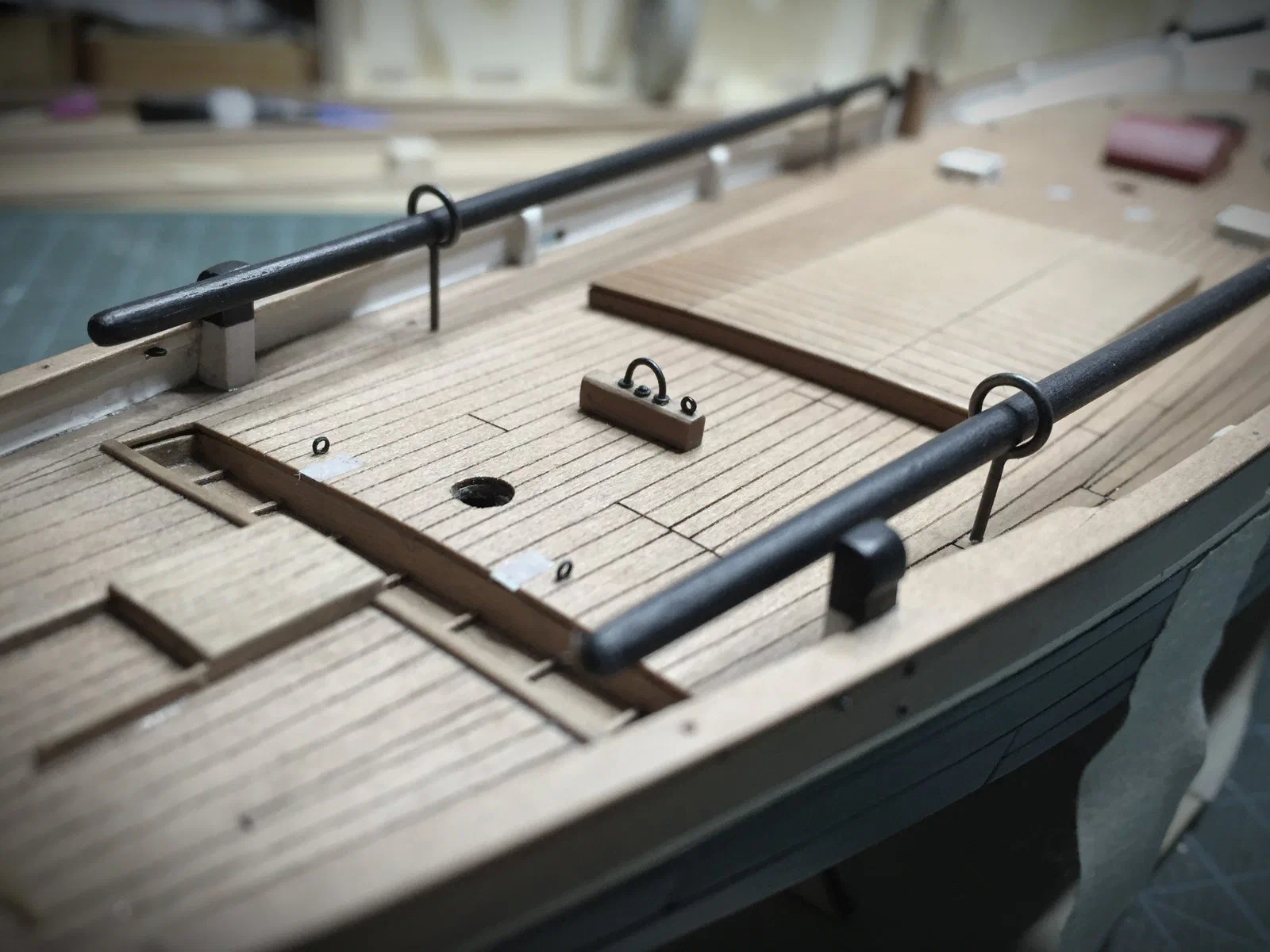
After turning a pair of brass pillars for the stand came the “wedding”: all parts were finally glued and pinned on deck.
Mast rings and spars
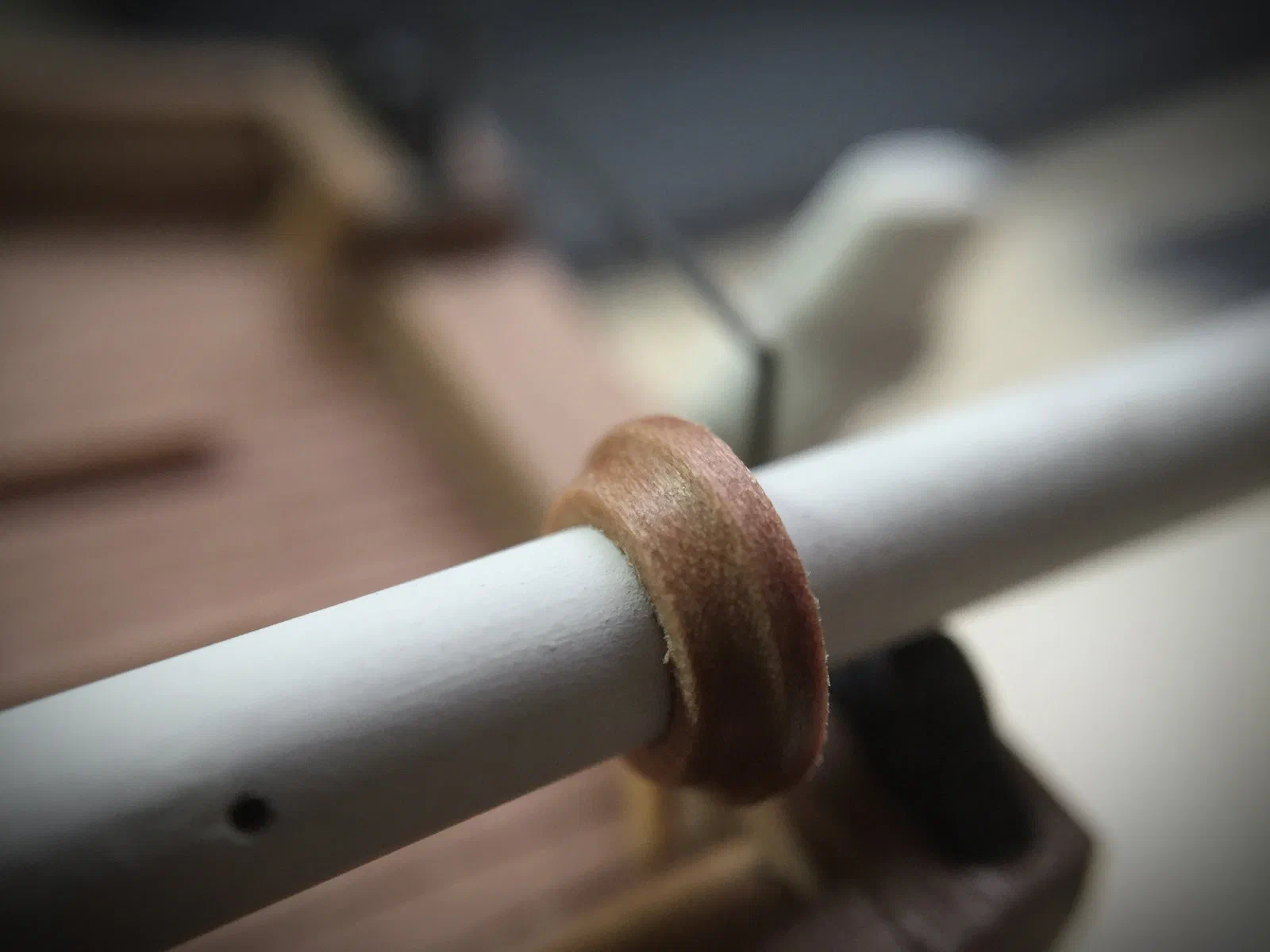
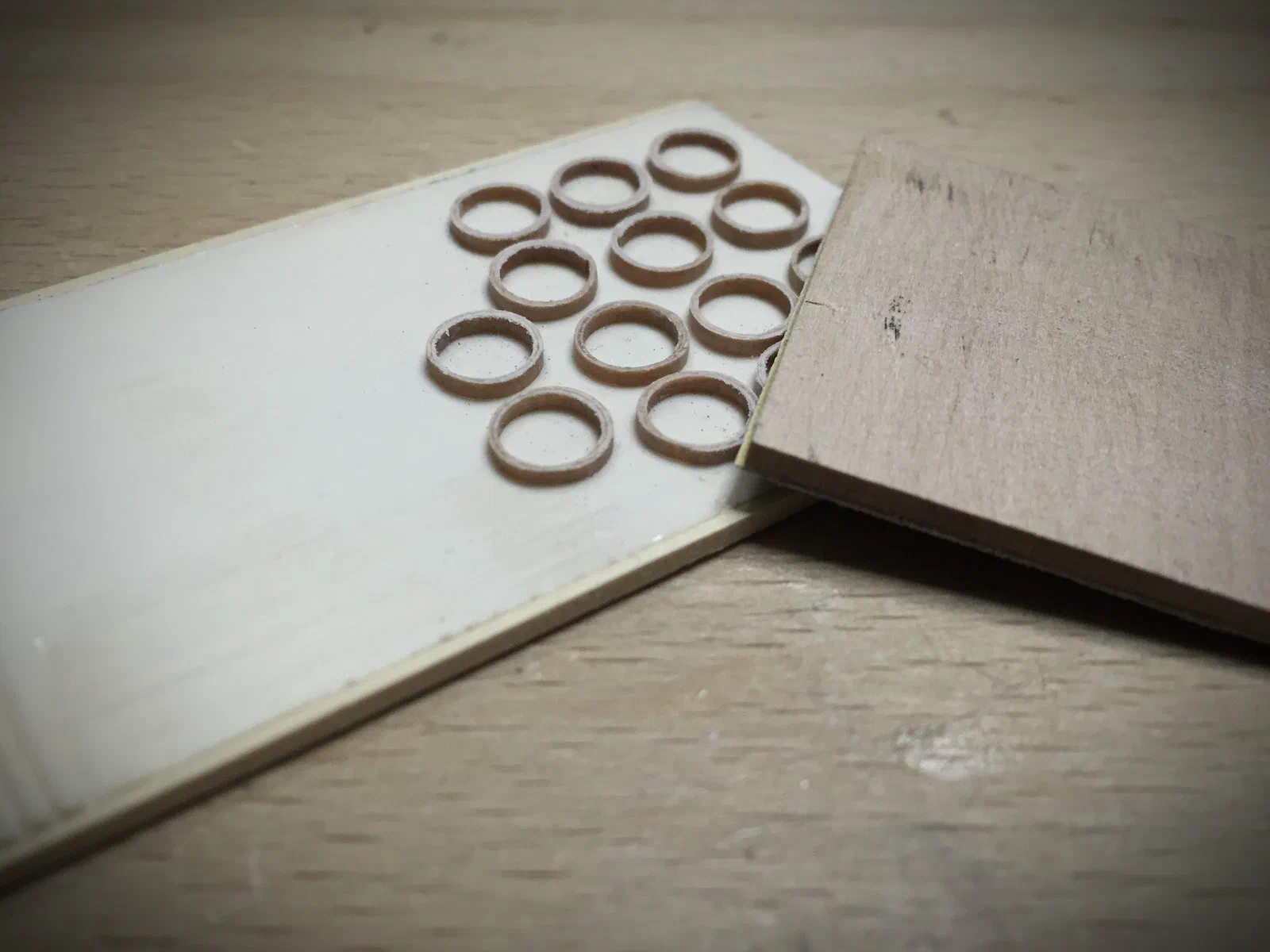
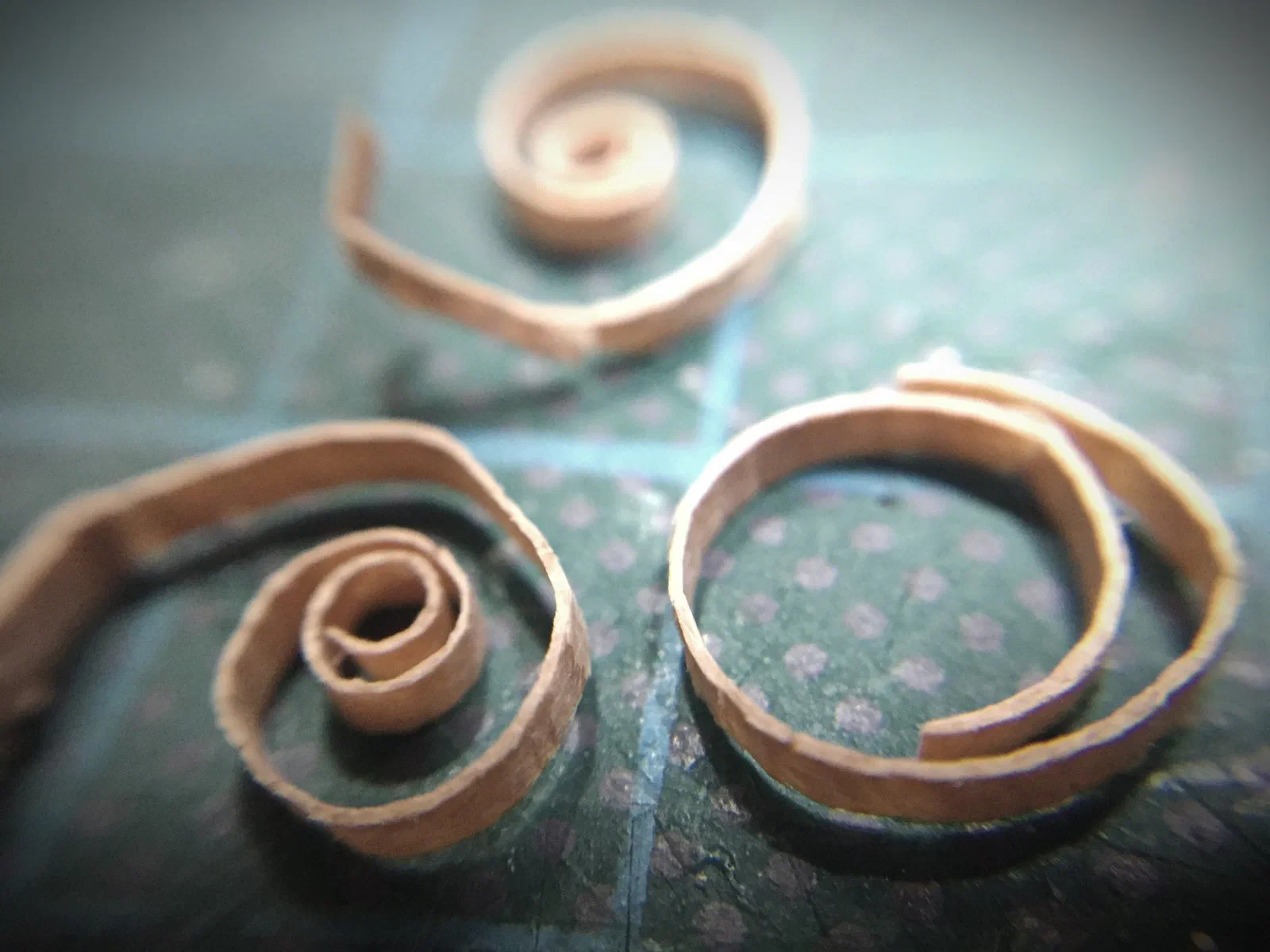
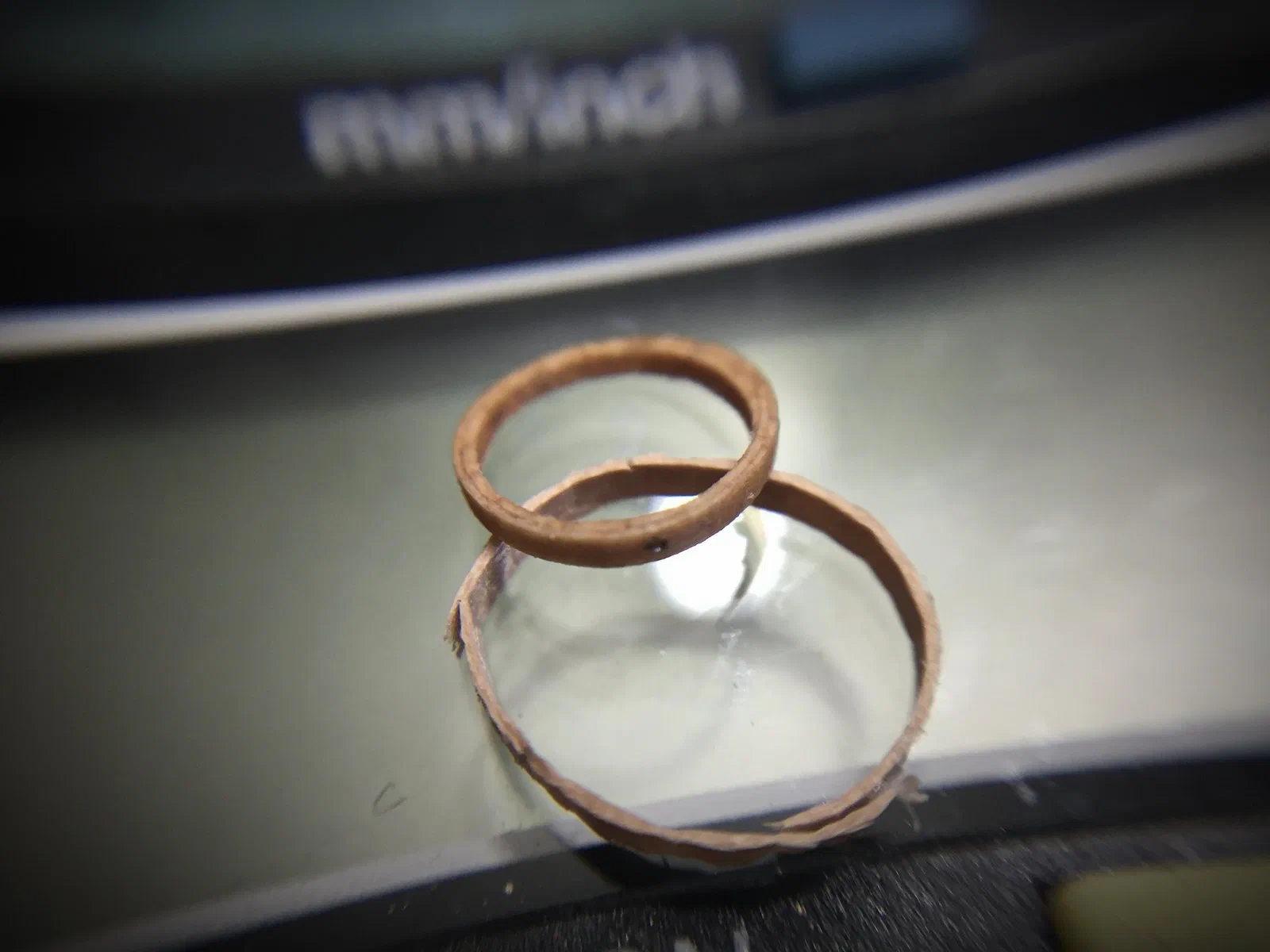
The kit provides photo-etched mast rings, but I wanted to try wooden ones – a challenge in 1:72. With a small slicer I made shavings about 0.2 mm thick, fixed the start of a shaving with a drop of CA and wound it with plenty of CA into two or three layers. Cut, sanded, given two fake bolts and a coat of Danish oil, the rings were done. More rings were rigged than needed, as on the real ships, so that a broken one could be replaced quickly.
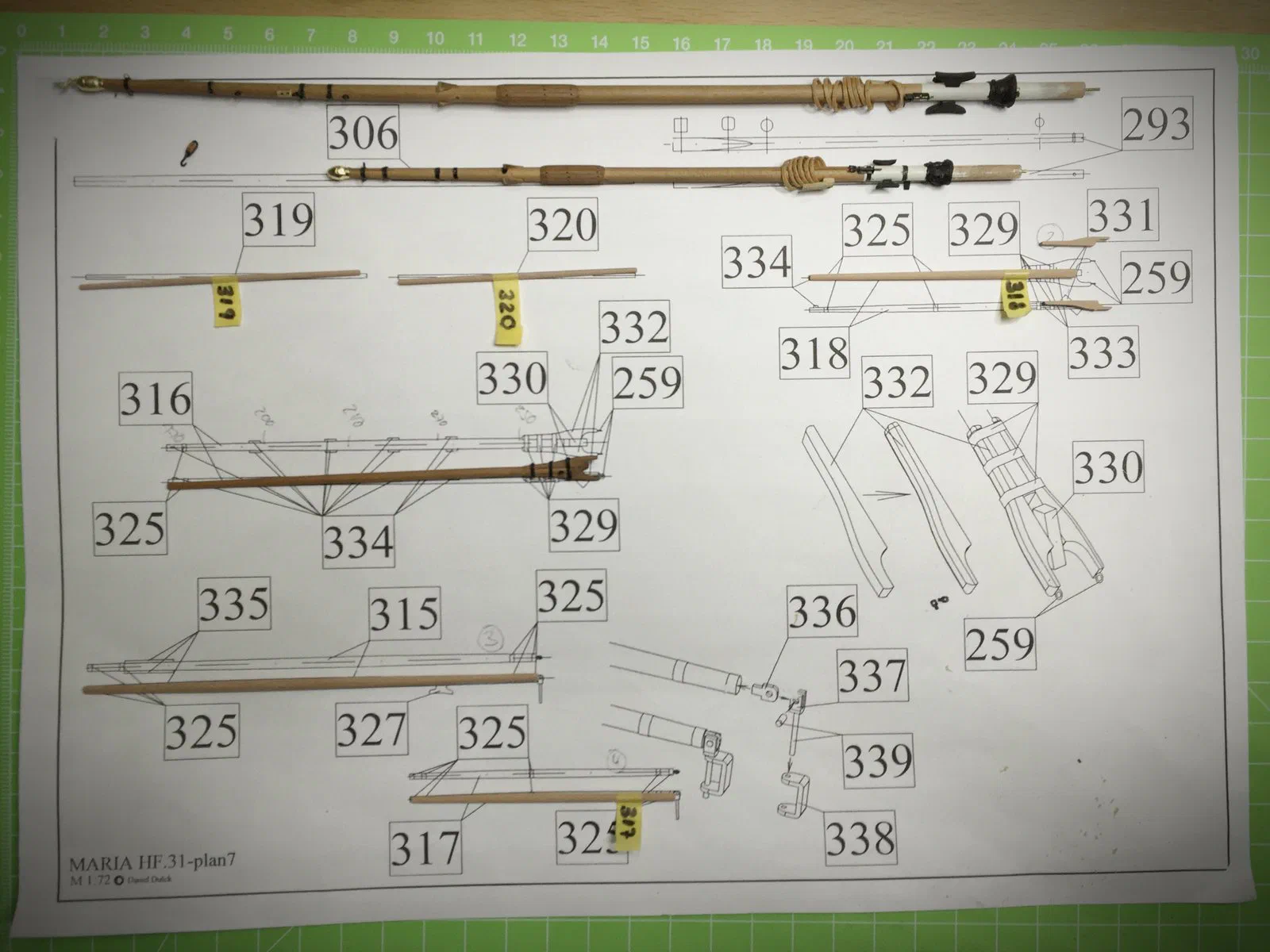
A discreet weathering of some parts broke up the colours – the white in particular is often “too white”. The metalwork on the spars was a test of patience: brass bands with two holes on blocks of 2 mm, every band pinned with a micro rivet or an eyebolt, because I do not trust glue alone.
Sails and rigging
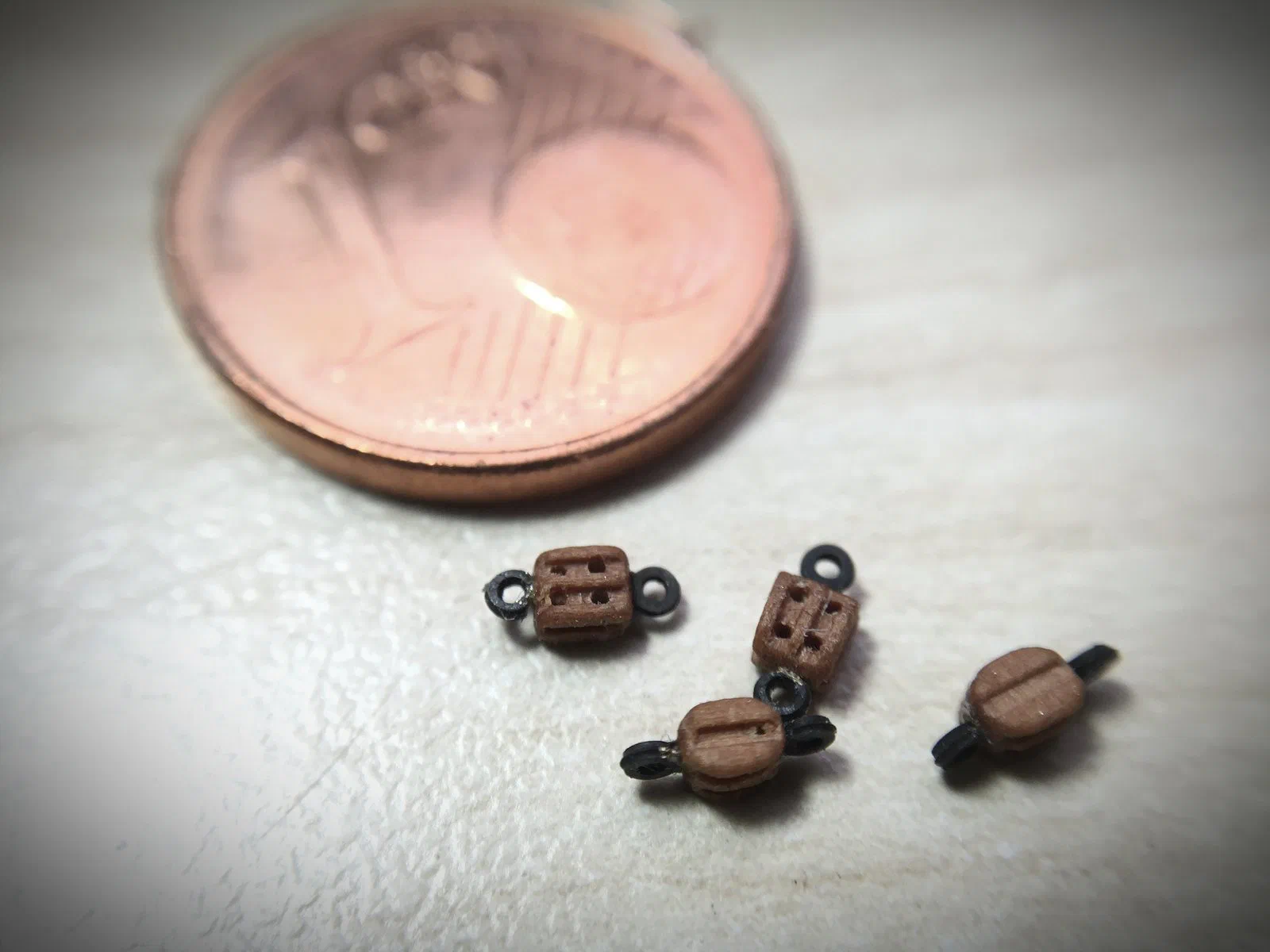
Rigging is always the hardest part for me – making the rope not only look right but also lie and fall naturally. As the Maria was a working boat, I used a mix of rope. The sails went on with 0.1 mm rope, the parrels were made from FIMO, baked and drilled. The shrouds and the forestay are wire rope; the shrouds were “tarred” with a permanent marker. I added more rigging details following photos of the Maria in Munich, closed a chain that was a nightmare to close, and built the jib ring more or less blind. It is important that the sails are brown: the fishing ewers from Finkenwerder had brown sails, while those from Blankenese had grey ones.
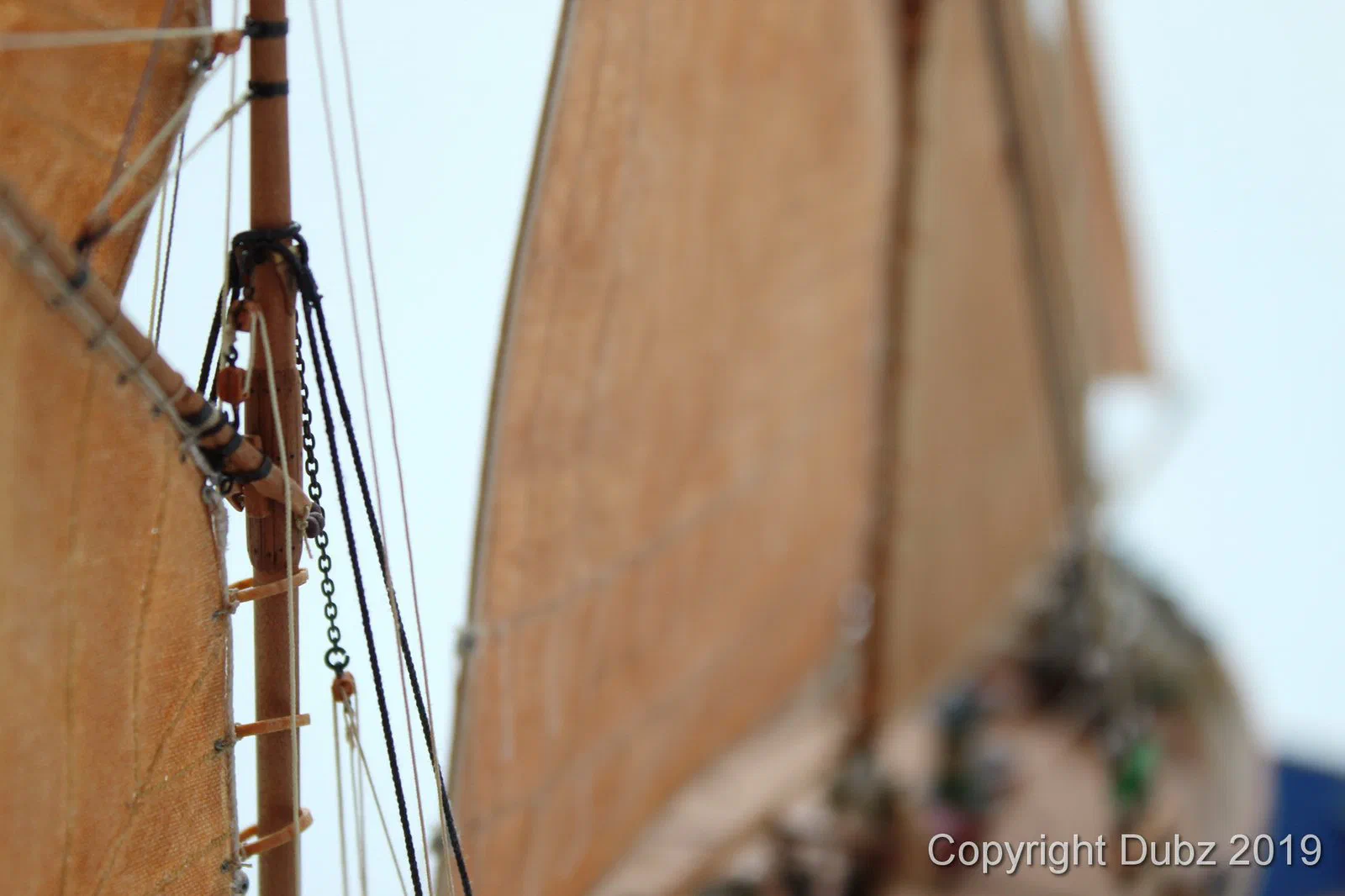
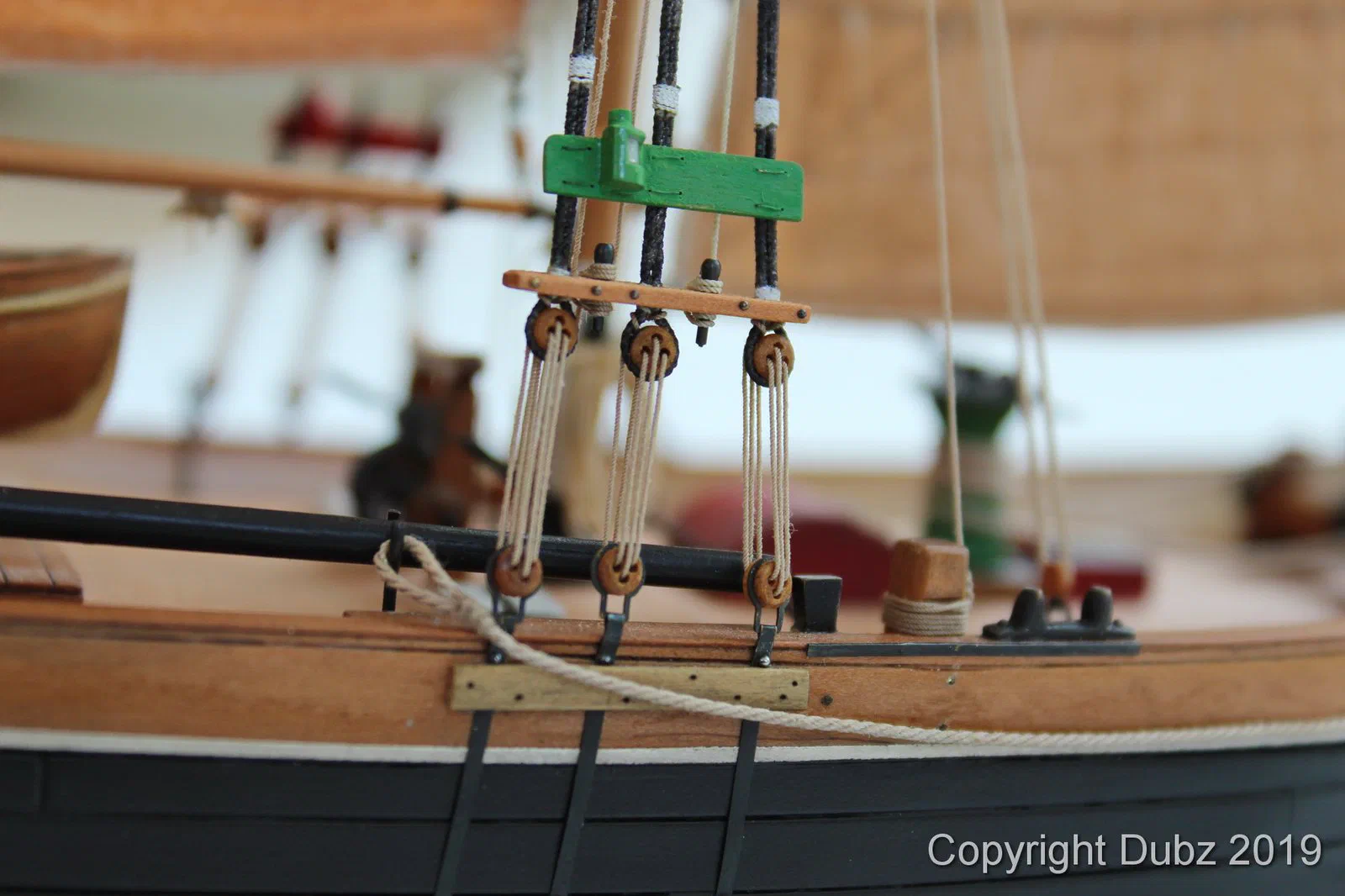
The last details were the position lights, fitted as on the original with wire around the shrouds – 0.2 mm holes and 0.1 mm wire –, a lifebelt, the anchor and its chain (drilling a 0.3 mm hole in a 0.4 mm anchor was a challenge), the name plates and a mast lamp, which I built twice because some colleagues were not happy with the first one.
The finished model
The Maria is finished – I call her 99 % done, as there is always something. In 2021 she took 1st place in the category “Civilian Sailing Boats” at the 4th Concurso Internacional Virtual de Modelismo Naval of the Sociedad Nacional de Modelismo Naval del Perú.
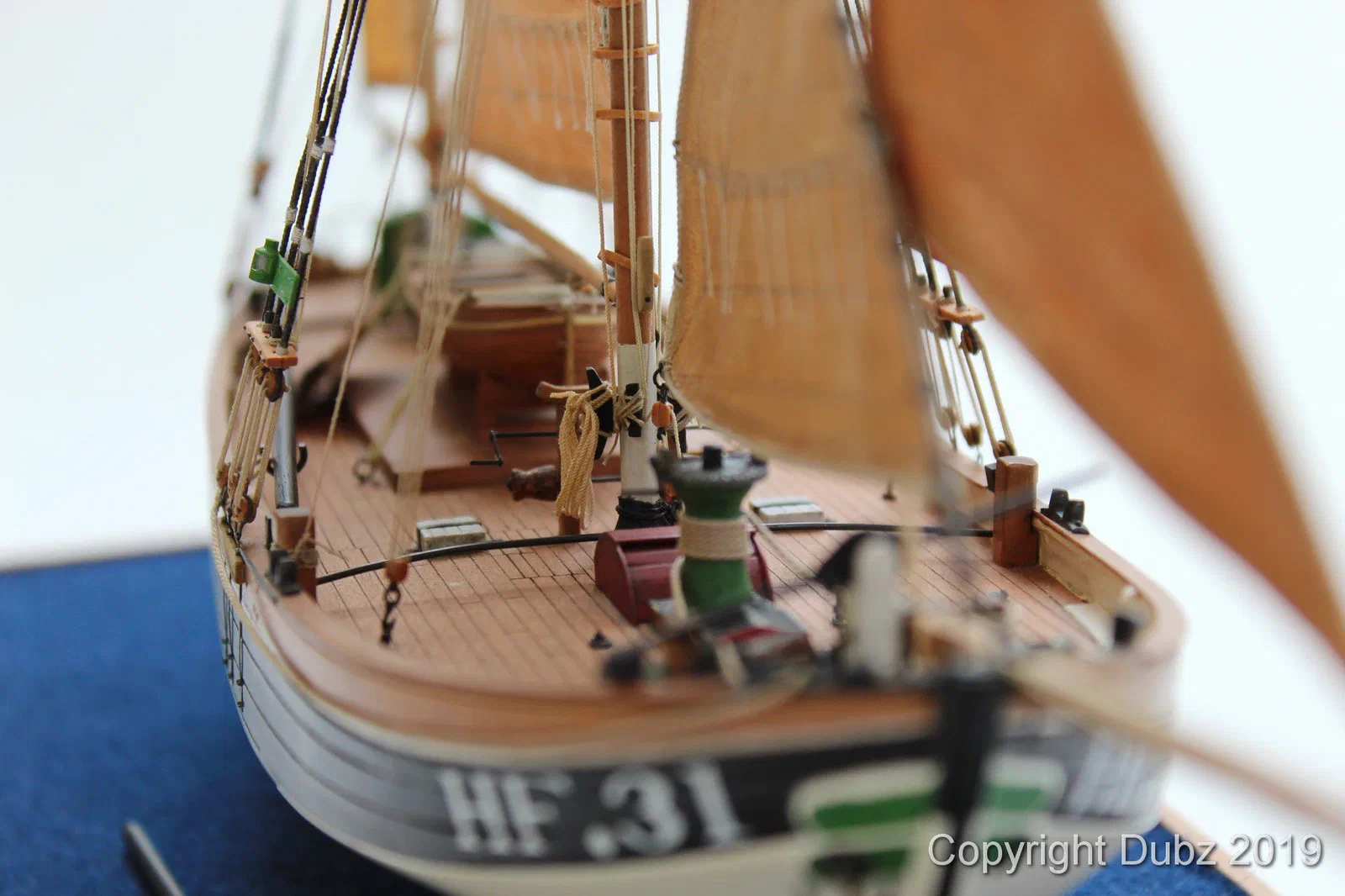
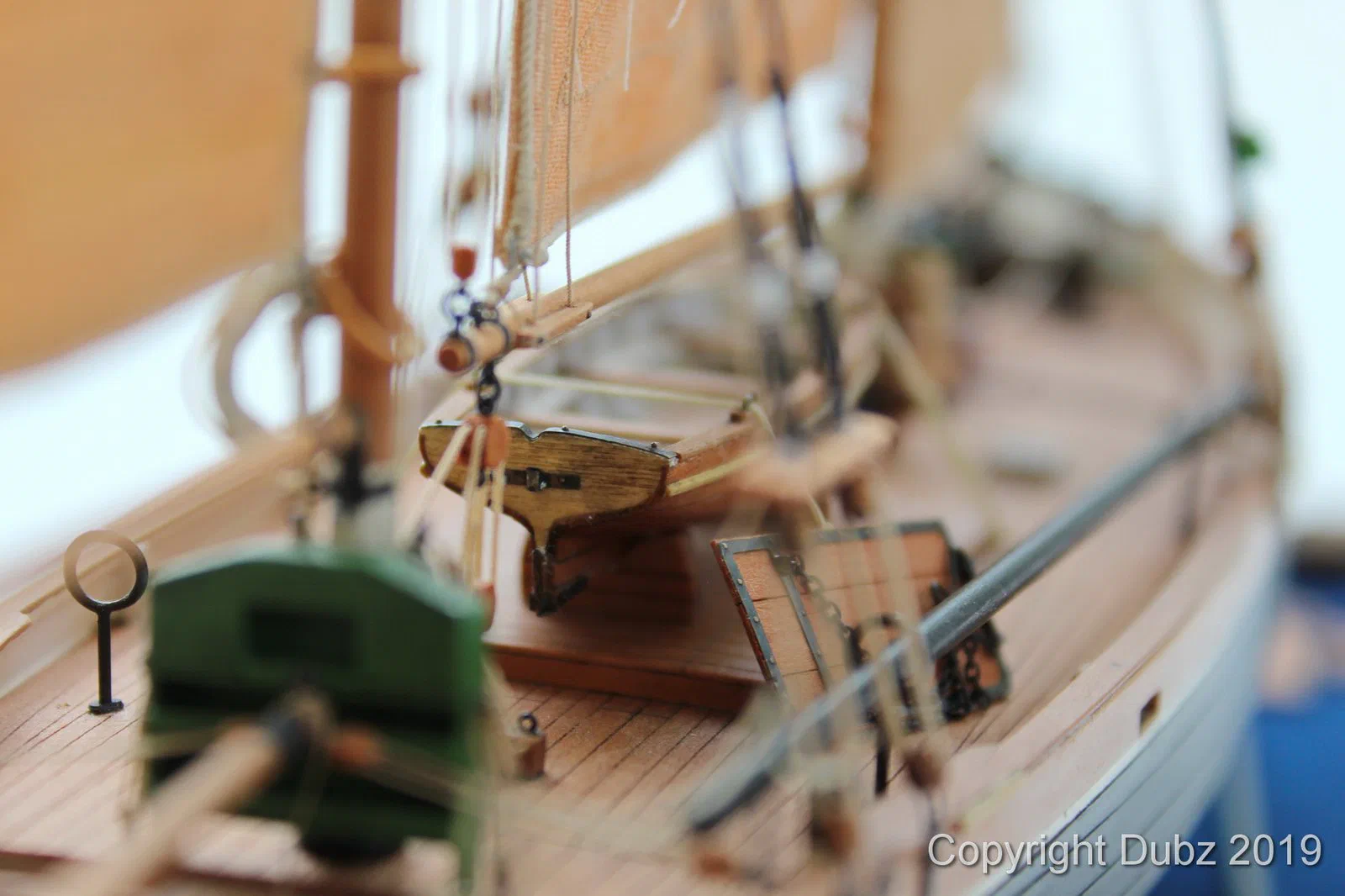
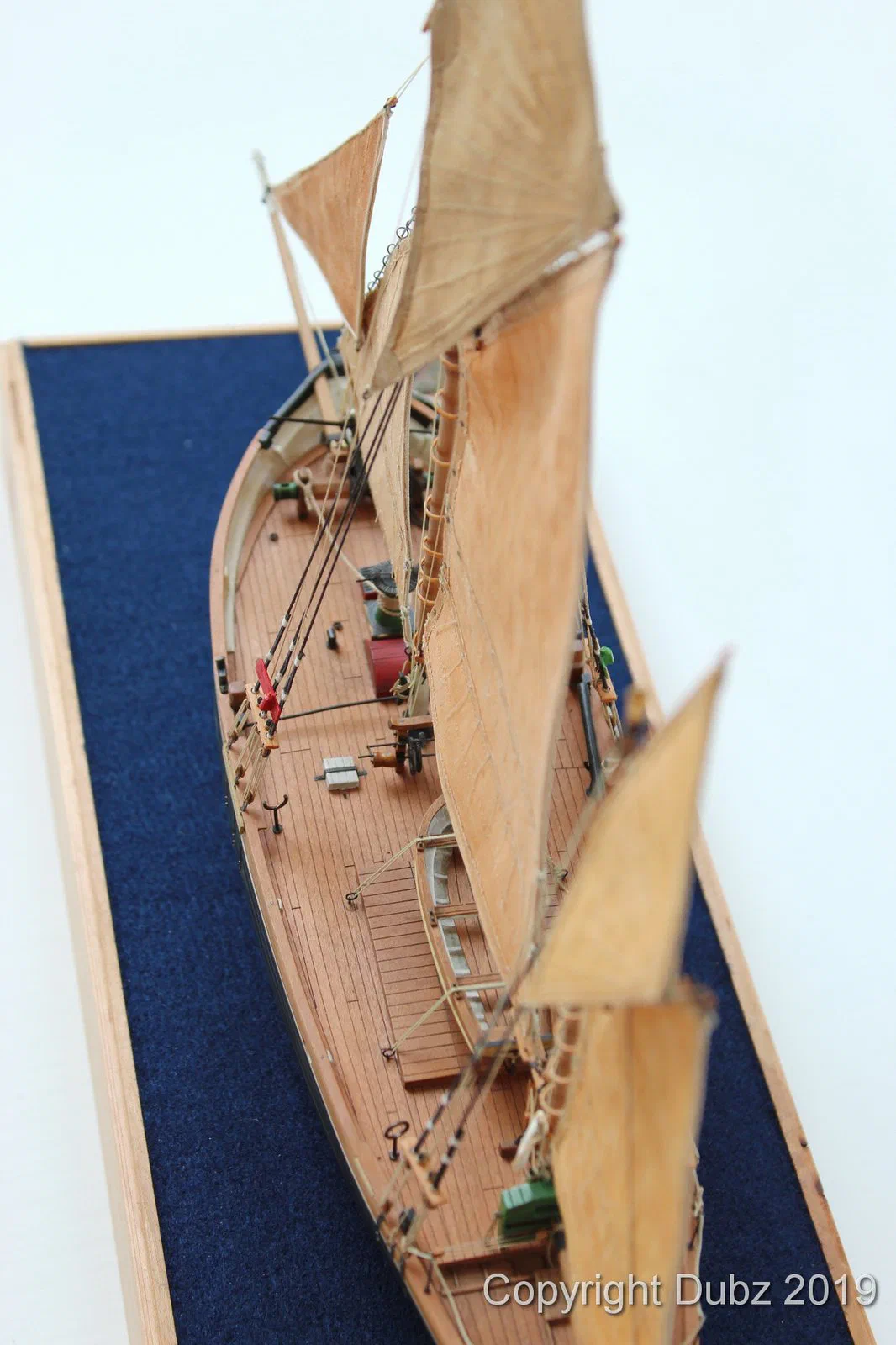
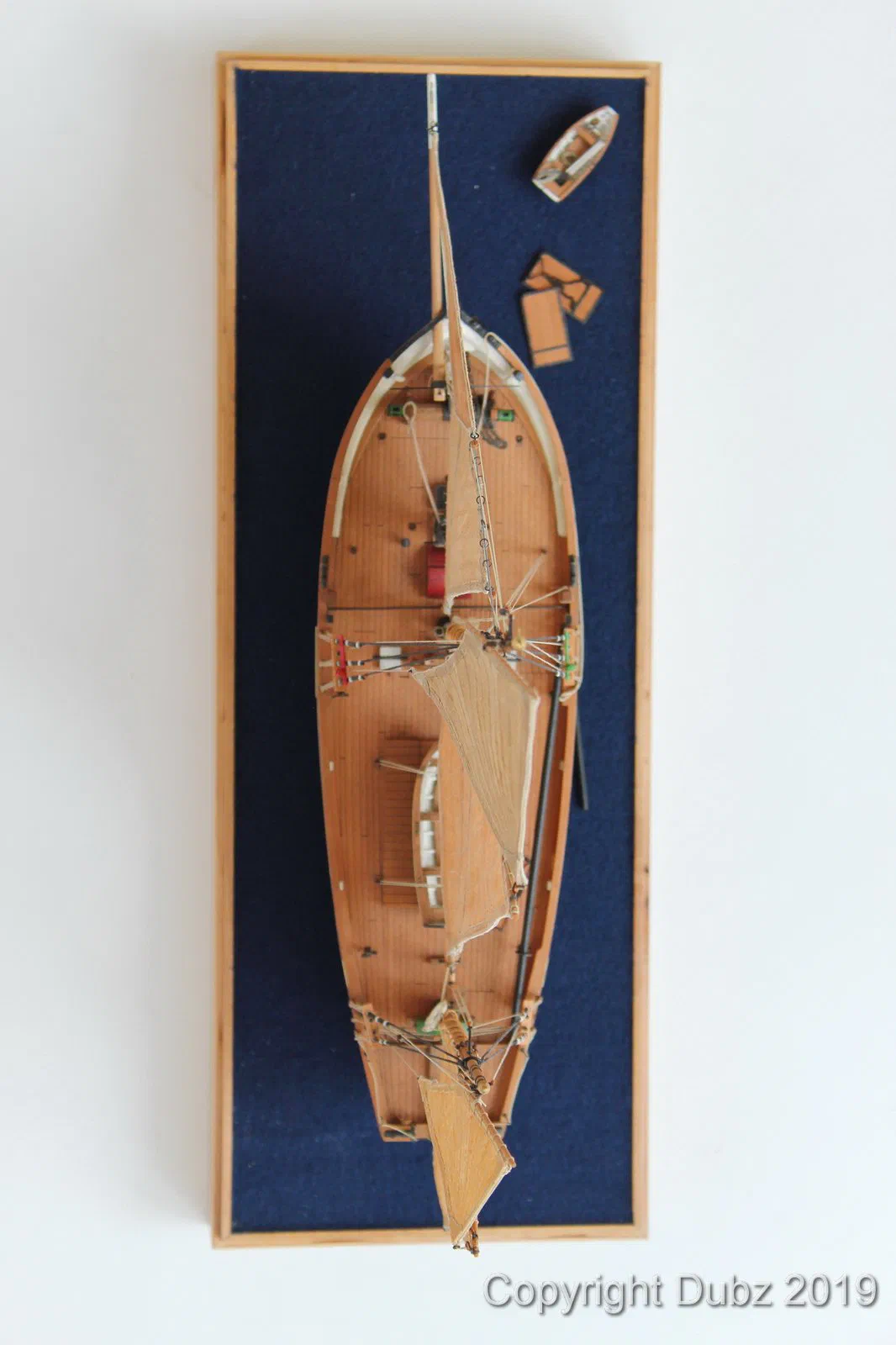
All build photos were taken with an iPhone and an Olloclip macro lens.