History
HMS Enterprise – historically often spelled Enterprize – was a 28-gun sixth-rate frigate of the Royal Navy and the name ship of a class of twenty-seven frigates designed in 1770 by John Williams. The Enterprise class was the last class of 28-gun sixth-rates built for the Royal Navy. She was ordered in January 1771, laid down at Deptford Royal Dockyard on 9 September 1771 and launched on 24 August 1774, measured about 593 tons and carried twenty-four 9-pounders on the gun deck and four 3-pounders on the quarterdeck.
Commissioned in April 1775 under Captain Sir Thomas Rich, she went straight into the typical work of a small frigate: patrolling and escorting convoys. From 1799 she served as a receiving ship at the Tower of London, and in 1807 she was taken to pieces at Deptford.
A small project
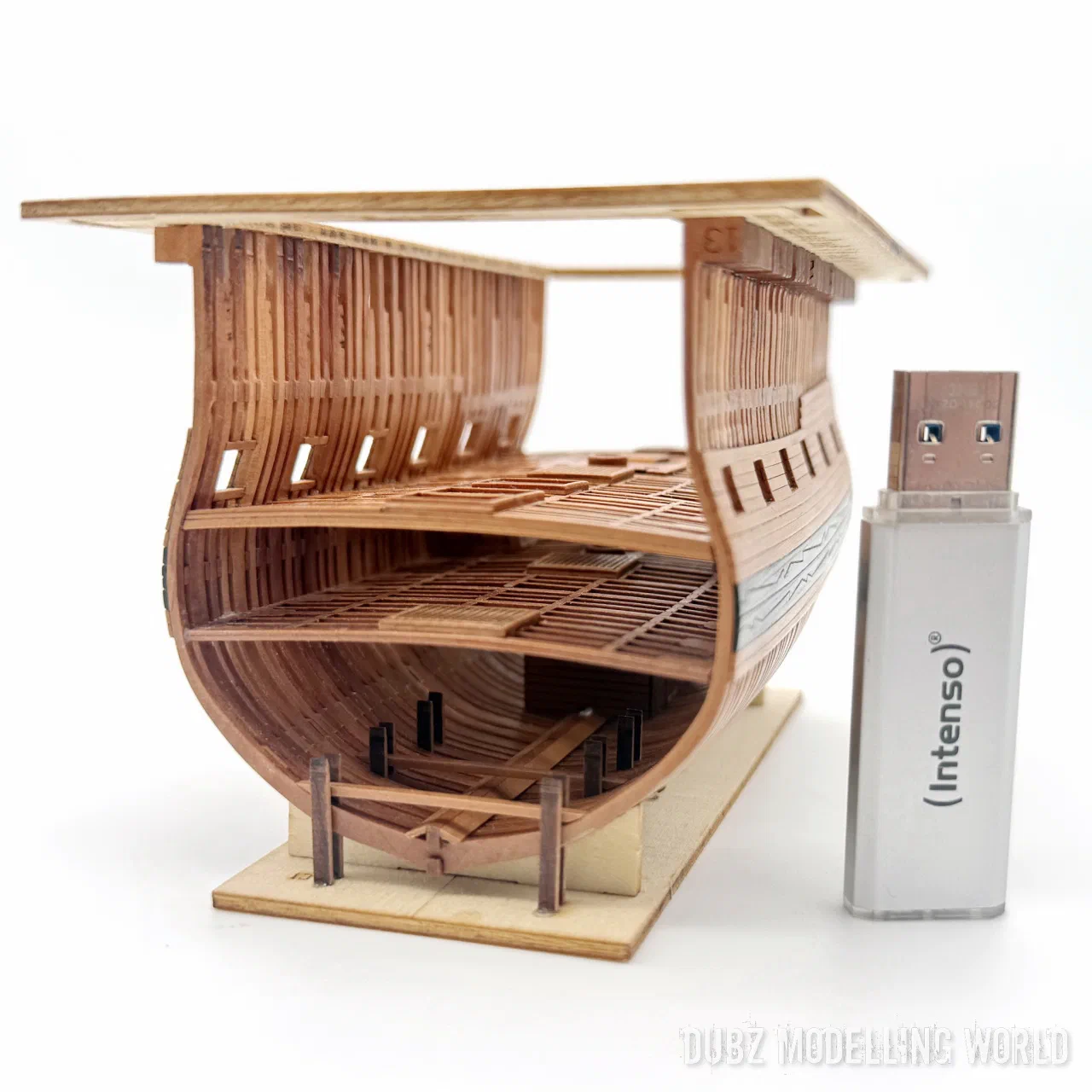
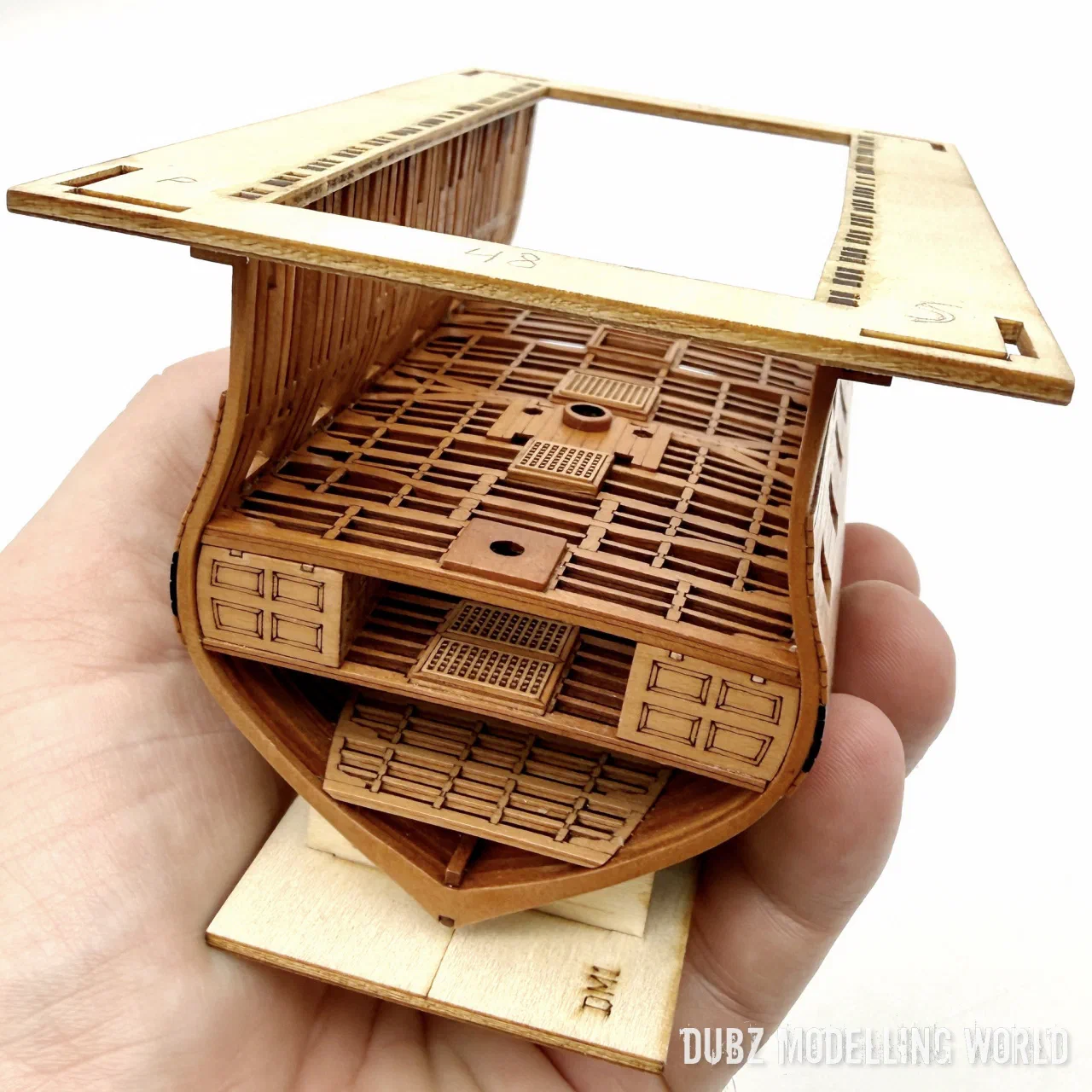
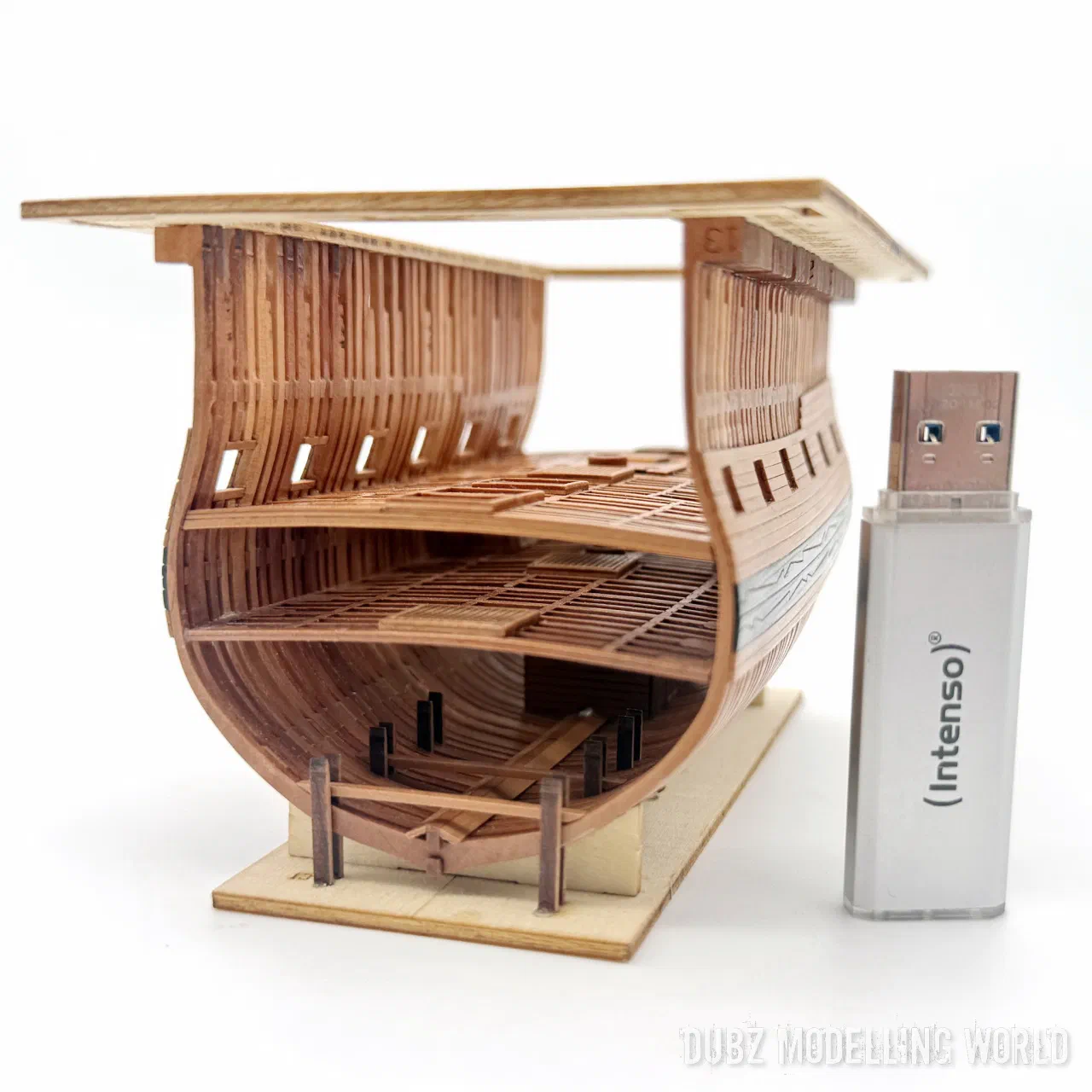
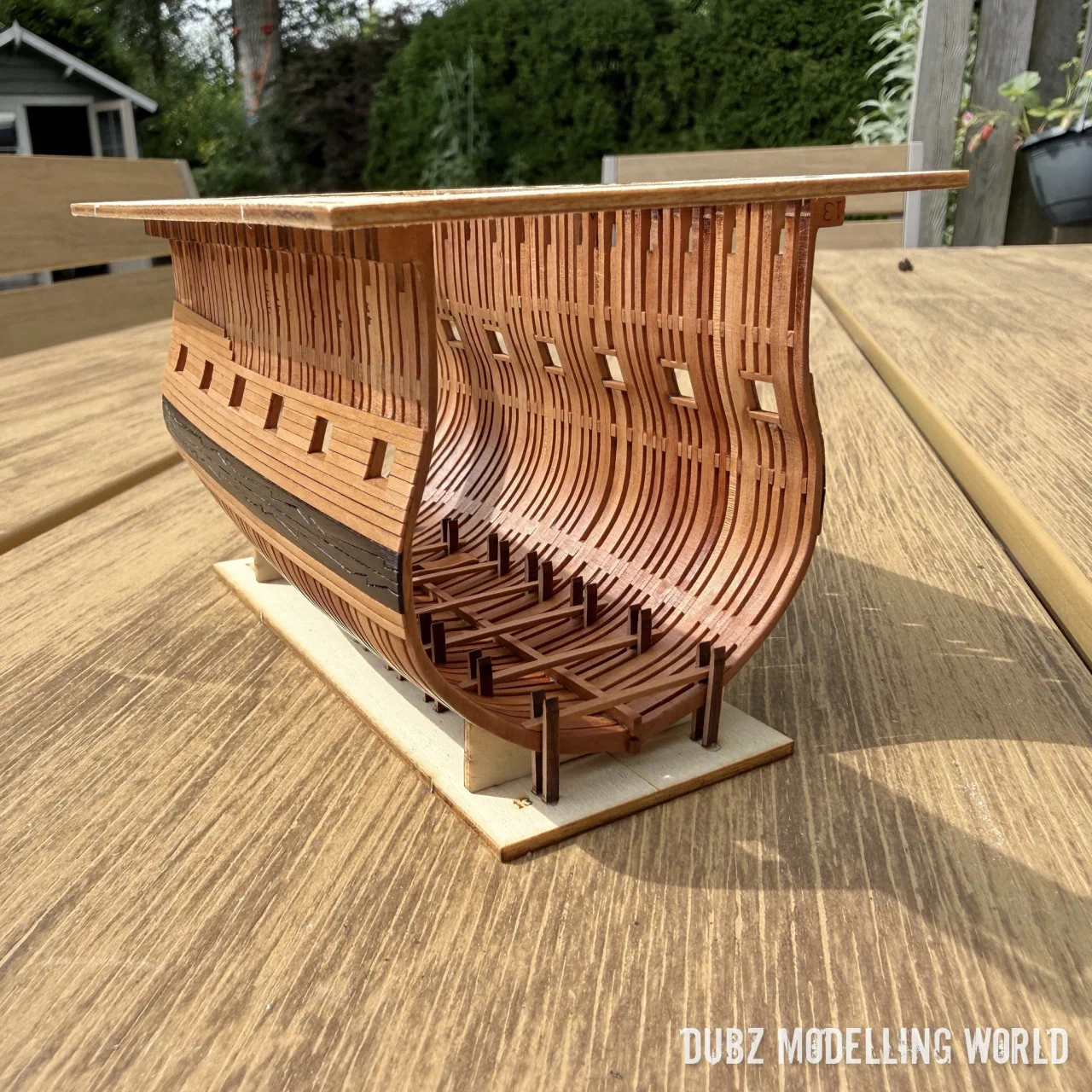
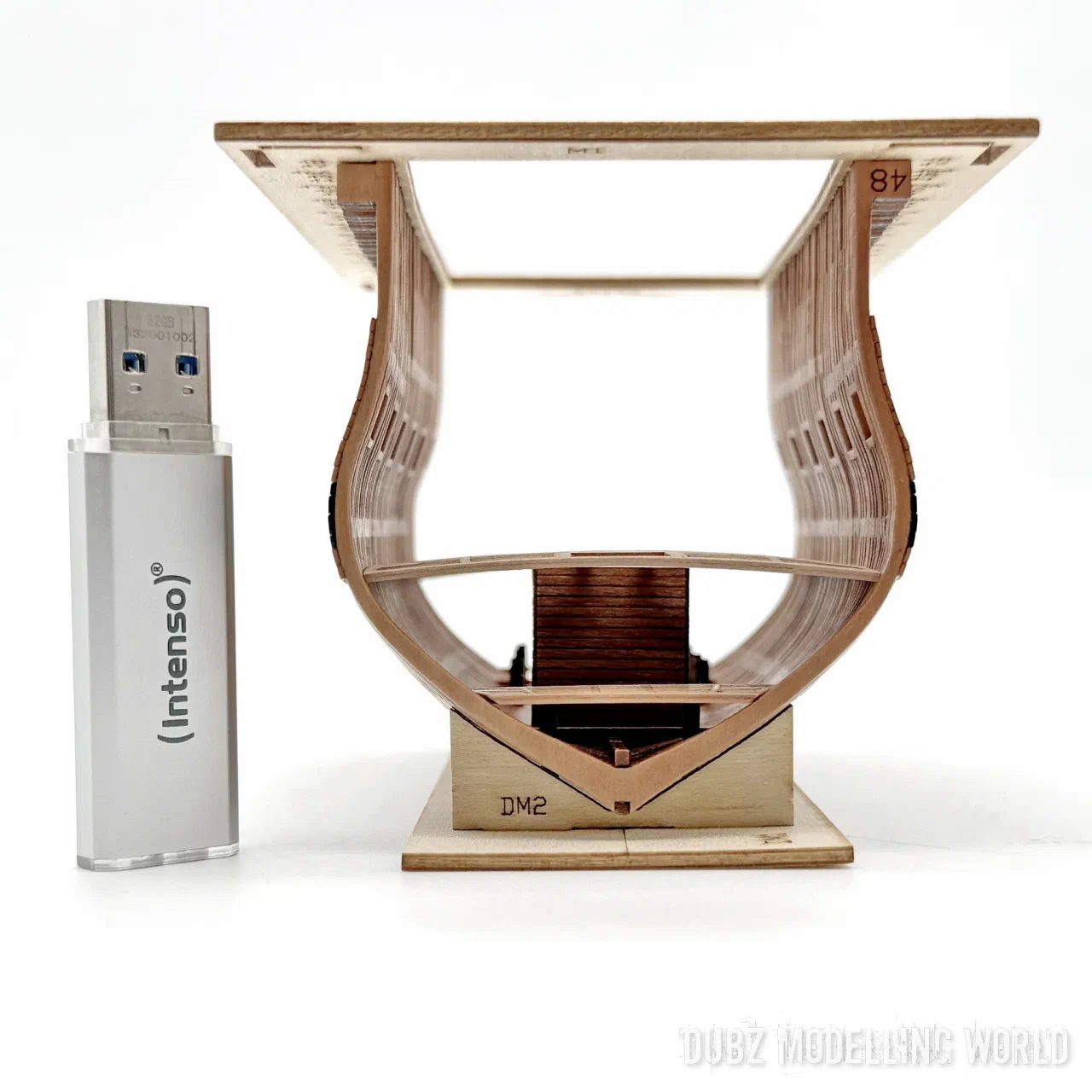
I took a break from the Axel Thorsen and started a new little project: the midship cross-section of HMS Enterprise in 1:160 from Unicorn Model, in pear. I like these small cross-sections, and Unicorn Model has made a very nice one, with many helpful jigs and details.
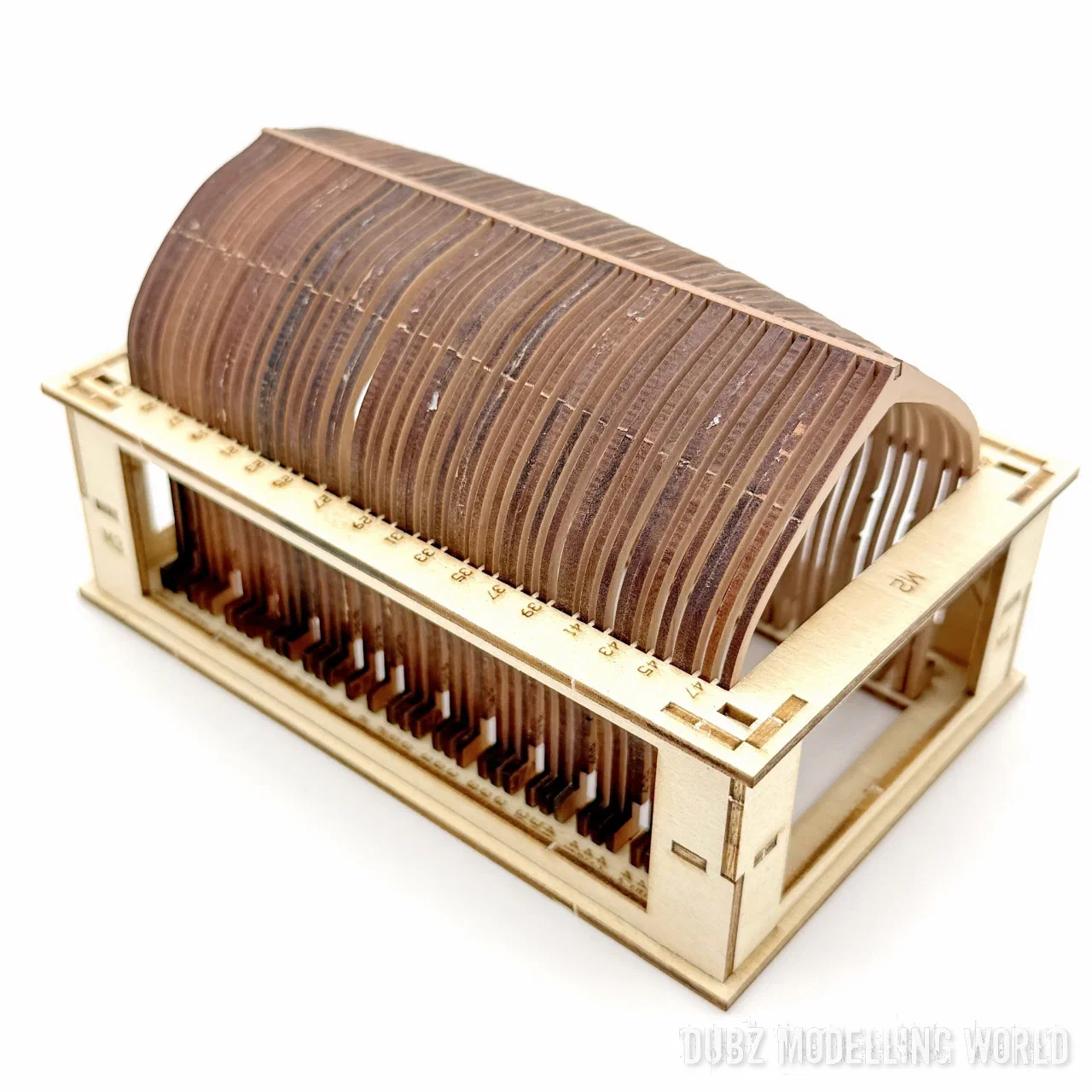
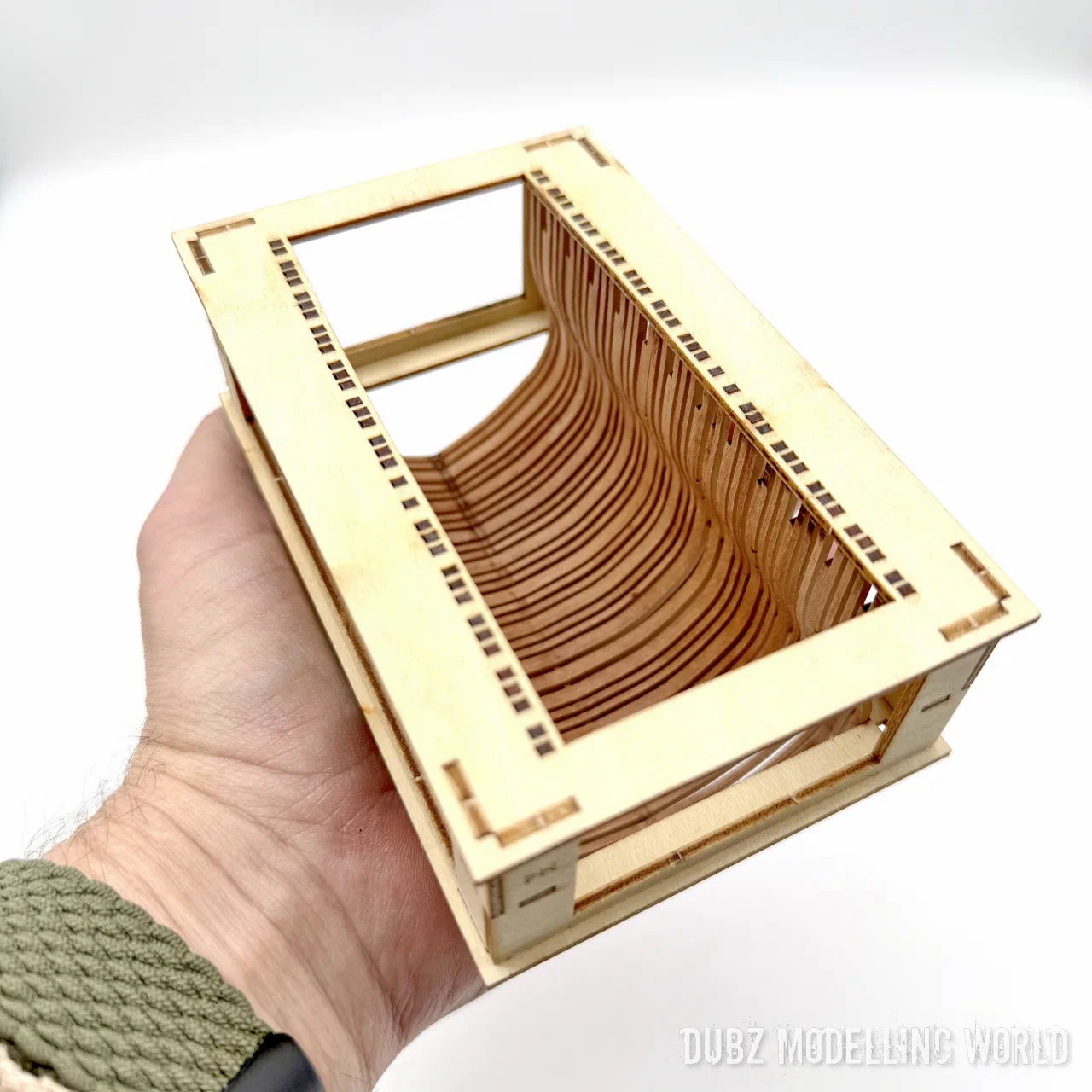
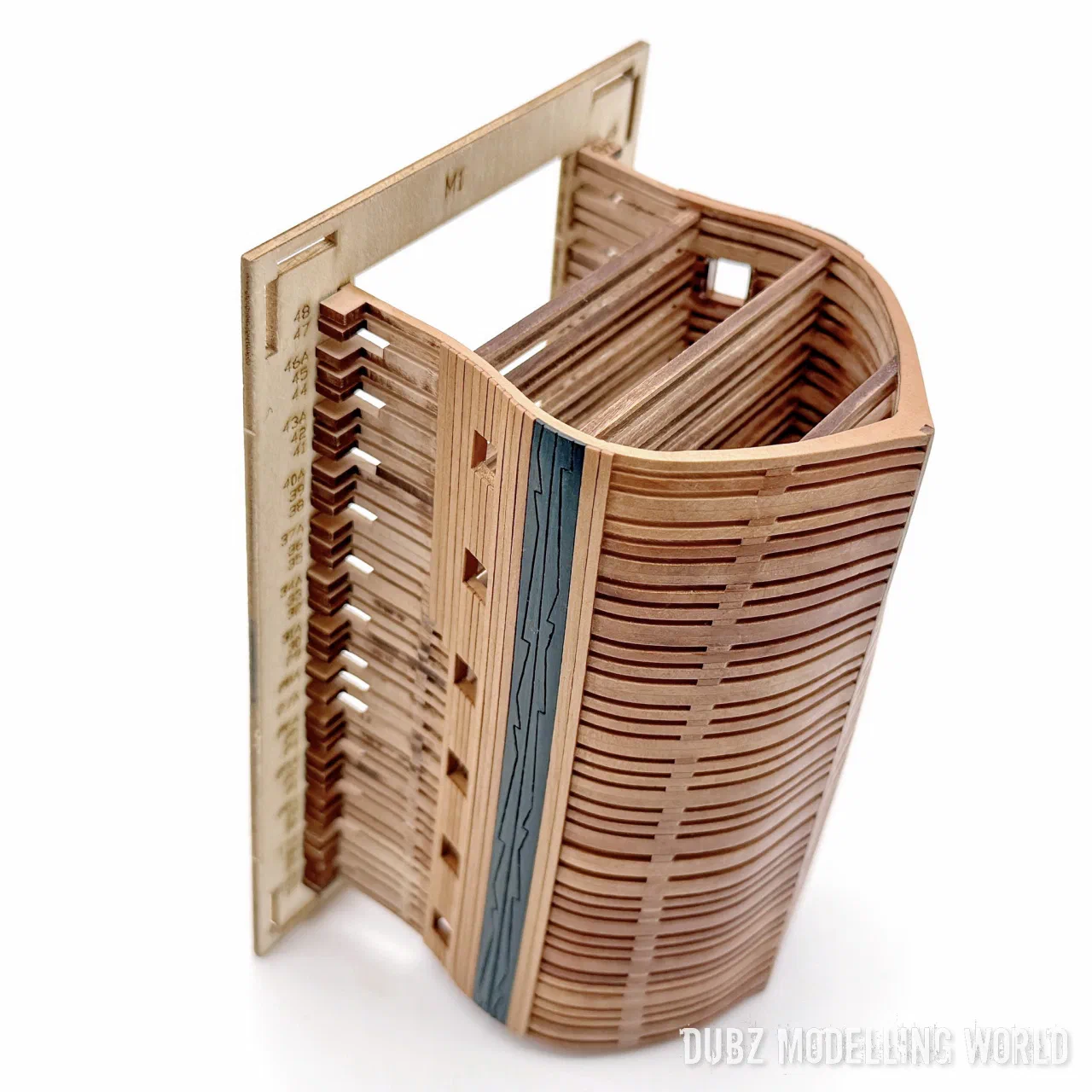
The double and single frames were done quickly and fit perfectly in the building berth. The frames have strong laser burn marks that are hard to remove and cost some material. My advice: remove them from the frames before assembly – I only did that on the inside and later regretted not doing the outside as well.
Spacers and wales
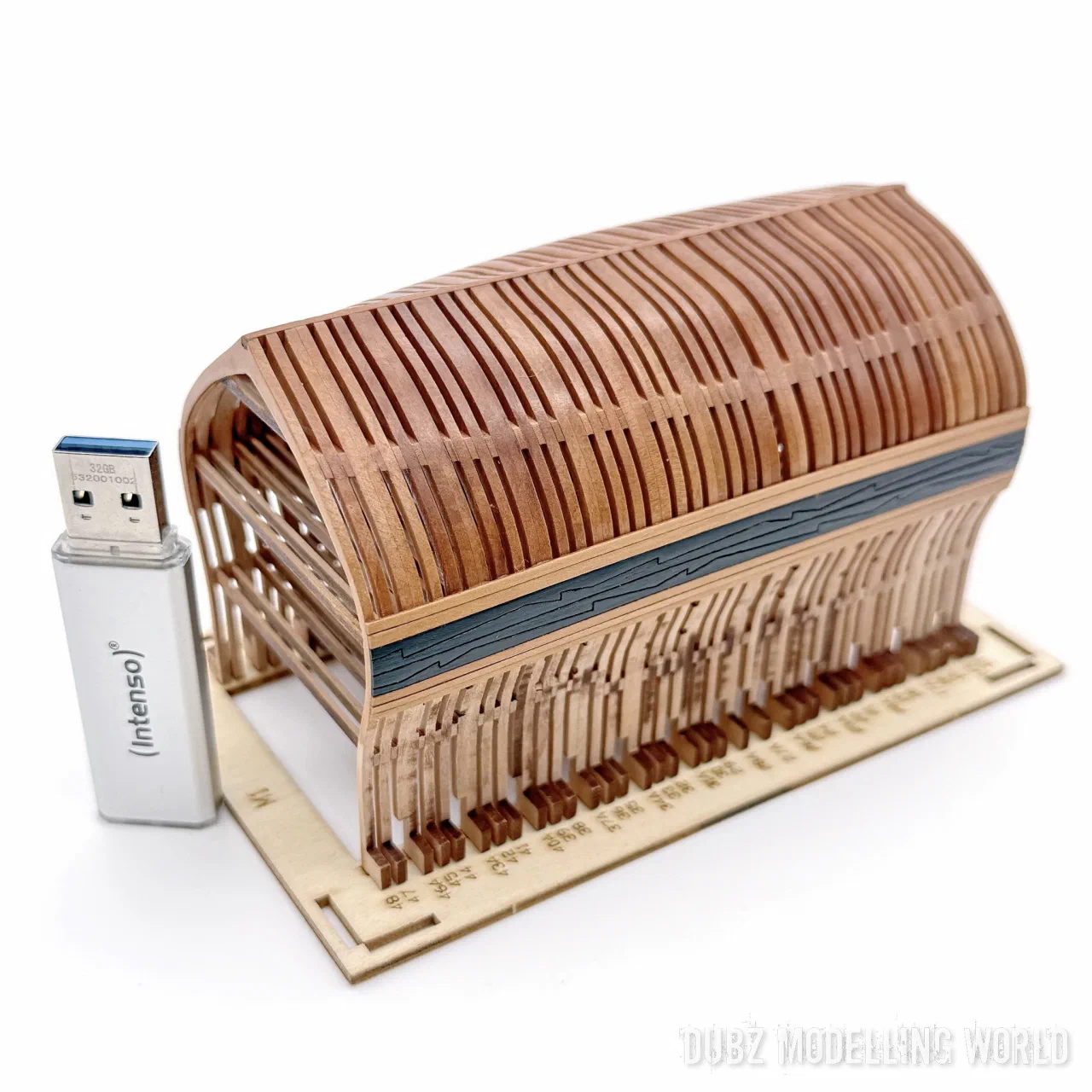
Next came the spacers between the frames, again with excellent jigs. I glued them with thin superglue so that it would run into the gaps. I was not entirely happy with that, because the wood cannot take oil properly where the glue is – but in the end it is hardly noticeable.
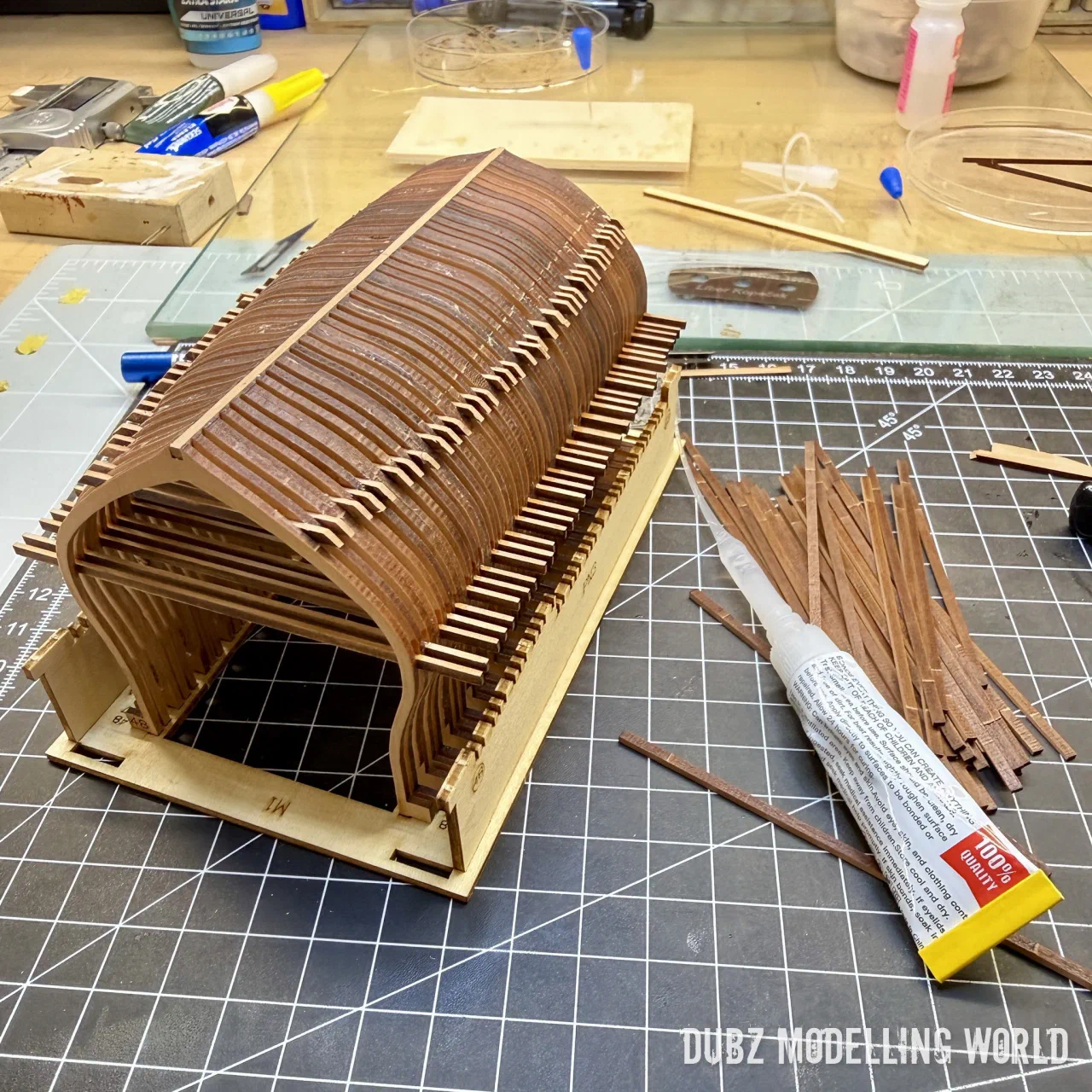
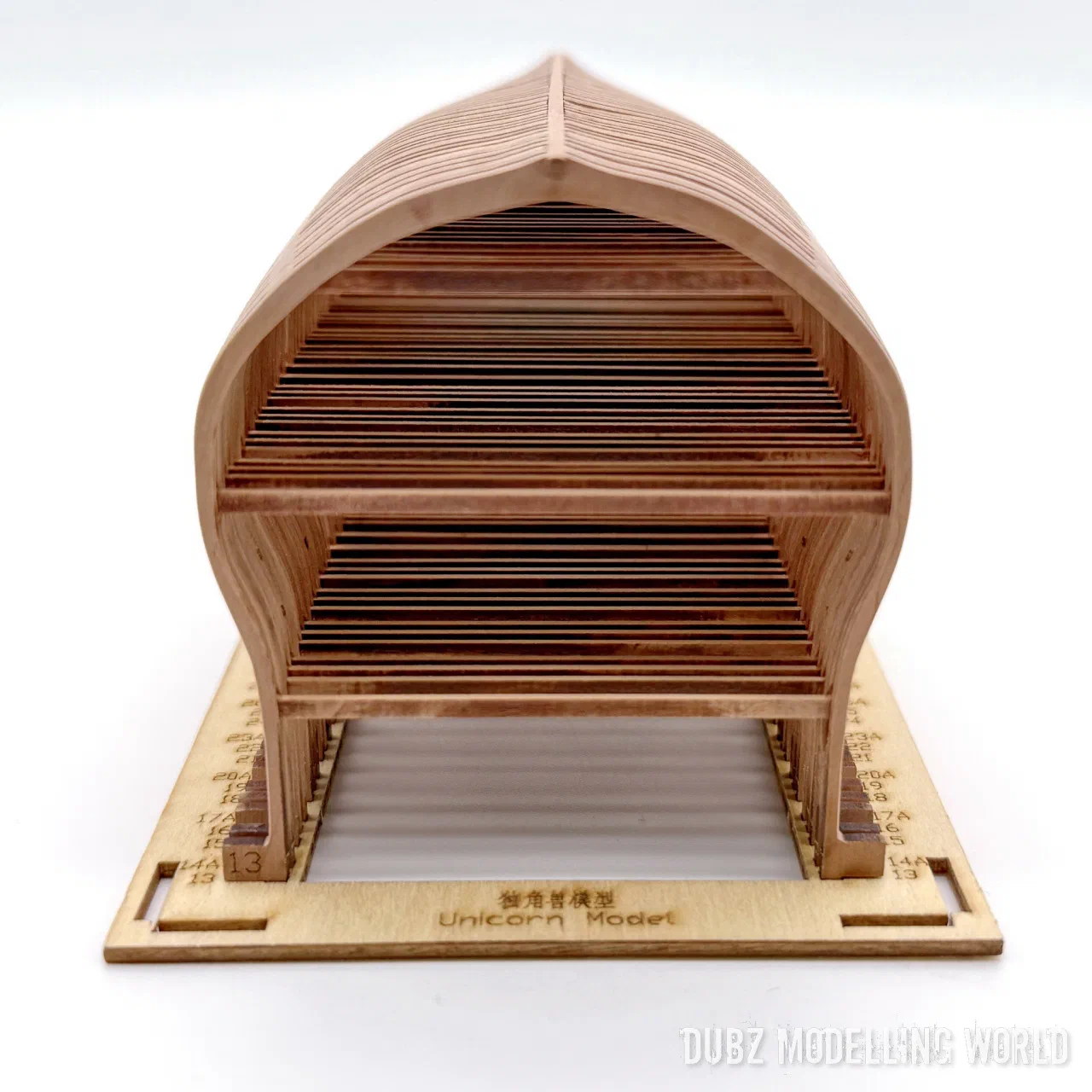
For the wales there is a jig for marking the exact position. Brilliant. Next time I would place the first plank of the wale directly against the jig instead of working with the marked line – on one side it ended up 0.3 mm higher, and at this scale 0.3 mm is a lot.
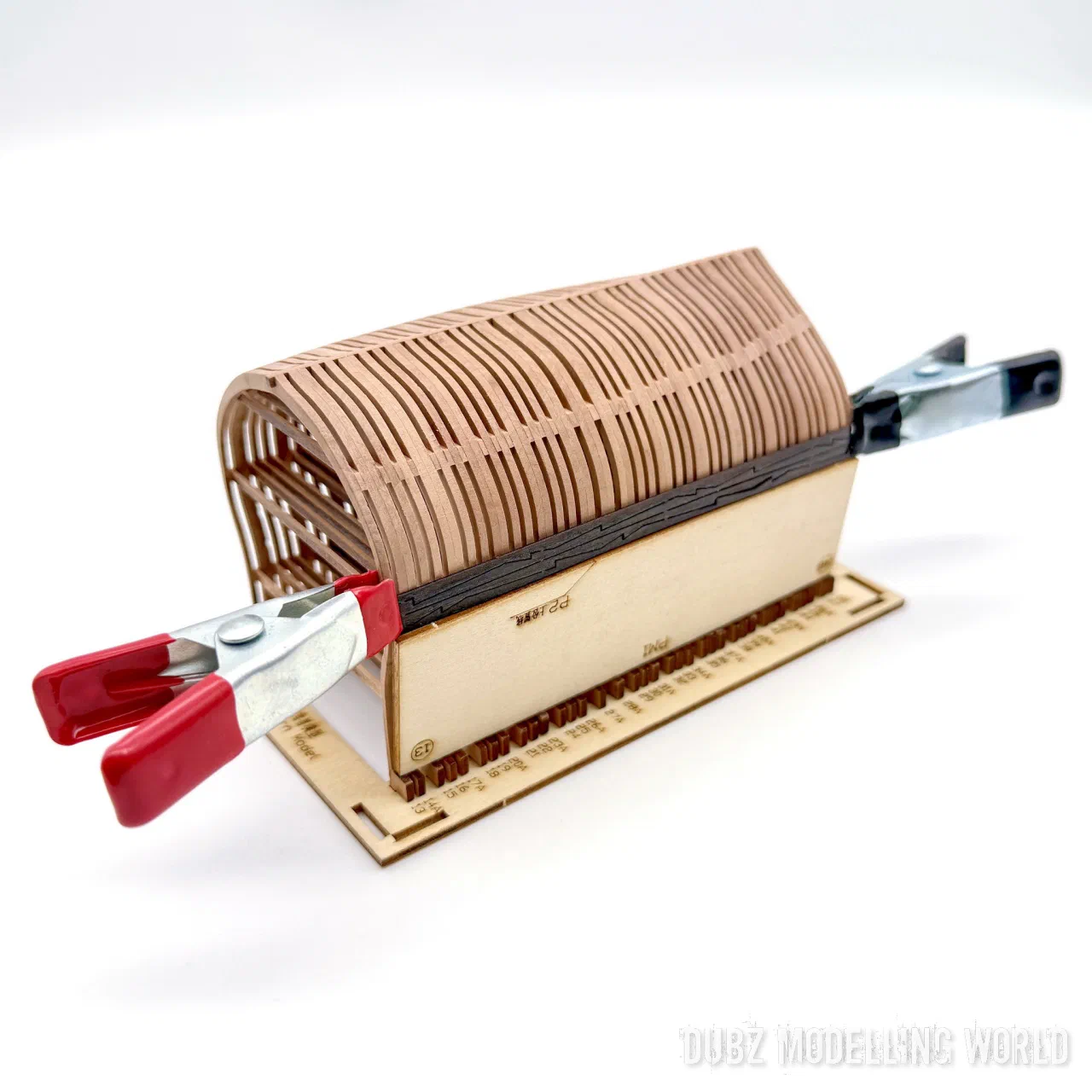
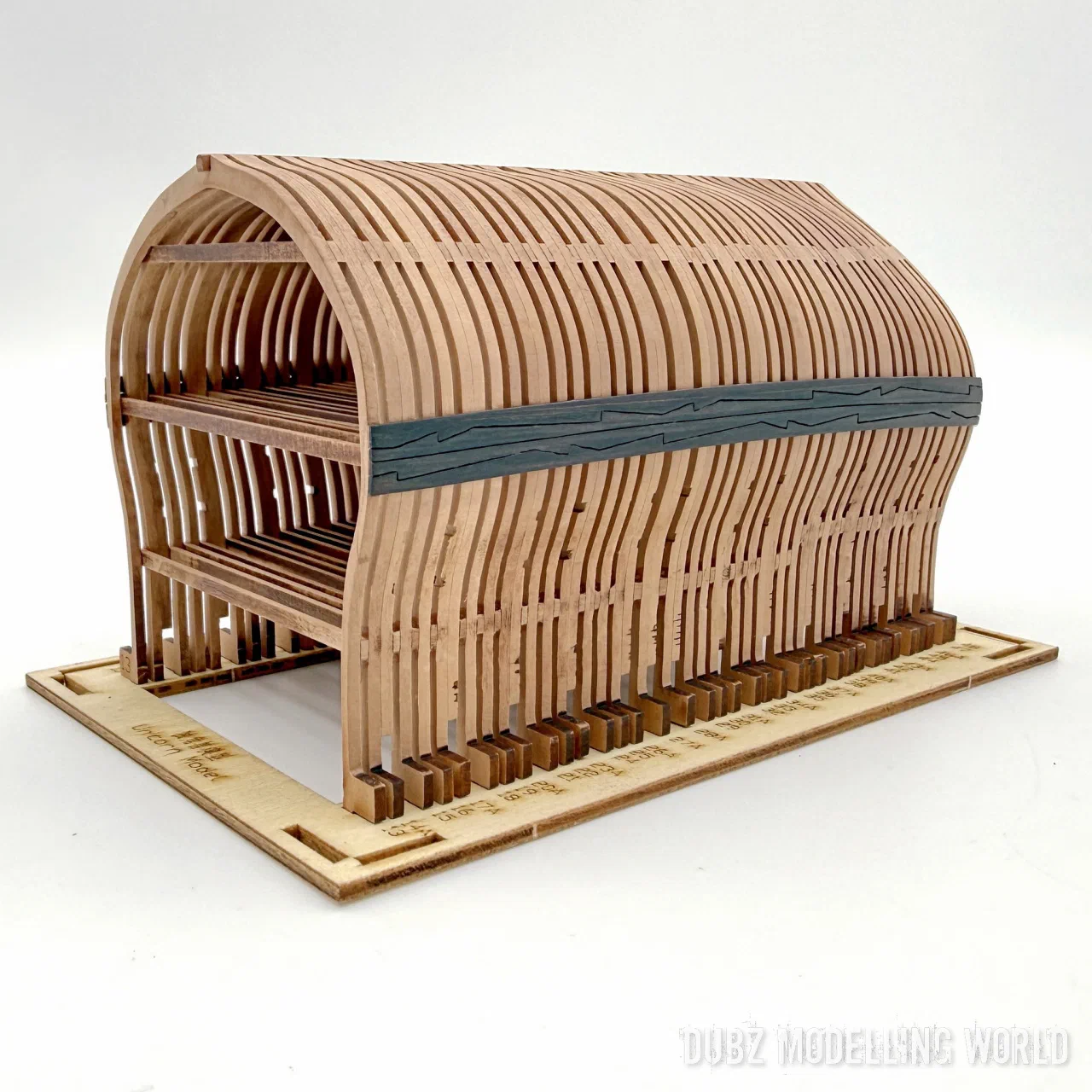
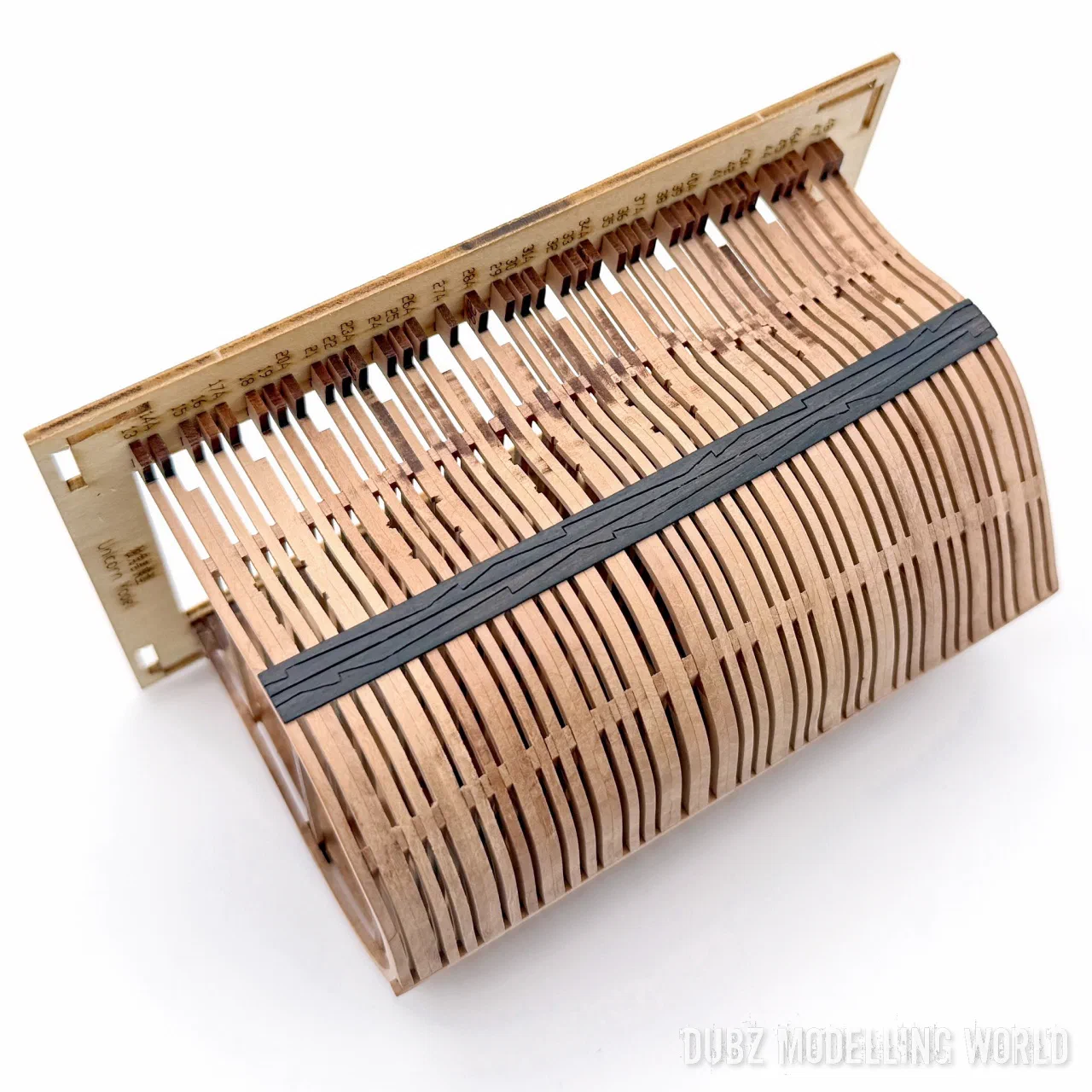
Then some planks were added and the frames got Danish oil. It darkens the wood a lot – I always like the surprise of how it looks afterwards.
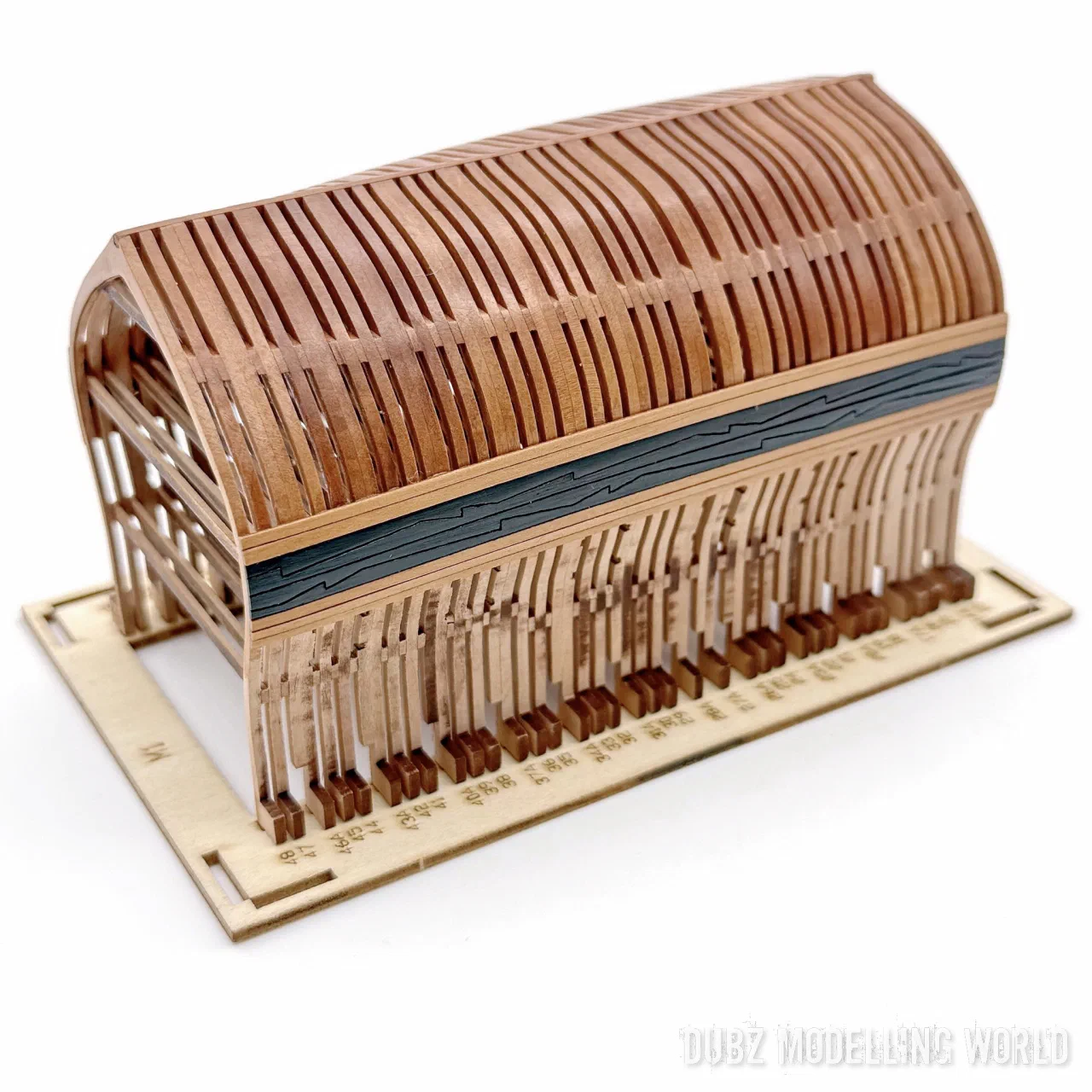
Gun ports
The gun port sills are not my favourite work. I tend to remove laser marks very thoroughly – here that made it harder to get the positions of the sills exactly right, and I would have liked a template for this step. Another template marks exactly where the planking is needed; I like these jigs very much.
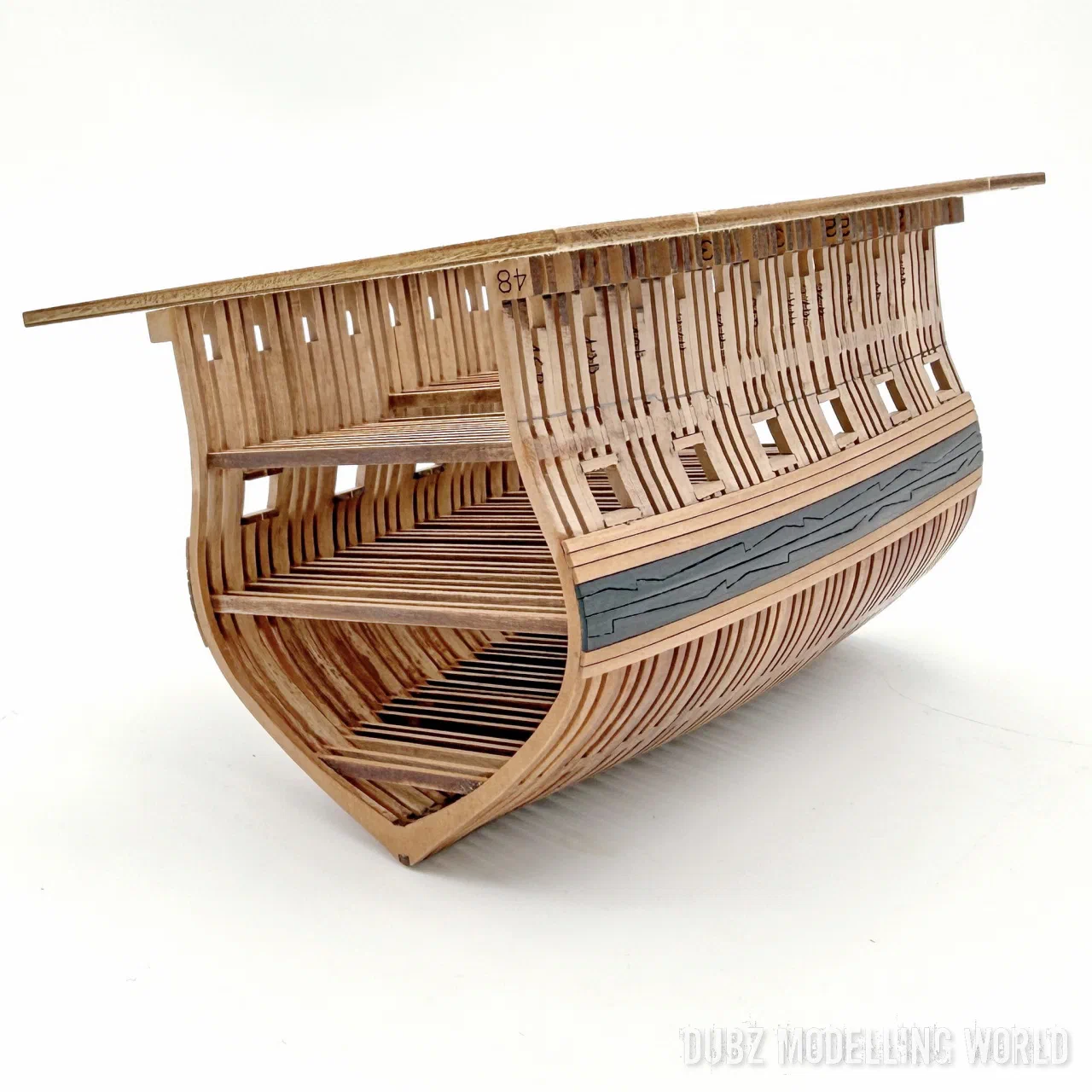
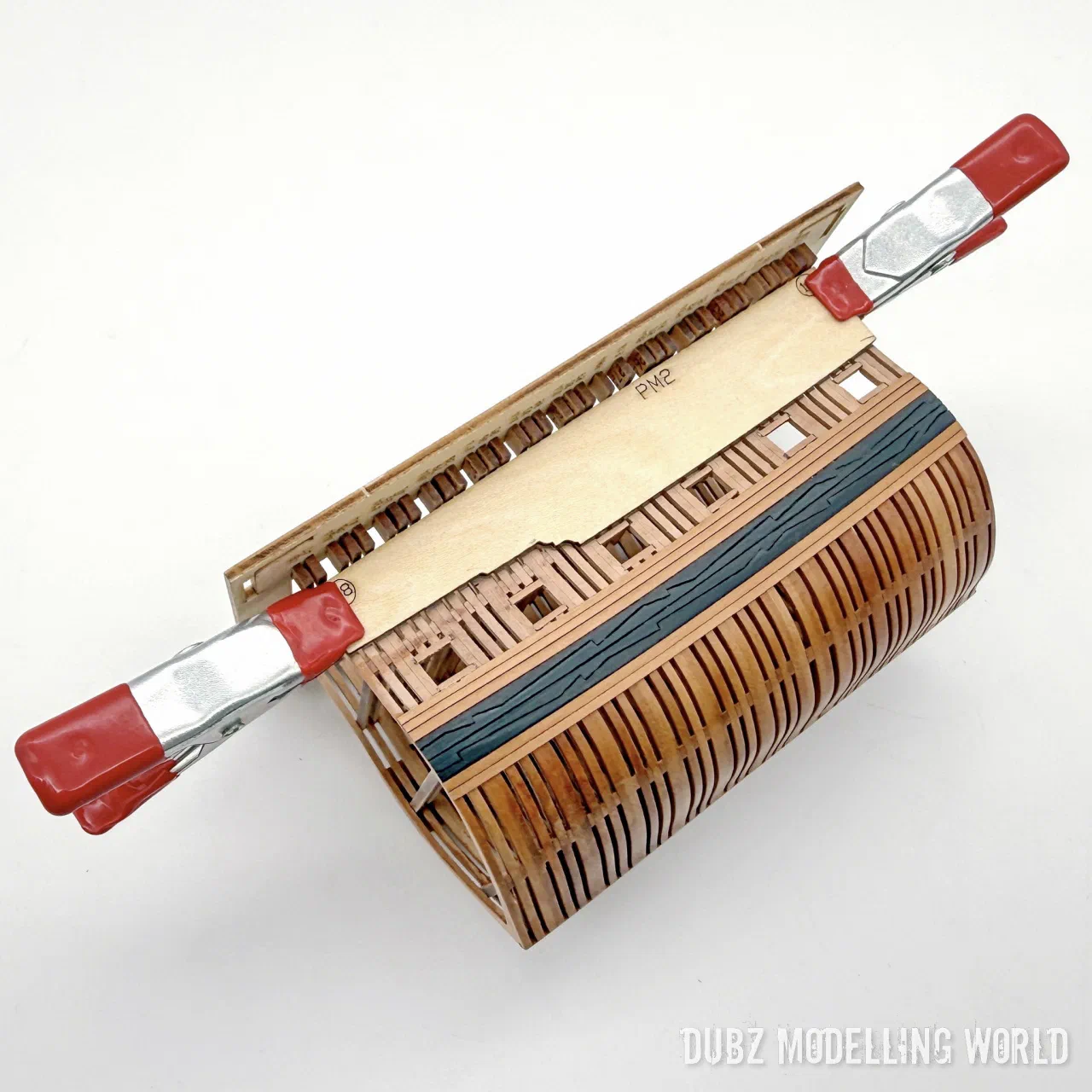
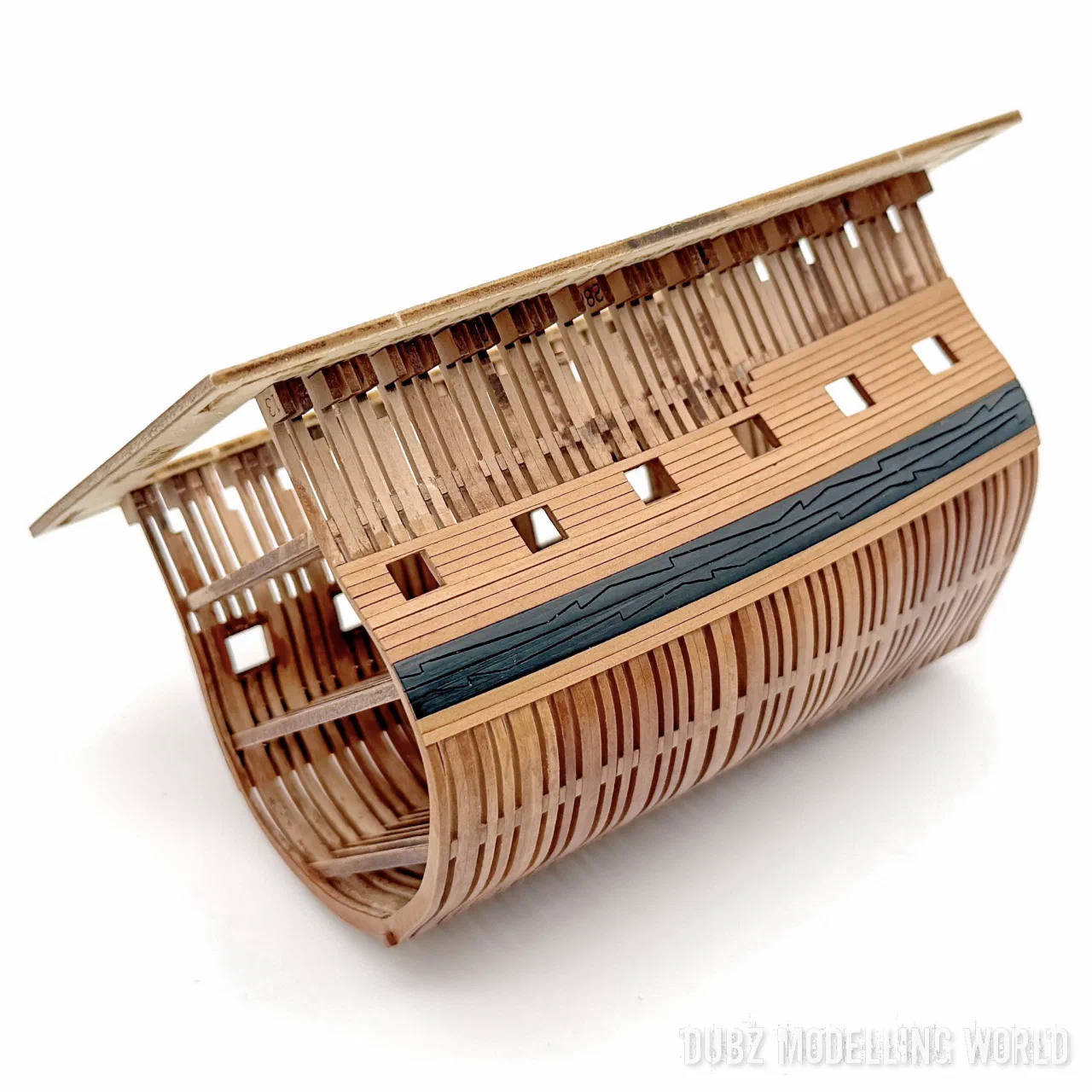
I had planned to leave one side partly open, but I was not happy with the quality of my sills, so both sides were closed. A tip: lay the planks in one piece, even across the gun ports, so that the overall curve stays clean and smooth.
The inside
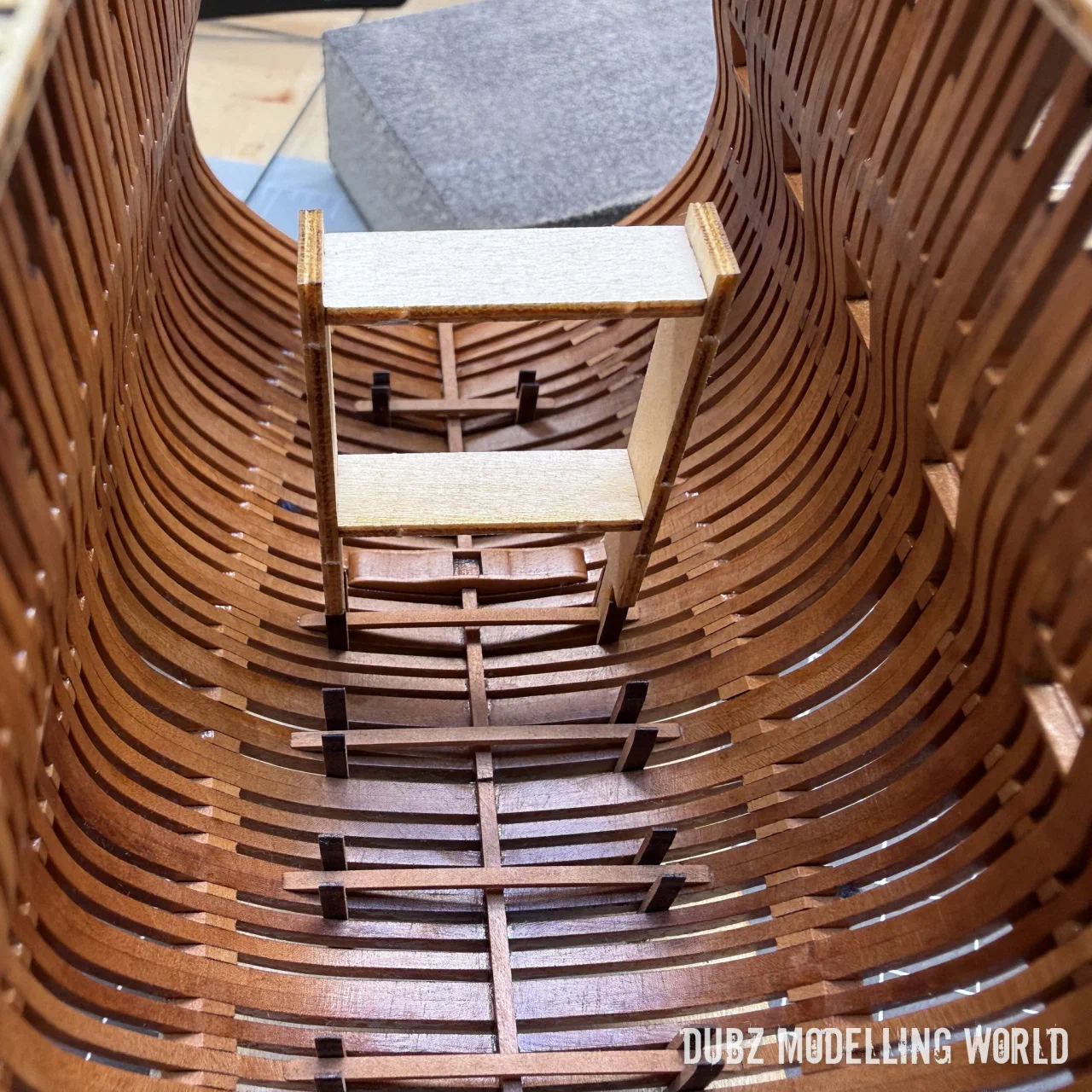
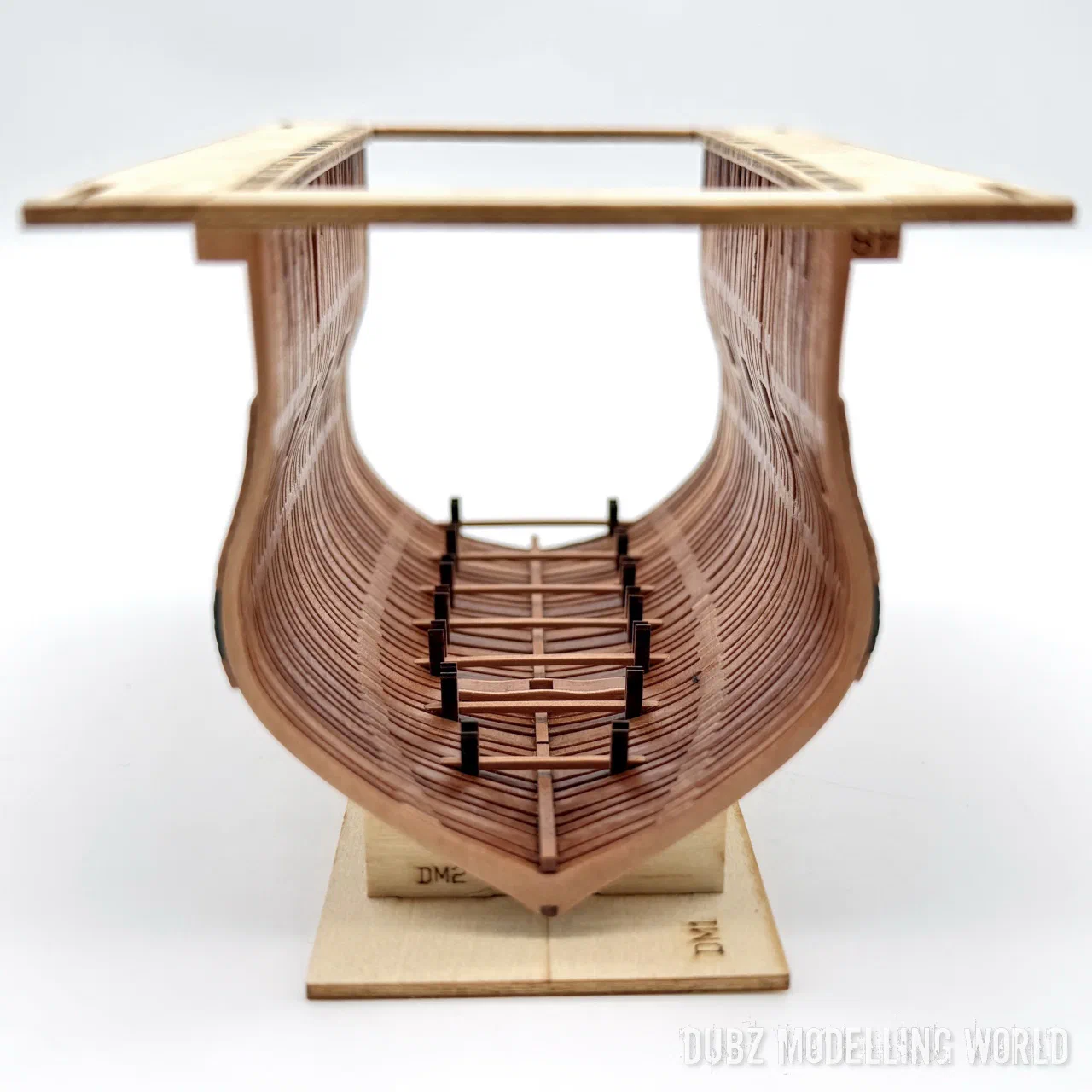
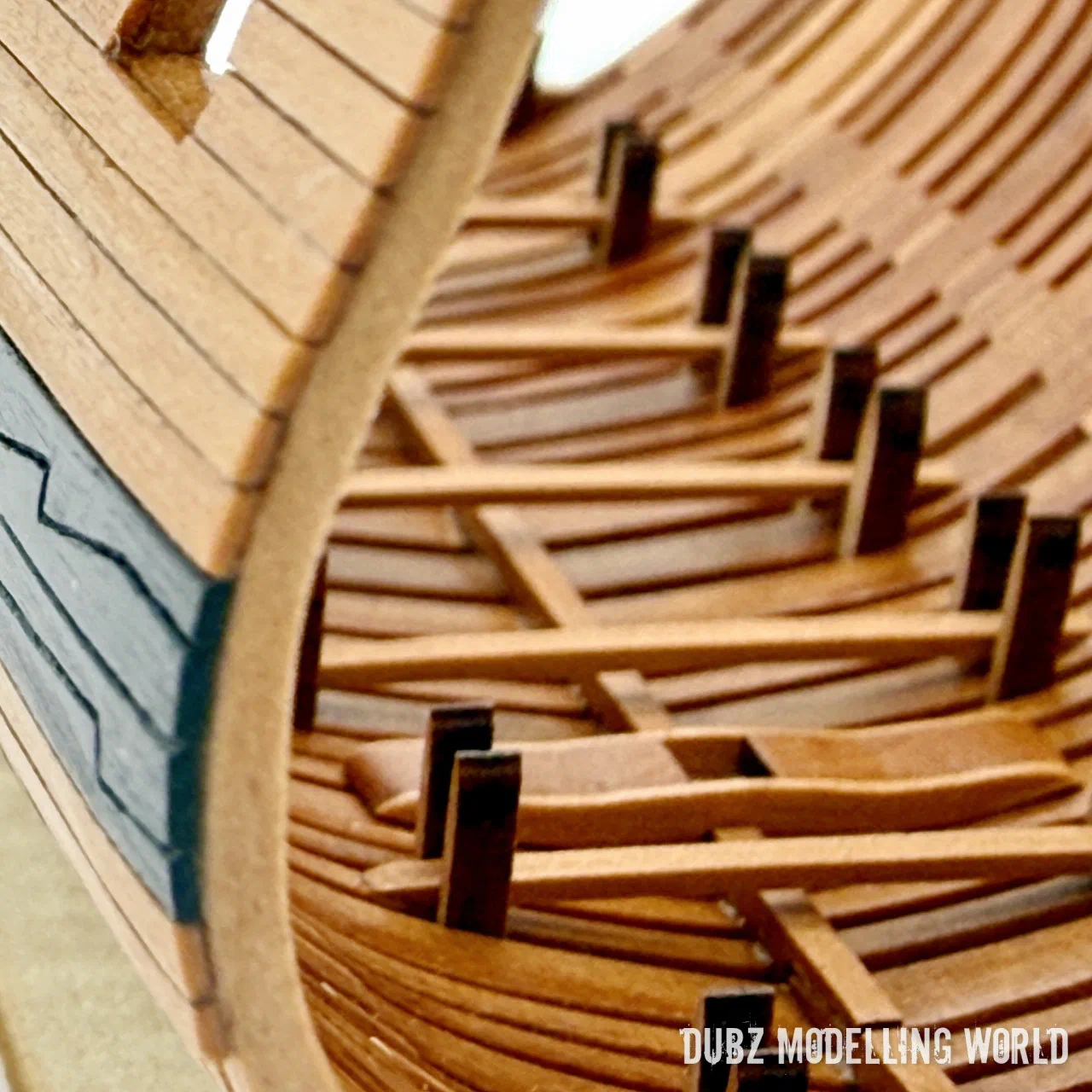
Once the gun ports were done, all spacers were removed and the inner hull was sanded clean. Removing the laser char from the inner frames right at the start proved to be absolutely right – I can only recommend it, especially for the pear version.
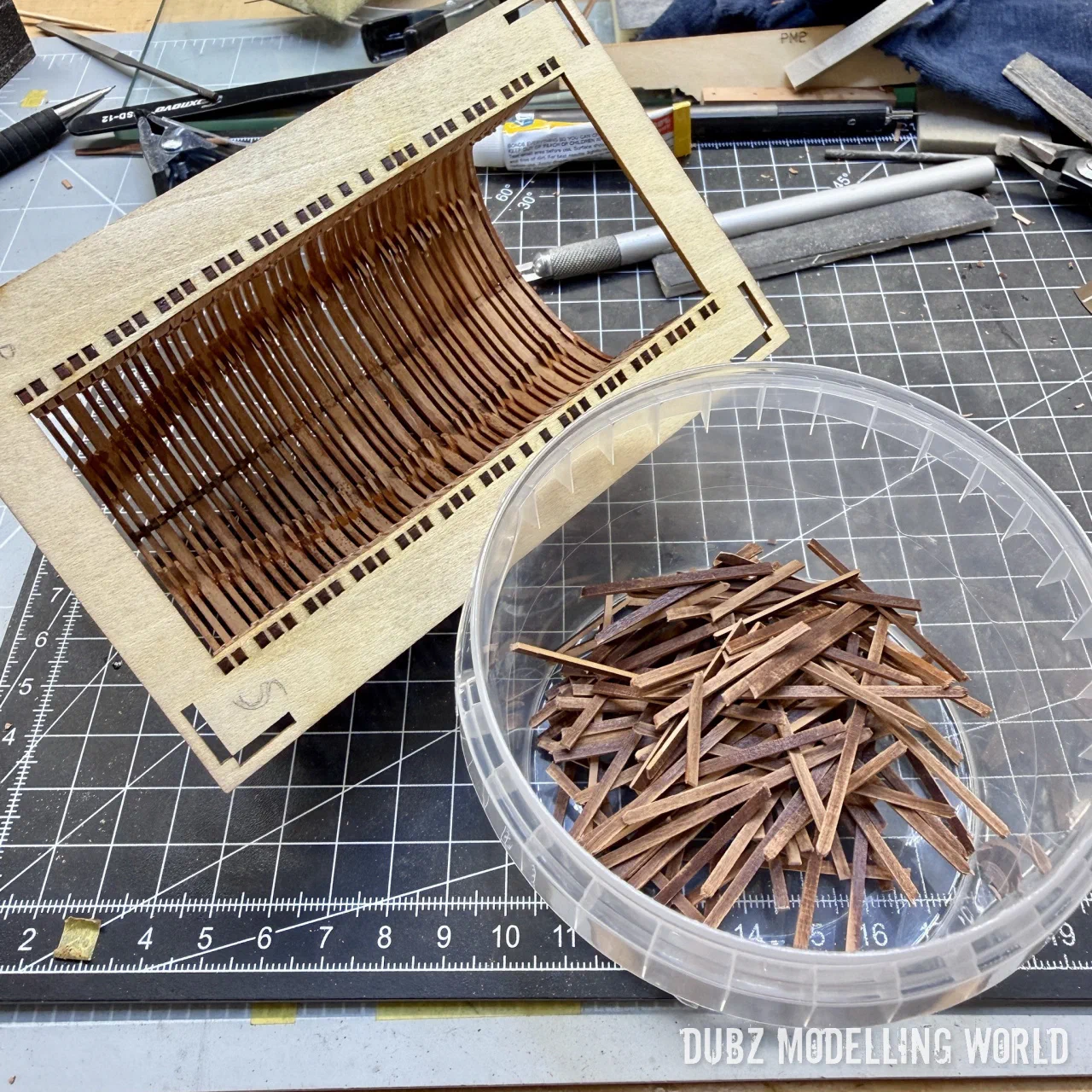
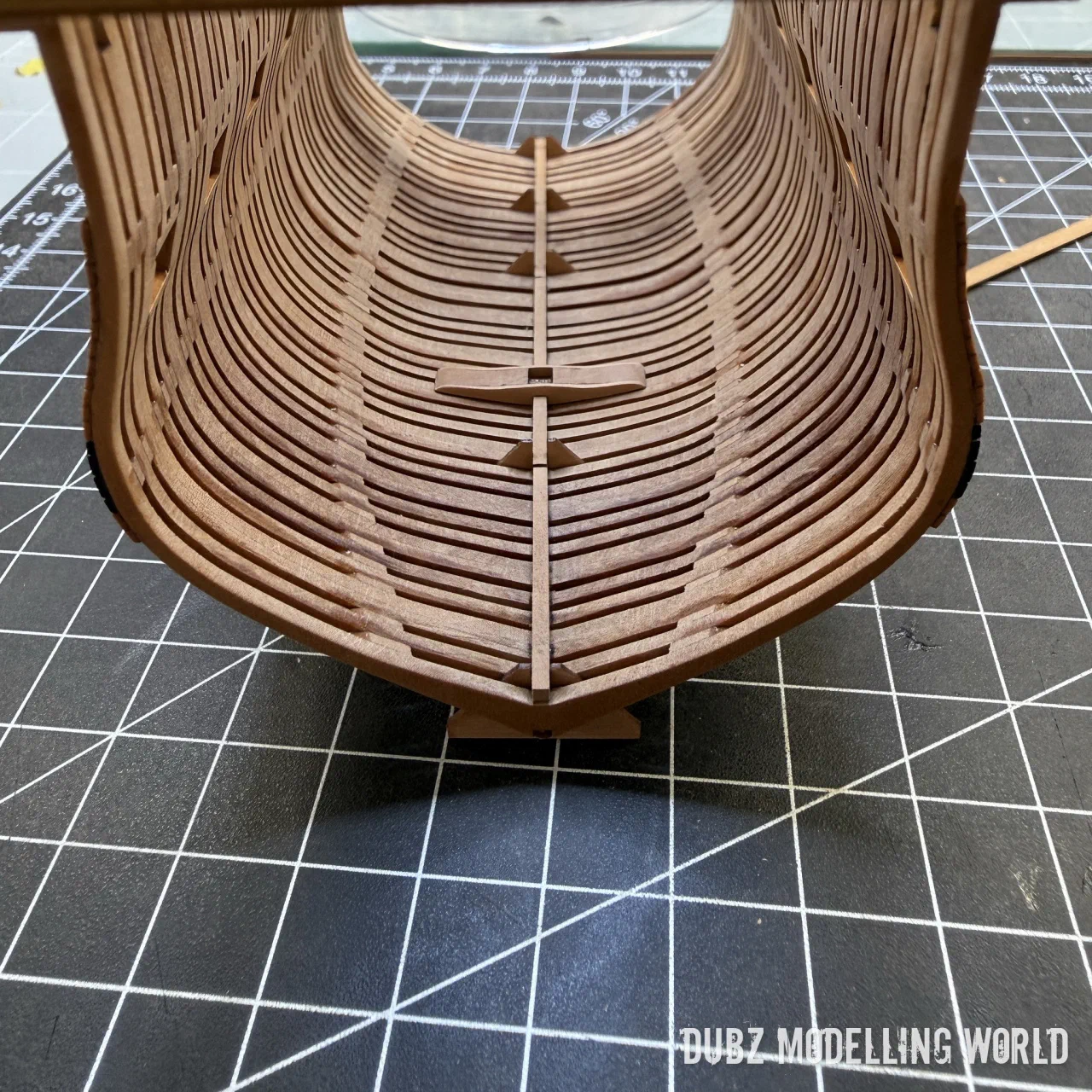
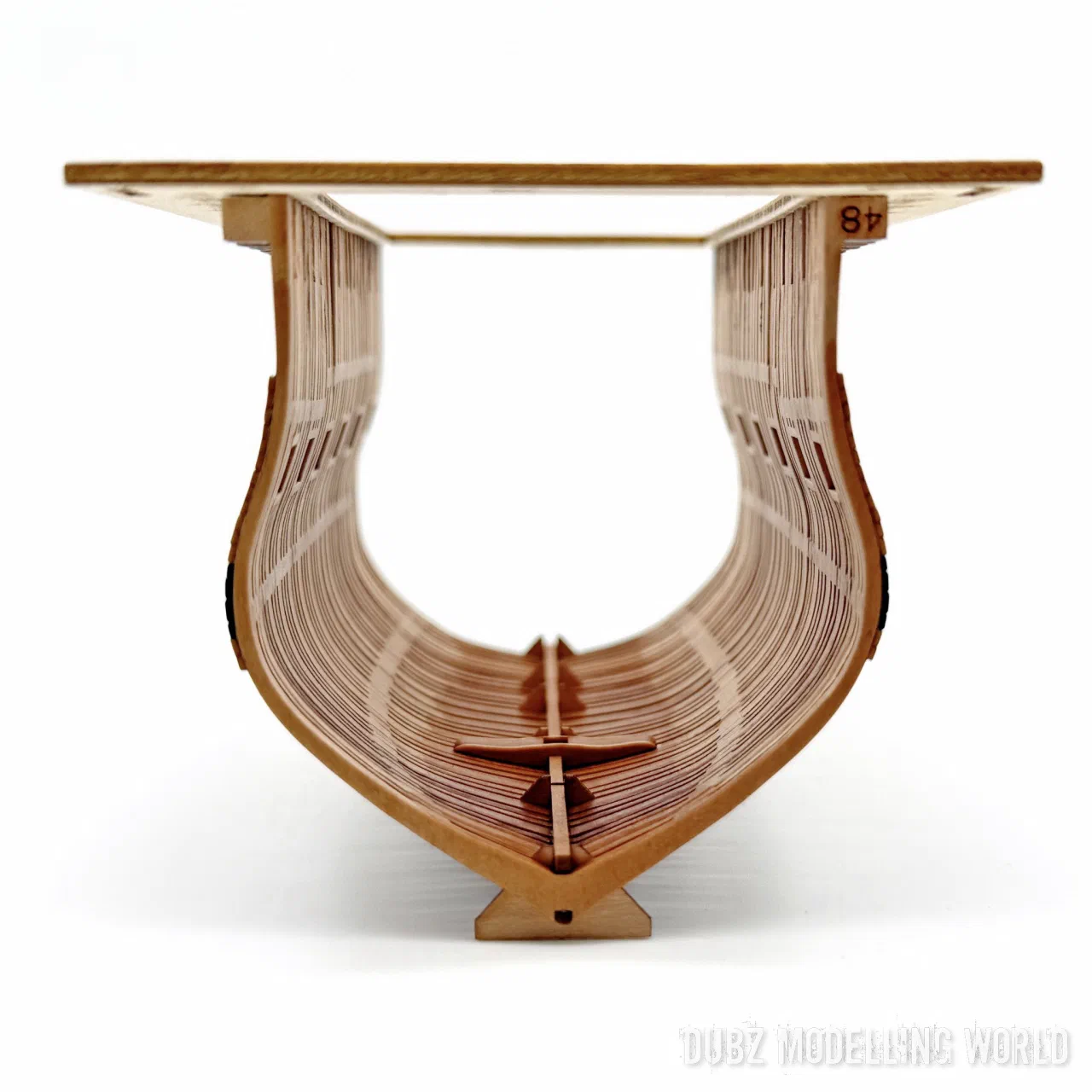
A jig helps to align the keelson neatly. I fitted the three-part keelson bit by bit instead of gluing it straight away. The main mast step is laminated from three parts; here the pear shows a disadvantage compared with boxwood – the colour varies, and you can see that the part is made of three pieces.
Then a jig and stand were built to position the beams of the hold deck exactly, and another jig centred the beams on the double frame. Before that, the whole inner hull was oiled, because that would not have been possible afterwards.
The hold deck
The deck of the hold is laminated from two parts, and that is hard to assemble. With thin superglue I could not align them perfectly, and the deck did not fit very well into the hull either – so there are a few gaps now.
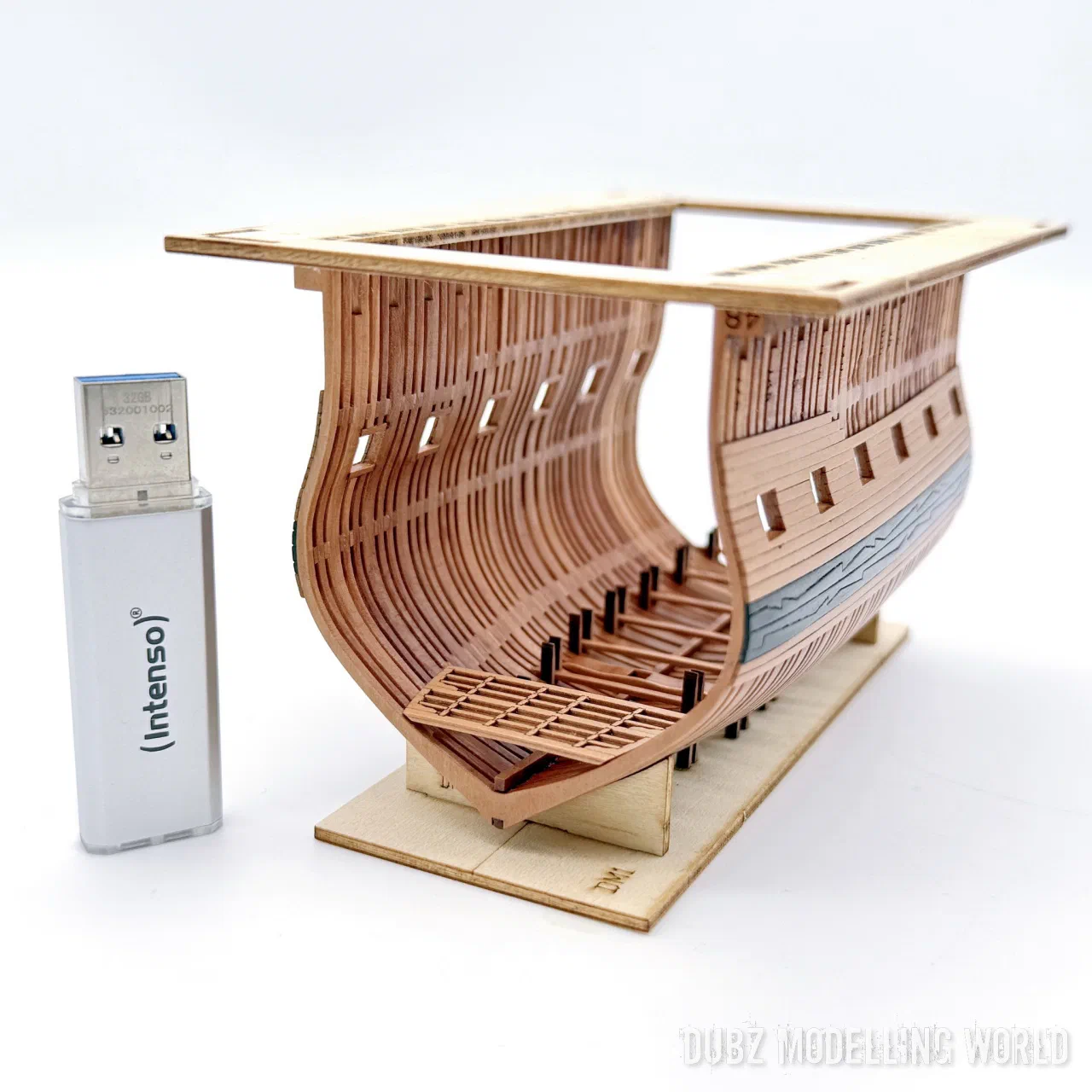
The lower deck – and a lesson
Next came the lower deck, and I almost ruined it. Superglue sets too fast to position the pieces neatly, so I had what I thought was a brilliant idea: diluted wood glue, “ironed” together. Not a good idea at all. The result was a warped, wavy, badly aligned deck, and I was furious. Unicorn Model kindly sent me a replacement. In the meantime I soaked the botched deck, extended the jig and brought it back into a clean curve – a good deck to practise on.
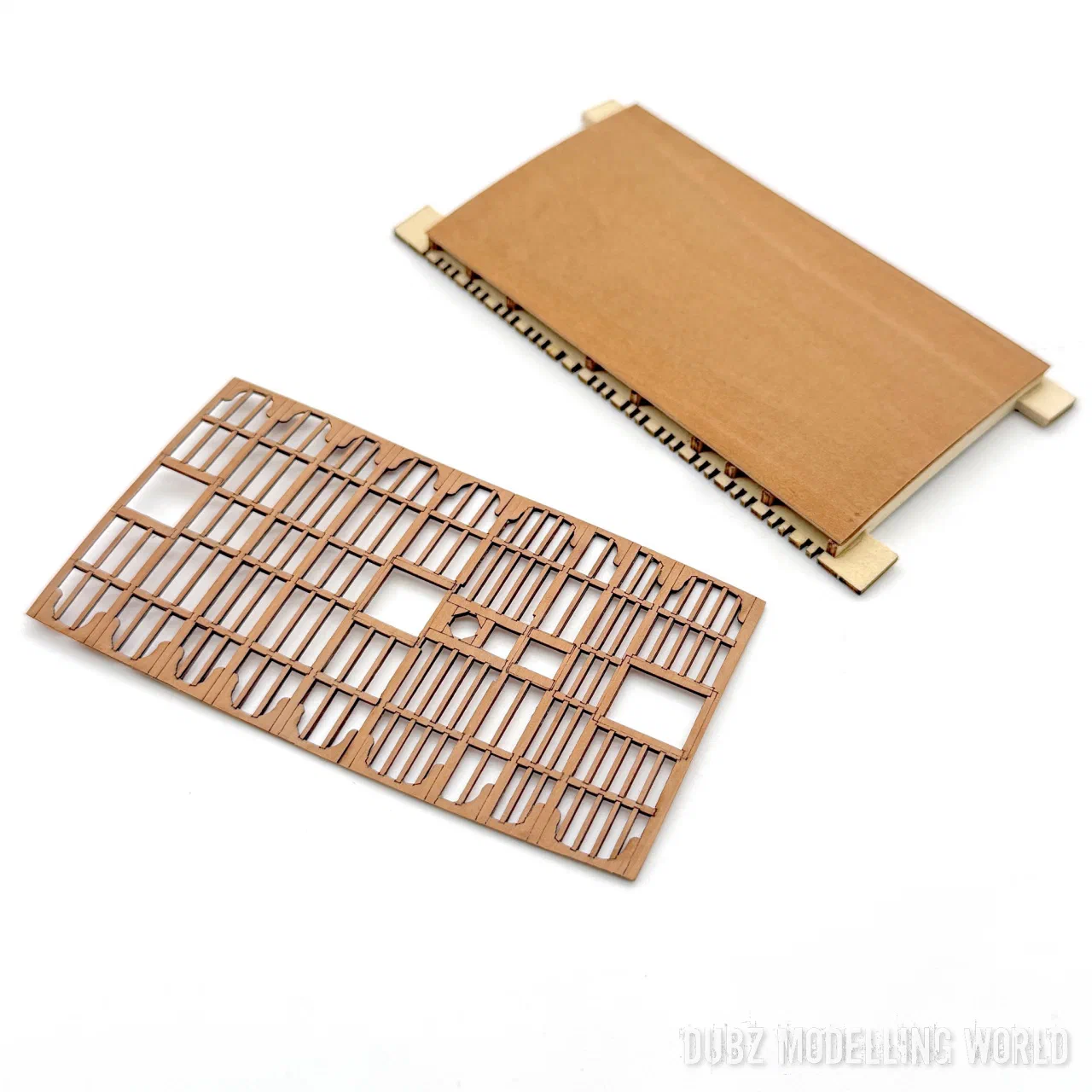
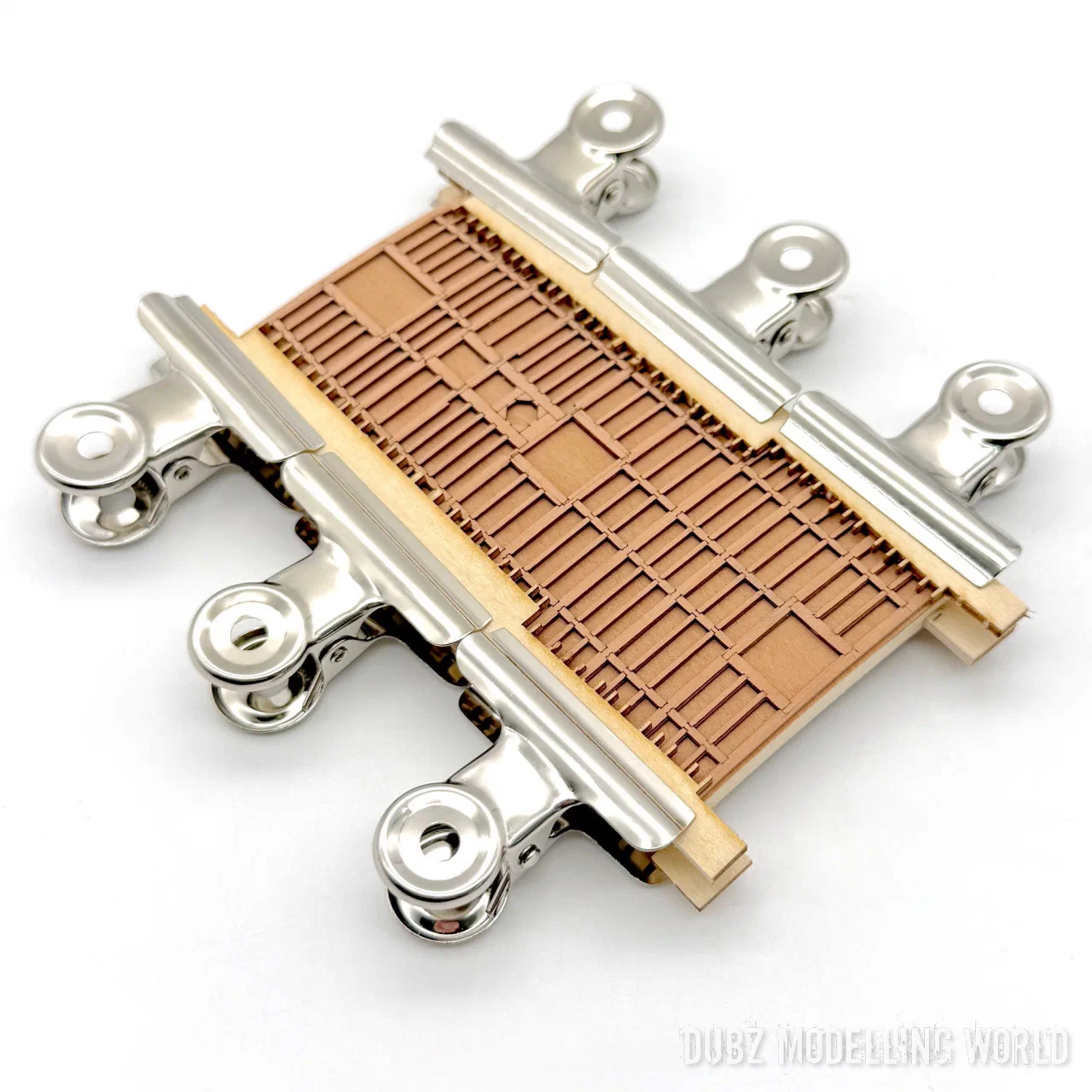
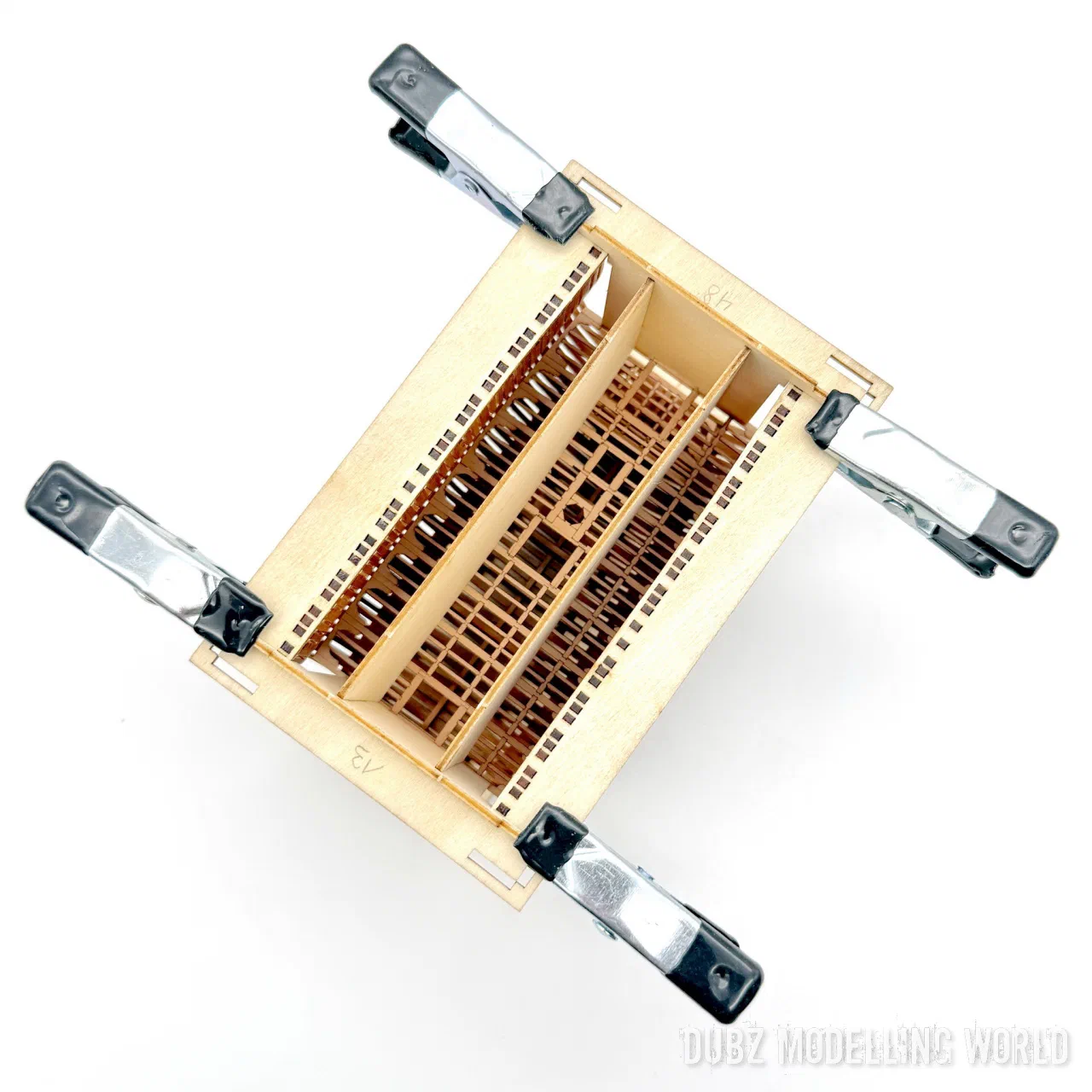
Well and shot locker
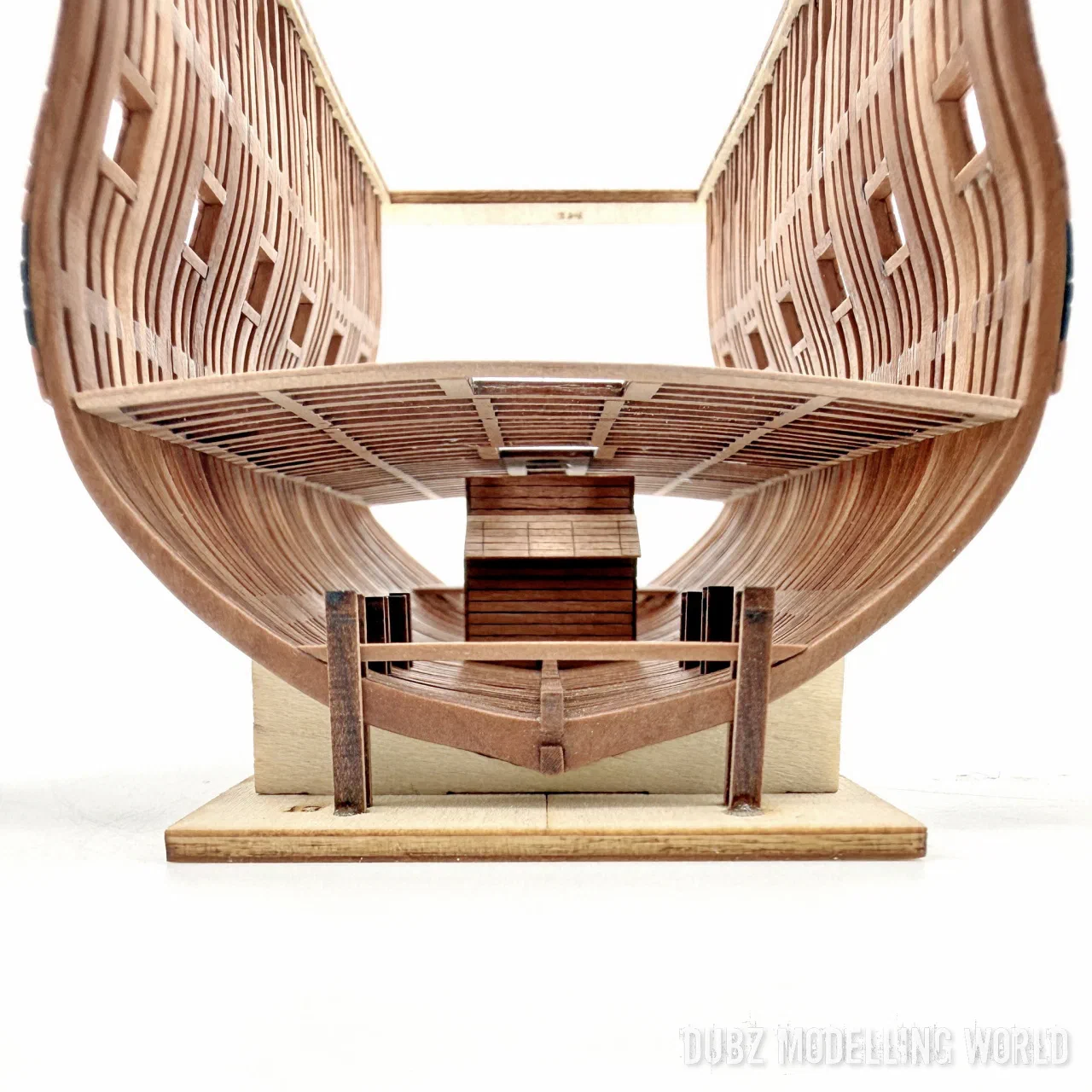
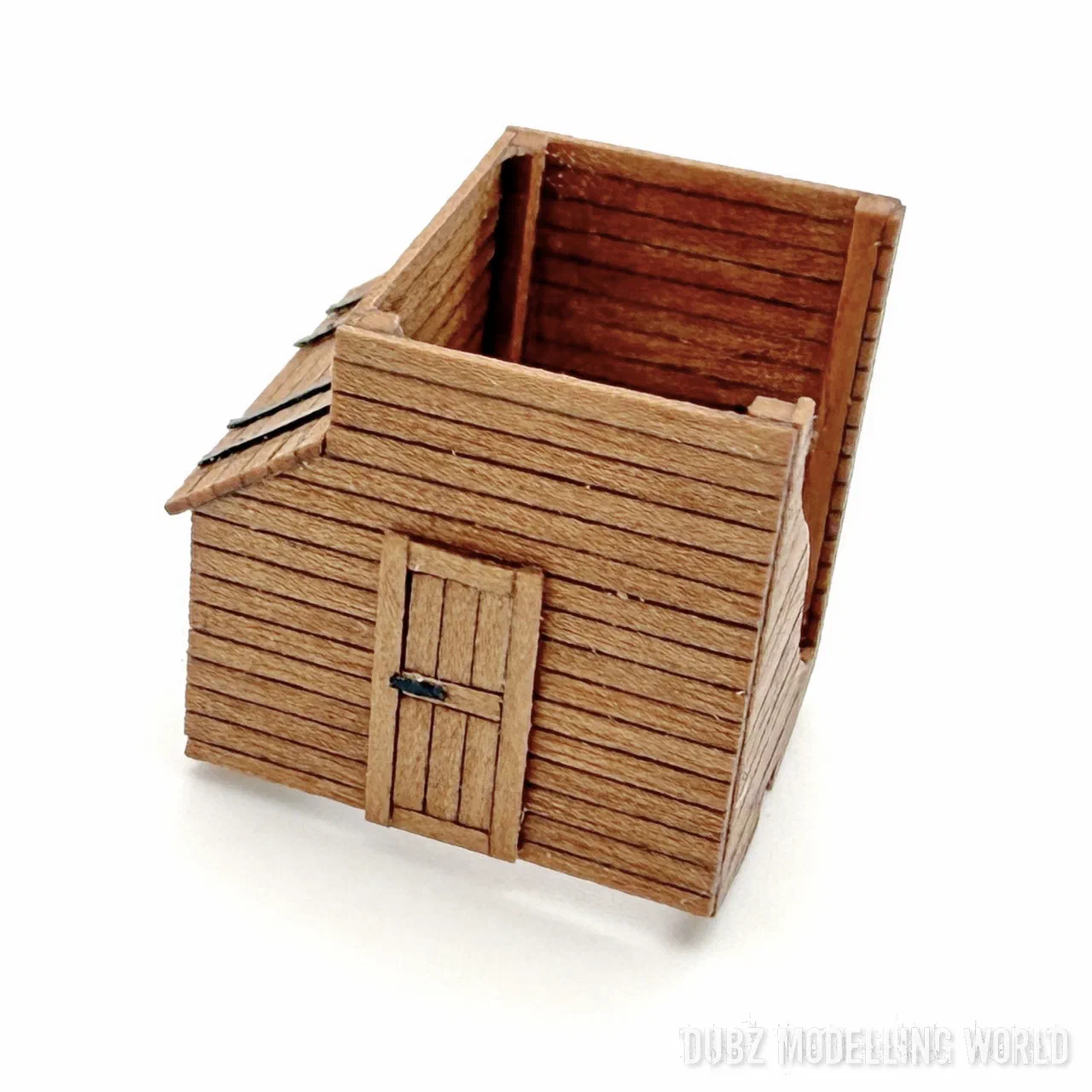
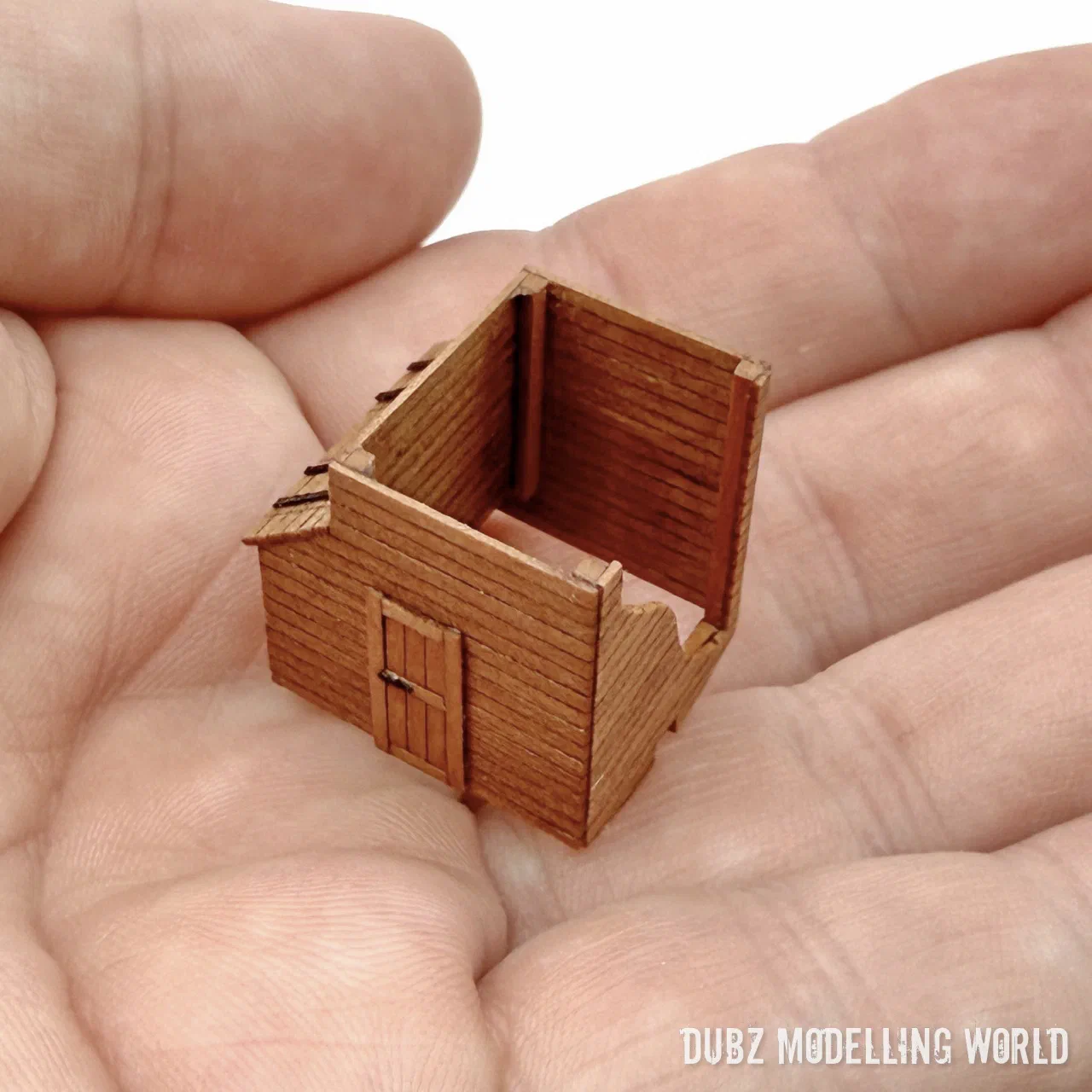
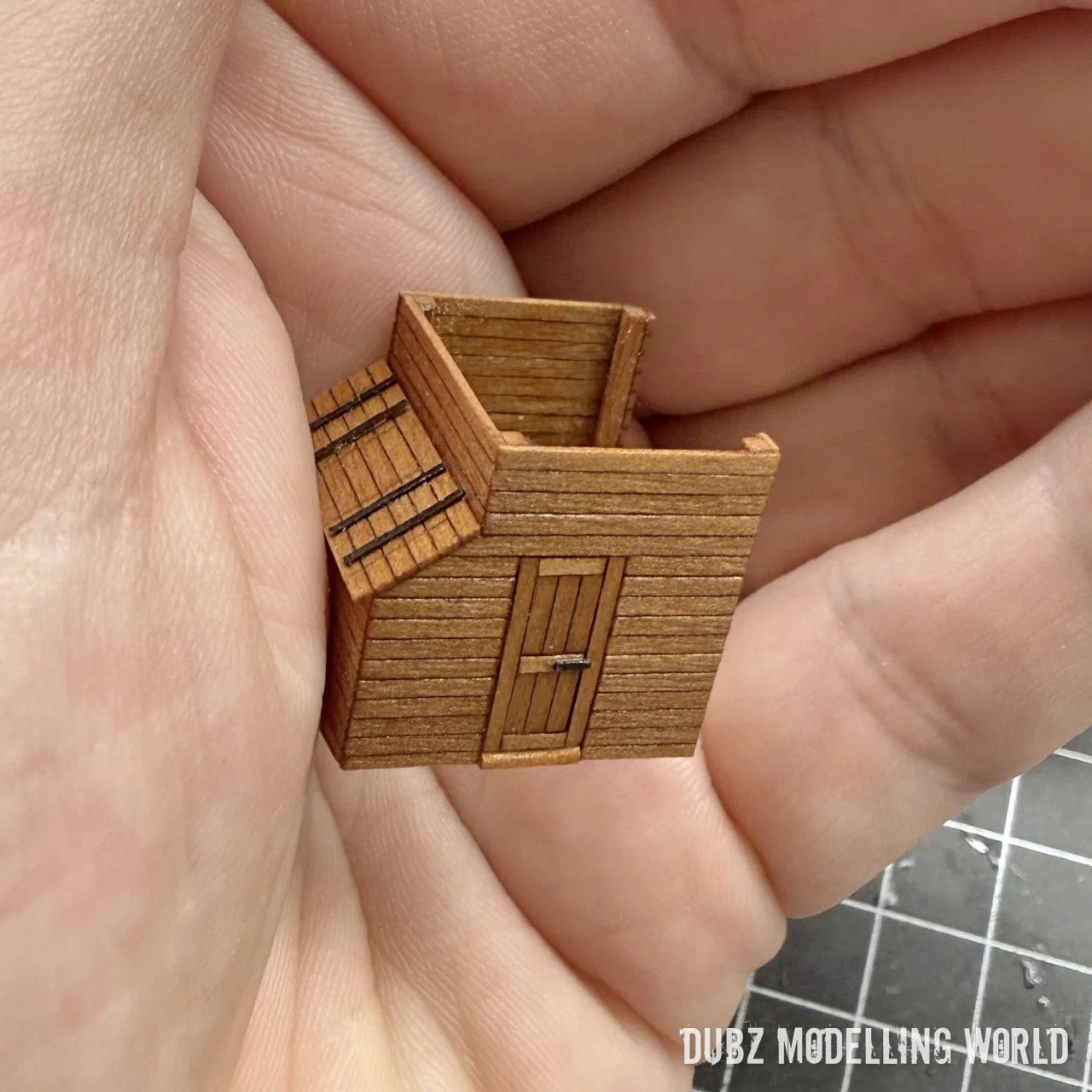
The more I compared the kit with the original plans, the more differences I found – Pandora’s box was open. I decided to add the well around the pumps with its shot locker: first a prototype, then the real thing. Two of the beams for the centre platform had to go, and the mast step was modified.
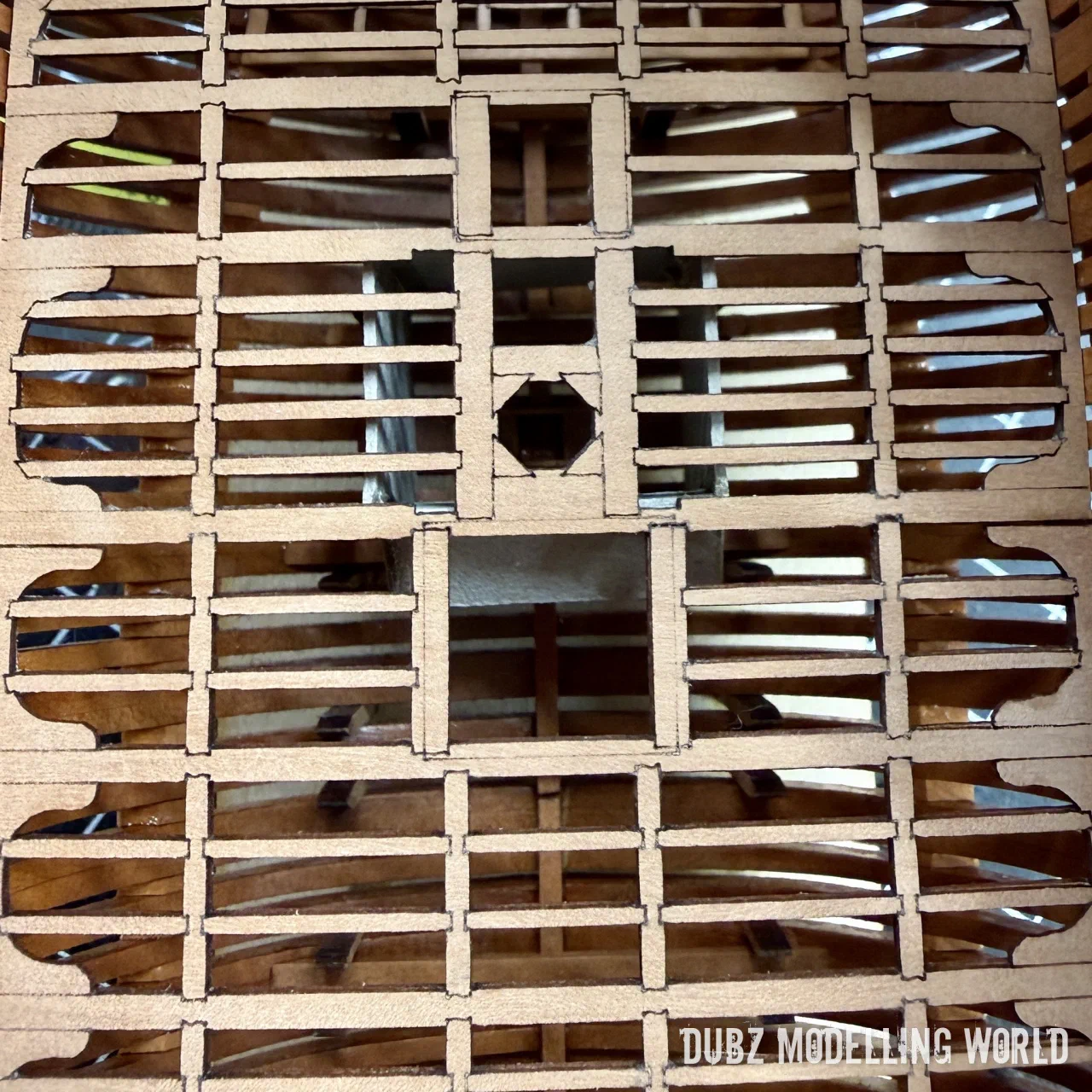
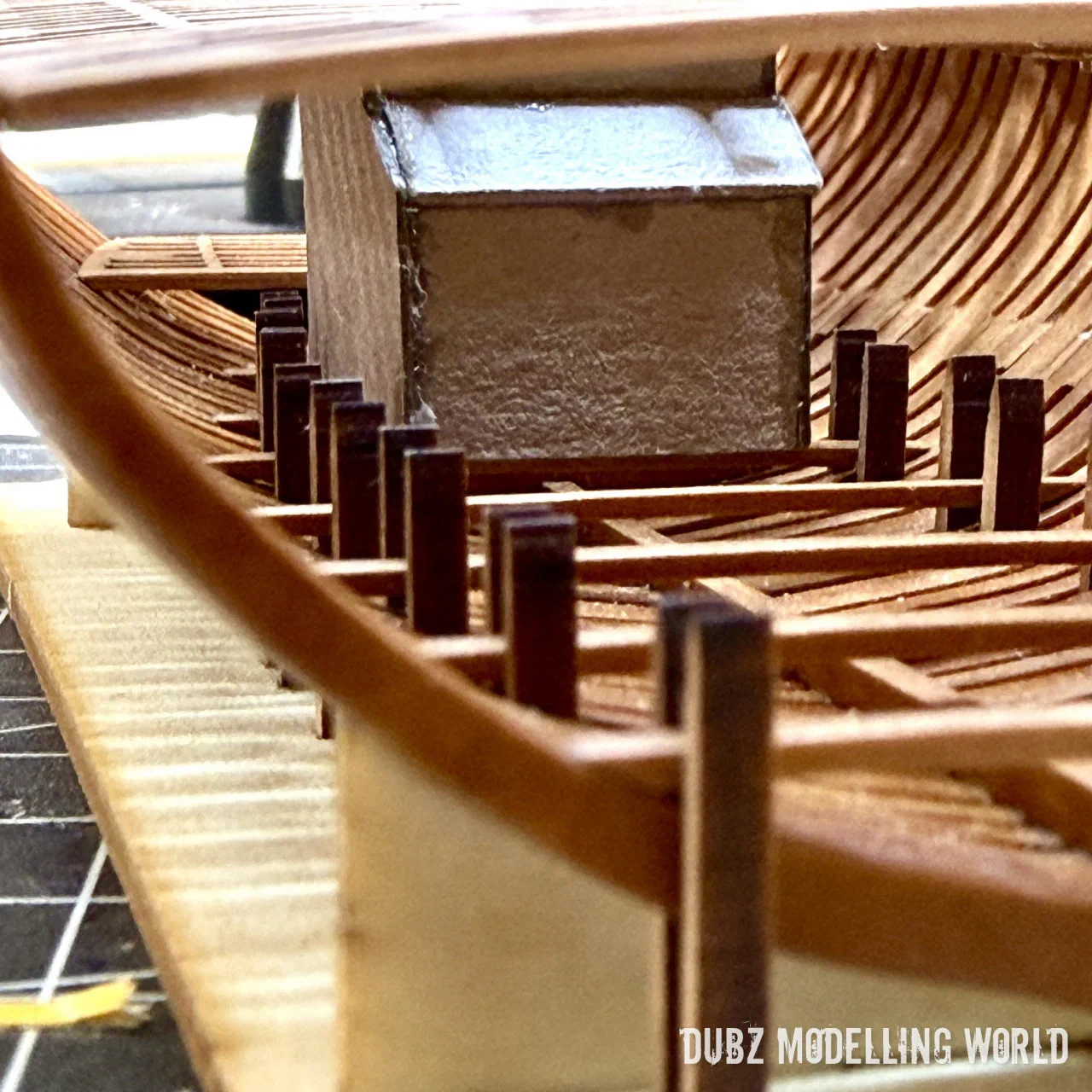
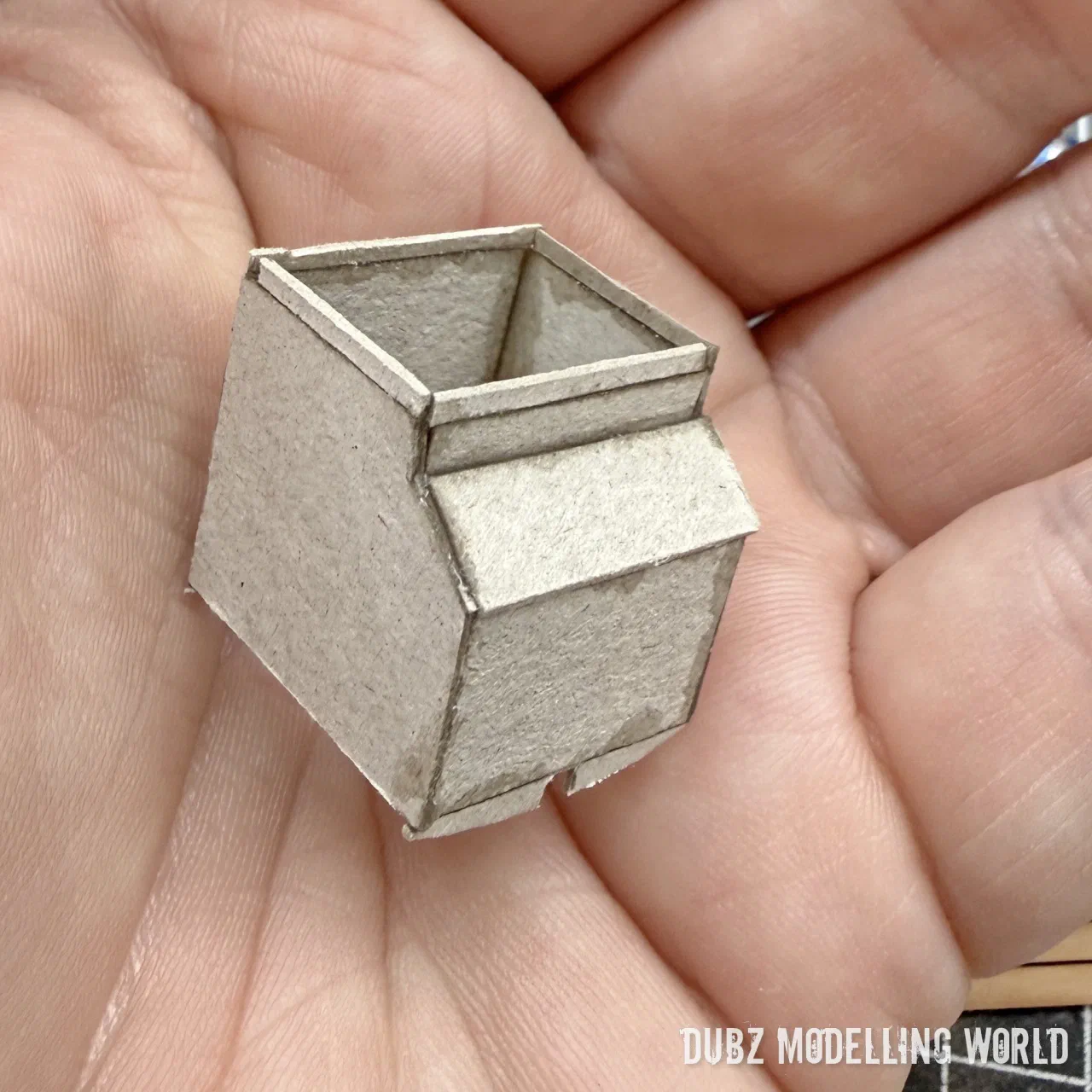
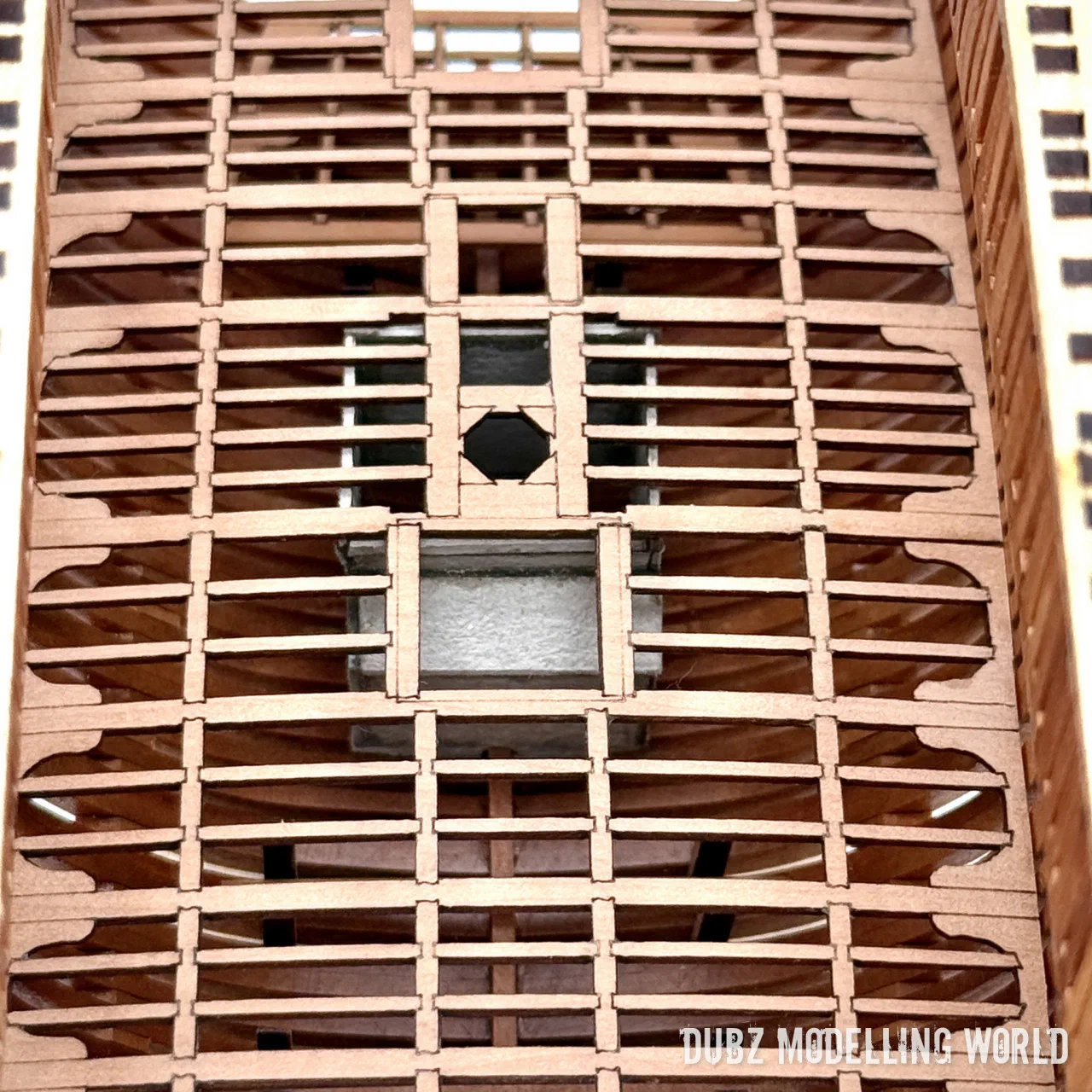
The part warped a little, which still annoys me even though nobody will notice it once the model is finished. The door got a second attempt, because I could not stand the first one.
The lower deck in place
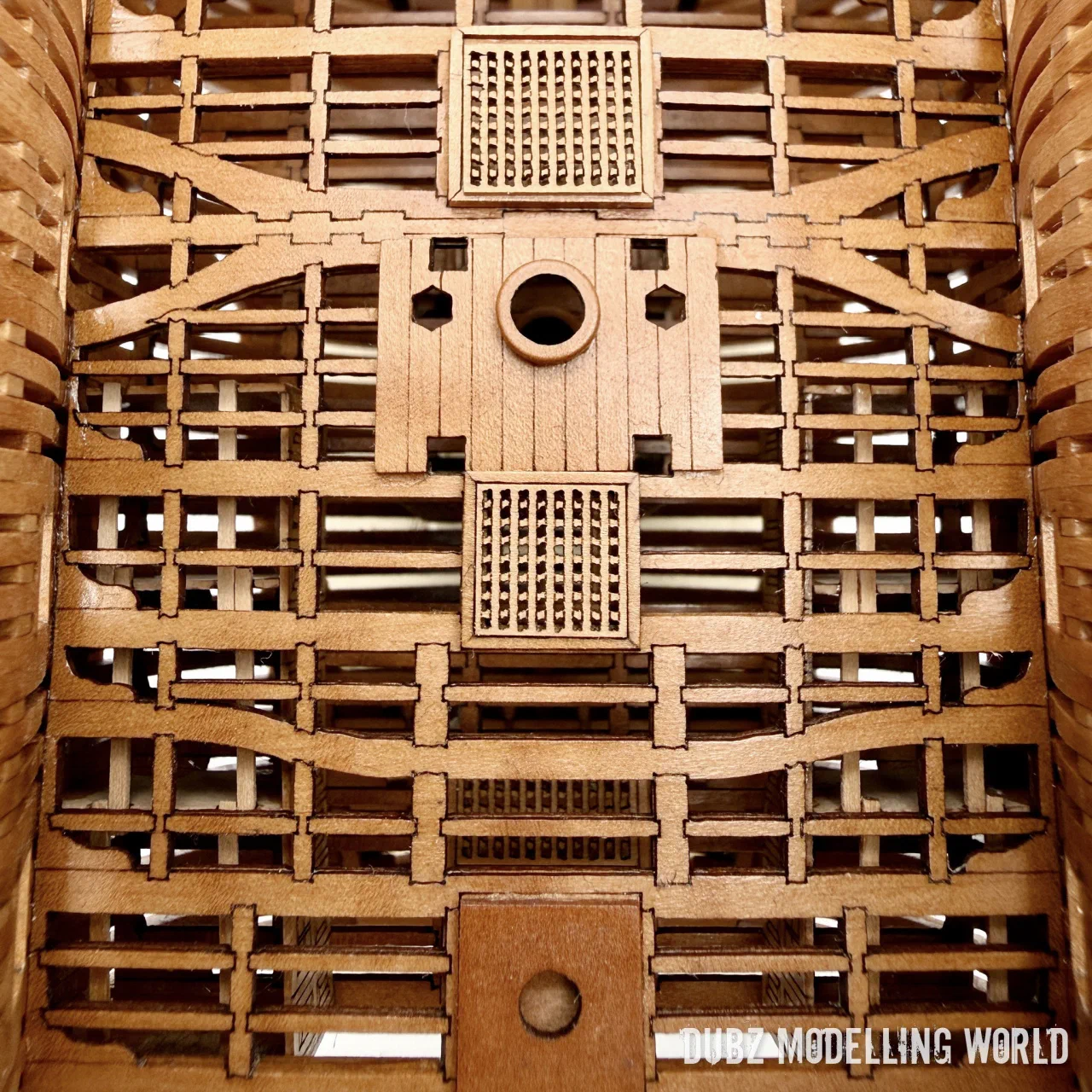
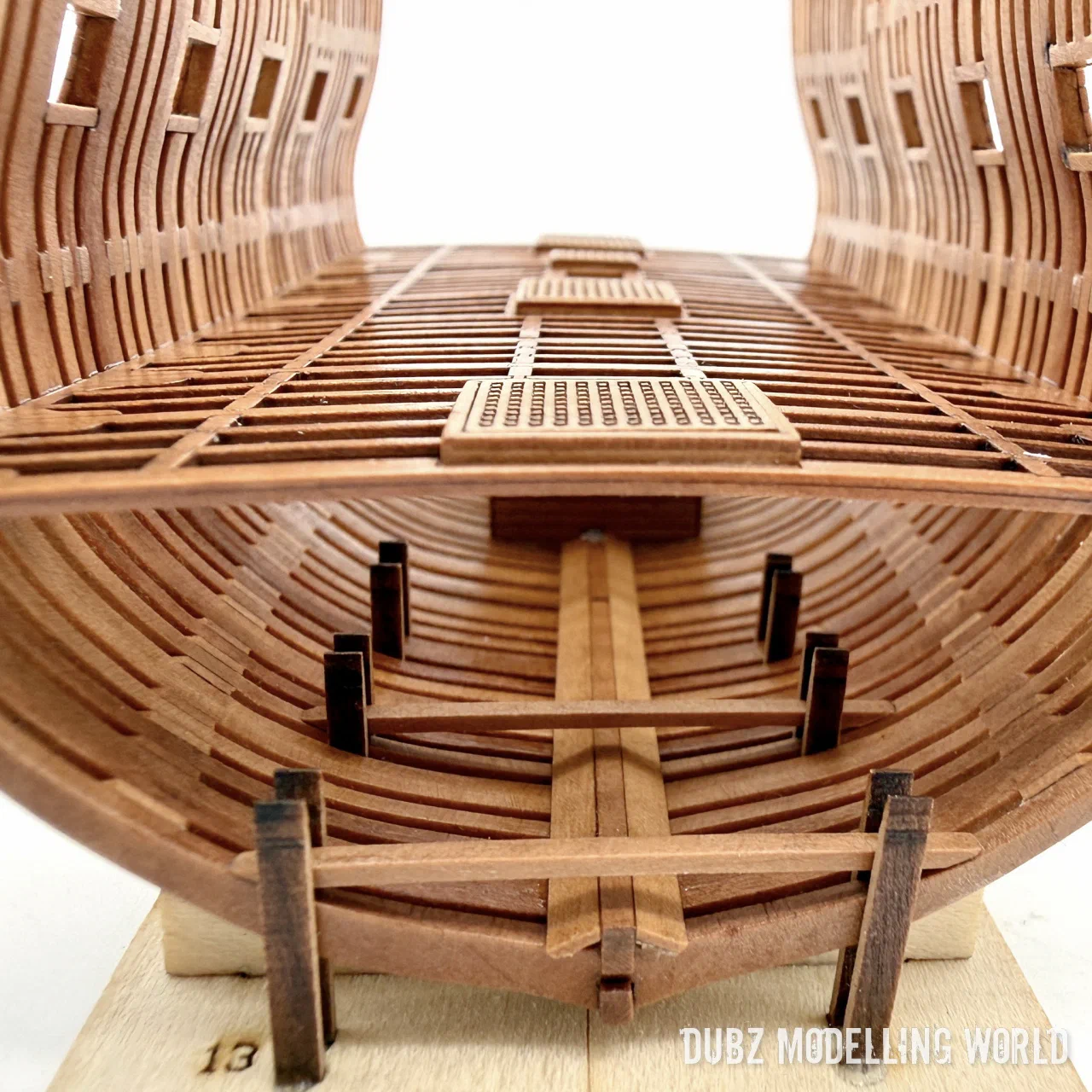
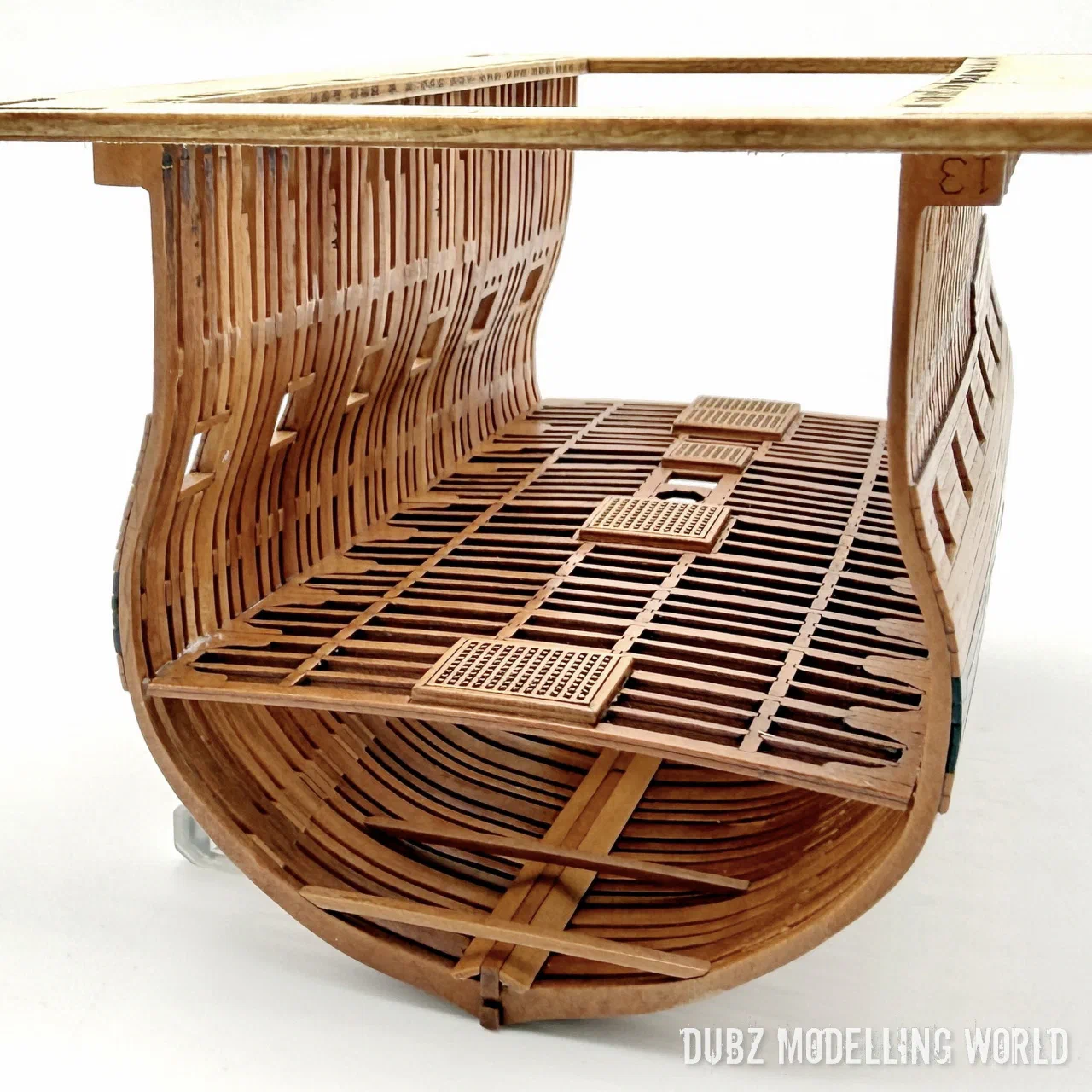
With the replacement deck from Unicorn Model the gluing went at least a bit better – it is still a difficult task. The gratings were made removable, and after some more or less successful adjustments the deck was glued in. I also added the limber board along the well. The deck is not correct at the position of the well; I understood the differences too late, but the pump room may hide it.
Cabins and gun deck
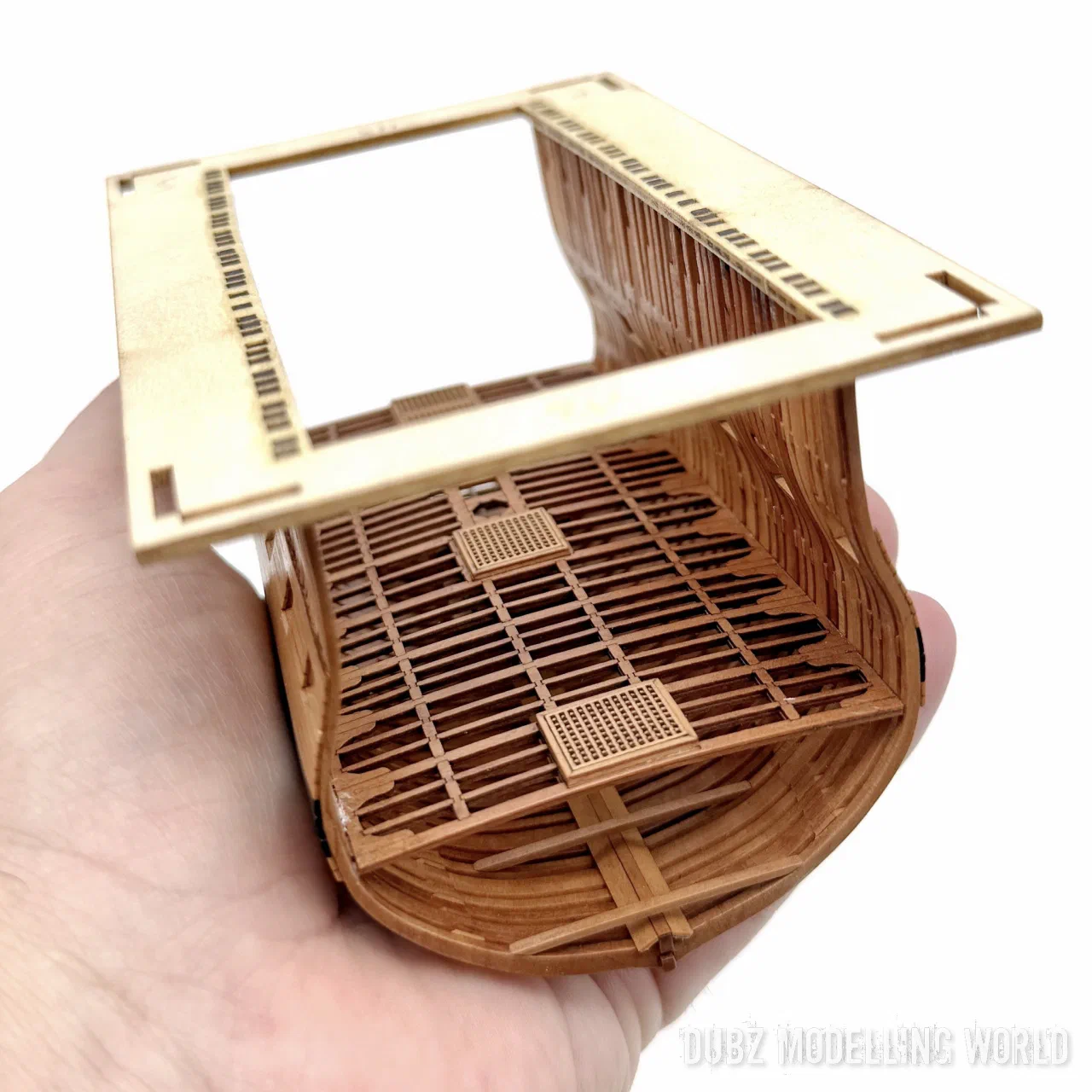
Before the gun deck, the cabins had to be built – follow the instructions exactly and do not mix up the front and back panels, as I did. For the gun deck I found a better method: I positioned the two laminated sections precisely, joined them with masking tape like a hinge, so that I only had to fold one section over after applying the thin superglue. That worked well. The deck was then wetted and left overnight on the bending jig to get its camber, and the special beams the same way.
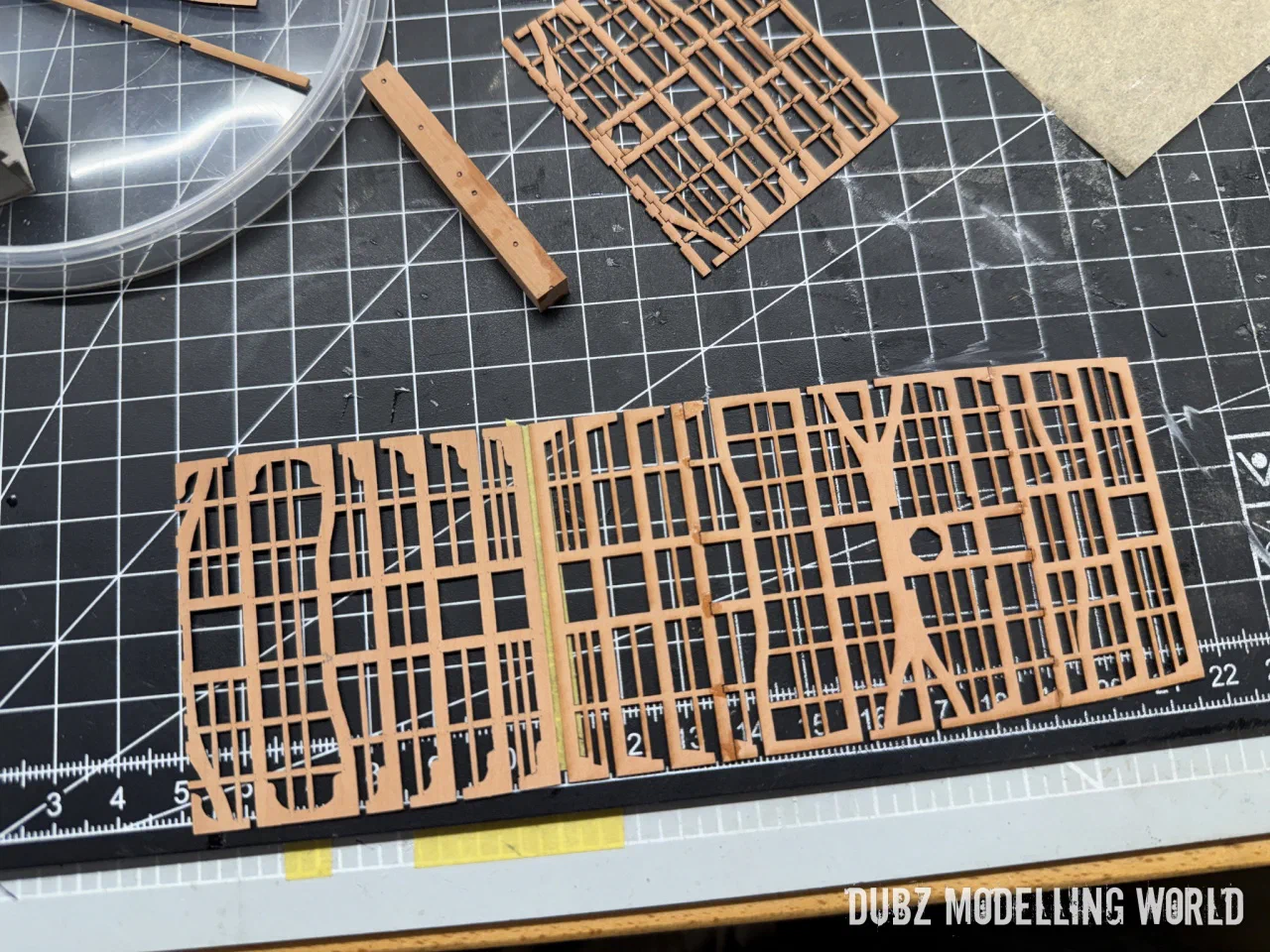

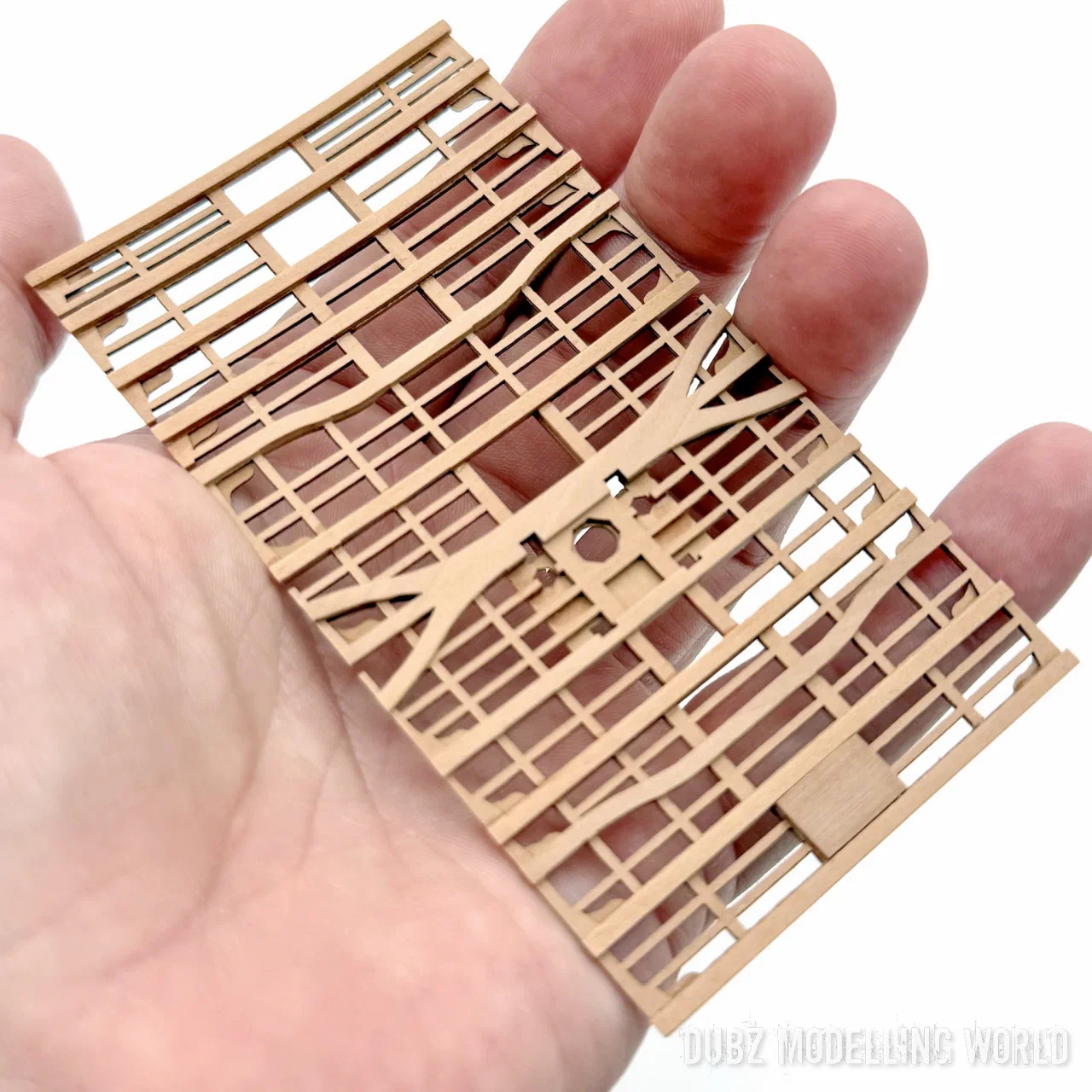
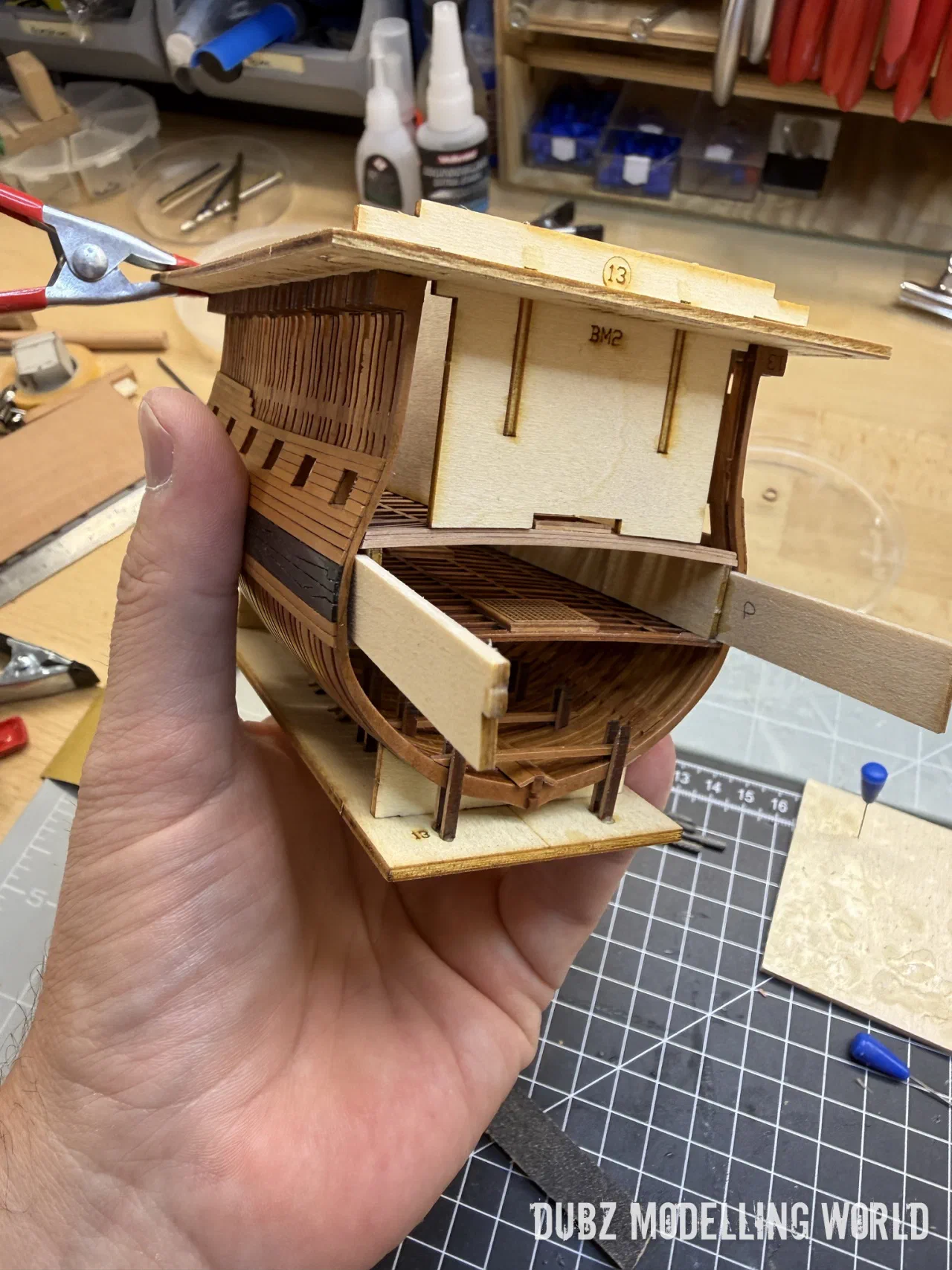
The laser-engraved patterns of this deck are really brilliant – very delicate and rich in detail. Ahead of the instructions I fitted the main mast partner, because I want to build the whole pump from scratch, down to the bilge, through both decks – the kit only shows the two ends of the pump on the gun deck. A small jig helps to fit the deck under the gun ports.
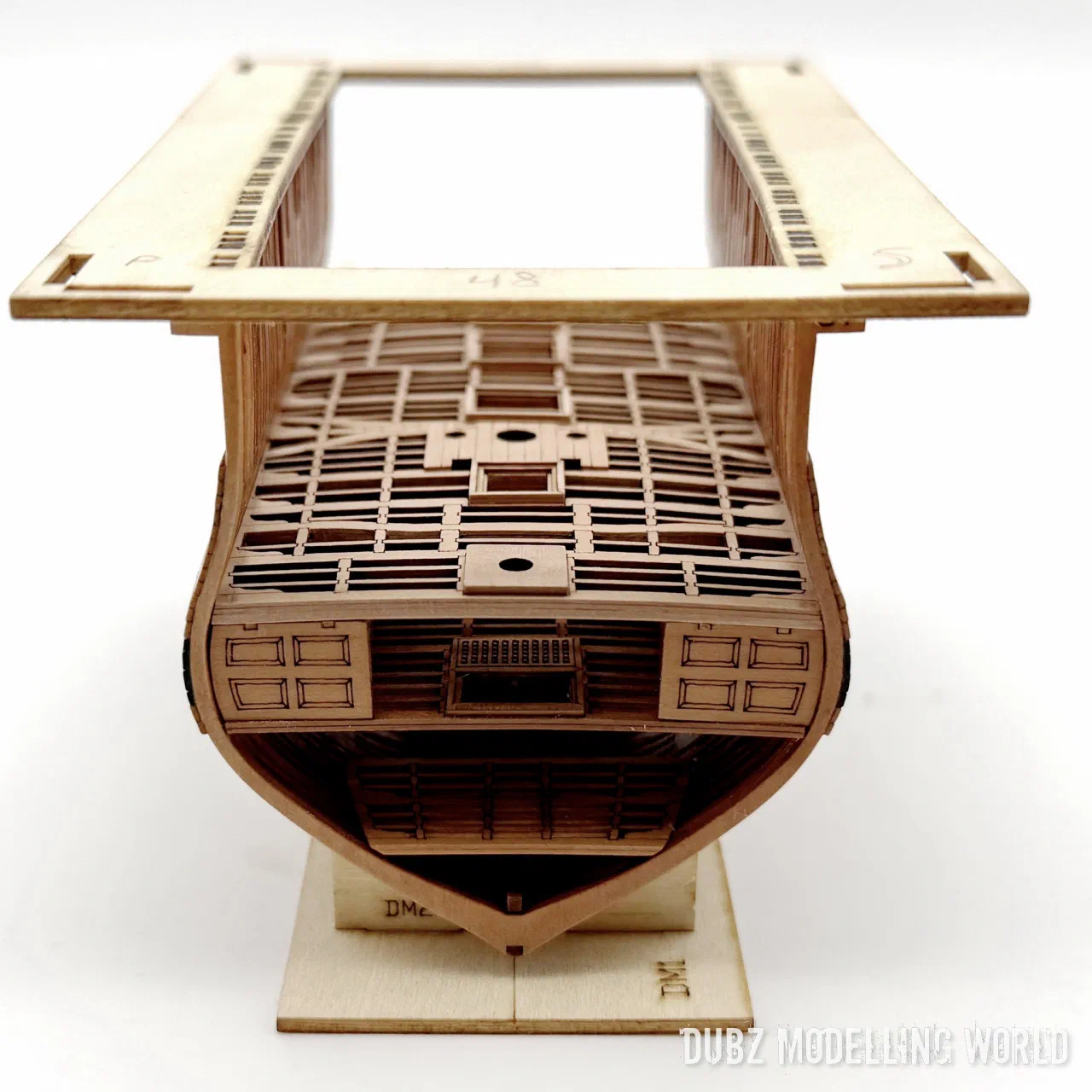
Where she stands
The gun deck was oiled, given an irregular shine with Ballenmattierung and glued in place. The knees are next, then the pump room and the pumps. The Enterprise is a work in progress.